Traditional spirituals weren’t written to be played on electric guitars or driven by a drum kit. They were sung in fields, in churches, in homes-voices raised in pain, hope, and resilience. But when you take those same melodies and hand them to a gospel blues band, something powerful happens. The raw emotion of the spiritual meets the groove of the blues, and suddenly, centuries-old songs feel brand new. Arranging spirituals for a gospel blues band isn’t about making them "cool" or "modern." It’s about honoring their roots while letting them breathe in a new context. This guide shows you how to do it without losing the soul.
Understand the Core of the Spiritual
Before you touch a chord or tweak a rhythm, you need to know what you’re working with. Spirituals like "Wade in the Water," "Go Down Moses," or "This Little Light of Mine" were built on call-and-response patterns, pentatonic scales, and free, floating rhythms. They didn’t follow 4/4 time like pop songs. They followed the breath of the singer.
Many arrangements fail because they force spirituals into rigid structures. Don’t start by writing a chord chart. Start by listening to field recordings from the Library of Congress. Notice how the tempo shifts. How one singer leads, and the group answers. How silence is used as a tool. That’s the heartbeat you’re trying to preserve.
The melody isn’t just a sequence of notes-it’s a story. When you arrange it for a band, you’re not replacing that story. You’re giving it new instruments to speak through.
Choose the Right Spirituals for the Band
Not every spiritual translates well to a blues band. Some are too slow, too chant-like, or too harmonically simple. Others have built-in momentum that fits perfectly.
Start with these three types:
- Call-and-response heavy - "Ain’t Gonna Let Nobody Turn Me Around" works because the band can become the "response." The rhythm section locks into a steady shuffle while horns or guitars answer the lead vocal.
- Minor-key based - "Sometimes I Feel Like a Motherless Child" has a natural blues feel. Its minor third and flatted seventh are already in the blues scale.
- Rhythmic drive - "Joshua Fit the Battle of Jericho" has a built-in march. Turn it into a slow 12/8 groove with a snare on 2 and 4, and let the bass walk like a preacher walking to the pulpit.
Avoid spirituals that rely heavily on complex harmonies (like "Deep River") unless your band has a strong piano or organ player who can handle extended chords. Simplicity is your ally here.
Build the Foundation: Rhythm Section First
The backbone of any gospel blues arrangement is the rhythm section. Forget metronomes. Think of the groove as a living thing.
Start with the bass. Don’t just play root notes. Walk with feeling. Use blue notes-bend the third and fifth. Play behind the beat slightly. That’s where the soul lives. A bass line that’s too tight kills the spiritual’s natural sway.
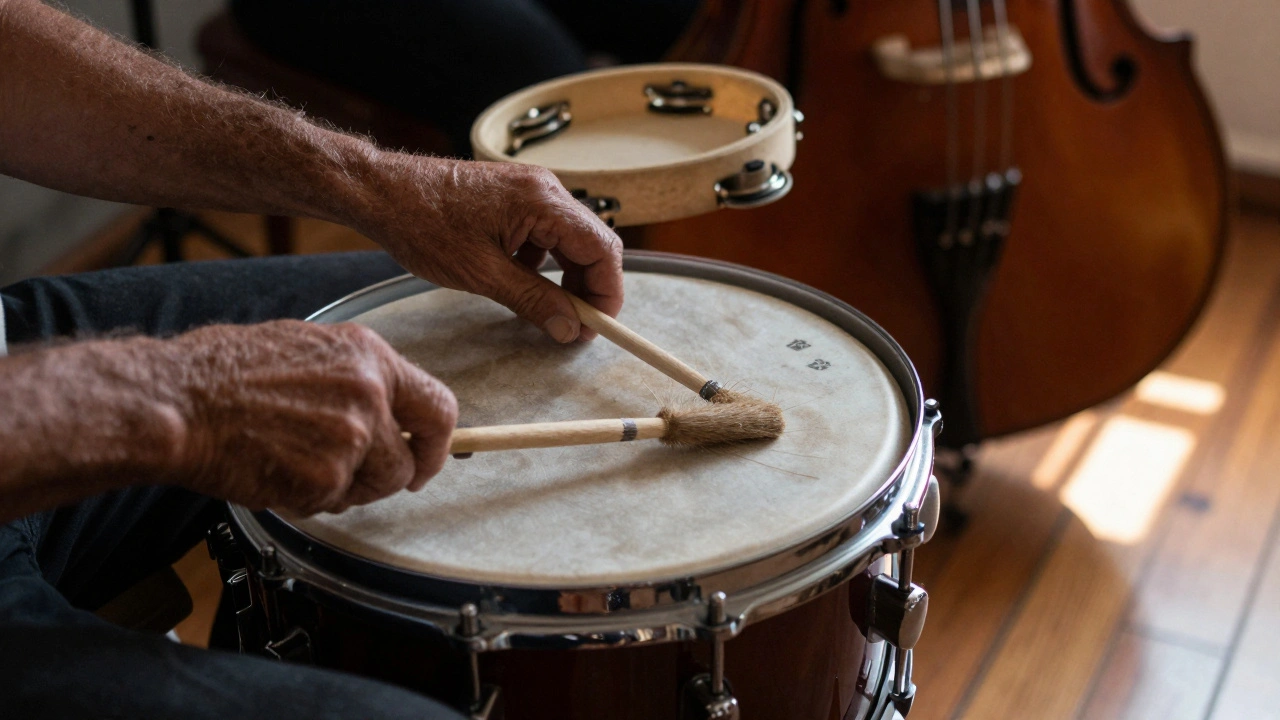
The drums should feel like a church service. Use a shuffle pattern in 12/8 or a slow 4/4 with a brush or stick on the snare. Keep the kick light-just enough to anchor the pulse. Let the hi-hat ride like a heartbeat. Add a tambourine on the offbeats. That’s the sound of hands clapping in an old church.
And don’t forget the guitar. A clean or slightly overdriven electric guitar can play the melody in octaves, or lay down a syncopated rhythm that mimics hand-clapping. Think Albert King meets Mahalia Jackson.
Harmony: Less Is More
Traditional spirituals often use just three chords: I, IV, and V. But in blues, you add color. The trick is to add just enough.
Use dominant 7ths. Instead of C major, play C7. Instead of F major, play F7. That’s it. No extended chords. No altered ninths. Keep it raw.
Let the organ or piano add subtle tension. A quick, low B-flat under a C7 chord? That’s the sound of someone moaning in the back pew. A sustained E-flat in the left hand while the right plays the melody? That’s the sound of grief holding on.
Choirs? Great. But don’t over-sing. Three voices-lead, harmony, and a low drone-are enough. Let the band breathe between phrases. Silence is part of the arrangement.
Instrumentation: Who Plays What
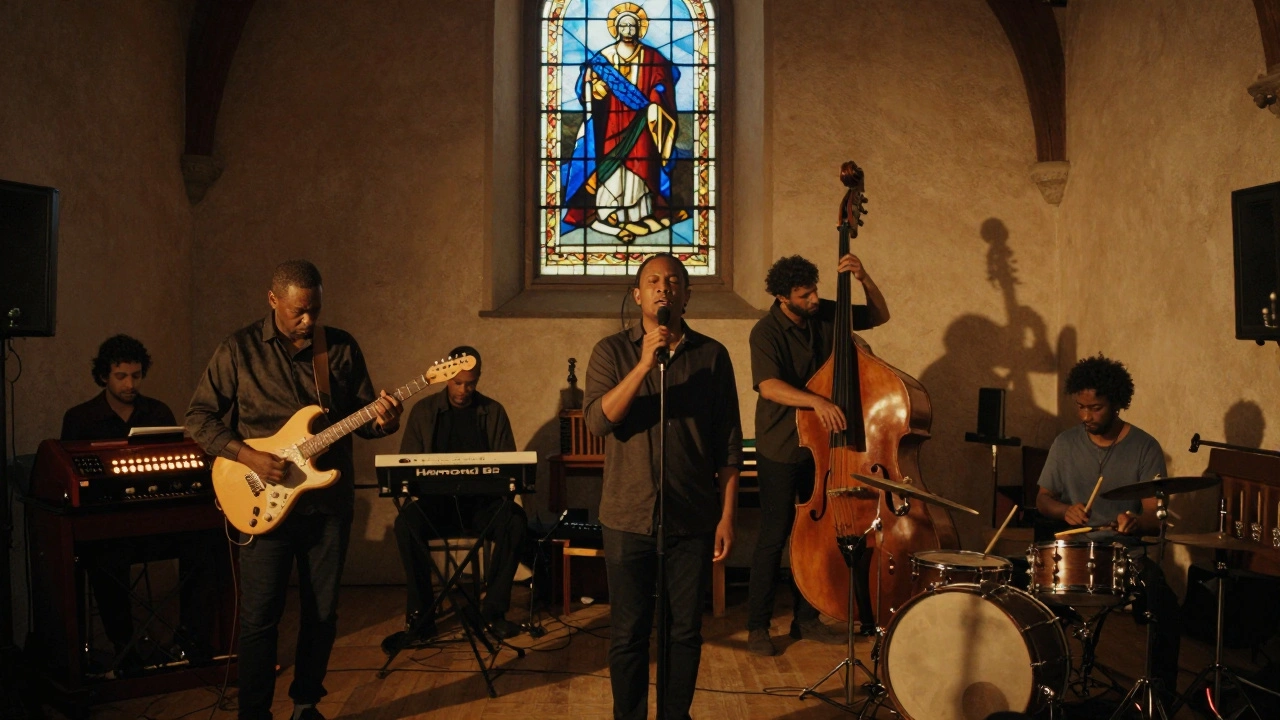
Here’s what works in a real gospel blues band setting:
- Lead vocal - One strong voice. No harmonies unless it’s a call-and-response moment.
- Electric guitar - Plays rhythm or answers the vocal with short licks. Use vibrato. Bend notes like you’re crying.
- Hammond B3 organ - The secret weapon. Use the drawbars for a warm, gritty tone. Play chords on the lower manual, add single-note runs on the upper.
- Bass - Upright or electric. Walk with weight. Don’t be afraid to let notes ring.
- Drums - Simple kit. Snare, kick, hi-hat, tambourine. No cymbal crashes. Just ride the groove.
- Horns (optional) - Tenor sax or trumpet. Use them sparingly. One short phrase after a vocal line. Think of them as the echo of a distant bell.
Don’t add a full horn section. That’s a gospel choir, not a blues band. Less is more. One sax player who knows when to hold back is worth ten who play all the time.
Arrangement Structure: Don’t Over-Engineer
Most spirituals don’t have verses and choruses. They have sections. Here’s a simple, effective structure:
- Intro - 4 bars of guitar or organ playing the melody in a slow, sparse way. Let the room breathe.
- Lead vocal + rhythm - The full band comes in. The vocal sings the first line. The band responds with a short chord stab or guitar lick.
- Call-and-response - Vocal sings a line. Band answers with a groove. Repeat 2-3 times.
- Instrumental break - Guitar or organ takes a 4-bar solo. No fancy solos. Just one phrase, repeated with feeling.
- Final chorus - Everyone sings together. The band plays louder. The tambourine shakes harder. The bass walks faster. Build to a climax.
- Outro - Drop everything except the bass and one vocal. Fade on a single note. Let it hang.
This structure works because it’s not about complexity. It’s about repetition with emotional buildup. Like a sermon.
What to Avoid
These are the mistakes that kill the soul of a spiritual arrangement:
- Overplaying - If every instrument is playing at once, you’ve lost the space. Leave room for silence.
- Tempo too fast - Spirituals aren’t dance tunes. A slow, dragging groove (around 70 BPM) feels more honest than a rushed one.
- Using modern production - Auto-tune, reverb tails, click tracks. They sanitize the emotion. Record live. Let the room sound.
- Changing the melody - Don’t jazz it up. Don’t add runs. The melody is sacred. Your job is to support it, not rewrite it.
- Ignoring dynamics - The quiet parts are just as important as the loud ones. A whispered line followed by a full-band cry? That’s power.
Real Example: "Wade in the Water" Arranged for a Gospel Blues Band
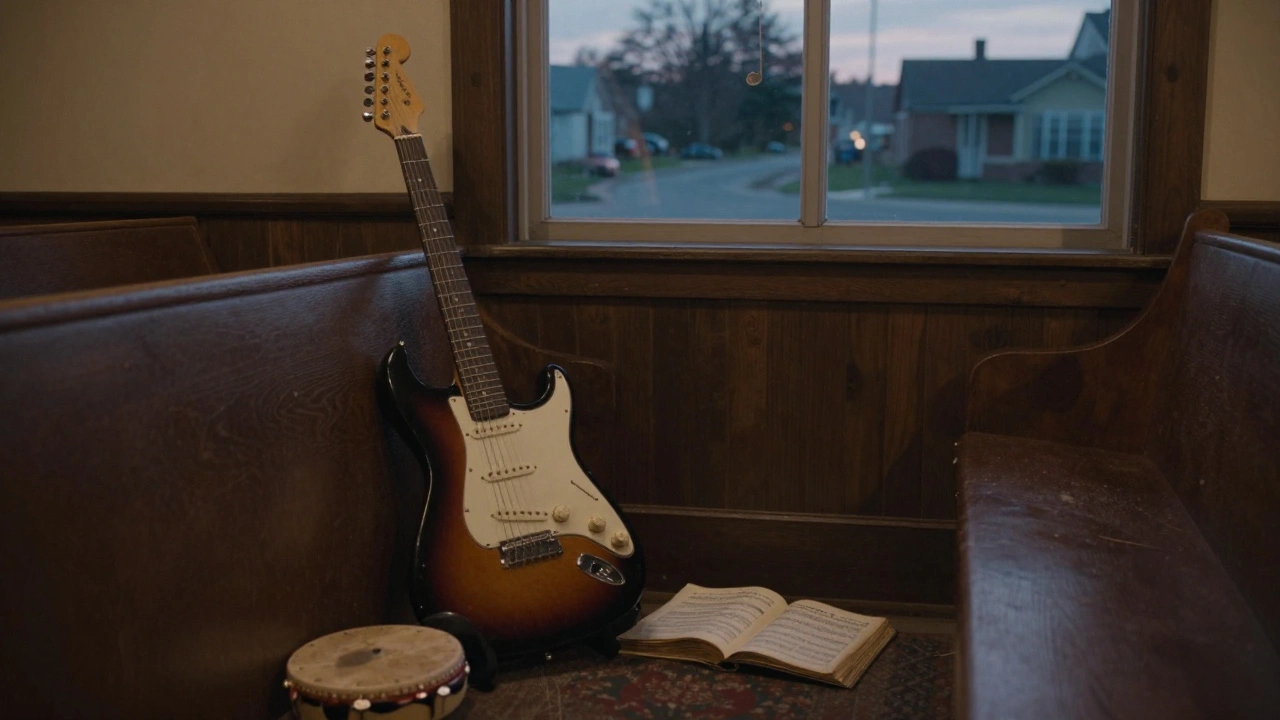
Take "Wade in the Water." The original melody is simple: five notes, descending. Here’s how a live version in Portland’s St. Luke’s Church band did it:
- Intro: Bass walks slowly, guitar plays open D and A strings, no rhythm. Just the sound of water.
- Vocal enters on "Wade in the water," band hits a single C7 chord.
- Band answers with a short guitar lick in E minor pentatonic.
- Second verse: Organ adds a low drone on G. Tambourine shakes on the "and" of 2 and 4.
- Break: Tenor sax plays the melody, bent and breathy, like a cry.
- Final chorus: Everyone sings. Drums kick harder. Bass walks up to a B-flat. The last note is held by the vocal alone. Fade out.
It lasted 5 minutes. No solo. No fancy chords. Just groove, space, and truth.
Practice Tips
- Start with one spiritual. Master it before moving to the next.
- Record your rehearsals. Listen back. Does it feel alive? Or forced?
- Play it for people who grew up with spirituals. Their reaction tells you more than any theory book.
- Let the band sit in silence for 10 seconds before playing. Let them feel the weight of the song.
- Don’t practice in a studio. Practice in a room with hard floors and no carpets. Let the sound bounce. That’s where the soul lives.
Final Thought: It’s Not About the Band. It’s About the Story.
These songs carried people through slavery, through segregation, through grief. They weren’t written to be performed. They were written to be lived.
When you arrange them for a gospel blues band, you’re not making music. You’re giving voice to a history. Your job isn’t to impress. It’s to listen. To hold space. To let the old songs speak through you-not in spite of the band, but because of it.
Can I use modern instruments like synthesizers in a gospel blues spiritual arrangement?
Synthesizers rarely belong in this space. Spirituals and gospel blues thrive on organic textures: the grit of a Hammond B3, the thump of an upright bass, the crack of a snare with snare wires. Synths add a layer of artificial smoothness that clashes with the raw, human quality of the music. If you must use electronic elements, stick to a simple analog pad for atmosphere-never melody or rhythm.
Do I need a choir to make this sound authentic?
No. A full choir can overwhelm the intimacy of the arrangement. One strong lead vocalist with two backing voices is often enough. The power comes from the space between the notes, not the number of singers. Many of the most moving recordings of spirituals were done with just one voice and a single instrument.
What if my band doesn’t have an organ or piano?
You can still make it work. Use a clean electric guitar to play chord stabs in the spaces between vocal lines. A lap steel can mimic the slide of a B3. A harmonica can take the place of a horn line. The key isn’t the instrument-it’s the feel. A well-placed, bluesy guitar riff can carry the same emotional weight as a Hammond chord.
Should I change the lyrics to make them more contemporary?
No. The lyrics are part of the history. Changing them risks erasing the context. If you want to speak to modern struggles, write a new song. But when arranging a spiritual, honor the words as they are. Their power lies in their truth, not their popularity.
How do I know if my arrangement is working?
If people stop talking when you play it. If someone in the room closes their eyes and sways without thinking. If the silence after the last note feels heavier than the music itself. Those are the signs. You don’t need applause. You need stillness.