Stop sending emails that get ignored
You've spent weeks polishing your music, picking the perfect photos, and writing a bio that actually sounds cool. But here is the cold truth: a great Electronic Press Kit is useless if it stays on your hard drive or sits in a forgotten Dropbox folder. In an industry where a busy agent or journalist sifts through hundreds of emails a day, you have about three seconds to prove you aren't a waste of their time. If your EPK distribution strategy is just "sending a link and hoping for the best," you're playing a losing game.
The goal isn't just to show people who you are; it's to make it incredibly easy for a professional to say "yes" to you. Whether you're hunting for a festival slot, a label deal, or a feature in a magazine, your pitch is the bridge between your art and a business opportunity. Let's talk about how to build that bridge without sounding like a desperate spam bot.
Key Takeaways for Your Pitch
- Stop attaching large files; use a clean, hosted web link.
- Personalize every single outreach-generic CC lists are an immediate delete.
- Lead with the "Win": tell them why your project fits their specific brand.
- Keep the pitch short; the EPK does the heavy lifting, the email opens the door.
- Follow up exactly once, seven days later, if you hear nothing.
What actually goes inside a professional EPK?
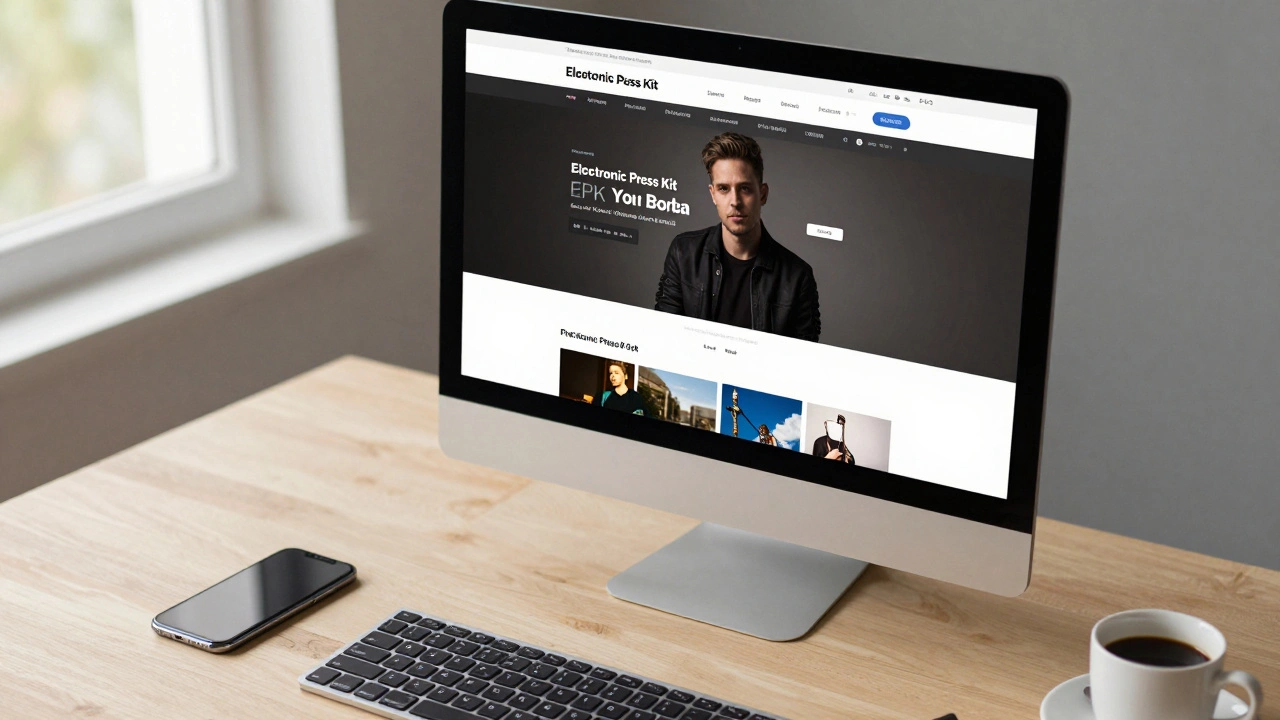
Before you hit send, you need to ensure your kit is a tool, not a portfolio. A EPK is a curated collection of promotional materials used by artists to provide a snapshot of their brand, achievements, and music to industry stakeholders. If you're forcing a promoter to click through five different folders to find your high-res headshot, they'll just move on to the next artist.
A high-converting kit should include these specific elements:
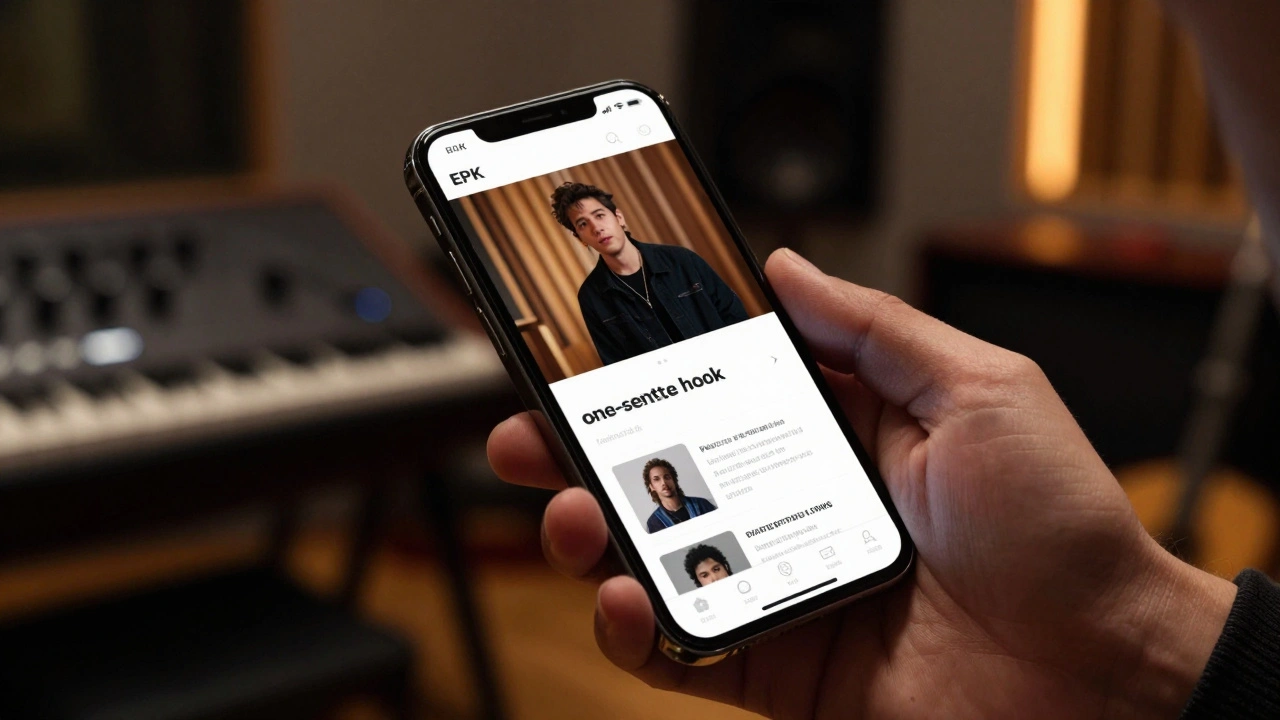
- The "One-Sentence Hook": A punchy description of your sound that doesn't use words like "unique" or "experimental." Instead of "unique sound," try "90s grunge mixed with modern synth-pop."
- Featured Tracks: Don't give them your whole album. Give them the three strongest songs. Use an embedded player so they don't have to leave the page.
- High-Resolution Imagery: Provide both a vertical and horizontal shot. Make sure there is a Press Photo that leaves room for text-magazines love this because it makes their layout designer's life easier.
- The Bio: Write a short version (one paragraph) and a long version. The short one is for social media and quick intros; the long one is for deep-dive features.
- Social Proof: This is where you list your wins. Mention that you opened for a known act, hit 100k streams on a specific track, or got a shoutout from a respected tastemaker.
| Asset Type | Format/Requirement | Purpose |
|---|---|---|
| Music | Streaming Link (SoundCloud/Spotify) | Immediate listening without downloads |
| Photos | 300 DPI / JPG or PNG | Print-ready quality for magazines |
| Bio | Editable Text (not a PDF) | Allows journalists to copy/paste quotes |
| Video | YouTube/Vimeo Embed | Proof of live performance ability |
Identifying your targets: Who are you pitching?
Sending the same EPK to a booking agent and a music blogger is a rookie mistake. They care about completely different things. You need to segment your Target Audience based on what they actually gain from working with you.
Booking Agents and Promoters: They care about money and crowds. They want to know if you can sell tickets in their city. When pitching them, emphasize your live draw, your previous venue history, and any data showing your local popularity. Your pitch should answer: "Will this artist fill the room on a Tuesday night?"
Music Journalists and Bloggers: They care about a story. A great song isn't always enough; they need a hook. Are you a classically trained cellist playing death metal? Did you record the album in a haunted basement? Give them a narrative angle that makes their article interesting to read. Your pitch should answer: "Why is this artist relevant right now?"
A&R Reps and Label Managers: They care about growth and brandability. They are looking for a trajectory. They want to see that you are already building a community and that you have a clear vision for your image. Your pitch should answer: "Is this artist a scalable investment?"

The anatomy of a pitch email that gets opened
The email is the wrapper for your EPK. If the wrapper looks like spam, the gift inside doesn't matter. Most artists make the mistake of writing a novel in the body of the email. Professionals don't read novels; they scan for value.
Start with a subject line that is specific. "Demo Submission" is a death sentence. Instead, use something like "Artist Submission: [Your Name] - [Your Genre] - [Specific Goal, e.g., Summer Fest Slot]." This tells the recipient exactly what the email is about before they even click.
The body should follow a simple four-part structure:
- The Personal Connection: Mention a specific show they booked or an article they wrote recently. "I loved your coverage of the XYZ festival last month" proves you aren't just blasting a list of 500 people.
- The Value Proposition: Tell them exactly why you are contacting them *now*. "I'm releasing a new EP in June and I think my sound would fit perfectly with your focus on indie-folk."
- The Low-Friction Call to Action: Instead of asking for a meeting or a contract, ask for a listen. "I've attached my EPK below with the lead single. I'd love to know if this fits your current roster."
- The Link: Place your EPK Link clearly on its own line. Do not use link shorteners like Bitly, as some corporate spam filters flag them. Use a clean domain or a professional platform link.
Avoiding common distribution pitfalls
There is a thin line between being persistent and being a nuisance. The biggest mistake artists make is the "Check-in Loop." This is when you send an email every three days asking if they've heard your music. This doesn't show passion; it shows a lack of professional boundaries.
One of the most common technical errors is the PDF Trap. While a PDF looks pretty, it is a nightmare for journalists. If they want to quote your bio, they have to copy and paste from a PDF, which often messes up the formatting. Always provide your bio as editable text on a webpage or in the email body.
Another pitfall is the "Everything Bagel" approach-including every single song you've ever written. This signals that you don't know what your best work is. If you can't curate your own music, you can't expect a professional to do it for you. Be ruthless with your selection. Three perfect songs are infinitely better than ten mediocre ones.
Scaling your outreach and tracking results
Once you've mastered the one-on-one pitch, you can start scaling. However, scaling doesn't mean automation. Use a CRM (Customer Relationship Management) tool or even a simple Google Sheet to track your outreach. Note who you contacted, when you contacted them, and what their reaction was.
If you notice that people are clicking your EPK link but not replying, the problem is likely the content of your kit. Maybe your lead track isn't strong enough, or your photos look amateur. If people aren't clicking the link at all, the problem is your email pitch. This data allows you to tweak your approach without guessing.
Remember that the music industry is built on Networking. The EPK is just the professional calling card. The real work happens in the follow-up conversations and the relationships you build after the first "yes." Treat every interaction as a long-term play, not a quick transaction.
Should I send my EPK as a website or a PDF?
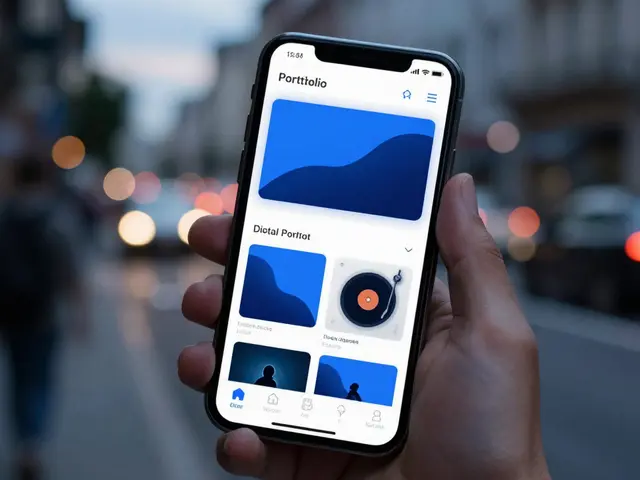
Always go with a website or a dedicated EPK hosting page. Websites allow for embedded audio and video, are easier to update in real-time, and don't take up space in the recipient's inbox. PDFs can become outdated the moment you change a tour date or add a new achievement.
How many songs should I include in my pitch?
Limit yourself to 2-3 tracks. Industry professionals have very short attention spans. If you provide too many options, you create "decision paralysis." Pick your absolute best, most representative songs that showcase your current direction.
Is it okay to CC multiple people on one pitch email?
Absolutely not. CCing a group of people tells the recipient that you are mass-mailing and that they aren't special. It is an immediate signal of amateurism. Send individual, personalized emails to every single contact.
When is the best time to follow up if I don't get a response?
Wait about 7 to 10 business days. A single, polite follow-up is standard and often appreciated because emails genuinely get lost in busy inboxes. If they don't respond to the second email, move on. Pestering them will get you blacklisted.
Do I need a professional photographer for my EPK photos?
While you don't need a world-famous photographer, you do need high-resolution images with proper lighting. Avoid selfies or cropped photos from a party. If you can't afford a pro, find a student photographer looking for portfolio work. The image is the first thing a promoter sees; if it looks cheap, they'll assume the music is too.
Next Steps for Different Artist Stages
For the Emerging Artist: Focus on building your "Social Proof" section. Since you might not have huge numbers yet, focus on consistency and local wins. Get a few quality reviews from local blogs to put in your kit.
For the Mid-Level Artist: Focus on data and ROI. When pitching to bigger festivals or labels, include a one-sheet with your streaming growth metrics and ticket sales data from your last tour.
For the Seasoned Pro: Keep your EPK lean. At this stage, your name carries the weight. Your kit should be a streamlined portal for press and logistics, focusing on current projects and high-level accolades.