The Core Logic of the Hill Method
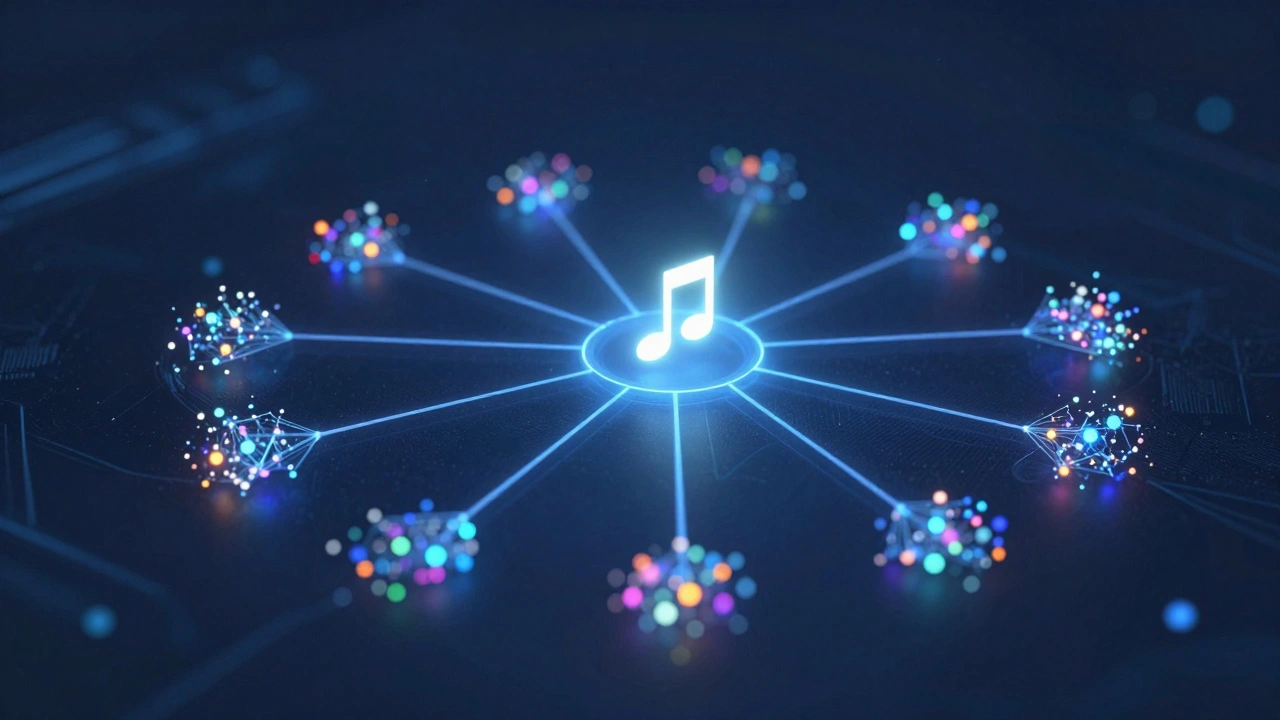
Robert Hill’s approach starts with a simple truth: broad genres are useless for growth. If you tag your music as 'Pop', you're competing with Taylor Swift and Billie Eilish. You'll never win that fight. Instead, Hill uses a three-tier system to narrow the focus while keeping the door open for new listeners. First, he identifies the Primary Anchor. This is the broad genre that provides the baseline. If the song is a synth-heavy track, the anchor might be Electronic Music. But the anchor is only there for the sake of the database. The real work happens in the secondary and tertiary layers. Secondary tags describe the specific sub-genre or style. Think of this as the 'neighborhood.' For that same electronic track, the secondary tag might be 'Synthwave' or 'Deep House'. Finally, the tertiary tags are the 'moods' or 'textures'. This is where Hill adds descriptors like 'Cinematic', 'Melancholic', or 'Industrial'. This layering allows a song to appear in a generic electronic playlist, a 80s-inspired synth playlist, and a 'dark mood' study playlist all at once.Avoiding the Tagging Trap
One of the biggest mistakes artists make is 'keyword stuffing'-adding twenty different genres to a single release in hopes of casting a wide net. Hill warns that this actually confuses the Recommendation Engine. When you tell a platform that your song is simultaneously Death Metal, Bossa Nova, and K-Pop, the algorithm doesn't think you're versatile; it thinks your data is unreliable. This often leads to the song being pushed to a generic 'global' pool where it gets ignored. To avoid this, Hill suggests a 'Rule of Three'. Pick one anchor, one sub-genre, and one-to-two mood descriptors. If a track truly bridges two worlds, he recommends creating a separate 'focused' version of the metadata for different platforms or marketing campaigns rather than blending them into a messy soup.
Mapping Your Music Hierarchy
To implement this, you need a concrete map of where your music sits in the wider landscape. Start by looking at your influences. If you're producing a track that sounds like a mix of 70s funk and modern glitch, don't just guess. Look at the Spotify or Apple Music categories for the artists you admire.| Layer | Purpose | Example A (Chill) | Example B (High Energy) |
|---|---|---|---|
| Primary Anchor | Database Categorization | Lo-Fi | Techno |
| Secondary Style | Niche Identification | Jazzhop | Industrial Techno |
| Tertiary Mood | Algorithmic Trigger | Rainy Day / Study | Warehouse / Dark |
Optimizing for Streaming Algorithms
Algorithms aren't humans; they are pattern recognition machines. They look for clusters. When you use the Hill method, you are essentially creating a 'semantic cluster' around your music. By consistently using a specific set of tags across an EP or album, you tell the platform that your artist profile has a defined identity. For instance, if every release in your catalog uses the tags 'Ambient', 'Drone', and 'Atmospheric', the algorithm begins to associate your artist entity with those specific sounds. This makes it much more likely that you'll be suggested in the 'Fans Also Like' section of other ambient artists. If you switch genres every single track, you reset that association, and the algorithm has to start from scratch every time you drop a new song.
Practical Workflow for New Releases
So, how do you actually apply this before you hit 'upload' on your distributor? Don't wing it. Create a metadata spreadsheet. Column A is the track name, Column B is the anchor, Column C is the style, and Column D is the mood. 1. Listen to the track in the context of other artists. Who would be the 'perfect' neighbor for this song on a playlist? 2. Identify the 3-5 most common tags those artists share. 3. Select the one that most accurately describes your sound as the Secondary Style. 4. Determine the emotional response the song triggers-this becomes your Tertiary Mood. 5. Verify that these tags don't contradict each other. (e.g., don't pair 'Happy' and 'Depressing' unless it's a very specific stylistic choice). This methodical approach removes the guesswork. Instead of hoping the algorithm 'finds' your audience, you are providing the exact coordinates of where that audience lives.The Long-Term Impact of Precise Tagging
Over time, this strategy pays dividends in the form of organic growth. When your metadata is clean and targeted, your 'User Acquisition Cost'-if you're running ads-drops significantly. Why? Because you're targeting people who actually want your specific sound, not just anyone who likes 'Music'. Furthermore, this approach helps with Music Supervision. Sync agents looking for music for film or TV rarely search for 'Rock'. They search for 'High-energy, gritty, distorted guitar for a car chase'. By integrating these descriptors into your classification strategy, you make your music searchable for the people who actually hold the checks.Will using too many specific tags hide my music from general searches?
Not at all. Because you still include a Primary Anchor (like 'Pop' or 'Rock'), you remain visible in broad searches. The specific tags simply act as filters that help the algorithm place you in more relevant, smaller niches where you have a higher chance of actually being played and liked.
What should I do if my song fits into two completely different genres?
Robert Hill suggests picking the dominant one as your secondary tag and using the other as a tertiary mood or style descriptor. If the song is truly a 50/50 split, it's often better to lean into the 'fusion' aspect (e.g., using a tag like 'Electro-Swing') rather than listing two unrelated genres, which can confuse the recommendation engine.
Do different streaming platforms require different tags?
While the core genres are similar, the way algorithms interpret them varies. However, sticking to a consistent hierarchy across all platforms ensures your brand identity remains stable. The most important thing is consistency; if you're 'Dark Ambient' on Spotify, don't be 'Chillhop' on Apple Music.
How often should I update my genre tags for old releases?
If you notice a track is getting traction in a specific playlist that doesn't match your tags, that's a signal from the audience. You can update your metadata through your distributor to align with how the world actually perceives your music. This is a great way to 'pivot' your sound based on real data.
Can I use mood tags like 'Sad' or 'Energetic' as primary genres?
No. Moods are tertiary. Using 'Sad' as a primary genre is too vague for a database. You need the anchor first (e.g., 'Piano Solo') and then the mood ('Melancholic'). This gives the algorithm both the technical category and the emotional context.

Jamie Read
I craft compelling narratives as a freelance journalist, exploring the intersection of technology and human behavior. My work appears in regional publications and niche online platforms. I spend my evenings refining stories that challenge conventional thinking and spark quiet reflection.