Most musicians spend hours writing songs, practicing chords, and perfecting their vocals-but when it comes to social media, they freeze. Why? Because they’re trying to post everything at once. No strategy. No plan. Just random clips of rehearsals, studio outtakes, and blurry stage shots. It’s exhausting. And it doesn’t work.
The truth is, you don’t need to post every day. You need to post the right things, consistently. That’s where content pillars come in. For musicians, four pillars cover 90% of what your audience actually wants to see: Reels, Stories, Lives, and Posts.
Reels: Show Your Sound, Not Just Your Smile
Instagram Reels aren’t just for dances and trending audio. They’re your shortest path to new fans. Think of them as 30-second radio ads you control. The best musician Reels don’t start with a smile-they start with a sound.
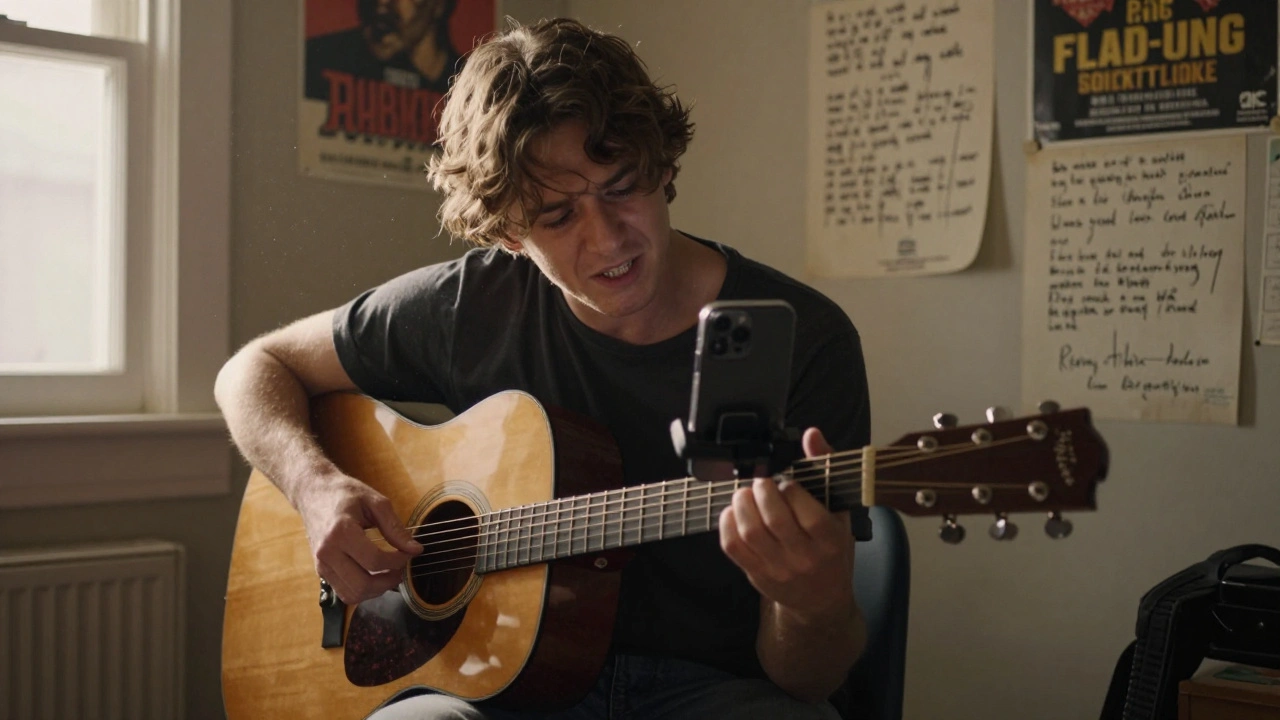
Try this: Open your phone, hit record, and play the first 15 seconds of your new song. No edits. No filters. Just you, your instrument, and the raw energy of the riff. Then cut to a quick shot of your hands on the fretboard or keys. Add a caption: "New single drops Friday. You heard it here first."
That’s it. No need for fancy transitions. No need to lip-sync to someone else’s track. Your music is the star. Reels that show your process-how you write, how you tune, how you nail a take-get 3x more saves than polished performance clips. Saves mean people are coming back. That’s how algorithms reward realness.
Pro tip: Use the original audio from your Reel as the track for your next post. Instagram prioritizes content that uses its own audio. It’s a quiet hack that keeps your music alive in feeds longer.
Stories: The Behind-the-Scenes Diary
Stories are your daily journal. They’re not meant to go viral. They’re meant to feel personal. When someone follows you, they’re not just following a musician-they’re following a person. Stories give them a front-row seat to your life.
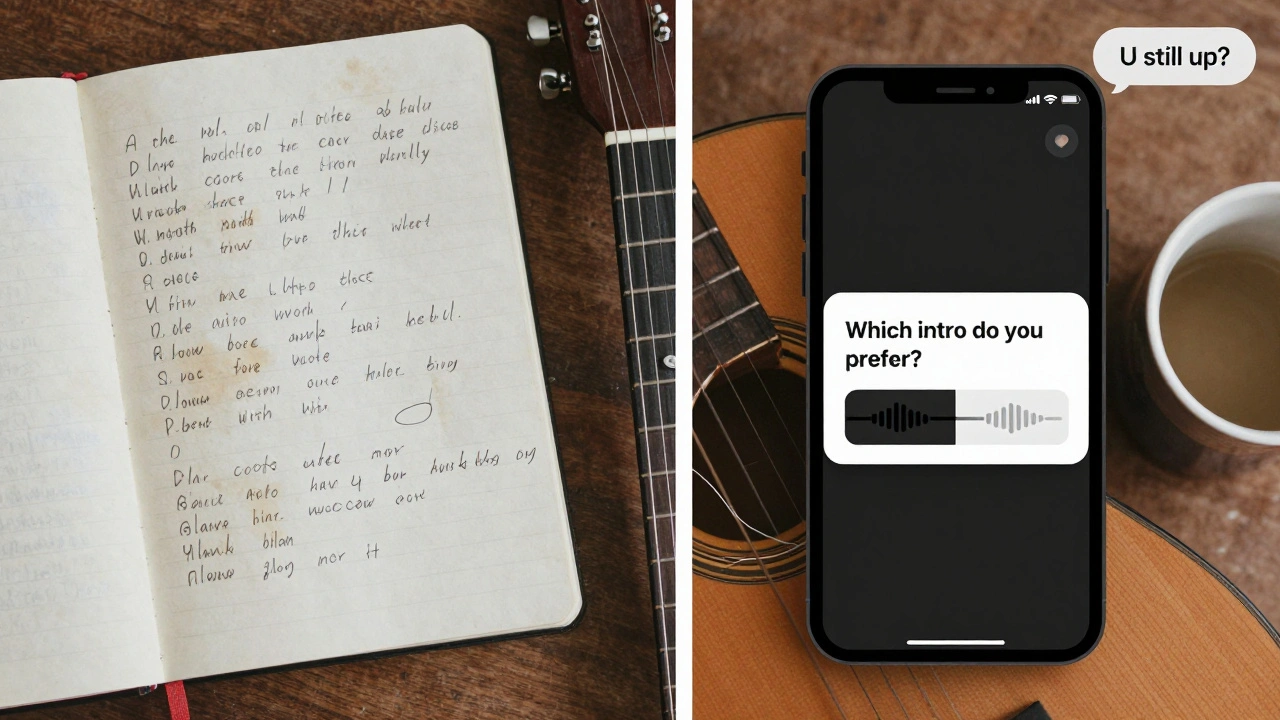
Use Stories to show the messy stuff: the broken string mid-rehearsal, the coffee stain on your lyric notebook, the 3 a.m. text exchange with your drummer about a drum fill that just won’t click. These aren’t failures. They’re proof you’re real.
Try these Story formats:
- "Day in the Life": 5 quick clips from your morning routine to your last rehearsal.
- "Fan Q&A": Use the question sticker. Answer one question a day. Even if it’s "Do you ever get stage fright?"-yes, you do. Say it.
- "Polls & Sliders": "Which intro do you prefer?" with two audio snippets. People love to vote. It keeps them engaged.
Stories disappear after 24 hours, but their impact lasts. They build trust. And trust turns listeners into fans. And fans? They show up to shows. They buy merch. They tell their friends.
Lives: The Live Connection
Live streams aren’t about production value. They’re about presence. You don’t need a studio. You don’t need lights. You just need to be there, in real time.
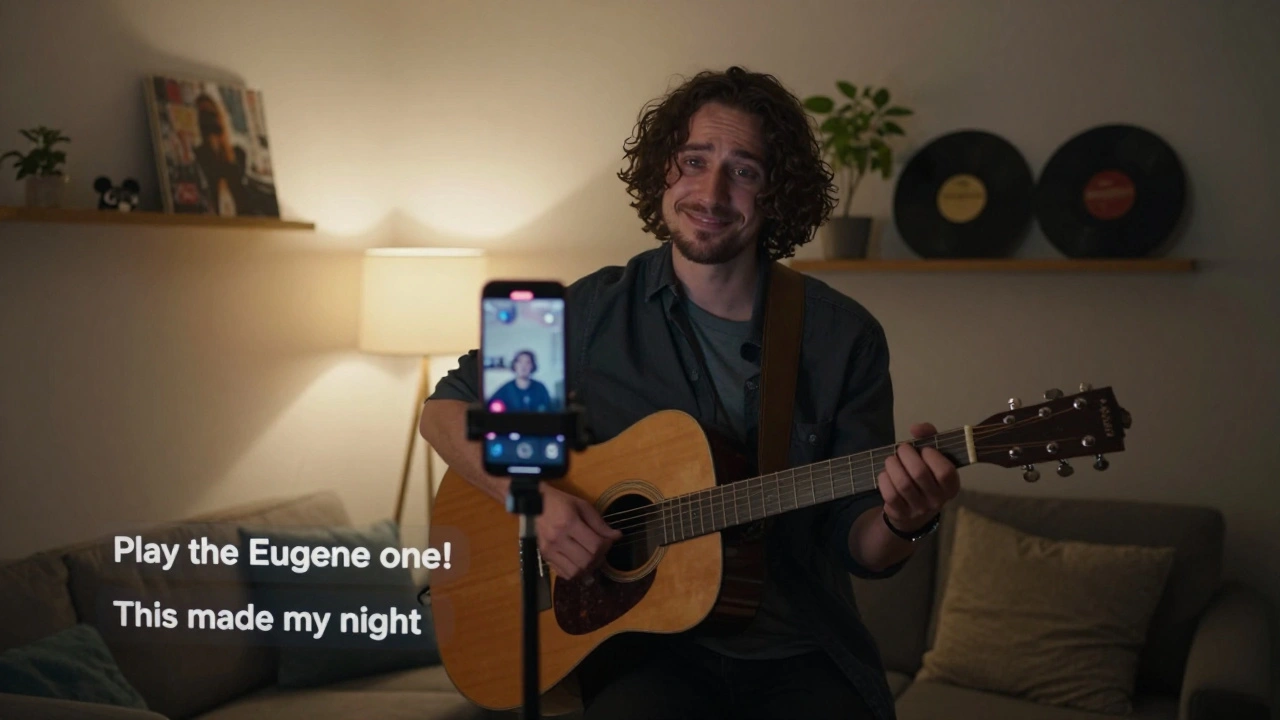
The most powerful Live sessions happen when you’re not performing. They happen when you’re talking. When you’re answering questions. When you’re playing a song you’ve never recorded and saying, "This one’s still rough, but I wanted you to hear it."
Try this: Every other week, go Live for 15 minutes. No agenda. Just say, "Hey, I’m here. What do you want to hear?" Let people type. Play what they ask for. Even if it’s a cover. Even if it’s a song you haven’t played in months.
Why does this work? Because live interaction creates a sense of ownership. When someone asks for a song and you play it? They feel like they helped create the moment. That’s loyalty.
And here’s the bonus: Instagram saves Lives as Reels automatically. So one 15-minute session gives you two pieces of content. No extra work.
Posts: The Anchor in Your Feed
Posts are your portfolio. They’re the things people scroll back to. They’re the images and captions that say, "This is who I am as an artist."
Don’t treat posts like an afterthought. Every post should serve one of three roles:
- Announcement: New single, tour date, merch drop. Keep it clean. One image. One line of text. "Out Friday. Link in bio."
- Artwork: The cover of your album, a photo of your studio, a handwritten lyric. Use high contrast. Make it look like art. People save these.
- Storytelling: A longer caption about the song’s inspiration. Where you wrote it. Who you were when you wrote it. This is where you connect emotionally.
Example: Post a photo of your old guitar with the caption: "This thing’s been with me since I was 16. It’s got three cracks, a missing tuner, and a sticker from a show in Eugene I’ll never forget. I wrote my first real song on it. It’s not perfect. But it’s mine."
That’s not a post. That’s a memory. And memories stick.
How to Build Your Weekly Plan
Here’s what a simple, sustainable content week looks like for a musician:
- Monday: Post (announcement or artwork)
- Tuesday: Reel (raw snippet of new song)
- Wednesday: Story (poll or Q&A)
- Thursday: Live (15-minute session)
- Friday: Reel (behind-the-scenes of recording)
- Saturday: Story (fan shoutout or tour update)
- Sunday: Rest. Or post a throwback if you feel like it.
You’re not posting for the algorithm. You’re posting for the people who show up. The ones who comment "I heard this on the way to work" or "This made my Tuesday better."
That’s your audience. And they’re waiting.
What Not to Do
Don’t post a 2-minute video of your full set and call it a day. No one watches that. Not even your mom.
Don’t copy other musicians’ trends unless they fit your sound. If you play ambient folk, don’t try to be a viral dance act. It’ll feel fake. And people smell fake.
Don’t wait for perfect lighting, perfect gear, perfect timing. You’ll wait forever. Start with what you have. A phone. A room. A song.
Final Thought
Social media isn’t a performance. It’s a conversation. Reels catch attention. Stories build connection. Lives create loyalty. Posts leave a mark.
You don’t need to be everywhere. Just be real. And be consistent.
The right people will find you. Not because you’re loud. But because you’re you.
How often should musicians post on social media?
Musicians don’t need to post every day. Consistency matters more than frequency. Aim for 3-4 high-quality posts per week using the four pillars: one post, two Reels, one Live, and daily Stories. This keeps your audience engaged without burning you out.
What type of Reels get the most engagement for musicians?
Reels that show raw, unedited moments-like a first take of a new song, a quick tuning tip, or a snippet of a live rehearsal-get the most saves and shares. People connect with authenticity, not polish. Using your own original audio also boosts reach because Instagram favors native sound.
Do I need to go live every week?
No, but going live every other week builds strong loyalty. Even a 10-minute session where you answer fan questions or play an unreleased song creates a personal connection that static posts can’t match. The key is to be present, not perfect.
Should I post lyrics on Instagram?
Yes-especially as a static post with a clean image of handwritten lyrics or a simple graphic. Lyrics spark emotional responses. Pair them with a caption about what inspired the song. People save these. They’re the kind of content fans revisit when they need comfort or motivation.
Can I use Stories to promote my upcoming show?
Absolutely. Use the countdown sticker, tag your venue, and share short clips from rehearsals. Add a poll: "What song should I open with?" That gets people involved. Stories are perfect for last-minute updates, ticket links, and creating urgency without being pushy.