Bandcamp isn’t just another music streaming site. It’s a place where artists keep 85% of every sale, fans buy music they actually love, and the whole system feels human. That’s because Robert Hill built it not to compete with Spotify or Apple Music, but to fix what those platforms broke: the connection between musicians and their listeners.
How Bandcamp Started
In 2008, Robert Hill was a software engineer who loved vinyl and cassettes. He noticed that independent artists were struggling to sell music online. Platforms like iTunes took 30% of every sale, and streaming services paid pennies per play. Hill didn’t want to build another middleman. He wanted to build a marketplace where artists could upload their music, set their own prices, and talk directly to fans.
He launched Bandcamp with a simple idea: let fans pay what they want. Not just for albums, but for downloads, merch, even concert tickets. No algorithms. No ads. No playlists controlled by corporate playlists. Just artists and people who care about their work.
The Model That Works
Bandcamp’s revenue split is simple: 85% to the artist, 15% to Bandcamp. That’s it. No tiered rates. No hidden fees. If you sell a $10 digital album, you get $8.50. If you sell a $25 vinyl record, you get $21.25. Compare that to Spotify, where artists make between $0.003 and $0.005 per stream. One million streams on Spotify might earn you $3,000. On Bandcamp, 1,000 sales at $10 each? $8,500.
Artists don’t need labels to use Bandcamp. No gatekeepers. No approval process. Just upload your music, design a cover, set a price, and share the link. Thousands of musicians - from bedroom producers to touring bands - use it as their primary income source.
Why Fans Keep Coming Back
Fans aren’t just buying music on Bandcamp. They’re buying into a relationship. When you purchase from an artist, you often get:
- High-quality downloads in FLAC, WAV, or MP3
- Exclusive tracks not available anywhere else
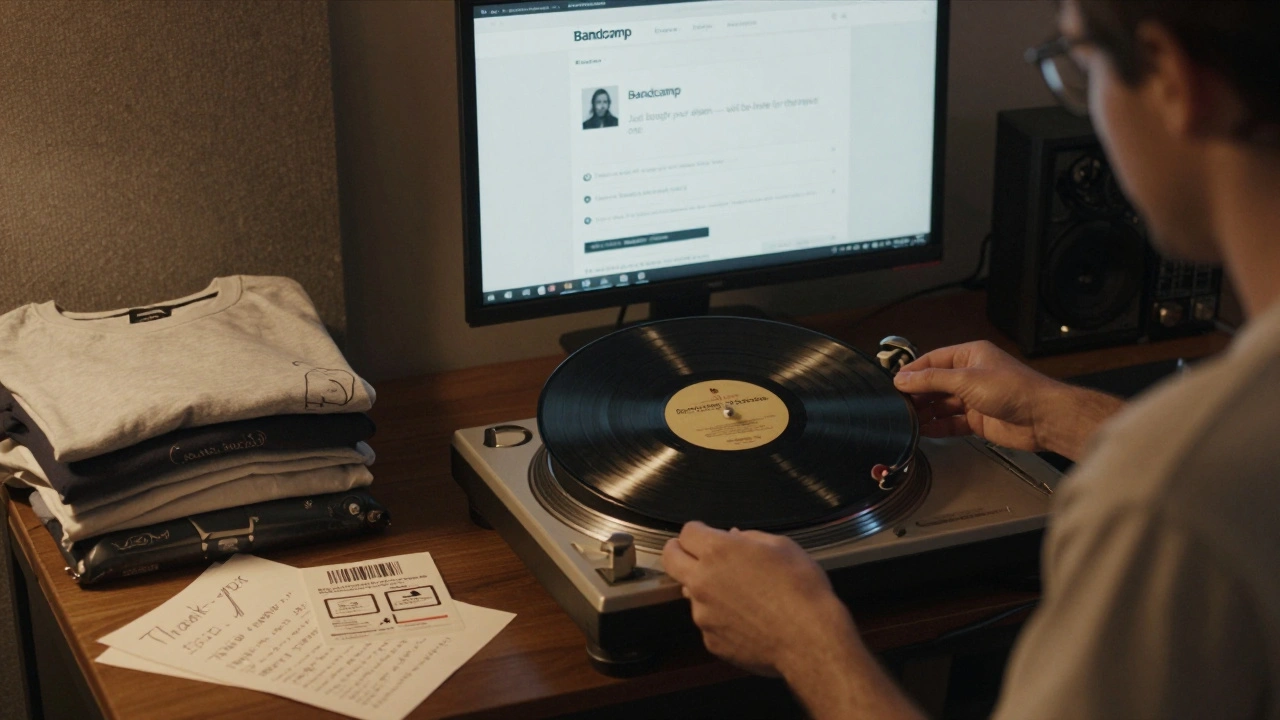
- Handwritten thank-you notes or digital stickers
- Early access to new releases
- Direct messages from the artist
There’s no algorithm pushing you to listen to the same 10 pop songs on loop. Instead, Bandcamp’s discovery tools are built around community. You follow artists you like. You join their mailing lists. You see their live streams. You comment on their posts. It feels like a record store run by friends.
Bandcamp Friday
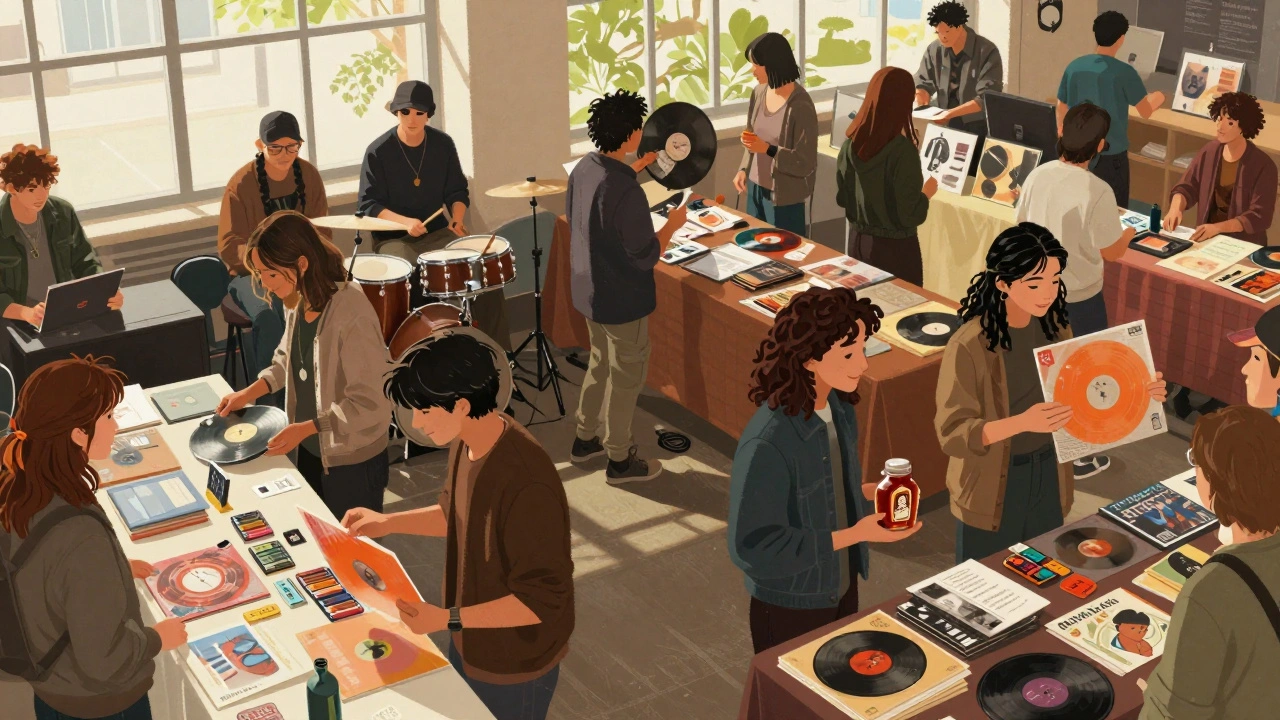
One of the most powerful things Bandcamp does is Bandcamp Friday. Every first Friday of the month, Bandcamp waives its 15% cut. That means artists keep 100% of sales. In 2020, during the pandemic, Bandcamp Friday raised over $50 million for artists in just one year. In 2024, it hit $68 million. That’s not charity. That’s a system working the way it should.
Artists post updates. Fans respond. A drummer in Nashville sells 300 vinyl copies. A producer in Tokyo drops a limited cassette. A folk singer in Portland gives away a free download to everyone who buys a T-shirt. These aren’t marketing gimmicks. They’re real exchanges.
What Bandcamp Doesn’t Do
Bandcamp doesn’t have playlists curated by AI. It doesn’t push you toward trending songs. It doesn’t track your listening habits to sell ads. It doesn’t make you pay a monthly fee to hear music. You don’t need an account to listen to previews. You don’t need to sign up to download a free track.
It’s not designed for passive listening. It’s built for active support. You have to choose to buy. You have to choose to follow. You have to choose to engage. That’s why Bandcamp’s user base is small compared to Spotify - but far more loyal.
Real Stories, Real Impact
Take Maria Lopez, a singer-songwriter from Oakland. She released her debut album on Bandcamp in 2021. She didn’t have a label. She didn’t have a PR team. She just posted the album, shared it on Instagram, and emailed her friends. Within six months, she sold 2,400 digital albums and 350 vinyl records. She made $21,000. She quit her day job.
Or consider The Midnight Hymns, a folk duo from rural Maine. They started uploading live recordings in 2019. By 2023, they were touring full-time, funded entirely by Bandcamp sales. Their fans send them handwritten letters. One fan mailed them a jar of maple syrup every month for a year. They still keep it on their kitchen counter.
These aren’t outliers. They’re the norm on Bandcamp.
Bandcamp vs. the Big Players
Here’s how Bandcamp stacks up against the giants:
| Feature | Bandcamp | Spotify | Apple Music |
|---|---|---|---|
| Artist payout per sale | 85% | N/A (streaming only) | N/A (streaming only) |
| Artist payout per stream | $0 (no streaming) | $0.003-$0.005 | $0.004-$0.007 |
| Direct fan communication | Yes | No | No |
| Merch sales integrated | Yes | No | No |
| Free downloads | Yes | No | No |
| Ownership of music | Yes - you own the file | No - you rent access | No - you rent access |
Bandcamp doesn’t want to be the biggest. It wants to be the most meaningful.
What Makes It Different
Most music platforms treat artists as content providers. Bandcamp treats them as creators. It doesn’t hide their names behind data points. It shows their faces. It lets them write stories. It lets them name their prices. It doesn’t force them into genres or playlists. A jazz musician can sell a 20-minute ambient track next to a punk band’s 90-second scream.
Robert Hill didn’t build Bandcamp to make money. He built it because he believed music should be a conversation, not a commodity. And that belief still drives every decision.
Is Bandcamp Right for You?
If you’re an artist who:
- Wants to keep more of your earnings
- Wants to talk to your fans
- Wants to sell physical goods with your music
- Wants to control your brand and pricing
- Doesn’t want to chase algorithms
Then Bandcamp isn’t just an option. It’s the best one.
If you’re a fan who:
- Wants to support music you love
- Wants to own your music
- Wants to discover artists outside the mainstream
- Wants to feel like you’re part of something real
Then Bandcamp isn’t just a store. It’s a community.
Is Bandcamp free to use for artists?
Yes, artists can create a free Bandcamp account and upload music without paying anything upfront. Bandcamp only takes a cut when a sale is made - 15% of the sale price. There are no monthly fees, no subscription costs, and no hidden charges.
Can you sell vinyl and merch on Bandcamp?
Yes. Bandcamp lets artists sell physical items like vinyl records, CDs, cassettes, T-shirts, posters, and even handmade goods. You can list them alongside your music. Bandcamp handles shipping labels, tracking, and payment processing. Artists keep 85% of the profit from physical sales too.
Does Bandcamp have streaming?
Bandcamp does allow streaming - but only as a preview. You can listen to full albums before buying, but there’s no unlimited streaming library like Spotify. The platform is built for purchases, not passive listening. This is intentional - it keeps the focus on supporting artists directly.
Why don’t more artists use Bandcamp?
Many artists still rely on streaming platforms because they’re easier to discover - but that’s changing. Bandcamp’s discovery tools are improving, and its community is growing. Artists who build relationships with fans - not algorithms - find Bandcamp more sustainable long-term. It’s not about volume. It’s about value.
Is Bandcamp only for indie artists?
No. While Bandcamp is popular with independent artists, major labels and established acts also use it. Artists like Fiona Apple, Bon Iver, and The National have released exclusive tracks, demos, and live recordings on Bandcamp. It’s not about size - it’s about control. Any artist who wants to own their sales and connect directly with fans can use it.