Most musicians spend weeks crafting their EPK-polishing photos, selecting the best press quotes, fine-tuning the bio, and linking to streaming stats. But once it’s live, what happens next? Do journalists actually click it? Did that one blog post you sent it to even open it? If you can’t answer those questions, you’re flying blind.
Tracking your EPK isn’t about vanity metrics. It’s about knowing who’s interested, what parts they care about, and where your effort is actually paying off. The goal? Stop guessing and start improving.
Why EPK Tracking Matters More Than You Think
An EPK isn’t just a digital press kit. It’s your first impression to music journalists, bloggers, playlist curators, and booking agents. If they don’t engage with it, they won’t write about you. They won’t book you. They won’t even remember your name.
But here’s the catch: most EPKs are static PDFs or simple web pages with no way to measure engagement. That’s like handing out flyers at a concert and never knowing how many people took one.
When you track your EPK, you start seeing patterns:
- Which section gets the most clicks-the bio, the press clips, or the video?
- Who’s accessing it? Local press? International blogs?
- Are you getting repeat visits from the same journalist?
- Did your latest single release spike interest?
These aren’t just nice-to-knows. They tell you where to double down. If press clips are getting 80% of the traffic, maybe you should add more. If nobody’s watching your live session video, maybe it’s too long-or poorly optimized.
How to Track Your EPK: Simple, Real-World Methods
You don’t need a marketing team or a $500/month tool. Here’s how real independent artists are tracking EPK engagement right now.
1. Use a Custom URL Shortener with Analytics
Instead of sharing your full EPK link (like https://yourname.com/epk), use a service like Bitly, Rebrandly, or TinyURL that lets you track clicks.
Set up a unique link for each journalist or outlet you contact:
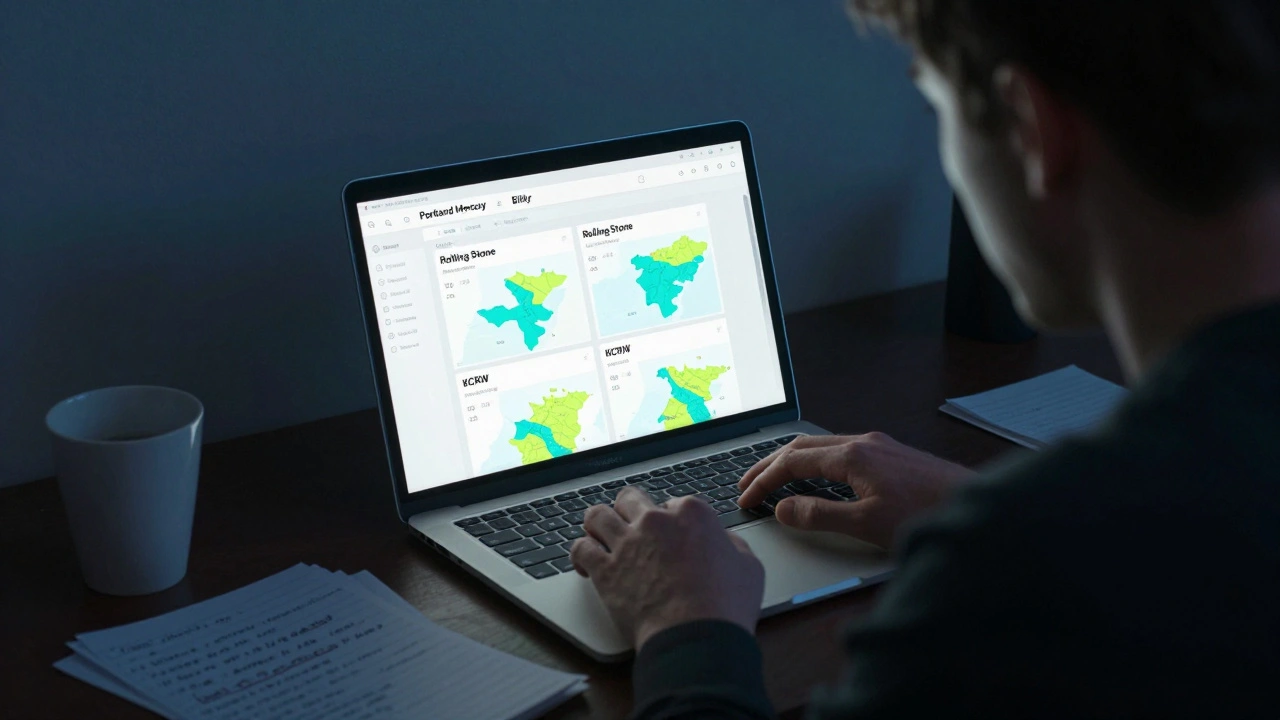
bit.ly/epk-jane-doefor the Portland Mercurybit.ly/epk-rollingstonefor the Rolling Stone editor
Now you know exactly who clicked. If Jane Doe from the Portland Mercury clicked five times over two weeks, that’s a hot lead. If Rolling Stone never clicked, maybe your pitch didn’t land-or they’re just not interested.
Pro tip: Add UTM parameters to your links if you’re using Google Analytics. Example: ?utm_source=press_pitch&utm_medium=email&utm_campaign=epk_2026. This tells you exactly where traffic came from.
2. Embed a Clickable Heatmap
Tools like Hotjar or Microsoft Clarity (both free) let you see where people click, scroll, and hover on your EPK page.
Imagine this: You spent hours designing a beautiful press section with 12 articles. But the heatmap shows nobody scrolled past the third one. That’s a problem.
Maybe the headlines are too long. Maybe the articles are outdated. Or maybe they’re buried under too much text. The data tells you what to fix.
3. Track Video Views with YouTube or Vimeo
If your EPK includes a live performance video or interview, host it on YouTube or Vimeo-not just as an embedded player. Both platforms give you detailed analytics.
Check these metrics:
- How many people watched the full video?
- Where did they drop off? (If 70% quit at 1:15, the intro’s too slow.)
- Which countries are watching?
One Portland-based indie band noticed 40% of their video views came from Germany. They didn’t know they had a following there. They reached out to a German music blog, got featured, and booked three shows in Berlin within a month.
4. Monitor Email Opens with Mailchimp or Beehiiv
When you email your EPK, use an email service that tracks opens. Mailchimp, Beehiiv, and even Gmail’s free tracking tools (via GMass) let you see who opened your email.
If you send your EPK to 20 bloggers and only 3 open it, you need to rethink your subject line. If 15 open it but none click the link, your preview text or EPK headline might be weak.
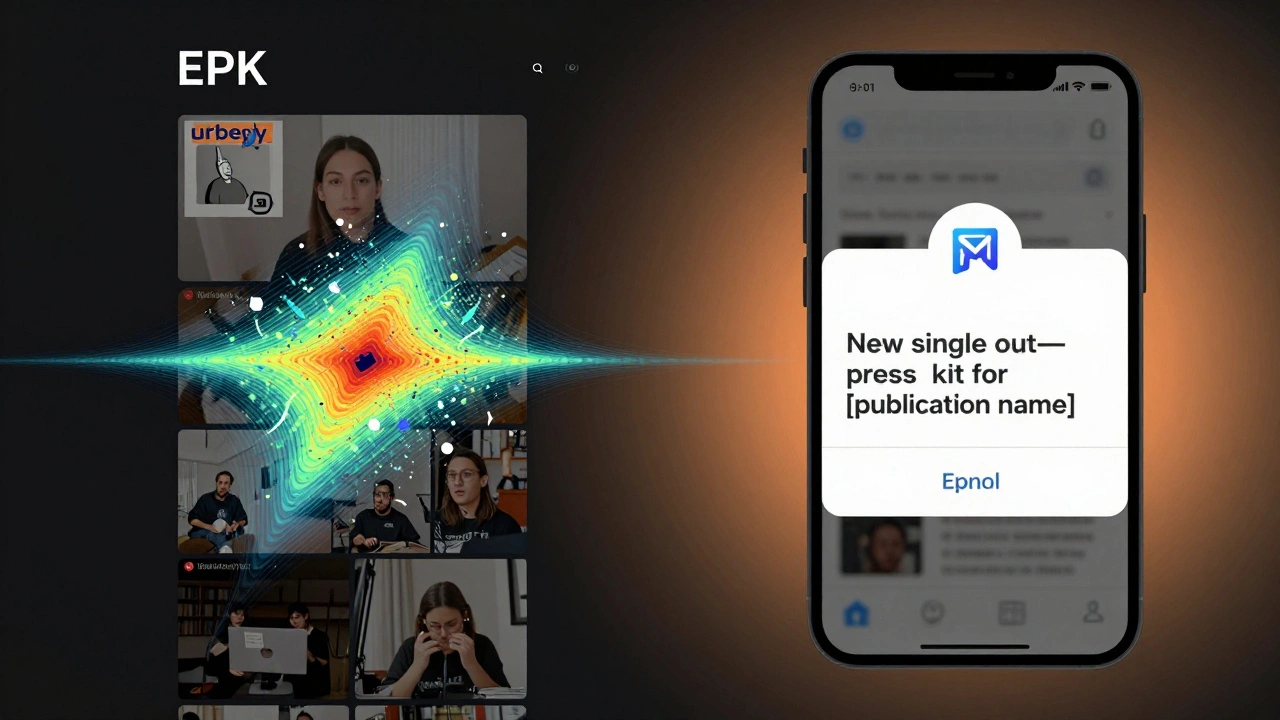
Test this: Change your subject line from “Here’s my EPK” to “New single out-press kit for [publication name]”. Open rates jump 3x.
What to Measure: The 5 Key Metrics That Actually Matter
Not all clicks are equal. Here are the five metrics you should track weekly:
- Click-through rate (CTR) - Percentage of people who opened your email and clicked the EPK link. Aim for 20%+.
- Time on page - If people spend less than 15 seconds, your EPK isn’t holding attention. Top performers average 45+ seconds.
- Repeat visits - If the same journalist visits twice, they’re seriously considering you. That’s a win.
- Device breakdown - Are most users on mobile? If so, your EPK must load fast and look great on phones.
- Geographic traffic - Where are your viewers? If you’re getting traffic from Tokyo, start pitching to Japanese outlets.
One artist in Portland tracked her EPK for six months. She noticed 60% of traffic came from California. She started targeting local indie blogs, got picked up by KCRW, and landed a slot at Outside Lands.
Common Mistakes (And How to Avoid Them)
Even with tracking, most musicians mess up. Here’s what not to do:
- Using the same link for everyone - You can’t tell who’s interested if you don’t track per person.
- Ignoring mobile - Over 70% of press people check EPKs on their phones. If it’s hard to read, they’ll close it.
- Not updating content - If your press clips are from 2021, it looks stale. Update quarterly.
- Tracking clicks but not actions - Clicking isn’t enough. Did they download your press photo? Did they watch the full video? Set up goals.
One band didn’t realize their EPK had a broken link to their Spotify page. For three months, every click went nowhere. They fixed it, and press inquiries jumped 40%.
Turn Data Into Action: What to Do Next
Here’s how to use your EPK data to get real results:
- If a journalist clicked but didn’t reply - Send a short follow-up: “Saw you checked out my EPK-wanted to make sure the video link worked.”
- If your video has low retention - Trim it. Cut the intro. Add subtitles. Test a 60-second version.
- If traffic spikes after a single release - That’s your moment. Send your EPK to 10 more outlets right away.
- If most visitors are from one city - Pitch to local radio, newspapers, and event promoters there.
Track for a month. Then ask: What did I learn? What should I change?
One musician tracked her EPK for 30 days. She found that journalists who clicked her press video were 5x more likely to write about her. So she made a new video every release. Within six months, she had features in five major blogs.
Start Small. Track One Thing.
You don’t need to track everything. Start with one thing: use Bitly for your next 5 EPK emails. See who clicks. See how many times.
That’s it. No fancy dashboards. No expensive tools. Just one link. One data point. One insight.
Next time you send your EPK, you won’t be hoping for a reply. You’ll know who’s interested-and you’ll know exactly what to do next.
Do I need a paid tool to track my EPK?
No. Free tools like Bitly, YouTube Analytics, and Mailchimp’s free plan give you all the data you need. Paid tools add features like heatmaps or automation, but they’re not required to get started. Focus on tracking clicks and opens first.
How often should I update my EPK?
Update your EPK every 3 to 6 months, or after every major release. Remove outdated press clips, add new photos, update your bio with recent achievements, and refresh your video links. A stale EPK looks unprofessional-even if you’re talented.
What’s the best way to send my EPK to journalists?
Never just paste a link in a cold email. Personalize it. Mention their recent article. Say why you think they’d like your music. Then include a custom Bitly link. Example: "I saw your piece on rising indie pop in Portland-I think you’d connect with my new single ‘Midnight Drive.’ Here’s my EPK: bit.ly/epk-[yourname]."
Can I track if someone downloads my press photos?
Yes, if your EPK page has direct links to image files (like .jpg or .png). Use Bitly or Rebrandly to shorten those links. Each download becomes a click. You’ll know which photos are most popular-use that to improve future versions.
What if no one clicks my EPK?
That usually means your pitch or your EPK headline isn’t working. Test both. Change your email subject line. Rewrite your EPK’s opening line. Try a different video thumbnail. Track which version gets more clicks. Small tweaks make a big difference.