There’s a reason vinyl records and old folk albums still sound alive decades later. When you record acoustic music the right way, you don’t just capture notes-you capture breath, wood, skin, and silence. Too many people think good acoustic recording means stacking mics, tweaking plugins, or chasing perfect levels. It doesn’t. It means listening. Really listening.
Why Acoustic Sound Can’t Be Fixed in Post
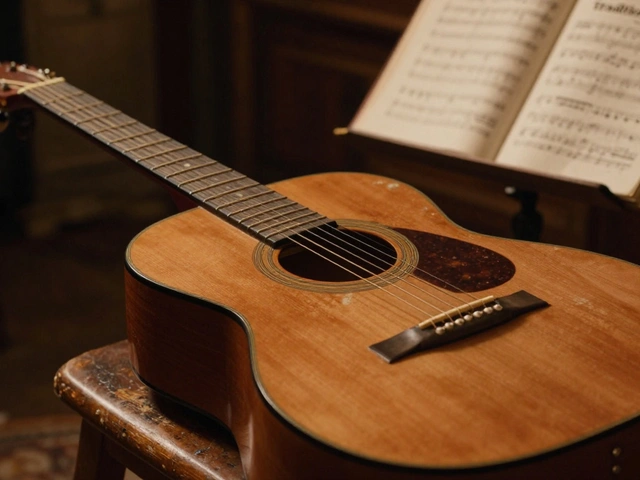
Electric instruments can be reshaped. You can change a guitar’s tone with an amp sim, fix a vocal with pitch correction, or mute a snare bleed. But an acoustic guitar? A cello? A handpan? Once you’ve recorded it with bad mic placement or in a room that echoes like a bathroom, you’re stuck. No amount of EQ or compression will bring back the natural resonance of spruce vibrating under fingers, or the way a fiddle’s bow sings across strings in a warm space.
Real acoustic sound lives in the space between the instrument and the mic. It’s not about gear-it’s about awareness. You’re not just recording a sound. You’re recording a moment.
The Room Is Your First Instrument
You can have the best microphone in the world, but if you’re recording in a room with hard walls, a bare floor, and no furniture, you’re capturing a boxy, lifeless sound. Acoustic instruments respond to their environment. They resonate. They reflect. They decay.
Try this: Play a single note on your acoustic guitar in your living room. Now walk into the bathroom and play the same note. The difference isn’t just volume-it’s character. The bathroom gives you a bright, ringing tail. The living room might give you warmth and depth. That’s the sound you’re choosing.
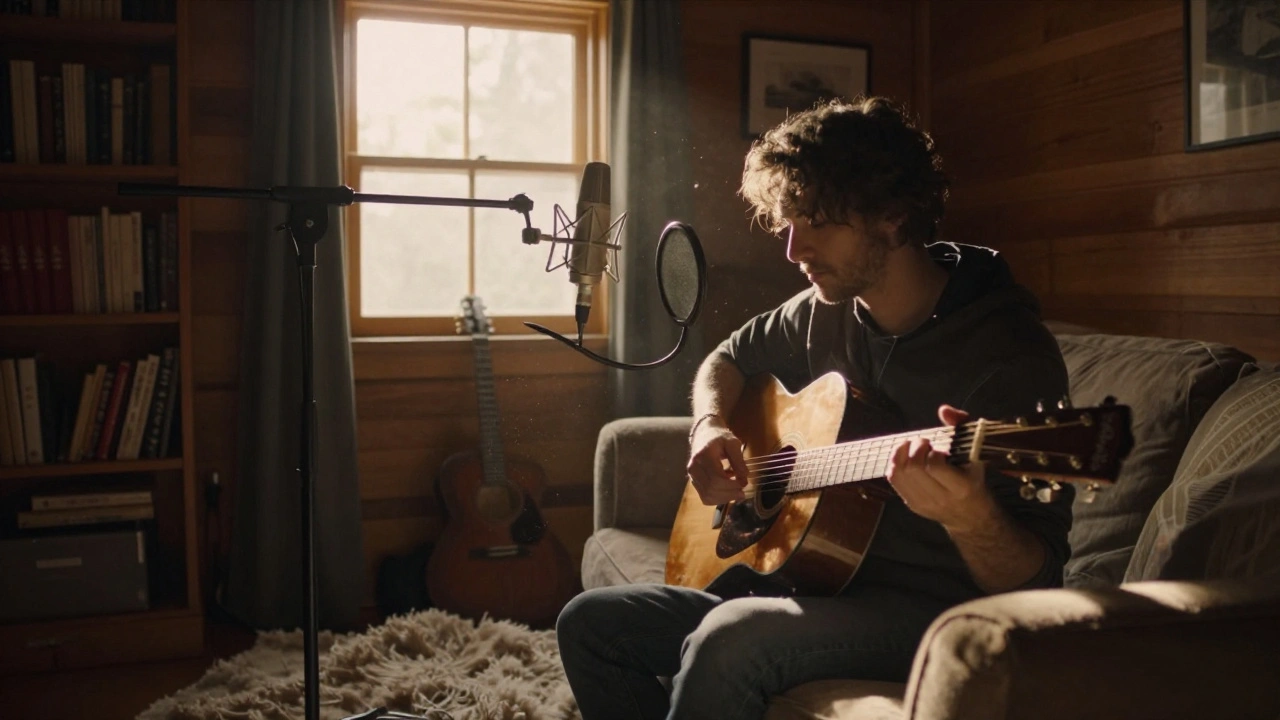
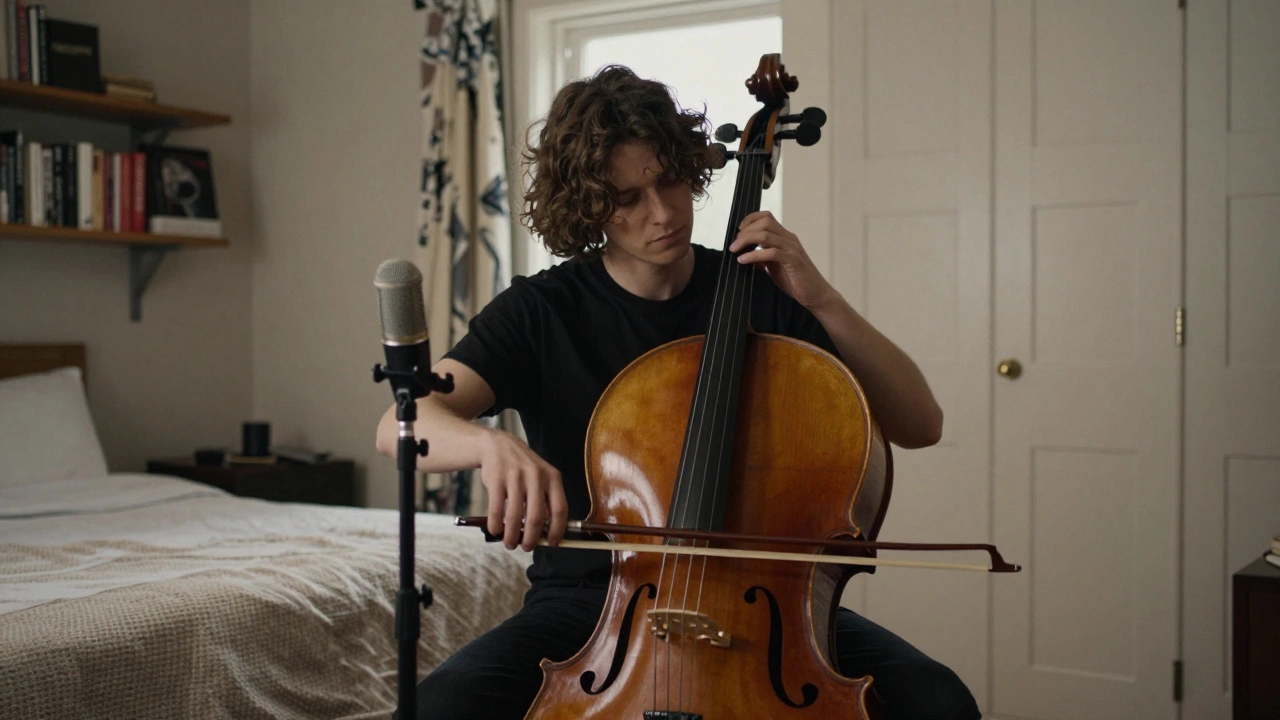
For recording, aim for a medium-sized room with some soft surfaces. A rug, curtains, bookshelves, even a couch can help tame reflections. Avoid square rooms if you can-they create standing waves that boom at certain frequencies. A corner of a bedroom with a window and a closet behind you? That’s often better than a dedicated studio with bare walls.
Mic Choice Isn’t Everything-Placement Is
People obsess over microphones. The Neumann TLM 103? The Royer R-121? The Shure SM57? All great. But none of them matter if you put them in the wrong spot.
For an acoustic guitar, start by placing a single cardioid mic about 6 to 12 inches from the 12th fret, angled slightly toward the soundhole. Not directly over it-soundholes produce boomy low-end that can overwhelm the mix. The 12th fret is where the string energy meets the body resonance. That’s the sweet spot.
Try recording the same passage with the mic at 6 inches, then 18 inches. Listen back. At 6 inches, you’ll hear more attack, more finger noise, more detail. At 18 inches, you’ll get more room tone, more air, more of the instrument’s natural voice. Neither is wrong. One might suit a folk ballad. The other might work for a lively bluegrass jam.
For violin or cello, try a small-diaphragm condenser about 12 inches above the bridge, pointed slightly down. Avoid mic-ing from the side-you’ll miss the projection. The instrument speaks forward.
Less Is More: One Mic Often Beats Two
There’s a myth that stereo recording always sounds better. Not true for acoustic music. Stereo can widen the sound, but it also introduces phase issues, uneven balance, and unnatural imaging. Most classic folk, blues, and country records from the 50s and 60s were done with one mic.
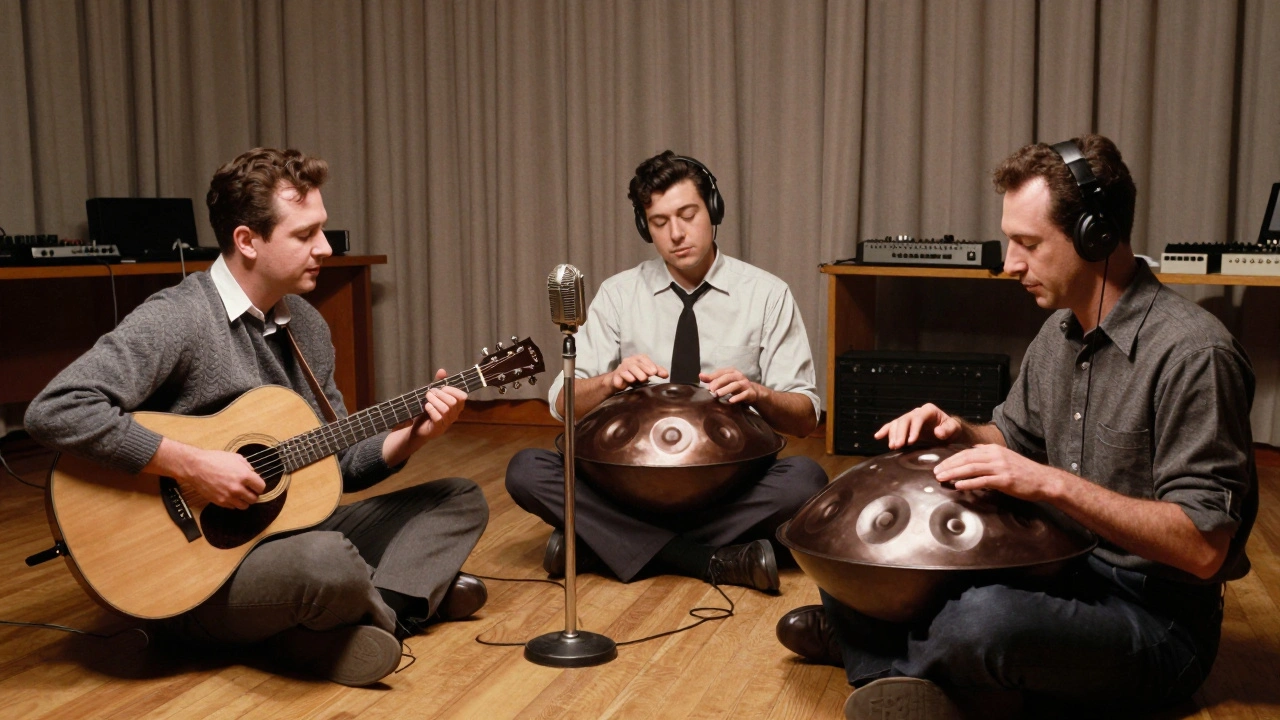
Try a single mic setup first. Record the whole ensemble-guitar, voice, hand percussion-in one take, one mic. You’ll be surprised how cohesive it sounds. If you need more separation, add a second mic later, but only if you can’t get the balance you want otherwise.
One mic forces you to think about arrangement. If the singer’s too loud, move them back. If the guitar’s too quiet, bring it closer. You’re not editing-you’re arranging in real space.
Environment Matters More Than Gear
I’ve recorded in a barn in Maine, a converted garage in Portland, and a cabin in the Cascades. The best sound? The cabin. Why? Because the wood was old. The floor was pine. The windows were single-pane. The air was still. The silence between notes had weight.
You don’t need a $10,000 studio. You need a quiet place with character. Turn off the fridge. Close the windows. Wait for the neighbor’s dog to stop barking. Record at night. Early morning. When the house is still.
Use your phone to test. Record a few claps or hums. Listen back. Does it ring? Does it sound flat? Does it have echo? If it sounds like a cave, you’ve got work to do. If it sounds like a warm room where someone once played music, you’re ready.
Performance Over Perfection
Acoustic music thrives on humanity. A slightly off-pitch note. A breath before the chorus. A thumb slipping on a string. These aren’t mistakes. They’re proof it’s real.
Too many people record 20 takes to get one “perfect” performance. Then they splice them together. The result? A lifeless track that sounds like a robot playing music.
Go for one or two takes. Record the whole thing. Don’t stop. If you mess up, keep going. The emotion in the second take is almost always better than the “perfect” first take. You can’t fake feeling. But you can capture it-if you let the moment happen.
What Gear You Actually Need
You don’t need a lot. Here’s what works:
- One good mic: A small-diaphragm condenser like the Audio-Technica AT2020 or a dynamic like the Shure SM57. Both cost under $150.
- A decent preamp: Most audio interfaces have enough. Don’t chase boutique preamps unless you’re doing serious studio work.
- One stand: A boom stand lets you move the mic precisely. No need for fancy suspension.
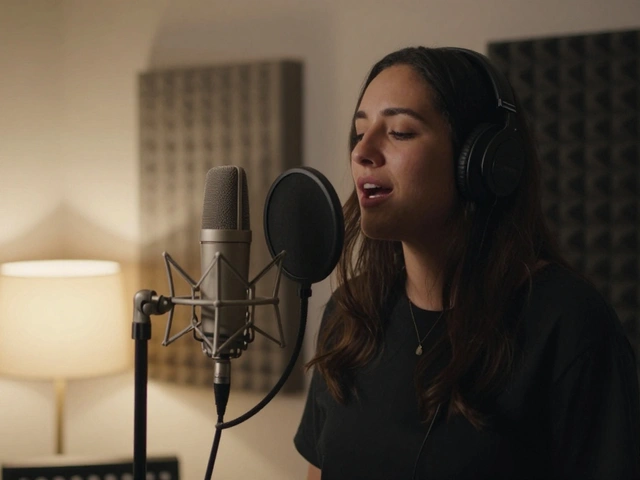
- One pair of headphones: Closed-back so you don’t bleed sound into the mic.
- One quiet room: The most important tool.
That’s it. No outboard gear. No plugins. No multitrack editing. Just you, the instrument, and the space.
Test Your Setup: The 30-Second Challenge
Before you record a full song, do this:
- Set up your mic in the spot you think is best.
- Play a simple chord progression for 30 seconds-no stops.
- Listen back on headphones, then on speakers.
- Ask: Does it sound like the instrument? Or like a recording of the instrument?
If it sounds like a recording, adjust. Move the mic. Change the room. Try a different angle. Keep doing it until it sounds like the instrument is in the room with you.
Final Thought: Sound Is Memory
When you record acoustic music, you’re not just capturing sound. You’re preserving a feeling. The way sunlight hit the strings that afternoon. The quiet before the last note. The way the room held its breath.
That’s why people still listen to old recordings. Not because they were technically flawless. But because they were real.
Don’t chase perfection. Chase presence.
Do I need an expensive microphone to record acoustic music?
No. Many classic acoustic recordings were made with budget mics. A Shure SM57 or Audio-Technica AT2020 can sound incredible if placed well. What matters more than price is where you put the mic and how the room sounds. A $50 mic in a great space will beat a $1,000 mic in a bathroom.
Can I record acoustic instruments with my phone?
Yes-for demoing, practicing, or capturing ideas. But don’t rely on it for final recordings. Phone mics are tiny and omnidirectional, so they pick up everything: HVAC, traffic, your dog barking. For serious work, use a dedicated mic and interface. But if you’re just trying to remember a melody, your phone is fine.
Should I record in stereo or mono for acoustic guitar?
Start with mono. One well-placed mic captures the instrument’s natural tone without phase issues. Stereo can sound wider, but it often makes the guitar feel distant or unnatural. Use stereo only if you’re recording two instruments together, like a duet, or if you want ambient room sound. Otherwise, mono is simpler and more authentic.
How do I reduce room noise when recording?
First, eliminate sources: turn off fans, fridges, and AC. Close windows. Tell others to stay quiet. Then, add soft materials: hang a blanket behind the mic, lay a rug on the floor, put pillows on chairs. You don’t need acoustic foam-just anything that absorbs sound. Even a closet full of clothes can work as a makeshift booth.
Is it okay to record multiple instruments at once?
Absolutely. Many traditional recordings-like old bluegrass or Celtic sessions-were done live with one mic. It creates a natural blend that’s hard to replicate in post. Just make sure the players can hear each other, and the mic is placed where it picks up everyone evenly. It’s not about isolation-it’s about connection.