
Getting new fans isn’t just about posting songs on social media. It’s about spending money wisely - and knowing exactly how much you’re spending to win each one. If you’re an independent artist, label, or music brand, your customer acquisition cost (CAC) is the most important number you’re probably ignoring. It tells you if your promo budget is working - or burning cash.
What Is Customer Acquisition Cost for Music Fans?
CAC is how much it costs you to gain one new fan who listens, follows, or buys. It’s not about likes or streams. It’s about real engagement that turns into long-term support. For musicians, that means someone who follows your Spotify, signs up for your mailing list, buys a vinyl, or attends a show.
You calculate it simply: total marketing spend divided by new fans acquired in the same period. Say you spent $2,000 on TikTok ads, Instagram influencers, and a Bandcamp promo campaign over 30 days. During that time, you gained 500 new email subscribers and 1,200 Spotify followers. That’s 1,700 new fans. Your CAC is $2,000 ÷ 1,700 = $1.18 per fan.
That sounds cheap - until you realize most fans don’t pay anything yet. If only 5% of them buy your next EP at $10, you’re losing money on every new fan you bring in. That’s the trap. Low CAC looks good, but if those fans never convert, you’re just growing a debt.
Why Most Artists Get CAC Wrong
Many musicians think CAC is just ad spend. But it’s everything. That includes:
- Cost of paid ads (TikTok, YouTube, Meta)
- Fee to influencers (even if you gave them free merch instead of cash)
- Time spent managing campaigns (your labor)
- Design and video production costs
- Platform fees (like Bandcamp’s 15% or DistroKid’s annual fee)
Let’s say you hired a freelancer to make a 60-second teaser video for $300, ran $800 in TikTok ads, and spent 20 hours of your own time. If you value your time at $20/hour, that’s another $400. Total spend: $1,500. You gained 1,000 new followers. CAC = $1.50. But if you didn’t track your time? You thought it was $1.10 - and you’re underestimating your real cost by 36%.
Most artists don’t track time. They don’t assign value to their own labor. That’s why they keep spending more and seeing no return.
How to Track Your Fans Accurately
You need to define what counts as a “fan.” Not all followers are equal. Here’s a practical breakdown:
- Low-value fan: Someone who follows you on Instagram but never opens your emails or streams your music.
- Medium-value fan: Subscribes to your mailing list or saves your Spotify playlist.
- High-value fan: Buys merch, attends shows, or streams 10+ tracks per month.
Track each group separately. Use UTM parameters on every link you share. Use a free tool like Bitly or Google Analytics to see where each fan came from. Then, assign each fan a value based on their behavior.
Example: A fan who signs up for your email list is worth $0.50 because historically, 10% of email subscribers buy your $5 digital single. A fan who attends a show is worth $25 - ticket price minus venue cut. You can now calculate CAC per channel, per fan type, and know exactly where to double down.
How to Cut Your CAC Without Losing Fans
You don’t need to spend less. You need to spend smarter.
1. Double Down on Organic Growth
Organic doesn’t mean “do nothing.” It means using free, repeatable systems. Playlists are your secret weapon. Get your song on 15 curated Spotify playlists. Each one can bring 50-200 new listeners per week. That’s 750-3,000 fans a month - for zero ad spend.
Find playlists using tools like PlaylistPush or SubmitHub. Pitch to curators who already support artists similar to you. Track which playlists deliver the most email signups. Focus on those.
2. Use Your Existing Fans to Bring New Ones
Every fan you have is a potential recruiter. Add a simple call-to-action to your email signature: “Know someone who’d love this? Forward this email.” Offer a free download or early access to your next track if they refer three friends.
One indie artist in Nashville grew her email list by 400% in three months using a referral program. She gave away a bonus track to anyone who got three friends to sign up. Cost? $0. Revenue? $1,200 in merch sales from new fans.
3. Stop Paying for Vanity Metrics
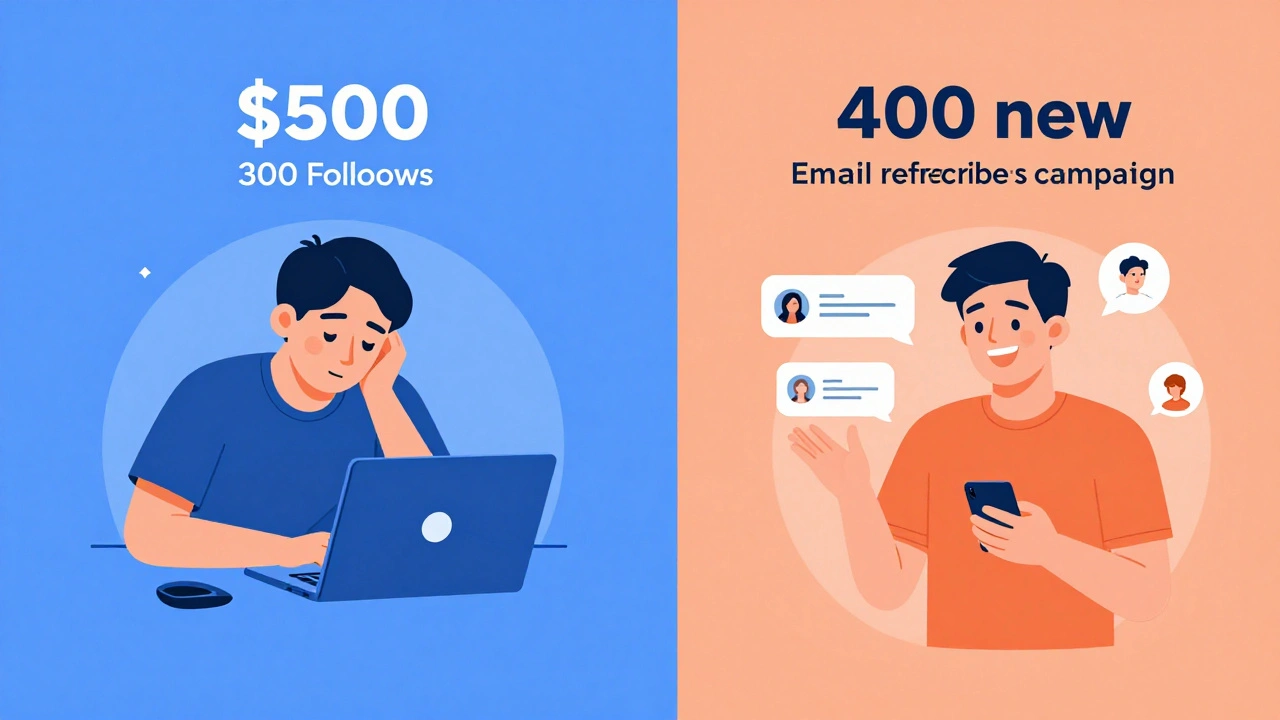
If an influencer gets 50,000 views but only 300 of their followers follow you? That’s a bad deal. Ask for proof: “How many of your followers clicked the link?” Demand UTM tracking. If they can’t show you, walk away.
Instead of paying influencers $500 for a post, pay them $100 + $2 per new email subscriber they bring. Now their incentive aligns with your goal.
4. Bundle Your Offers
Sell a $15 bundle: one digital album + a digital zine + a 10% off coupon for merch. That raises the value of each new fan. Now your CAC of $1.50 looks better because each fan is worth $15, not $0.
Bundle pricing works because it turns one-time buyers into repeat customers. People who buy a bundle are 3x more likely to return for your next release.
What a Good CAC Looks Like for Music
There’s no universal number. But here’s a rule of thumb: your CAC should be less than 20% of the average fan’s lifetime value (LTV).
If your average fan spends $75 over their lifetime (merch, tickets, downloads), your CAC should be under $15. For indie artists, $1-$5 is common. For major label campaigns, $10-$20 is normal.
But here’s the kicker: if your CAC is $3 and your LTV is $10, you’re profitable. If your CAC is $2 and your LTV is $100? You’re sitting on a goldmine. That’s the goal.
Tools to Automate Tracking
You don’t need a team. You need three free tools:
- Bitly: Track clicks on every link you share.
- Google Analytics: See which traffic sources lead to email signups or purchases.
- Mailchimp or Beehiiv: Track which campaigns drive the most subscribers.
Set up a simple dashboard. One sheet. One column for spend. One column for new fans. One column for revenue from those fans. Update it every week. You’ll start seeing patterns - which platforms work, which don’t, and where your real fans come from.
What to Do Next
Start today. Here’s your 5-minute action plan:
- Calculate your last 30-day CAC. Add up all ad spend, influencer costs, and your time.
- Define what counts as a fan. Pick one type to focus on (e.g., email subscribers).
- Set up UTM links on your next three posts.
- Find one playlist you can get on this week.
- Ask five loyal fans to refer one friend each.
You don’t need a bigger budget. You need better data. The fans are out there. You just need to stop guessing where they are - and start measuring.
What’s a realistic CAC for an independent musician?
For most indie artists, a CAC between $1 and $5 is realistic if you’re using organic methods like playlist pitching, email list building, and fan referrals. Paid ads can push it to $5-$10, but only if you’re targeting the right audience. Anything above $10 without a clear path to revenue (like merch or tickets) is usually unsustainable.
Is CAC the same as cost per stream?
No. Cost per stream is how much you pay to get one listen - usually from ads or playlist promotion. CAC is how much you spend to gain a real fan who engages with your music long-term - whether that’s following you, signing up for updates, or buying something. A stream doesn’t equal a fan. A fan does.
Can I lower CAC without spending money?
Yes - and you should. The cheapest way to grow is through your existing fans. Ask them to share your music, join your email list, or tag friends in comments. Use free tools like Bitly and Google Analytics to track what works. Focus on playlists and community, not paid ads. Many artists cut their CAC in half just by optimizing their organic channels.
How do I know if my CAC is too high?
Compare it to your fan’s lifetime value (LTV). If you spend $5 to get a fan who only ever streams your music once, your CAC is too high. But if that same fan buys your EP, attends your show, and buys merch - and spends $50 total - then $5 CAC is fine. Track what fans do after they arrive. That’s the real metric.
Should I stop running paid ads if my CAC is high?
Not necessarily. But pause and ask: are you targeting the right people? Are you measuring conversions, not just clicks? If your ads are bringing in fans who never engage, stop. If they’re bringing in fans who buy merch or sign up for your list - keep going, but optimize. Test smaller budgets, tighter audiences, and better landing pages. Paid ads can work - but only if you’re tracking the right outcomes.