Blues music has always been about feeling. It’s raw, real, and deeply personal. But in a world where streaming dominates, physical media like vinyl and CDs still hold a special place for fans who want to connect with the music in a tangible way. For indie blues artists, pressing your own records or CDs isn’t just a nostalgic move-it’s a powerful way to build loyalty, earn more per sale, and create something collectors value. The question isn’t whether you should do it. It’s how to do it without breaking the bank.
Why Physical Media Still Matters for Blues
Blues isn’t just background noise. It’s something you sit with. You turn the record over. You read the liner notes. You notice the hand-drawn artwork. That’s why vinyl sales for blues artists have grown every year since 2020, according to the Recording Industry Association of America. In 2025, blues vinyl accounted for 12% of all vinyl sales in the U.S.-a number that’s higher than jazz or classical. Fans don’t just listen to blues; they collect it.
CDs aren’t dead either. They’re cheaper to produce, easier to ship, and still the go-to format for older fans and radio stations. A well-designed CD with a booklet can feel just as meaningful as a vinyl record. The key is understanding your audience. If your fans are in their 50s and up, CDs might sell better. If you’re drawing younger crowds who love vinyl culture, then records are your focus.
How Much Does It Actually Cost?
Let’s cut through the hype. Pressing 500 vinyl records doesn’t have to cost $5,000. You don’t need to work with a major distributor. There are indie-friendly manufacturers that treat small artists like humans, not numbers.
Here’s what you can expect to pay in 2026:
- 140g black vinyl (500 units): $1,100-$1,500 (including sleeve, inner sleeve, and basic insert)
- CDs (500 units, full-color jewel case + insert): $500-$700
- Custom packaging (gatefold, foil stamping, die-cut): +$300-$800
- Shipping (U.S.): $100-$200
That’s it. You can produce a full vinyl release for under $2,000. And if you sell those records at $20 each, you break even after 100 sales. That’s not a gamble-that’s a business model.
Choosing the Right Pressing Plant
Not all pressing plants are created equal. Big companies like United Record Pressing or Record Industry will charge you $3,000 just to get on their waiting list. But there are smaller, artist-first options that specialize in indie blues.
Here are three reliable options that work well for small runs:
- United Record Pressing (Nashville): Best for quality, but minimum 500 units. Wait times are 6-10 months.
- Record Industry (California): Fast turnaround (8-10 weeks), great for CDs too. Charges $1.80 per vinyl unit for 500.
- Smaller Presses (like Vinyl Me, Please or Local Press): These often handle runs under 300 units. Prices start at $2.50 per record. Slower, but more personal service.
Pro tip: If you’re on a tight budget, start with 300 vinyl and 200 CDs. Test the market. See what sells. Then press more.
Designing Your Packaging Without a Designer
You don’t need to hire a graphic designer to make your cover look professional. But you do need to follow a few rules.
For vinyl:
- Use 12” x 12” art for the outer sleeve
- Inner sleeve should be plain white or black-no printing unless you’re ready to pay extra
- Include lyrics, credits, and thank-yous on a 4-page insert
For CDs:
- Use 4.75” x 4.75” art for the front
- Back cover should have tracklist, barcode, and copyright info
- Use a matte finish-it looks more authentic than glossy
Use Canva or Adobe Express. Both have free templates for vinyl and CD packaging. Upload your artwork, adjust the size, download the PDF, and send it to the press. Most plants will check your files for free.
Where to Sell It
Pressing your music is only half the battle. You need to get it into hands.
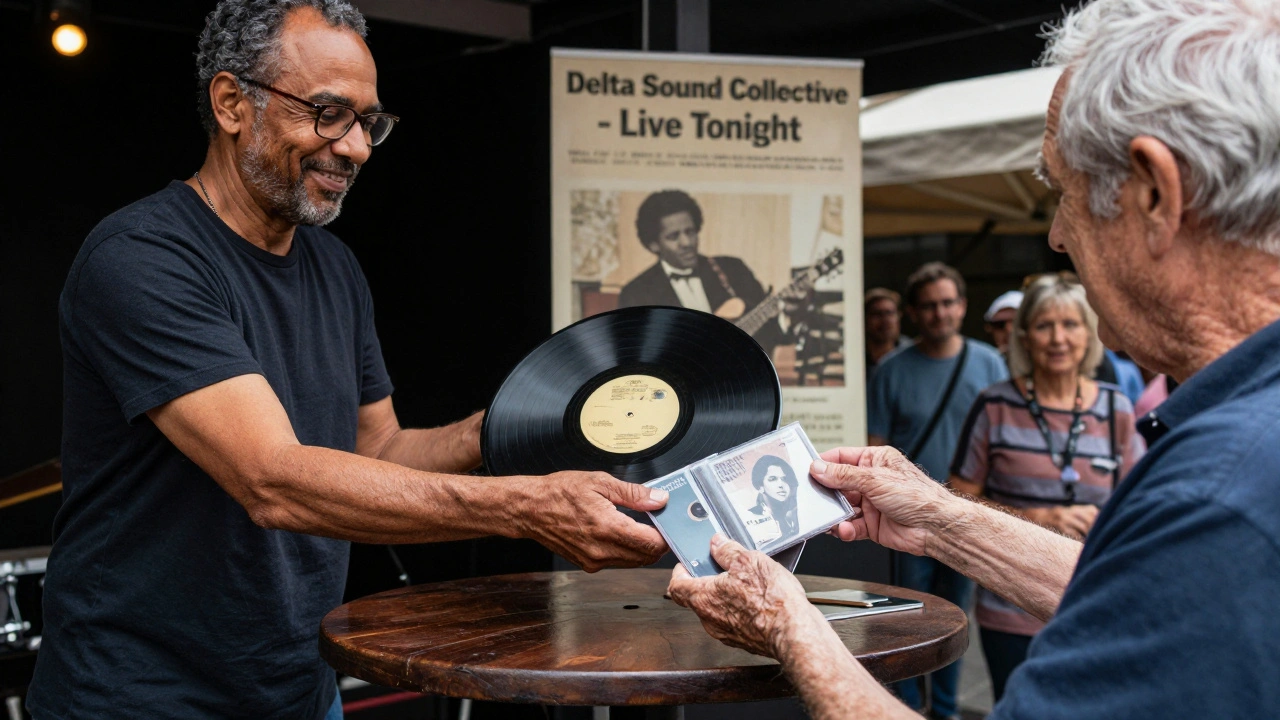
Start with your own shows. Have a table. Sell the record right after your set. People are more likely to buy when they’ve just heard you play live. Offer a discount if they buy both CD and vinyl.
Online, use Bandcamp. It’s free to set up, takes only 15% commission, and lets fans download the music with their purchase. You can even offer a digital download code inside the physical package.
Don’t ignore local record stores. Call them. Send them a sample. Many indie shops will take your release on consignment-meaning they only pay you when it sells. No upfront cost.
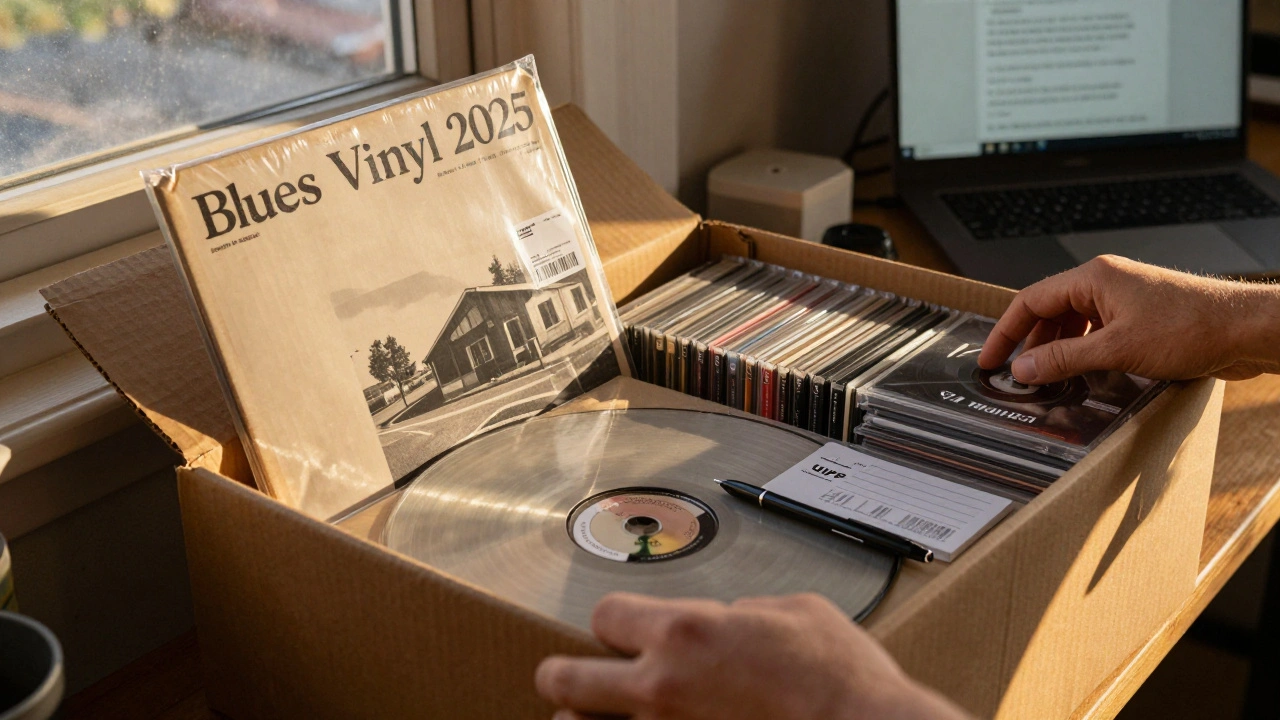
And yes, Facebook Marketplace and eBay still work. People search for “blues vinyl 2025” all the time. List your records with clear photos and mention the artist name in the title.
Real Example: The Delta Sound Collective
A three-piece blues band from Mississippi pressed 300 vinyl records and 200 CDs in early 2025. Total cost: $1,750. They sold 210 records at $22 each ($4,620) and 180 CDs at $12 each ($2,160). That’s $6,780 in revenue. After costs, they made $5,030 profit. They didn’t need a label. They didn’t need investors. They just knew their fans.
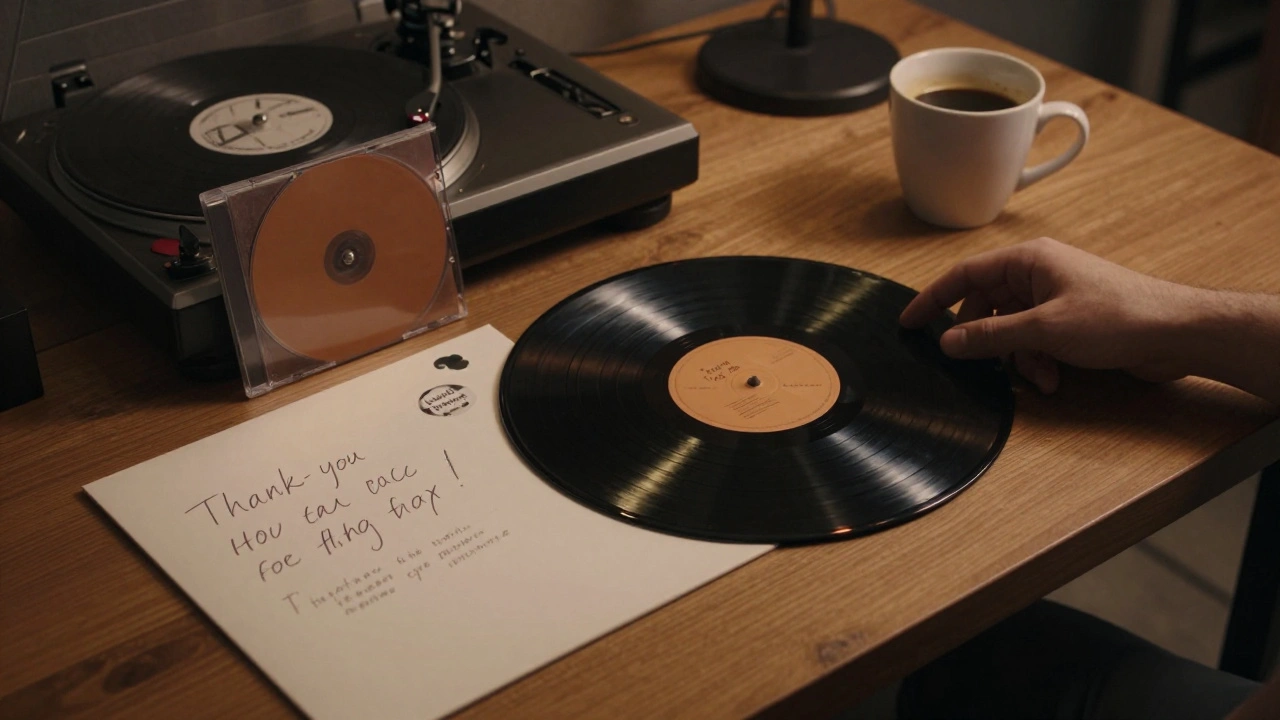
They also mailed a handwritten thank-you note to every buyer. That’s what turned casual listeners into lifelong fans.
Common Mistakes to Avoid
- Pressing too much too soon. Don’t press 1,000 records if you’ve never sold more than 50 online. Start small.
- Using low-quality artwork. A blurry cover looks amateur. Even a simple design done right beats a fancy one done poorly.
- Ignoring the liner notes. People love to read who played what. List every musician, every studio, every date.
- Forgetting the barcode. Without a UPC code, stores won’t stock your CD. Get one for $25 from Barcode USA or similar services.
- Not testing the sound. Always get a test pressing before the full run. If the record skips, you’ve wasted money.
What Comes Next?
Once you’ve done your first run, you’ll see what works. Maybe your fans love the vinyl. Maybe they want a cassette version next. Maybe they want a limited edition colored record.
Keep it simple. Keep it honest. And keep making music that matters. Physical media isn’t about nostalgia. It’s about creating something that lasts longer than a stream.
Can I press vinyl or CDs without a label?
Yes. Thousands of indie artists press music without a label. You just need to handle the manufacturing, artwork, and distribution yourself. Companies like Record Industry and United Record Pressing work directly with solo artists. You’ll need to get your own UPC barcode and register your release with SoundExchange for royalty collection, but that’s it.
Is vinyl really more profitable than streaming?
Absolutely. On Spotify, you earn about $0.003 per stream. To make $1,000, you’d need over 330,000 plays. A single vinyl record sold for $20 gives you $12-$15 profit after costs. Sell 70 records, and you’ve made what it takes to hit 3 million streams. Physical sales are the only way indie blues artists make real money today.
How long does it take to press vinyl?
Typically 8 to 16 weeks from the time you submit your files. Some plants offer rush service for an extra fee, cutting it to 4-6 weeks. But if you’re on a tight budget, plan ahead. Order your records at least 4 months before your next tour or album release date.
Do I need a barcode for CDs?
Yes. Without a UPC barcode, retailers can’t scan your CD. You can buy one for $25 from Barcode USA, or get a free one through DistroKid or CD Baby when you distribute digitally. Just make sure the barcode matches the product name and catalog number you use on your packaging.
Can I press colored vinyl on a budget?
Yes-but it costs more. Standard black vinyl is cheapest. Colored vinyl adds $0.50-$1 per record. Limited-edition splatter or marble pressings can add $2-$3. If you’re doing your first run, stick with black. Save colored pressings for a second batch when you know there’s demand.