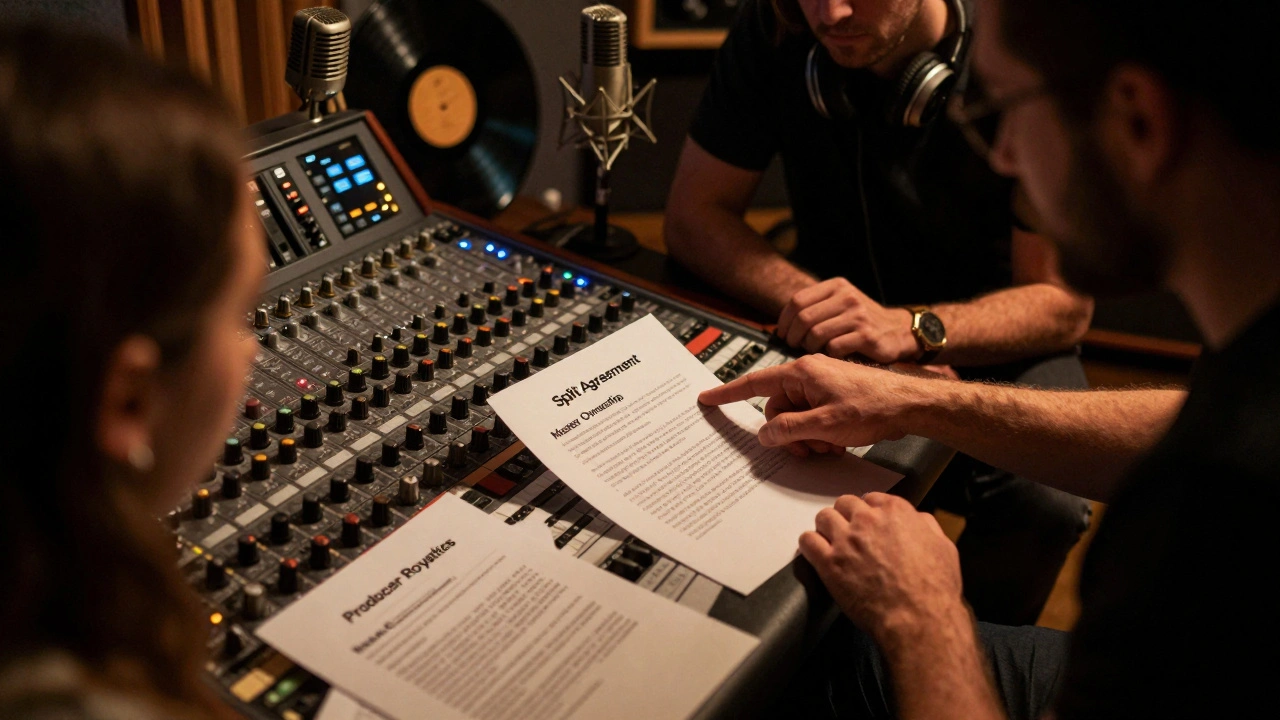
Music collaborations can blow up overnight - a viral beat, a late-night studio session, a TikTok hit. But when the streams roll in, things get messy fast if the contract was never clear. Too many artists lose money, credit, or control because they signed a handshake deal or copied a template from a forum. Here are the five biggest legal red flags in music collaboration contracts you need to watch out for - and how to fix them before it’s too late.
1. No Written Split Agreement
"We all wrote it, so it’s 50/50," sounds fair. But what does "wrote it" mean? Did one person write the melody? The lyrics? The drum pattern? Without a written split, you’re trusting memory, not law. Courts don’t care about "we agreed" - they care about evidence.
Every contributor must be listed with their exact contribution: lyrics, chords, production, vocal arrangement, sampling. Use percentages, not vague terms like "equal shares." A 2024 study by the Recording Industry Association found that 68% of unresolved royalty disputes started with unclear splits. If you’re using DistroKid, TuneCore, or CD Baby, they’ll ask for split details when you upload. Get it right before then.
Example: If Alex wrote the hook and Jordan produced the beat, but Sam added the vocal ad-libs and edited the mix, the split should reflect that: Alex 30%, Jordan 40%, Sam 30%. Not 33/33/33. That’s not fair - it’s lazy.
2. Missing Producer Credit and Royalty Terms
Producers are often treated like hired help - but if they created the instrumental, added the signature sound, or shaped the song’s structure, they’re a co-writer. A producer who only runs the session might get a flat fee. One who built the track from scratch? They’re entitled to a publishing share.
Many contracts say "Producer gets 5% of master royalties" but say nothing about publishing. That’s a trap. Publishing royalties come from radio play, streaming, sync licenses - not just sales. If the producer didn’t get publishing, they’re missing out on long-term income. In 2025, the average producer’s publishing share in a hit song was 15-25%. If your contract says 0%, you’re leaving money on the table.
Fix it: Always define two things - master royalties (from sales/streaming) and publishing royalties (from composition). If the producer helped write the song, they get both. If they only engineered, they get master only. Write it down. No exceptions.
3. No Clarity on Who Owns the Master
The master recording is the final audio file. Whoever owns it controls how it’s used - on Spotify, in ads, in movies. Many collabs assume "we both own it," but that’s legally meaningless. Ownership must be assigned.
Here’s the real issue: if one person paid for studio time, bought the plugin, or even just lent their laptop, they might claim ownership. Without a contract, the person who recorded it first often owns it - even if they didn’t write a note. In 2023, a producer in Nashville sued a rapper over a track they recorded in their garage. The producer owned the master because the contract didn’t specify otherwise. The rapper lost 90% of future earnings.
Fix it: State clearly who owns the master. Example: "The master recording of [Song Title] is jointly owned by Artist A and Artist B in a 50/50 split." If one person is paying for production, they can own the master but grant the others a royalty share. But don’t leave it open-ended.
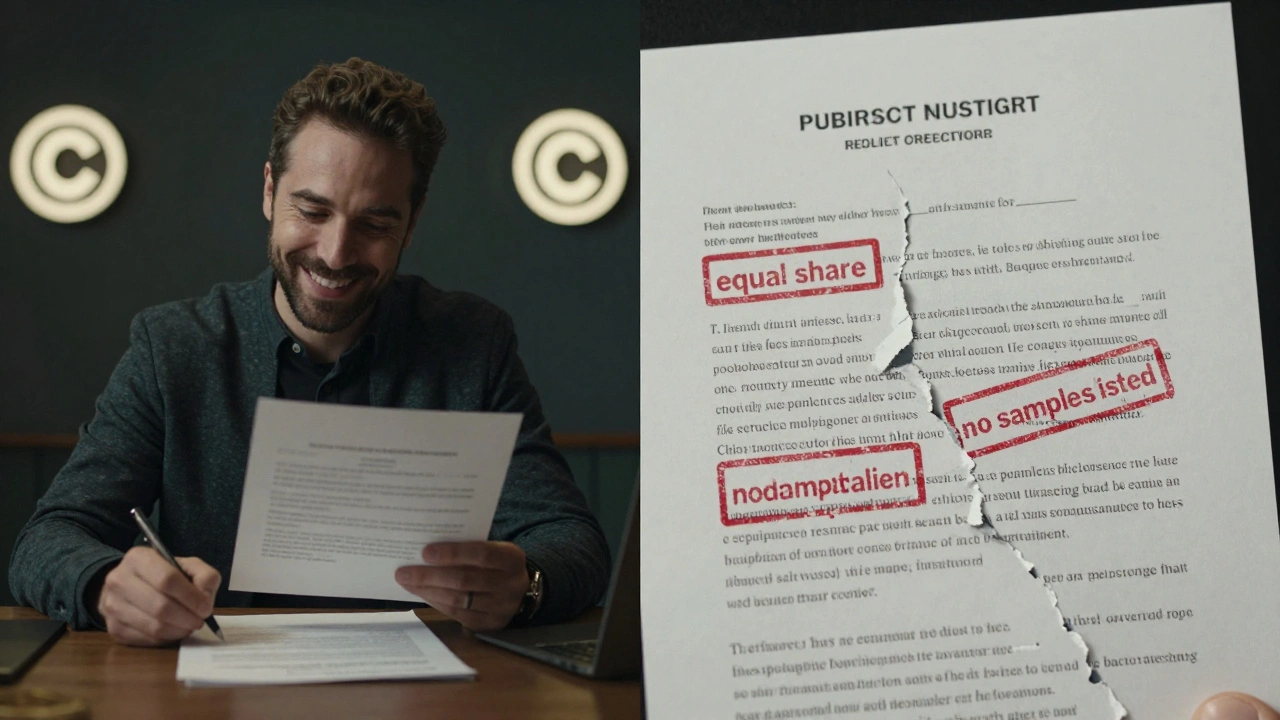
4. Vague or Missing Termination Clauses
What if one artist gets signed to a label? What if you break up as a team? What if someone dies? Contracts often ignore these scenarios. That’s how lawsuits happen.
Without a termination clause, you can’t remove someone from a track - even if they’re no longer active. Labels won’t license a song if they can’t confirm all rights are cleared. A 2025 report from ASCAP showed that 41% of sync licensing rejections were due to unclear ownership among collaborators.
Fix it: Add a simple clause: "Either party may terminate this agreement with 30 days’ written notice. Upon termination, all rights to the master and publishing remain as agreed, and no further royalties are owed to the terminating party beyond those already earned." That’s it. No drama. Just clarity.
5. Forgetting About Sampling and Clearances
That 8-second vocal snippet from an old soul record? That bassline from a 2001 hip-hop track? If you didn’t clear it, you’re infringing copyright - even if you changed the pitch. Labels and streaming platforms scan for this. A single unlicensed sample can get your song pulled from Spotify, Apple Music, and YouTube.
Many collabs say "We used a loop," but loops from Splice, Loopmasters, or Cymatics come with licenses. You need to read the fine print. Some require attribution. Some forbid commercial use. Others charge per stream after 10,000 plays. If you don’t know what license your sample has, you’re gambling.
Fix it: List every sample, loop, or interpolation in the contract. Include the source, the license type, and whether it’s cleared for commercial use. If you used a free sample, add: "All samples used are from royalty-free sources under non-exclusive licenses permitting commercial distribution." If you sampled something copyrighted? Get written clearance before you release.
What to Do Instead
Don’t wing it. Use a template from a trusted source - like the Music Business Association’s free collaboration agreement, updated for 2026. It’s simple, non-legalese, and covers all five red flags above. Fill in the names, splits, and terms. Print it. Sign it. Date it. Keep a copy.
Even if you’re working with a friend, this isn’t about trust. It’s about protecting your future. A song that hits 10 million streams could earn $30,000-$100,000 in royalties. That’s not chump change. A $10 contract that covers your rights is worth more than a lifetime of friendship.
Quick Checklist: Before You Release
- Is every contributor listed with their exact role and percentage split?
- Does the contract say who owns the master recording?
- Are producer royalties split between master and publishing?
- Is there a termination clause?
- Are all samples listed with their license status?
If you answered "no" to any of these, pause. Don’t upload. Fix it now. You’ll thank yourself when the streams start rolling.
Do I need a lawyer to sign a music collaboration contract?
Not always. For simple collabs between friends, a clear, written agreement using a trusted template is enough. But if money is involved - like a label deal, sync license, or over $10,000 in projected earnings - hire a music attorney. They’ll catch hidden clauses you didn’t know were dangerous.
Can I use a contract from a friend’s past collab?
No. Every song is different. A contract that worked for a trap beat might not cover a folk duet with samples. Terms like "producer share" or "split percentage" vary by genre and contribution. Using someone else’s contract risks leaving out your rights. Always customize.
What if one collaborator refuses to sign?
Don’t release the song. Without a signed agreement, you can’t prove ownership. Even if you think they’re fine with it, streaming platforms, labels, and publishers will ask for proof. If they won’t sign, assume they don’t want to be credited - and remove their contribution. Better to release a clean version than risk a lawsuit later.
Can I change the split after the song is released?
You can, but only if everyone agrees in writing. Once a song is on streaming services, the split is locked into the metadata. Changing it requires updating the distributor, notifying all rights holders, and getting approval from PROs like ASCAP or BMI. It’s messy. Avoid it by getting it right the first time.
What happens if a collaborator dies?
Their share goes to their estate - spouse, children, or whoever inherits their assets. If your contract doesn’t address this, you’ll have to track down their heirs to keep collecting royalties. That’s why termination clauses and clear ownership language matter. Include a line like: "In the event of death, the deceased party’s rights shall pass to their legal heir as documented in their will or estate plan." It’s simple, but it prevents years of legal headaches.
Final Thought
Music is emotional. Contracts feel cold. But the song you make today could be the one that pays your rent in five years. Protect it like your career depends on it - because it does.