When you drop a new music video, you’re not just releasing art-you’re launching a campaign. But without data, you’re flying blind. How many people actually watched it? Did they skip the first 10 seconds? Did they share it? Did it push your streaming numbers up? Music video analytics turns guesses into decisions. It tells you what worked, what flopped, and what to do next.
What Music Video Analytics Really Measures
It’s not just about views. A million views on YouTube might sound huge, but if 80% of viewers dropped off in the first 15 seconds, that’s not a hit-it’s a warning sign. Music video analytics digs deeper. It tracks:
- Watch time: How long people stayed. A 2-minute video with 1:45 average watch time is doing better than a 4-minute video with 30 seconds.
- Retention rate: Which parts of the video people skipped or rewound. If viewers keep jumping back to the chorus, that’s your hook-and you should highlight it in future edits.
- Click-through rate (CTR): How many people clicked on your video after seeing the thumbnail and title. A low CTR means your preview isn’t grabbing attention.
- Engagement metrics: Likes, shares, comments, and saves. These signal emotional connection, not just passive viewing.
- Audience demographics: Age, gender, location. If your video blew up in Brazil but tanked in Germany, you might have a regional fanbase you didn’t know about.
- Device and platform data: Are people watching on mobile? On smart TVs? On Instagram Reels? This tells you where to focus future promotion.
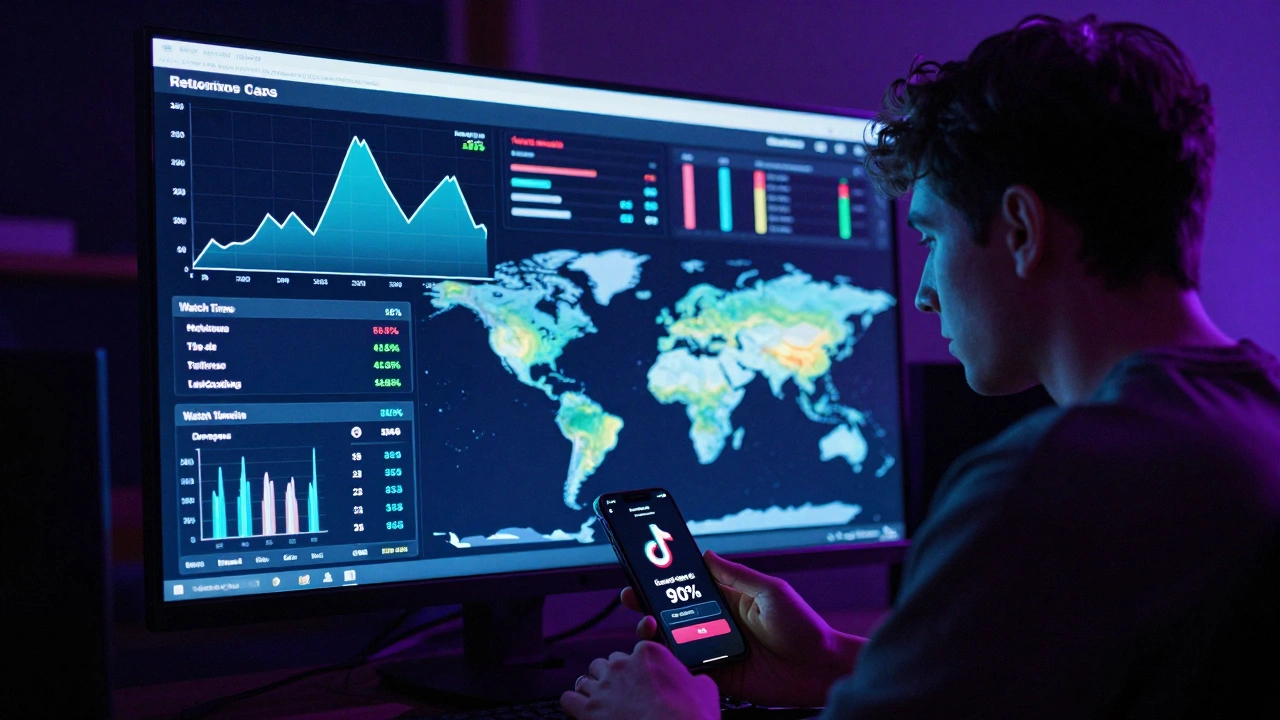
Platforms like YouTube Studio, Spotify Canvas, and TikTok Analytics give you this data for free. But most artists just glance at the view count and move on. That’s like checking your car’s gas light and never looking at the engine.
Why Your Views Don’t Tell the Whole Story
Let’s say your video hit 500,000 views. Sounds great, right? But here’s what else might be true:
- 400,000 of those views came from one country, and most were under 18.
- The average watch time was 22 seconds on a 3-minute video.
- Only 3% of viewers clicked your link in the description.
- Zero shares. Zero comments.
That’s not a viral hit. That’s a ghost town. You got seen, but you didn’t connect. And connections are what turn viewers into fans.
Compare that to a video with 120,000 views, but 85% watch time, 12% CTR, and 8,000 shares. That’s a real engagement win. Even with fewer views, it’s doing more heavy lifting for your brand. It’s building momentum. It’s telling algorithms, “This is worth promoting.”
YouTube’s algorithm doesn’t reward views. It rewards watch time and retention. If people stick around, it pushes your video to more people. If they bounce, it hides you. That’s why tracking retention graphs is more important than counting views.
How to Use Analytics to Improve Your Next Video
Don’t just collect data-use it. Here’s how real artists are turning numbers into strategy:
- Find your hook: Look at the retention graph. Where did people drop off? Where did they pause or rewind? That’s where your strongest moment is. If the drop-off spikes right after the first verse, your intro is too slow. Fix it next time.
- Optimize thumbnails and titles: If your CTR is below 5%, your thumbnail isn’t working. Test different versions. Use faces, bold text, contrasting colors. Artists who A/B test thumbnails see 20-40% higher click rates.
- Target your audience: If your top viewers are in Mexico City and Bogotá, run targeted ads there. If your fans are mostly 16-24, focus on TikTok and Instagram Reels. Don’t waste budget on audiences that don’t engage.
- Time your releases: Check when your audience is most active. If 70% of your views happen between 8 PM and midnight on Fridays, don’t drop your video on a Tuesday morning.
- Repurpose your best moments: If the chorus gets 90% retention, cut a 15-second clip and post it as a standalone Reel or TikTok. Tag it with your song title. That’s free promotion.
One indie artist from Portland used this exact method. Her video had 85,000 views, but retention dropped hard after 30 seconds. She cut the intro by 10 seconds, added a flash of color right at the beat drop, and re-uploaded. The new version got 2.3x more watch time and 4x more shares.
Platforms You Should Be Tracking
Not all platforms are created equal. Here’s where to look:
| Platform | Key Metrics | Why It Matters |
|---|---|---|
| YouTube Studio | Watch time, retention, CTR, demographics | Most detailed data. Shows exactly where viewers drop off. |
| TikTok Analytics | Completion rate, shares, saves, follower growth | Best for short-form clips. If your video gets saved, it’s stuck in someone’s mind. |
| Instagram Insights | Impressions, reach, profile visits | Tracks how your video drives traffic to your profile. |
| Spotify Canvas | Plays, skips, saves | Shows how your video performs as a visual loop within the music app. |
| Twitter/X Analytics | Retweets, quote tweets, link clicks | Helps spot fan-driven buzz. If fans are tweeting clips, they’re your ambassadors. |
Don’t just check one. Cross-reference. If your TikTok clip has a 90% completion rate but your YouTube video has 40%, you need to rethink your long-form edit. Maybe it’s too slow. Maybe the pacing doesn’t match how people consume music now.
Common Mistakes Artists Make
You’re not alone if you’re making these errors:
- Only checking views: Views are vanity. Watch time is value.
- Ignoring negative feedback: If 30% of comments say "skip to the chorus," don’t get defensive. Fix it.
- Not testing: One thumbnail change can double your clicks. Don’t assume you know what works.
- Overlooking non-YouTube platforms: If your video is only on YouTube, you’re missing 60% of your audience. Reels, TikTok, and Spotify Canvas are where Gen Z lives.
- Waiting too long to act: Analytics are useless if you wait a month to react. Check data within 48 hours of release.
One band waited three weeks to look at their analytics. By then, the algorithm had already buried their video. They missed the window to boost it with paid promotion. They lost 100,000 potential views.
What to Do After Your Video Drops
Here’s a simple 72-hour plan:
- Hour 0-24: Post the video everywhere. Share a 15-second teaser on TikTok. Send it to your email list. Ask 5 friends to comment "This slaps"-early engagement helps the algorithm.
- Hour 24-48: Check YouTube Studio. Look at retention. If it’s under 50%, plan a quick edit. Add a lower-third text overlay with "CHORUS STARTS HERE" if people are skipping.
- Hour 48-72: Run a small ad ($20) targeting viewers who watched 75% of the video. Retarget them with a link to your new single or merch. This turns watchers into buyers.
You don’t need a big budget. You just need to pay attention.
Final Thought: Data Doesn’t Kill Creativity-It Empowers It
Some artists think analytics is for corporate labels. That’s backwards. Analytics is your tool to understand your fans. You don’t have to change your art. You just have to understand how it’s being received.
Use the data to make your next video louder, tighter, and more emotional. Let the numbers guide your edits, not your ego. The best music videos aren’t the ones with the biggest budgets-they’re the ones that connect. And analytics is how you find out where that connection happens.
What’s the best metric to track for music video success?
The best metric is average watch time as a percentage of total video length. If your 3-minute video gets an average of 2:20 watched, that’s 78% retention-and that’s a strong signal to algorithms. High retention means people are engaged, which leads to more recommendations, shares, and long-term fan growth.
Should I pay to promote my music video?
Only after you’ve analyzed the organic performance. If your video has a retention rate above 60% and a CTR over 5%, then yes-spend $50-$100 to boost it to viewers who watched 75% or more. That’s retargeting, not spraying money. If your retention is below 40%, fix the video first. Promotion won’t save a weak hook.
Can I track music video analytics without YouTube?
Yes. TikTok and Instagram offer detailed analytics for Reels and Stories. Spotify Canvas shows plays, skips, and saves. Even Twitter/X can track how often your video is shared. YouTube is the most detailed, but if your audience is on other platforms, that’s where your data matters most.
How often should I check my music video analytics?
Check within 24 hours of release to catch early trends. Then check again at 72 hours and 7 days. After that, monthly checks are enough unless you’re running ads. The first 72 hours are critical-this is when the algorithm decides whether to push your video further.
Do likes and comments matter for music video performance?
Yes-but not the way you think. Likes are weak signals. Comments and shares are strong ones. A video with 500 likes and 50 comments from fans quoting lyrics is doing better than one with 5,000 likes and zero comments. Comments mean emotional connection. Shares mean people are advocating for you. That’s what algorithms reward.