When you hear the word EP, you might think of a mini-album. But what does that actually mean? An EP - short for extended play - is a musical release that’s longer than a single but shorter than a full-length album. It’s not just a stopgap between albums. For many artists, especially in today’s music landscape, an EP is a deliberate creative choice - a way to share something real without the pressure of a full project.
What Makes an EP Different?
An EP typically has 3 to 6 tracks and runs under 30 minutes total. That’s the industry standard, but it’s not a hard rule. Some EPs are as short as two songs, while others stretch to seven tracks. The key isn’t the number - it’s the intent. An EP is meant to feel complete, not rushed. It’s not a demo. It’s not a sampler. It’s a focused statement.
Compare that to a single: one song, maybe a B-side. Or an album: 10 to 18 tracks, often designed to tell a bigger story. An EP sits right in the middle. Think of it like a short film. You don’t need two hours to make an impact. Sometimes, 20 minutes is all you need.
Why Do Artists Choose EPs?
Artists release EPs for a lot of reasons. For newcomers, it’s a low-risk way to build a fanbase. Instead of spending months on a full album, they can drop an EP in six weeks, test reactions, and adjust. Bands like Lizzo and Billie Eilish started with EPs that later became the foundation of their breakout albums.
For established artists, EPs are a way to keep fans engaged between albums. Taylor Swift’s folklore: the long pond studio sessions wasn’t a live album - it was an EP of reworked tracks with behind-the-scenes commentary. It gave fans something new without needing to write a whole new record.
Some artists use EPs to explore different sounds. Frank Ocean’s endless and blonde came out within days of each other. One was an EP of ambient instrumentals. The other, a full album. Together, they told a bigger story than either could alone.
How Are EPs Structured?
There’s no formula, but there are common patterns. Most EPs open with a strong single - something that grabs attention. The second track builds momentum. The third might be the emotional core. The last track often leaves a lingering feeling, not a punchline.
Take the 2023 EP Stung! by the indie band HONNE. It’s four tracks, 18 minutes long. The opener, “I Don’t Know Why,” is a danceable pop hook. The second, “You’re the One,” adds emotional depth. The third, “Wish You Were Here,” strips everything down to vocals and piano. The closer, “Lose Myself,” fades into ambient noise - not with a bang, but a whisper. It’s a complete arc. That’s the mark of a well-made EP.
EPs vs. Mixtapes vs. Albums
People mix up EPs, mixtapes, and albums. Here’s how they differ:
| Feature | EP | Mixtape | Album |
|---|---|---|---|
| Track Count | 3-6 | 5-15 | 10-18 |
| Runtime | Under 30 minutes | 30-60 minutes | 35-75 minutes |
| Production | Polished, studio-quality | Often lo-fi, DIY, or freestyled | High-budget, fully produced |
| Purpose | Artistic statement | Building buzz, experimental | Major release, career milestone |
| Release Strategy | Planned, timed with tour or season | Often free, informal | Marketing campaign, label-backed |
Modern mixtapes blur the line - artists like Drake and Travis Scott have released mixtapes with studio-quality production. But the spirit stays the same: mixtapes are about freedom. EPs are about focus.
How to Release an EP Today
If you’re an artist thinking about releasing an EP, here’s what actually works in 2026:
- Start with a theme. Don’t just dump songs. Pick a mood, a time of year, a feeling. Is it about change? Loneliness? Joy after loss? Let that guide the tracklist.
- Choose your lead single wisely. One song should stand out - something that can go viral on TikTok or get picked up by indie playlists. It doesn’t have to be the best song. It has to be the most shareable.
- Plan your rollout. Drop the lead single 3-4 weeks before the EP. Tease a lyric video. Post studio snippets. Let fans feel like they’re part of the process.
- Release on all platforms. Spotify, Apple Music, Bandcamp, YouTube. Don’t forget SoundCloud - it’s still where new artists find their first listeners.
- Bundle it with something. A digital zine. A short film. A handwritten note. Fans remember the extras.
EPs Are Not Second-Best
There’s a myth that EPs are for artists who can’t make a full album. That’s wrong. EPs are for artists who know exactly what they want to say - and they don’t need 12 songs to say it.
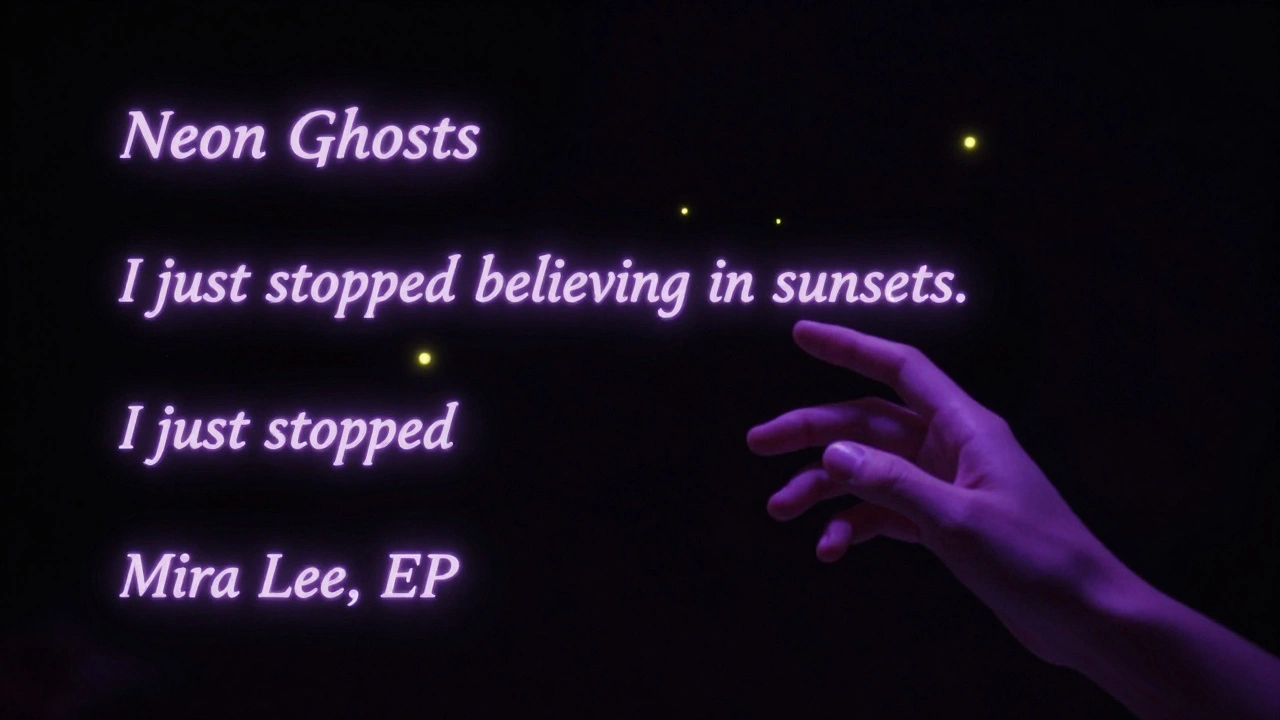
Look at the 2025 EP Neon Ghosts by indie artist Mira Lee. Four songs. Twelve minutes. It climbed to #3 on the Bandcamp indie chart. No label. No ads. Just a quiet release, a thoughtful cover, and a single lyric that went viral: “I didn’t leave. I just stopped believing in sunsets.”
That’s the power of an EP. It doesn’t need to be loud. It just needs to be true.
What’s Next for EPs?
With streaming, listeners don’t need 10 songs to feel satisfied. Algorithms favor shorter, bingeable content. That’s why EPs are growing - not fading. In 2025, over 40% of new indie releases were EPs, up from 22% in 2020. More artists are choosing to release two EPs a year instead of one album.
It’s not about being lazy. It’s about being honest. Music doesn’t need to be long to be meaningful. Sometimes, less is more.
Is an EP considered an official album?
No, an EP is not classified as a full album by industry standards. Major music platforms like Spotify and Apple Music treat EPs as separate from albums in charts and playlists. However, some artists and fans treat EPs as part of their official discography - especially if the EP is well-produced and thematically complete. It’s not an album, but it’s still a legitimate release.
Can an EP have only two songs?
Yes, though it’s rare. Most platforms and retailers classify anything under three tracks as a single. But some artists release two-song EPs to make a bold, minimalist statement. Examples include Tame Impala’s 2012 release Beats for the Mind and Phoebe Bridgers’ 2016 Killer. These are still called EPs because they’re intentional, cohesive projects - not just singles with bonus tracks.
Do EPs chart on the Billboard 200?
Yes. Billboard counts EPs on the Billboard 200 if they meet the equivalent of 1,000 album units in sales and streams. In 2025, EPs accounted for 17% of all entries on the Billboard 200. Artists like Olivia Rodrigo and J. Cole have charted EPs, proving they’re not just niche releases anymore.
How much does it cost to release an EP?
It varies widely. A DIY EP recorded at home might cost under $500 - mostly for mastering and distribution. A professionally produced EP with studio time, mixing, and artwork can run $5,000 to $15,000. Many artists use crowdfunding or label advances to cover costs. The key is not spending more than you can afford - EPs are meant to be sustainable, not overwhelming.
Can I release an EP without a label?
Absolutely. In fact, most EPs today are released independently. Platforms like DistroKid, TuneCore, and CD Baby let artists upload music directly to Spotify, Apple Music, and Amazon for under $20 a year. You keep 100% of your royalties. Labels are no longer gatekeepers - they’re optional partners.
Final Thought
EPs are quiet rebels. They don’t shout. They don’t need to be big. They just need to be real. In a world where music is often treated like content - endless, disposable, algorithm-driven - EPs remind us that art doesn’t need to be long to last.