When an album drops, the clock starts ticking. Not just for fans waiting to hear the music, but for the team behind it-managers, publicists, labels-trying to squeeze a mountain of media coverage into a single week. A press junket isn’t just a series of interviews. It’s a precision operation. Miss a slot, and you lose momentum. Overload the schedule, and the artist burns out before the first review goes live.
Why press junkets still matter in 2026
People think streaming killed the press cycle. They’re wrong. Streaming changed it. Now, a single day of visibility can push an album into the top 10. But getting that day? That takes planning. A well-timed interview with a major outlet like Pitchfork, Rolling Stone, or Apple Music can generate more streams than a paid ad campaign. And those interviews don’t happen by accident. They’re scheduled, negotiated, and locked in weeks before the release.
Look at the data from last year’s top 20 albums. The ones with five or more major media appearances in the first 72 hours saw, on average, a 47% higher first-week stream count than those with only one or two. It’s not about quantity-it’s about timing, reach, and energy. A 30-minute podcast slot on a Tuesday morning might not seem like much, but if it’s with a host who has 800K loyal listeners and a cult following? That’s a game-changer.
The core structure of a release week junket
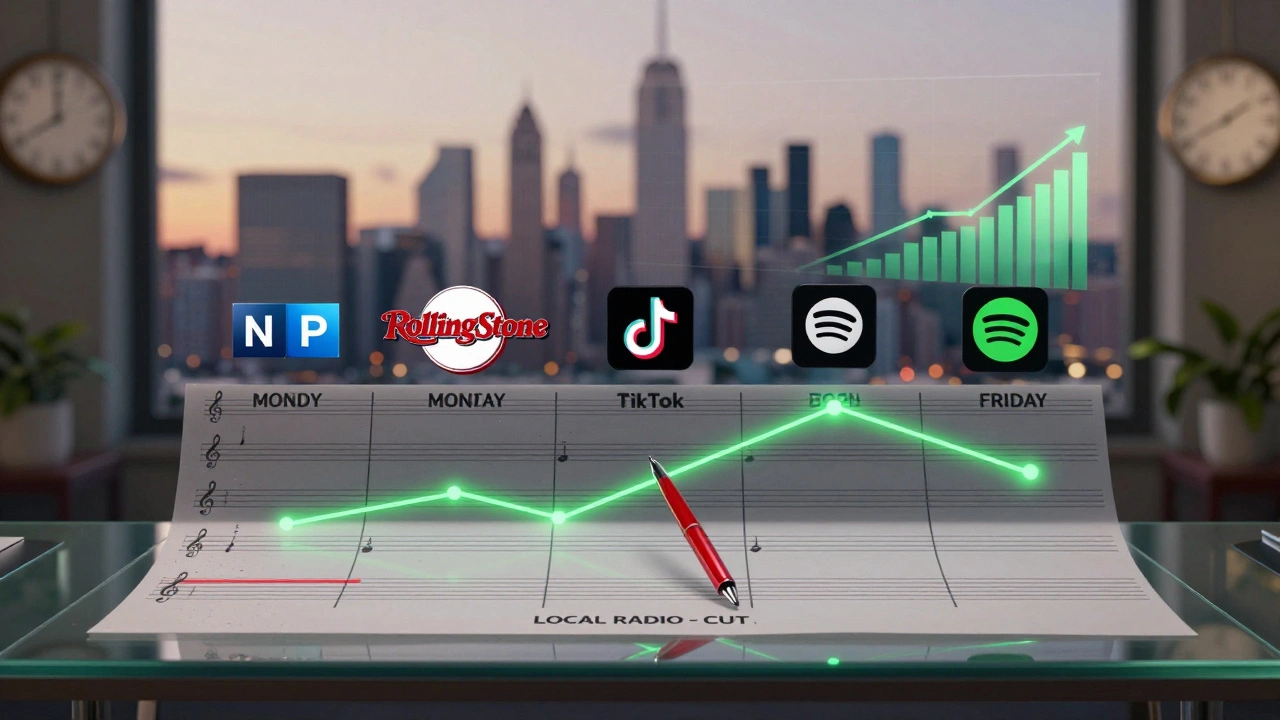
There’s a rhythm to this. It’s not random. Most successful junkets follow a five-day pattern:
- Monday - Early morning national radio (NPR, BBC, SiriusXM). These are low-pressure, high-reach slots. Listeners are commuting. The vibe is relaxed. Perfect for setting tone.
- Tuesday - Deep-dive podcasts and long-form video (YouTube, Spotify Originals). These are where artists talk about the album’s story, the process, the emotions. Fans remember these.
- Wednesday - Major print and digital features (Rolling Stone, The Guardian, Stereogum). These often drop the same day as the album. Timing matters. The piece needs to go live before noon local time on release day.
- Thursday - International media (European, Asian, Latin American outlets). Time zones are everything. A 9 a.m. EST interview for a U.S. outlet is 2 p.m. in London and 11 p.m. in Tokyo. Scheduling here isn’t about convenience-it’s about audience alignment.
- Friday - Late-night TV, TikTok live sessions, and fan Q&As. This is the emotional release valve. After the serious interviews, this is where the artist connects directly. It humanizes them.
This structure isn’t magic. It’s based on how media outlets plan their content calendars. Most editors finalize their release week coverage by Wednesday. Missing that window means your interview gets buried under three other albums dropping the same day.
What gets scheduled-and what doesn’t
Not every outlet is worth chasing. A junket isn’t about checking boxes. It’s about strategic placement. Here’s what gets booked:
- Outlets with verified audience reach (audience size + engagement rate)
- Hosts who’ve interviewed the artist before (familiarity = better chemistry)
- Platforms that allow video + audio + transcript (maximizes repurposing)
- Media that aligns with the album’s genre and tone (a hip-hop artist doesn’t need a classical music podcast)
And here’s what gets cut:
- Local radio stations with under 50K listeners
- Outlets that require the artist to travel (unless it’s a major market like London or Tokyo)
- Interviews that ask the same five questions everyone else does
- Media that doesn’t promise promotion beyond the interview (no retweets, no newsletter plugs, no social push)
One manager I spoke to in Nashville told me they dropped six scheduled interviews last year because the outlets didn’t share the artist’s social post. That’s not rude-it’s smart. Visibility isn’t free. You pay with time, energy, and emotional bandwidth. If you’re not getting value back, you’re losing.
How to avoid burnout and keep the artist sane
The biggest mistake? Scheduling too much. One pop artist I worked with had 22 interviews in four days. She showed up to her last one with a fever. The video went live. No one noticed she was barely holding it together. That’s not promotion. That’s damage control.
There’s a hard rule: no more than three interviews per day. And never back-to-back. Always leave 90 minutes between slots. That’s not padding. That’s recovery time. The artist needs to breathe, hydrate, and reset. A 10-minute walk outside. A 5-minute meditation. A text exchange with a friend who isn’t in the industry.
Also, build in buffer days. Don’t schedule anything for Saturday or Sunday. Even if the album drops on a Friday, the weekend is for fans, not journalists. Let them react. Let them post. Let them create memes. That organic buzz is worth more than a Sunday morning radio spot.
Tools that make it work
You can’t do this with spreadsheets anymore. Too many time zones, too many moving parts. The teams that win use tools like:
- Calendly Pro + Timezone.io - Lets media book slots automatically, but filters out conflicts by region.
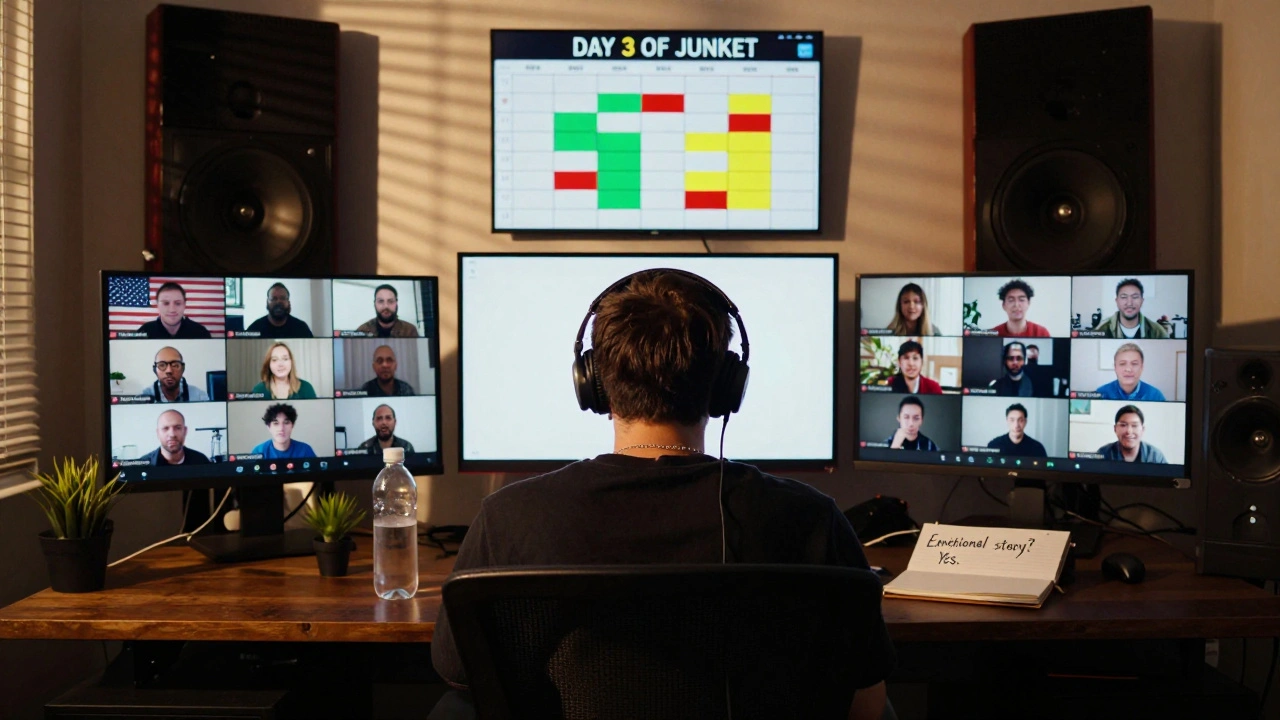
- Notion + Media Tracker - Tracks which outlets have confirmed, which have sent questions, which have published, and which are ghosting.
- Zoom + Riverside.fm - For recording high-quality audio and video in one click. Saves hours of editing.
- Google Trends + Chartmetric - Monitors search spikes and playlist adds in real time. If a podcast drops and streams jump 20% in 30 minutes, you know it worked.
One indie label in Portland started using Notion to track every interview’s outcome. They found that interviews with a “personal story” component (e.g., “What was the song you wrote after your dad passed?”) had 3x higher replay rates. So now, they prep questions around emotional turning points-not just album tracks.
What happens when it goes wrong
There’s a reason some albums vanish after release. Sometimes it’s the music. But more often, it’s the schedule.
Remember the R&B album that dropped in November 2025? The artist had interviews lined up with five major outlets. Three canceled last minute. One showed up 45 minutes late. The fourth asked the same question five times. The fifth didn’t even record the audio. The album sold 18,000 copies. It was a good record. But no one heard it.
That’s what happens when you treat a press junket like a to-do list. It’s not. It’s a performance. And like any performance, it needs rehearsal, rhythm, and respect.
Final checklist for release week scheduling
Here’s what every team needs to have locked in by 10 days before release:
- Confirmed interviews (with time, platform, and expected publish date)
- Pre-interview questions sent to each outlet (so the artist can prep)
- Technical setup tested (camera, mic, lighting, backup recording)
- Post-interview plan (who shares the link? Who posts on social? Who follows up?)
- Contingency plan (what if a major outlet drops? Who’s the backup?)
If you have all that? You’re ahead of 80% of the industry.
How far in advance should you start scheduling a press junket for an album?
Start reaching out at least 6-8 weeks before release. Major outlets book interviews 4-6 weeks out. Smaller podcasts and blogs may have shorter lead times, but you still need to build relationships and send materials. Waiting until 2 weeks out means you’ll get the leftovers-and the leftovers rarely get seen.
Should the artist do interviews in person or remotely?
Almost always remotely. Travel adds cost, fatigue, and risk. A single flight delay can cancel three interviews. With good lighting, a quiet room, and a decent mic, remote interviews look and sound professional. The only exceptions are major TV appearances (like The Tonight Show) or if the artist is already in a key city for a live show.
How do you handle time zones during a global press junket?
Use Calendly Pro with Timezone.io to auto-schedule. Never ask an artist to do an interview at 2 a.m. local time. Instead, stagger sessions: U.S. in the morning, Europe in the afternoon, Asia in the evening. This way, the artist gets a full night’s sleep between sessions. A 7 a.m. EST slot for a U.S. outlet is 12 p.m. in London and 1 a.m. in Tokyo-so schedule accordingly. If the artist is in Portland, a 10 a.m. PST interview is 6 p.m. in London and 7 a.m. the next day in Sydney. Always double-check.
What if an outlet doesn’t publish the interview?
Follow up politely 72 hours after the scheduled publish date. If there’s no response, move on. But track it. If the same outlet keeps ghosting, don’t book them again. Some outlets use interviews as free content without promotion. That’s not a win. A good interview should be published, shared, and promoted. If it’s not, it didn’t work.
Can you reuse interview footage across platforms?
Yes-and you should. Record every interview in high-res video and audio. Then cut it into clips: 15-second hooks for TikTok, 3-minute highlights for YouTube, audio-only for Spotify. This multiplies the value of each session. One 30-minute interview can become 12 pieces of content. That’s how you stretch a small budget.