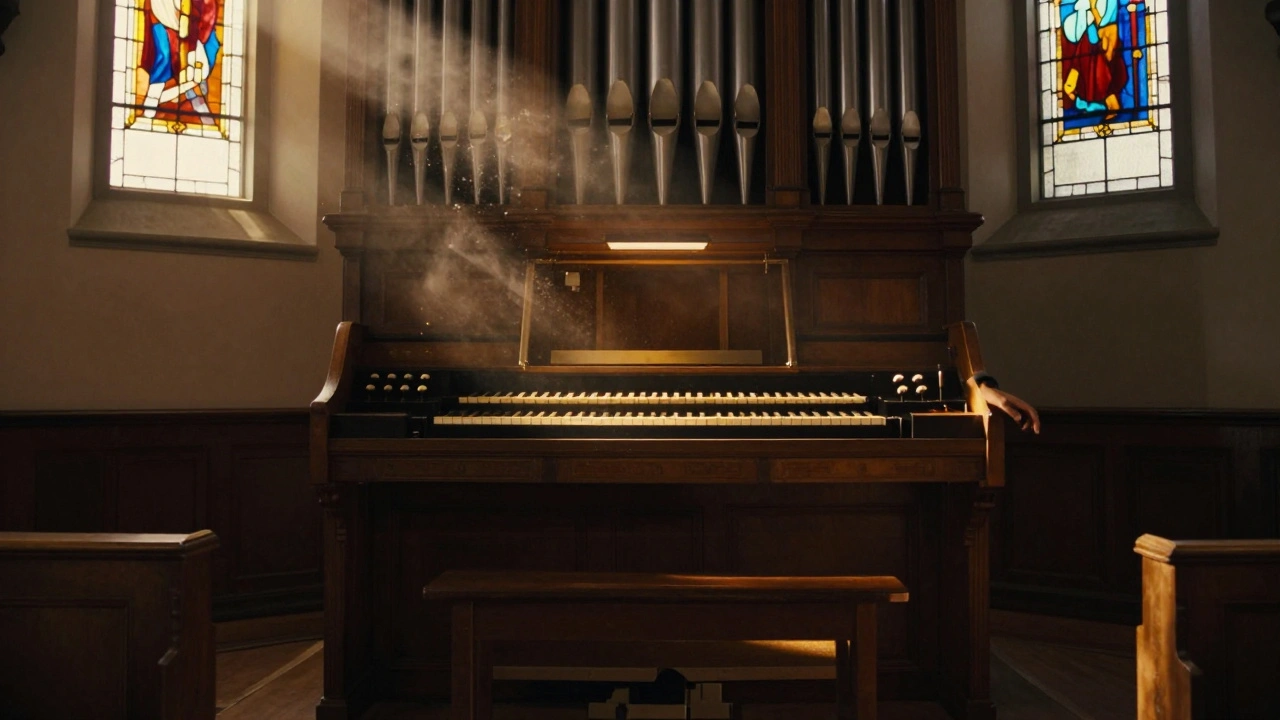
When you hear a gospel blues track that makes your chest hum and your feet tap without thinking, it’s not magic. It’s the quiet, intentional layering of organ, piano, and percussion-each instrument doing its job like a preacher, a choir, and a heartbeat all at once. This isn’t about fancy gear or studio tricks. It’s about understanding how these three instruments have always worked together in Black churches across the South, turning worship into rhythm and pain into power.
Start with the Organ: The Voice of the Congregation
The Hammond B-3 isn’t just an instrument in gospel blues-it’s the voice that holds the whole song together. You don’t play it to show off. You play it to carry the melody when voices break, to fill the space when the piano rests, and to give the whole thing that warm, swirling, slightly gritty texture that feels like Sunday morning sweat and hymnals.
Real gospel organists don’t use presets. They use drawbars. Set them to 888000000-that’s full bass, full treble, no percussion. Then, if you want that classic church growl, add a little 8’ and 5.6’ for harmonic bite. The key? Let it breathe. Don’t overplay. Let the sustain do the work. A single held chord with a slow vibrato on the lever can make a room feel like it’s shaking, even when no one’s moving.
Listen to the recordings of Clarence Carter is a gospel blues artist known for his soulful organ-driven tracks that blend church hymns with Delta blues or Johnny Hartman was a vocalist and organist whose recordings in the 1960s fused gospel harmonies with slow blues grooves. You’ll notice the organ doesn’t solo. It swells. It holds. It waits.
Piano: The Rhythm That Sings
Most people think of gospel piano as fast, flashy runs. But in gospel blues, it’s the opposite. It’s slow. It’s heavy. It’s deliberate. Think of the piano as the hands of a preacher-reaching out, pulling back, then slamming down with conviction.
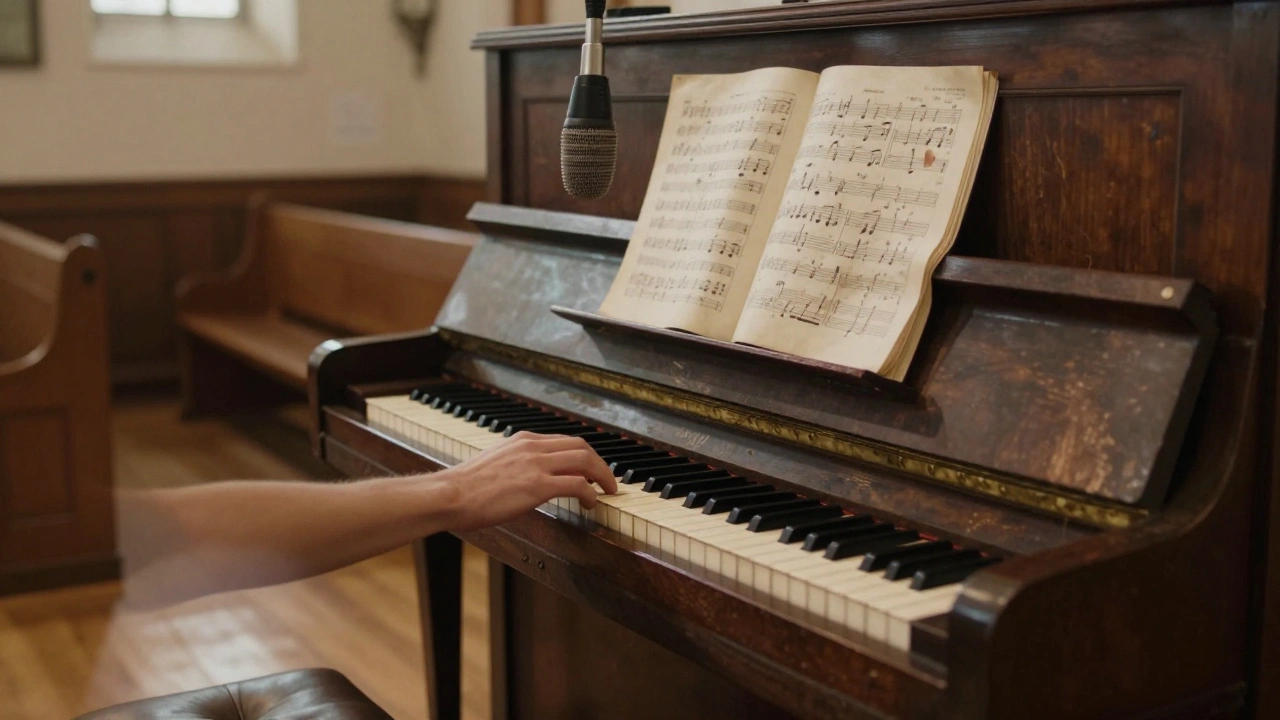
Play root-fifth-octave patterns in the left hand. Keep them simple. Let them ring. The right hand? Play chords with a slight delay. Not syncopated. Not rushed. Just late-by a hair. That tiny lag creates tension. That’s where the blues lives. Add a single blue note in the melody-maybe a flattened third or seventh-and let it hang. Don’t resolve it right away. Let it ache.
One trick used by producers in Muscle Shoals and New Orleans: record the piano with a mic close to the lid, then layer in a second track panned hard left with a slight tape delay (around 35ms). That gives the piano a halo-like it’s echoing off the church walls. You’ll hear it in Ray Charles pioneered the fusion of gospel vocals with blues piano, creating a sound that defined modern soul’s early work. It’s not about how many notes you play. It’s about how much space you leave.
Percussion: The Pulse, Not the Beat
Forget the kick drum. Forget the snare. In gospel blues, percussion isn’t about keeping time-it’s about keeping faith. The real groove comes from the hi-hat, the brush on a snare, and the subtle tap of a woodblock or cowbell.
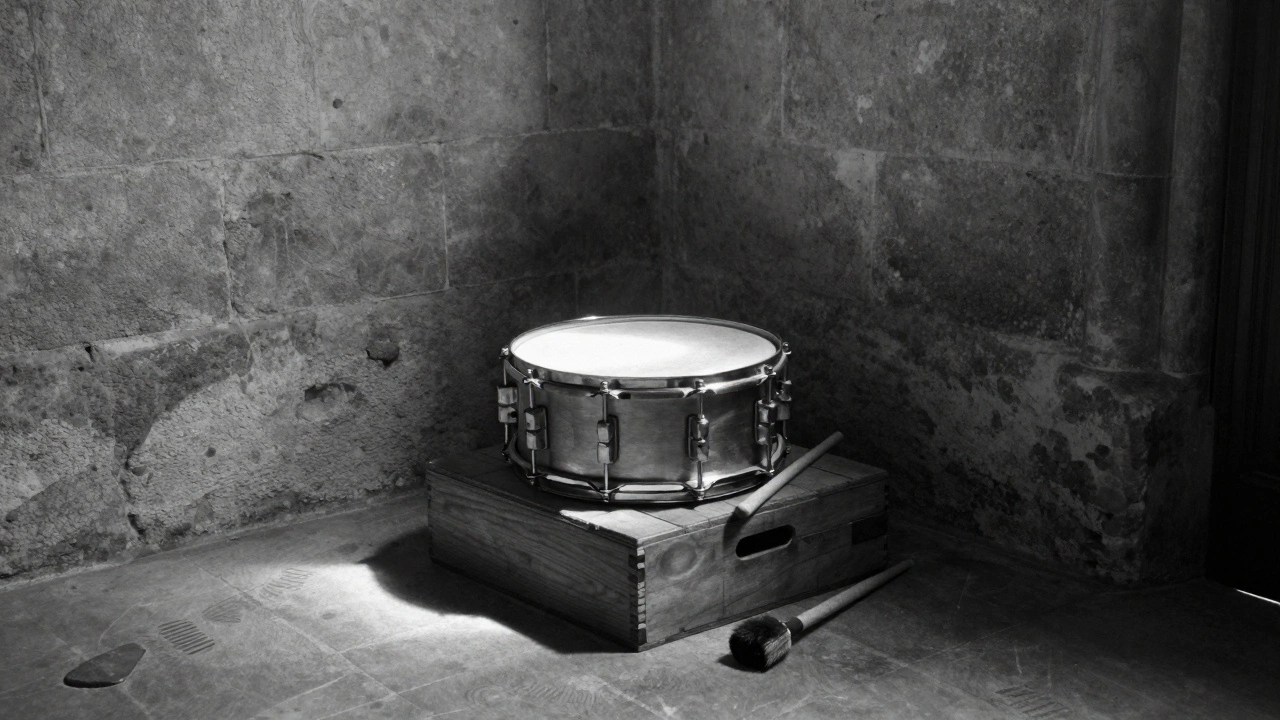
Use brushes on a snare drum. Not sticks. Brushes. That soft swish-like a preacher walking the aisle-creates movement without pounding. Add a light hi-hat pattern: open on the “and” of 2 and 4. Just enough to keep the rhythm from sinking. Then, somewhere in the background, a woodblock taps every fourth measure. Not loud. Just there. Like a heartbeat you didn’t notice until you stopped breathing.
One producer in Memphis used to record percussion in the church’s narthex-just outside the sanctuary. The natural reverb from the stone walls gave the drums a ghostly echo. You can’t replicate that with plugins. But you can get close: record the drums dry, then layer in a single room mic from a church recording-any real church, even a small one. That’s the secret. The sound of a building that’s heard thousands of prayers.
How the Three Work Together
The organ doesn’t play chords the same way the piano does. The piano doesn’t swing the same way the drums do. And the percussion? It doesn’t even try to keep time. It just reminds you that time matters.
Here’s how it breaks down:
- The organ holds the harmonic foundation. It’s the theology of the song.
- The piano adds emotional movement. It’s the cry, the moan, the sigh.
- The percussion is the breath. It doesn’t drive-it sustains.
When you mix them, don’t EQ them to fit. Let them fight. Let the organ’s low end rumble under the piano’s midrange. Let the hi-hat cut through both. The clash? That’s the point. That’s where the spirit lives.
Try this: mute the drums. Play just organ and piano. It feels empty. Now mute the organ. The piano feels lost. Now mute the piano. The organ feels cold. Remove the percussion? It becomes a hymn, not a blues. They need each other.
Production Mistakes to Avoid
Here’s what kills a gospel blues track before it even starts:
- Over-compressing the organ. It needs dynamics. Let the quiet parts breathe.
- Using a metronome. Gospel blues has a pulse, not a beat. Record to a live drummer, not a click.
- Layering too many synths. If it sounds like a video game, you’re not in church.
- Overdubbing piano runs. One thoughtful phrase is worth ten flashy ones.
- Using electronic drums. Real wood. Real skin. Real sweat. That’s the sound.
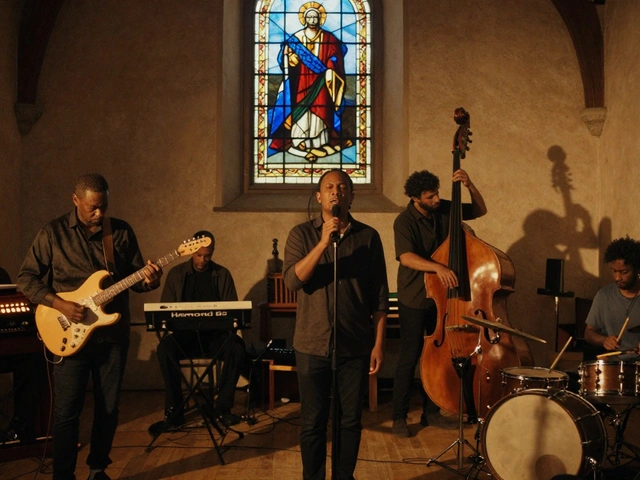
One producer told me: "If it doesn’t sound like it was played in a room with stained glass windows, it’s not gospel blues."
What to Listen To
Study these recordings. Not just the vocals. Listen to the instruments:
- Aretha Franklin brought gospel organ and piano techniques into mainstream blues and soul, defining a generation of female vocalists - "Spirit in the Dark" (1970)
- Sam Cooke transitioned from gospel choir leader to soul icon, using piano and organ to bridge sacred and secular sounds - "A Change Is Gonna Come" (1964)
- Little Milton blended church organ with electric blues guitar, creating a sound that influenced Southern soul - "We’re Gonna Make It" (1968)
- James Cleveland gospel choir director whose recordings preserved the organ-piano-percussion trio as the backbone of Black church music - "The King Is Coming" (1973)
Notice how the organ never plays fast. How the piano lingers on the off-beat. How the drums feel like they’re following the singer, not leading them.
Final Thought: It’s Not About Technique
You don’t need to be a virtuoso to make gospel blues. You need to understand this: this music was born from people who had nothing but their voices, a piano in a corner, and a drum made from a bucket. They didn’t have Pro Tools. They had faith. And they made something that still moves people 60 years later.
So when you’re in the studio, don’t ask, "How do I make this sound professional?" Ask, "How do I make it sound like a church that’s been singing the same song for 150 years?"
Can I use a digital organ instead of a Hammond B-3?
Yes, but only if you’re using a model that emulates the full drawbar system and has real tube preamp simulation. Digital organs like the Nord C2D or the Roland VK-88 can work, but avoid presets. You must manually set the drawbars to 888000000 and use the Leslie speaker simulation. The sound has to feel alive, not programmed.
What’s the best way to record piano for gospel blues?
Use two mics: one close to the hammers (about 6 inches from the strings) and one 3 feet back in the room. Pan them slightly left and right. Record in a room with hardwood floors and bare walls-the natural reverb helps. Don’t use EQ to cut lows. Let the piano boom. That low-end thump is what makes it feel like the floor is shaking.
Should I use a real drummer or programmed beats?
Real drummer, every time. Gospel blues is about feel, not precision. If you must use programming, sample real brushes on a snare from a 1960s gospel record. Then, humanize the timing-add random variation of ±20ms. A perfectly quantized beat sounds dead. A slightly off beat sounds holy.
How do I mix organ and piano without them clashing?
Don’t try to make them fit. Let them occupy different spaces. Cut the piano around 250Hz to make room for the organ’s low end. Cut the organ around 800Hz to let the piano’s attack come through. Pan the organ slightly left, piano slightly right. Use a stereo widener on the piano, not the organ. The organ should feel centered-like it’s coming from the pulpit.
Can I add electric guitar to gospel blues?
Only if it’s played like a second voice, not a lead. Use a clean or slightly overdriven tone. Play simple licks that echo the vocal line. Think of it like a deacon humming along. Don’t solo. Don’t shred. If it sounds like a rock solo, it doesn’t belong.