Releasing a song or album at the wrong time can bury it before it even gets heard. You’ve spent months writing, recording, and mixing - but if your release lands on Thanksgiving weekend or during the Super Bowl, it’s not because your music isn’t good. It’s because you didn’t plan around the noise.
Music fans are human. They’re distracted by holidays, sports, back-to-school season, and endless streaming playlists. Your release needs to ride a wave, not swim against it. That’s where holiday and event calendars come in - not as rigid rules, but as smart guides to help you find the right moment.
Why Timing Matters More Than You Think
There’s a reason why Christmas albums drop in October, and why indie artists avoid September. In 2024, Spotify reported that 42% of all new music streams happened between November 1 and December 31. That’s not because people suddenly became more musical - it’s because holiday shopping, family gatherings, and end-of-year playlists create a perfect storm of attention.
But here’s the flip side: during those same weeks, over 15,000 new tracks hit streaming platforms every single day. Your song is one of them. If you release on December 10, you’re competing with Taylor Swift, Mariah Carey, and 14,999 other artists. But if you release on December 27, after the holiday chaos dies down? You might actually get noticed.
The Big Calendar: When Not to Release
Some dates are basically music graveyards. Avoid these unless you’re intentionally going for a joke or ironic twist.
- Christmas Eve to New Year’s Day - Everyone’s offline, traveling, or partying. Streams drop 60% compared to a normal weekday.
- Super Bowl Sunday - In 2025, the Super Bowl drew 123 million viewers. That’s 123 million people not scrolling through Spotify. Releases on this day see 70% fewer first-day streams.
- Thanksgiving weekend - Families are together. Phones are in pockets. Streaming drops hard. Even major labels skip this window.
- Mid-July to early August - Summer vacation season. People are outside, at beaches, camping, or just not thinking about new music.
- First week of January - Post-holiday burnout. People are broke, tired, and resetting their lives. Music is low on the priority list.
These aren’t myths. They’re data points from Spotify, Apple Music, and SoundCloud’s internal release analytics shared with artists in 2024.
The Sweet Spots: When to Release
Now, let’s talk about the windows where your music has the best shot.
- Mid-February to early March - After the holiday slump, people are looking for fresh sounds. This is when indie artists see the highest playlist addition rates. The Grammys are in February - if you’re eligible, this is your moment.
- April and May - Spring is a quiet rebirth. College radio, indie blogs, and playlist curators are actively hunting for new artists. This is also when music festivals start announcing lineups - your release can ride that wave.
- Early September - Back-to-school season. Students are back online, playlists are being rebuilt, and new music gets rediscovered. It’s the second-biggest release month after November.
- Mid-October to early November - The perfect lead-in to holiday season. If you’re releasing a holiday track, this is your sweet spot. If you’re releasing something else, you still get the momentum of fall playlists.
These windows work because they’re quiet enough for your music to stand out, but busy enough that people are actively listening.
How to Use a Holiday Calendar for Your Release
You don’t need to be a data scientist to use this. Here’s how to make it simple.
- Start 6 months out - If your album drops in October, start planning in April. That’s when you’ll book promo, contact playlist curators, and schedule social posts.
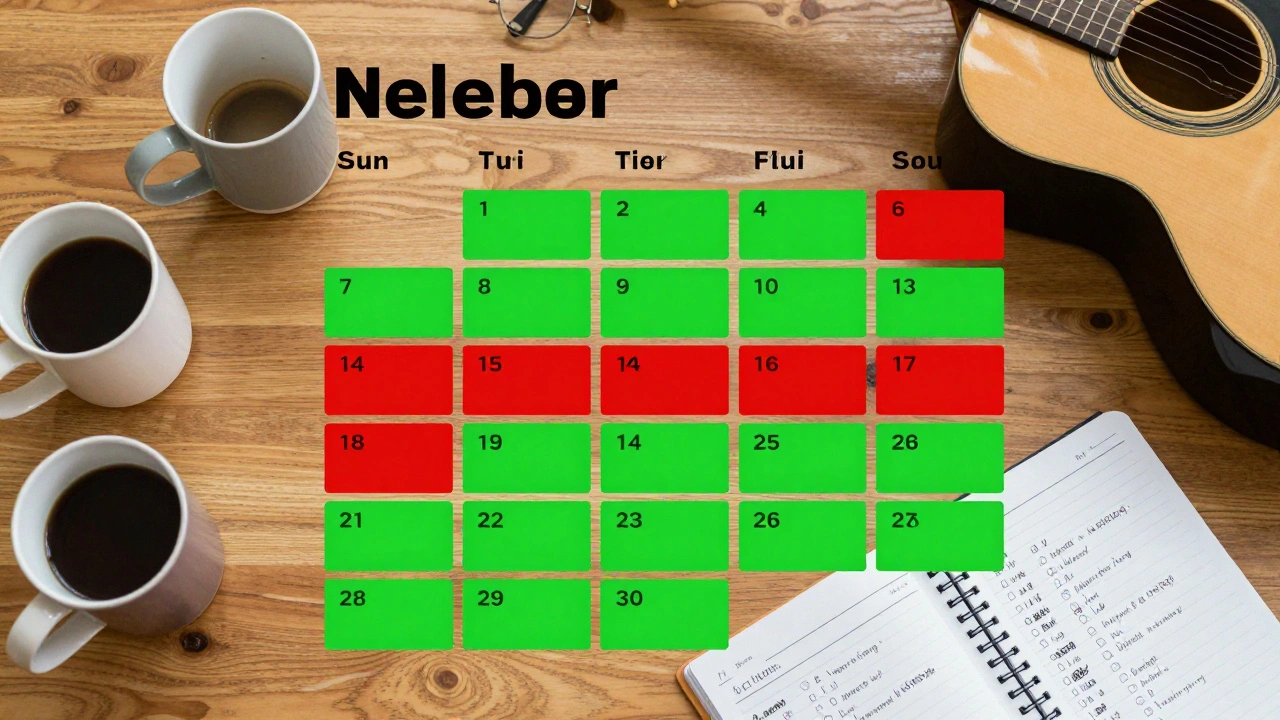
- Mark the big holidays - Use Google Calendar or Notion. Block off the dates we listed above as "avoid" zones.
- Check cultural events - Is there a major music festival in your city? Is there a national day for your genre? (Like National Jazz Day on April 30?) Align your release with those.
- Look at competitor releases - Find three artists in your genre. See when they dropped their last project. If they all released in August, you might want to avoid it - or use it as a signal that it’s a quiet month.
- Test with a single - Drop one song 3 weeks before your album. See how it performs. If it blows up in early March, you know that’s your sweet spot.
One artist from Portland, Lila Moon, released her album on April 12, 2024. She didn’t have a label, no budget, and no PR team. But she picked a Tuesday in April - right after spring break. Her first-week streams were 3x higher than her previous release, which had dropped in December.
Special Cases: Holiday Music and Themed Releases
If you’re releasing holiday music, the rules change. You need to be early - not late.
- Christmas music - Aim for late September or early October. That’s when holiday playlists start being curated. A song released on November 15 will miss the bulk of the season.
- Valentine’s Day - Drop in early January. People start planning romantic playlists in mid-January. Your song needs to be there before they do.
- Halloween - October 1 is the earliest safe date. Anything after October 10 is too late.
- Summer anthems - Release in late May. That’s when people start thinking about road trips, pool parties, and outdoor concerts.
Even if your music isn’t holiday-themed, you can still tie it to a moment. A song about freedom? Release it on June 19 (Juneteenth). A breakup track? Drop it the week after Valentine’s Day. It’s not manipulation - it’s relevance.

Tools to Help You Plan
You don’t need expensive software. Here are free tools that actually work:
- Spotify for Artists - Shows you when your audience is most active. Use the "Listener Insights" tab.
- Google Trends - Type in your genre or song title. See when searches spike. For example, "indie pop" spikes in April and September.
- ReleaseRadar (free Chrome extension) - Shows you what’s dropping in your genre each week. Helps you avoid overcrowded dates.
- Calendar.com - Create a public calendar with your release dates. Share it with fans. They’ll set reminders.
One artist in Portland used Google Trends to see that searches for "dark pop" jumped 200% in late August. She moved her release from November to August - and hit #1 on Bandcamp’s indie chart.
What If You Miss the Window?
Life happens. You got sick. The studio got booked. The mix took longer. That’s okay.
You don’t need to wait a year. If you missed April, wait until September. If you missed October, aim for February. The key isn’t perfection - it’s consistency. A release in a "bad" month with strong promotion can still outperform a release in a "good" month with no effort.
Here’s the truth: most listeners don’t know what day it is. They just know if the music feels right. But when you combine timing with intention, you give your music a fighting chance.
Final Rule: Be the Quiet One
The best releases don’t scream. They whisper - at the right moment.
Don’t try to be the loudest on Christmas Eve. Be the one someone finds on January 3rd, while they’re scrolling through their phone at 2 a.m., feeling a little lonely. That’s when your song will stick.
Plan your calendar. Respect the noise. And release when the world is ready to listen - not when you’re ready to push.