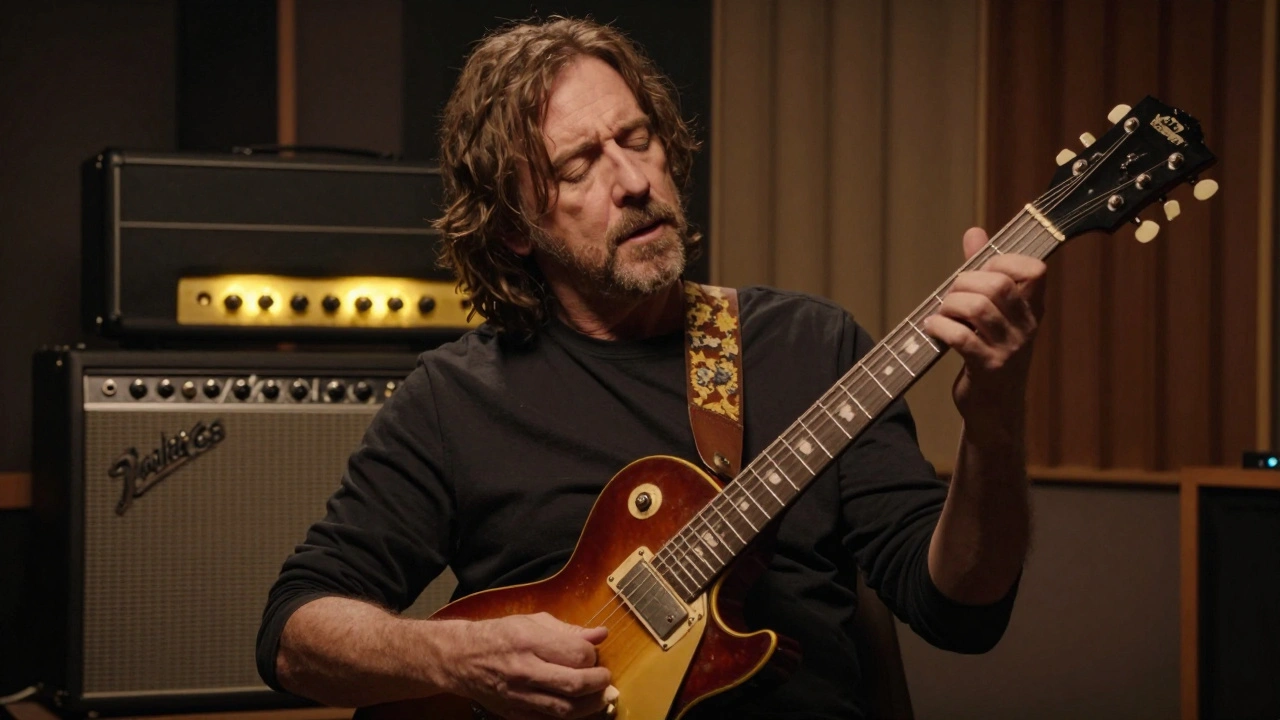
Robert Hill doesn’t just play slide guitar-he makes it sing. When you listen to his playing, you don’t hear metal on strings. You hear a voice. A moan. A cry. A laugh. That’s not luck. It’s years of listening, mimicking, and breaking down how human voices move through blues music-and then translating every nuance into the language of a steel bar and six strings.
Why Slide Guitar Sounds Like a Voice
Slide guitar isn’t about speed. It’s about vocal-like phrasing. Most guitarists think of notes as fixed points on the fretboard. But blues singers don’t hit notes-they glide into them. They bend, slur, and linger. Robert Hill learned this by listening to B.B. King, Muddy Waters, and Koko Taylor. Not just their songs, but their breathing, their pauses, their vibrato. He realized the slide could do what the throat does: it can cry on a note, whisper before a phrase, or shout with a sudden push.
He started by recording himself playing along with old 78 rpm records. He’d slow them down, note by note, until he could hear how the singer slid from E to G, how they held the third of the chord just a half-step shy before resolving. Then he’d copy it on his guitar. Not the pitch-the feeling.
The Tools He Uses
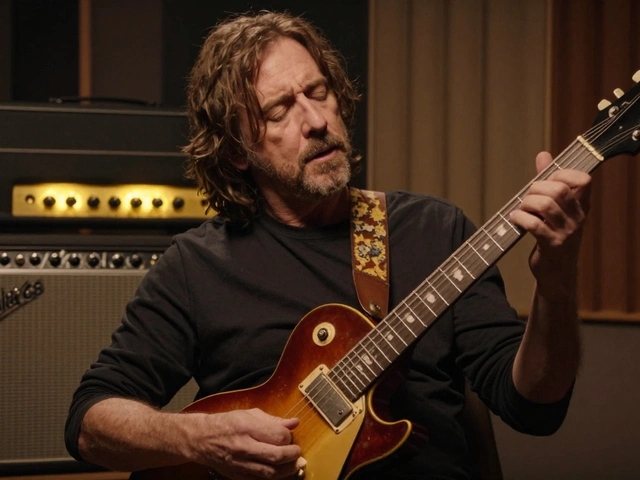
Robert doesn’t use fancy gear. His main slide is a .375-inch brass tube, worn smooth from years of use. He strings his 1957 Gibson Les Paul with .011-.052 gauges-thick enough to hold tension under pressure, but not so heavy that the slide won’t glide. He tunes to open G (D-G-D-G-B-D), which gives him three notes of the G major chord under his fingers without moving. That’s key. He doesn’t need to fret. He needs to float.
His amp? A 1965 Fender Deluxe Reverb, cranked just enough to break up slightly. He doesn’t need distortion-he needs response. When he presses the slide into the string, he wants to feel the note bloom. Not like a synth, but like a human exhaling into a note. He avoids effects. No reverb, no delay. Just the room, the guitar, and the silence between phrases.
How He Builds Phrasing
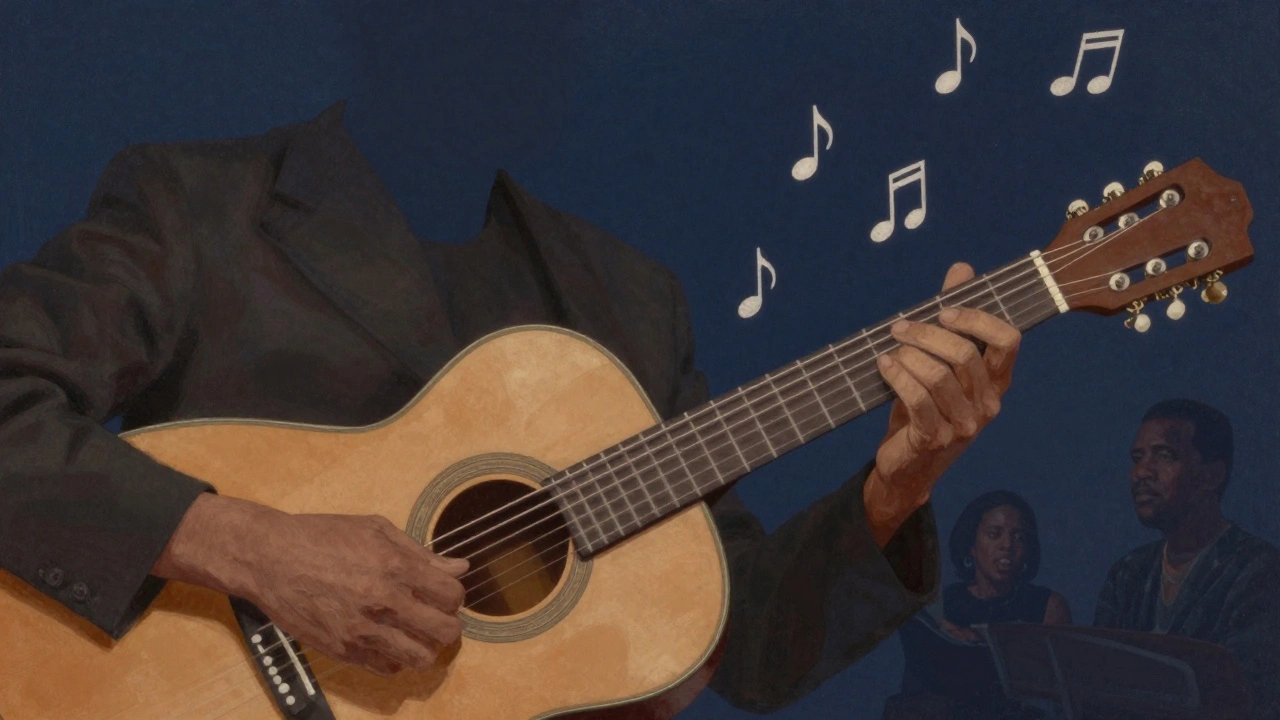
Robert’s approach to phrasing is simple: think like a singer. Every lick starts with a question. He imagines the lyric-even if there isn’t one. What would the singer say here? Would they sigh? Groan? Laugh? Then he finds the note that matches that emotion.
Here’s how he does it in practice:
- Start with a bend, not a note. Instead of playing a G, he slides into it from F#-just like a singer might approach a note from below.
- Let silence breathe. He’ll play three notes, then stop. Not to rest-but to let the listener feel the space where the next word would come.
- Use vibrato like a sigh. His vibrato isn’t fast. It’s slow, wide, and uneven-like someone holding back tears.
- Play behind the beat. He doesn’t rush. He lingers on the edge of the note, as if the music is dragging him forward.
He calls it "singing with your fingers." And he’s right. When you play blues guitar like a voice, you don’t need to play many notes. You just need to play the right ones-with the right weight, the right timing, the right ache.
What Most Players Get Wrong
Too many slide players chase tone. They think a smoother slide or a brighter metal bar will make them sound better. Robert says that’s backwards. Tone comes from emotion-not equipment. He’s heard players with $2,000 slides who can’t make a single phrase feel human.
The real problem? They don’t listen enough.
Robert spends at least 30 minutes a day just listening-not playing. He picks one blues singer: Little Walter, Son House, or Etta James. He plays their song on repeat. Not to learn the notes. To learn how they live inside the music. He says, "If you can’t hear the singer’s breath, you can’t play the slide right."
How He Teaches It
Robert doesn’t teach scales. He doesn’t show licks. He gives his students a single task: "Sing a blues phrase out loud. Then play it on the guitar. Don’t think about the fretboard. Just match the sound."
He asks them to record themselves singing a simple 12-bar phrase-"I’m gonna leave this town, baby, but I don’t know where I’m going." Then he has them play it on slide guitar. Most fail. They play the right notes, but the emotion is flat. So he makes them sing it again. Louder. With more pain. More hope. More doubt.
After three tries, something shifts. Their fingers stop thinking. They start feeling. And that’s when the slide starts to sing.
The Secret: It’s Not About Technique
Robert’s playing doesn’t have flashy bends or lightning-fast runs. What makes it unforgettable is how it breathes. He doesn’t play to impress. He plays to connect. That’s why his music hits harder than most players who can play twice as fast.
He says, "The slide guitar isn’t an instrument. It’s a translator. It turns what’s inside you into sound. If you’re quiet inside, the guitar will be quiet. If you’re screaming, it’ll scream too."
That’s why his recordings feel like conversations. Not performances. You don’t hear a guitarist. You hear a soul.
Can you play vocal-like blues phrasing without using a slide?
Yes, but it’s harder. You can mimic slide phrasing with bends, hammer-ons, and vibrato on a standard guitar-but you’ll never fully replicate the smooth, continuous glide that a slide allows. The slide removes the frets, letting you move freely between notes like a voice. That’s why blues singers and slide players sound so similar. You can approximate it, but the slide gives you the full emotional range.
What’s the best slide material for beginners?
Brass is the most forgiving. It’s heavy enough to stay stable, smooth enough to glide, and warm enough to sound natural. Glass slides are lighter and brighter, but they slip more and require more control. Steel is loud and bright, great for rock, but can feel harsh for blues. Start with brass-it’s what Robert Hill uses, and it’s what most blues legends preferred.
Do you need to tune to open tuning to play slide blues?
Not always, but it helps. Open tunings (like open G or open D) let you play full chords with the slide, making it easier to harmonize and create rich, vocal-like chords. Standard tuning works fine for single-note lines, but open tuning gives you more room to breathe. Robert uses open G because it lets him play bass notes with his thumb while sliding melodies with his fingers-like a singer harmonizing with themselves.
How long does it take to learn vocal-like phrasing on slide guitar?
It’s not about time-it’s about listening. You can learn the physical technique in weeks. But learning to phrase like a voice? That takes years. Robert spent over five years just listening to blues singers before he felt his playing had any soul. The slide is easy. The feeling? That’s the hard part. And that’s what makes it beautiful.
Is Robert Hill’s style only for traditional blues?
No. His approach works for any music that values emotion over speed. You hear his phrasing in modern soul, Americana, and even ambient guitar music. The technique isn’t genre-specific-it’s human-specific. If you want your playing to move people, not just impress them, his method applies to any style.