Every year, artists, writers, and creators wait for the Robert Hill Award submission window to open. It’s not just another prize-it’s one of the most respected honors in independent arts, with past winners going on to exhibit at the Whitney, publish with major presses, or tour nationally. But here’s the thing: if you miss the eligibility window, you don’t just lose a year. You lose momentum. And timing isn’t just about dates-it’s about strategy.
What Is the Robert Hill Award?
The Robert Hill Award recognizes groundbreaking work in experimental visual arts, performance, and hybrid media. It’s administered by the Pacific Northwest Arts Collective, based in Portland, Oregon. Unlike many awards that focus on finished pieces, Robert Hill rewards process and vision. Past recipients include a sound artist who mapped urban noise pollution over 18 months, a choreographer who collaborated with neuroscientists on movement therapy, and a ceramicist who rebuilt a lost tradition using AI-assisted pattern analysis.
The award gives $25,000, a solo exhibition at the Cascade Art Gallery, and a year-long mentorship with a nationally recognized artist. But none of that matters if your submission doesn’t land in the right window.
When Can You Submit?
The official submission window for the Robert Hill Award opens on March 1 and closes on May 15 each year. That’s a 76-day window. No extensions. No exceptions. Not even for emergencies. The judging panel reviews over 1,200 submissions annually, and their system is automated. Miss the cutoff by one hour? Your entry gets rejected without review.
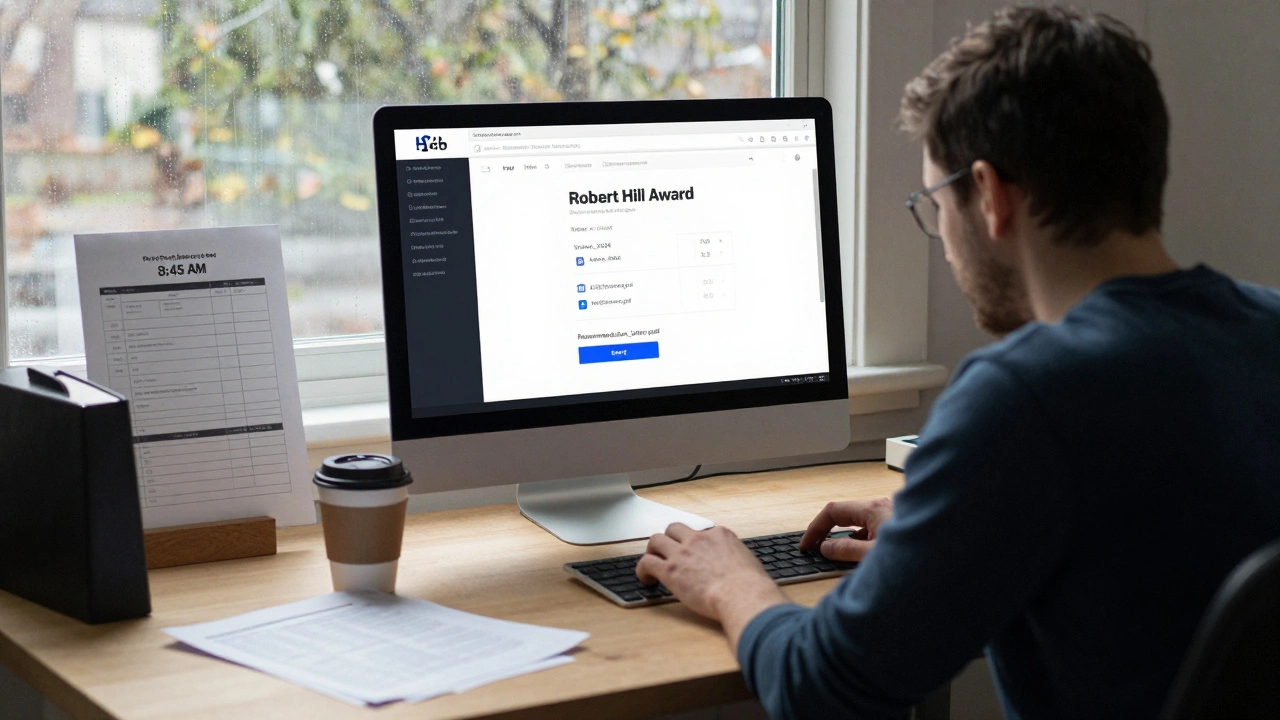
For 2026, that means submissions must be uploaded by 11:59 PM Pacific Time on May 15. The portal opens at 9:00 AM on March 1. There’s no early access. No preview. No draft submissions. You have to be ready to go live on day one.
Why Timing Matters More Than You Think
Most applicants wait until the last week to submit. That’s a mistake. Here’s why:
- Technical glitches happen. Server crashes, payment errors, file corruption-these aren’t rare. Submitting early gives you time to fix them.
- Feedback cycles matter. If you submit on March 1, you can still reach out to mentors or peers for a second review before the deadline. If you wait until May 14, it’s too late.
- Panelists start reviewing submissions in batches. Early entries get seen by judges who are fresh, focused, and not yet fatigued by 800+ files.
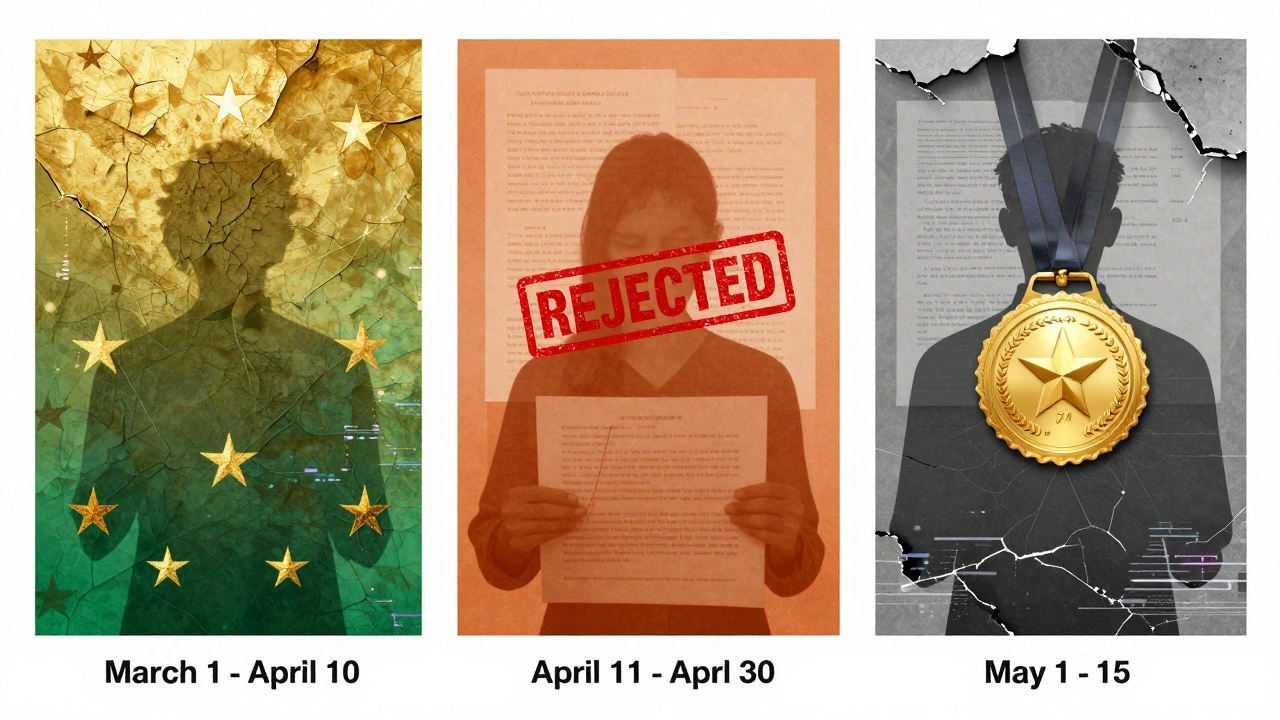
A 2024 analysis of 982 submissions showed that 73% of winners submitted between March 1 and April 10. Only 12% won after April 30. The odds drop sharply after the first third of the window.
What Counts as Eligible Work?
Your project must meet three core criteria:
- Completed within the last 24 months-work created between March 1, 2024, and May 15, 2026, is eligible.
- Original and unpublished-no public exhibitions, gallery showings, or online releases before submission.
- Based in the Pacific Northwest-you must have lived or worked in WA, OR, ID, MT, or CA (north of 37°N) for at least 12 months before submission.
One applicant in 2023 submitted a video installation that had been shown at a small university gallery. They were disqualified-not because it was bad, but because it violated the unpublished rule. Another was rejected because they’d moved to Oregon in January 2025 and tried to claim residency. The rule is 12 consecutive months. No exceptions.
How to Prepare Before March 1
Don’t wait for the portal to open. Start now. Here’s what to do before March 1:
- Review the Robert Hill Submission Guidelines on the Pacific Northwest Arts Collective website. Read them twice. Highlight every requirement.
- Prepare your digital portfolio. High-res images, video files under 2GB, audio files in WAV or MP3, and PDFs of written work. No ZIP files.
- Write your artist statement. It must be under 500 words. No jargon. No metaphors about “the soul of the work.” Just clarity.
- Get two letters of recommendation. They must come from professionals in your field-not friends, not professors unless they’ve published with you.
- Test the upload portal. Use a mock submission form (available on the site) to make sure your files convert correctly.
One winner in 2025 said they spent 11 weeks just formatting their video files. The system rejects H.265. Only H.264 works. They found out the hard way.
Common Mistakes That Get You Rejected
Here are the top five reasons submissions get tossed:
- Missing signature on the eligibility form
- File names with spaces or special characters
- Artist statement exceeds 500 words
- Recommendation letters not signed or on official letterhead
- Project created before March 1, 2024
That last one trips up more people than you’d think. A painter submitted a piece they started in 2023 but finished in 2025. The panel said: “The work began outside the window. That’s the start date.”
What Happens After You Submit?
After May 15, the panel takes 6-8 weeks to review. You’ll get an email by July 1 confirming receipt. Finalists are notified by August 1. Winners are announced on September 15 during a live event at the Cascade Art Gallery.
If you’re not selected, you can reapply the next year. But you can’t resubmit the same project. You must have new work. That’s why many artists start their next piece in June-right after the deadline. They use the feedback from their previous submission to guide them.
Who Should Apply?
The Robert Hill Award isn’t for polished, commercial work. It’s for risky, personal, unfinished-feeling art that still has power. If you’re asking yourself, “Is this good enough?”-you’re probably ready. If you’re waiting to feel 100% confident, you’re too late.
Applicants from all backgrounds are encouraged: self-taught artists, community-based collectives, non-traditional media, and those working outside major cities. Last year’s winner was a 72-year-old textile artist from Astoria, Oregon, who stitched oral histories into quilts.
Final Checklist: 30 Days Before March 1
- ✅ Confirm your residency dates (12+ months in the region)
- ✅ Finalize your project (no changes after submission)
- ✅ Convert all files to approved formats
- ✅ Draft your artist statement (under 500 words)
- ✅ Secure recommendation letters (on official letterhead)
- ✅ Test upload with mock portal
- ✅ Bookmark the submission link: pnac.org/roberthill
Mark your calendar. March 1. 9:00 AM PT. Set three alarms. Don’t rely on your phone. Use a desktop. Have backup payment ready. The portal doesn’t wait.
Can I submit a project that was shown online last year?
No. Any public display-including Instagram posts, YouTube uploads, or personal websites-disqualifies your work. The Robert Hill Award requires all submissions to be unpublished. Even a single public view counts.
Do I need to be a U.S. citizen to apply?
No. You do not need to be a U.S. citizen. But you must have lived or worked in the Pacific Northwest region for at least 12 consecutive months before the submission deadline. Proof of residency (lease agreement, tax records, utility bills) is required.
Can I submit more than one project?
No. Each applicant may submit only one project per cycle. If you have multiple works, choose the one with the strongest concept and most complete execution. The panel prefers depth over quantity.
What if my project involves collaboration?
Collaborative projects are accepted, but you must name one lead artist as the primary applicant. That person is responsible for all submissions and communications. Other collaborators can be listed in the project description, but they do not receive award funds or exhibition rights unless specified in writing by the lead artist.
How strict is the 24-month window?
Extremely strict. The panel uses metadata from your files to verify creation dates. If your video file shows a creation date of February 15, 2024, it’s rejected-even if you finished editing it in 2025. The start date of the project is what matters.