Ever scroll through a streaming service for hours and still can’t find something you actually want to watch? You’re not alone. Millions of users hit the same wall every day-not because there’s nothing to watch, but because the system can’t figure out what they’re really looking for. The secret isn’t more content. It’s better genre tags.
Why Genre Tags Matter More Than You Think
Genre tags aren’t just labels. They’re the invisible map that guides users from confusion to satisfaction. When you tag a show as "psychological thriller," you’re not just saying it’s scary. You’re telling the algorithm: this show has slow-burn tension, unreliable narrators, and moral ambiguity-just like Better Call Saul or True Detective Season 1.
Platforms like Netflix, Hulu, and Amazon Prime don’t just guess what you like. They use metadata-genre tags, mood indicators, pacing cues, and thematic keywords-to build your personal profile. A single wrong tag can send your recommendation stream off track. Tag a cozy mystery as "horror"? You’ll keep getting jump-scare-heavy content instead of charming small-town sleuths. Tag a romantic comedy as "drama"? You’ll miss out on the lighthearted stuff you actually enjoy.
How Streaming Services Use Genre Tags
Most platforms use a three-layer tagging system:
- Primary genre - the main category (e.g., "Crime," "Romance," "Sci-Fi")
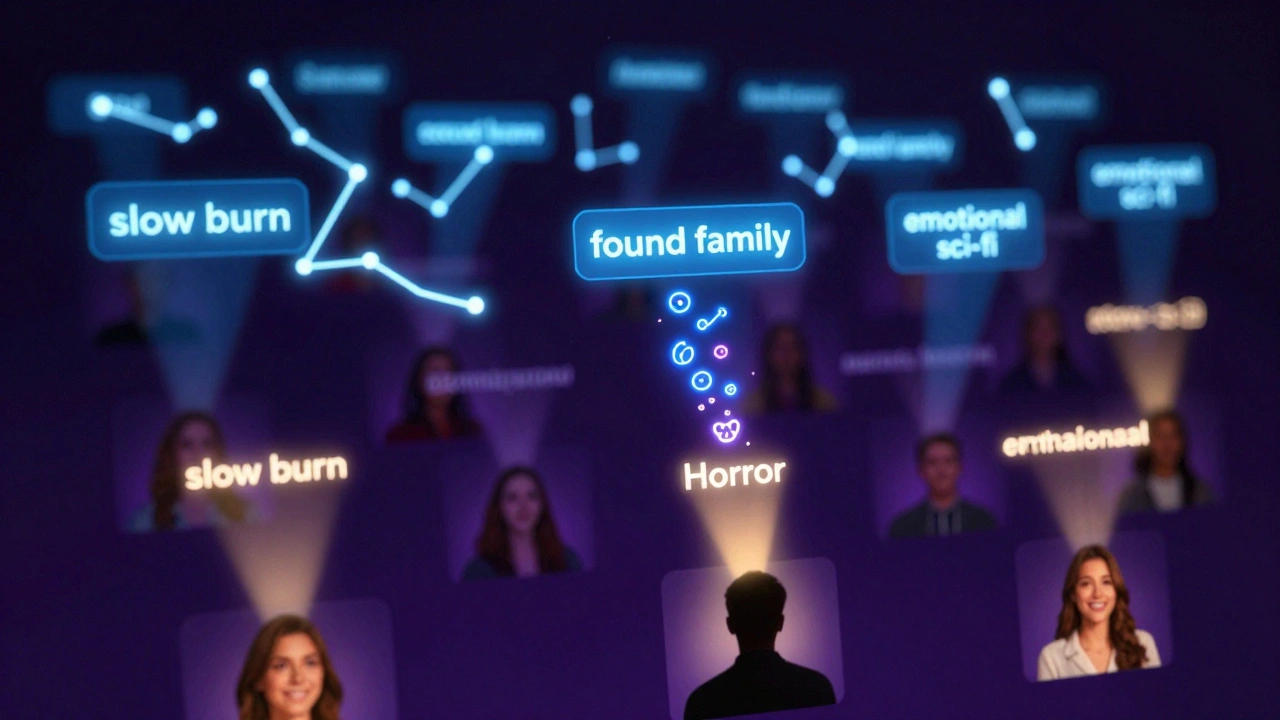
- Secondary tags - subgenres or mood modifiers (e.g., "noir," "slow burn," "found family")
- Thematic keywords - emotional or narrative hooks (e.g., "betrayal," "second chances," "class struggle")
Netflix’s internal system alone uses over 70,000 unique tags. That’s not a typo. Each one is manually assigned by content analysts who watch every episode, take notes on tone, pacing, character arcs, and visual style. A show like Stranger Things isn’t just "Sci-Fi"-it’s tagged as "80s nostalgia," "supernatural," "found family," "teen drama," and "government conspiracy." Each tag pulls in a different audience segment.
Smaller platforms like Tubi or Crackle rely even more heavily on accurate tagging. Without big marketing budgets, they depend on discoverability through search and recommendation engines. A poorly tagged indie film might never reach the viewers who’d love it.
The Cost of Bad Tagging
Imagine a documentary about rural healthcare in Appalachia. It’s deeply human, quietly powerful, and shot with a poetic realism. But the uploader tags it as "Education" and "Politics." What happens?
- It doesn’t show up in searches for "documentary" or "human stories."
- It doesn’t get recommended to fans of 13th or The Social Dilemma.
- It gets buried under generic school lectures and policy debates.
That’s not a failure of the content. It’s a failure of categorization. Studies from the University of Michigan’s Media Lab show that properly tagged independent films see a 47% increase in views within the first 30 days. That’s not magic. That’s precision.
Even big studios mess this up. A major studio once released a critically acclaimed drama about aging parents and dementia. They tagged it as "Family Drama"-a broad term that also includes sitcoms and teen coming-of-age stories. The result? The film’s audience was 62% older adults who didn’t use streaming services regularly. Meanwhile, younger viewers who loved similar films like Marriage Story never saw it.
What Makes a Good Genre Tag?
Not all tags are created equal. Here’s what works:
- Specific, not vague - "Horror" is too broad. "Body horror" or "folk horror" tells the algorithm exactly what kind of fear you’re serving.
- Audience-aligned - If your target viewers search for "slow-paced character study," use that phrase. Don’t just say "drama."
- Consistent with industry standards - Use tags that other platforms use. If everyone calls it "cozy mystery," don’t call it "gentle whodunit."
- Multi-layered - Combine genre, mood, and theme. "Romantic comedy with workplace tension and LGBTQ+ leads" is better than just "romance."
Tools like IMDb’s Advanced Search and Letterboxd’s genre filters show how audiences already think about categories. Use those as your guide. If people are grouping films under "quiet horror" or "emotional sci-fi," start tagging that way too.
Real-World Tagging Examples
Let’s look at three titles and how they’re tagged correctly:
| Content | Poor Tagging | Effective Tagging |
|---|---|---|
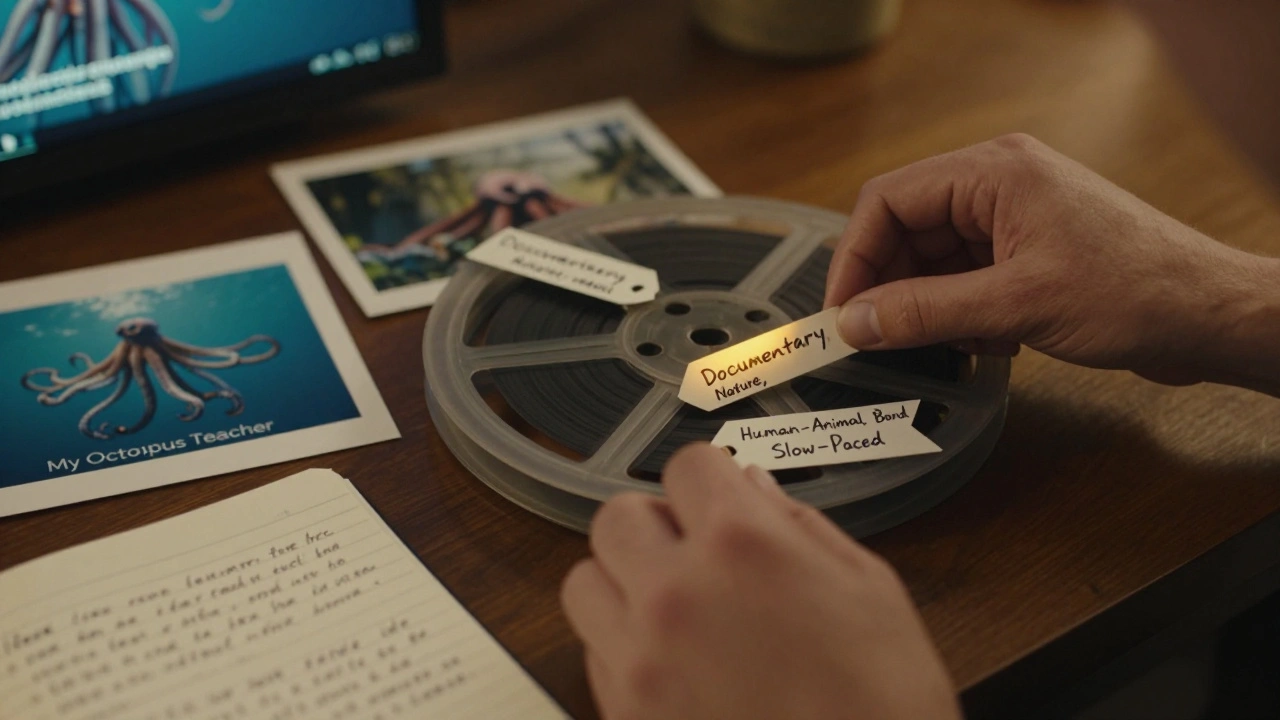
| My Octopus Teacher | Documentary, Nature | Documentary, Nature, Emotional, Wildlife, Human-Animal Bond, Slow-Paced |
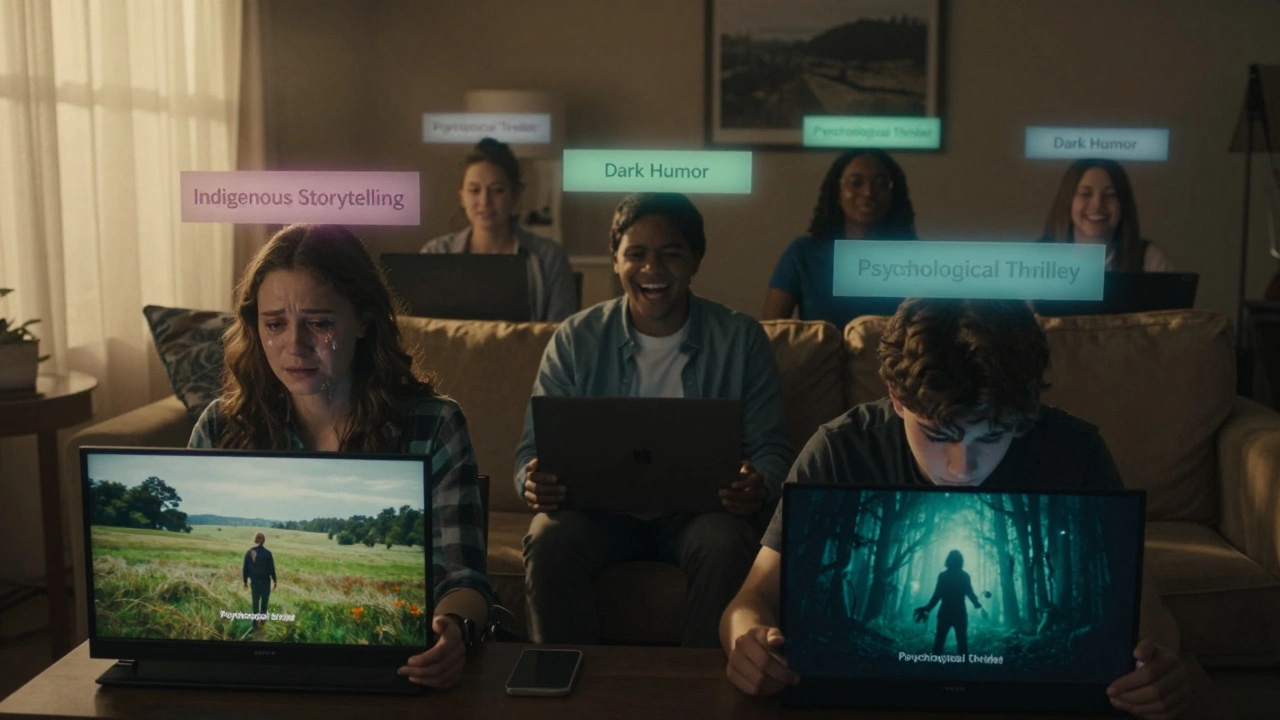
| Reservation Dogs | Comedy, Drama | Comedy, Drama, Indigenous Storytelling, Teen Coming-of-Age, Rural Setting, Dark Humor |
| Severance | Sci-Fi, Thriller | Sci-Fi, Psychological Thriller, Corporate Satire, Dystopian, Slow Burn, Existential |
Notice how the effective tags don’t just describe the plot-they describe the feeling and the audience experience. That’s what makes content discoverable.
How Creators Can Improve Their Tagging
If you’re uploading content to a platform-whether it’s a short film, podcast, or indie series-here’s how to tag like a pro:
- Watch three similar titles that succeeded. What tags do they use? Copy the language.
- Ask your target viewers: "What would you search for to find this?" Don’t guess. Ask.
- Use a mix of broad and niche tags. Start with one primary genre, then add 3-5 specific modifiers.
- Avoid overloading. Ten tags is the max. More than that dilutes focus.
- Update tags if your audience responds differently than expected. If people are watching your "crime" film but calling it "mystery," adjust.
Platforms like Vimeo and YouTube allow creators to edit tags after upload. Use that power. Don’t set it and forget it.
The Bigger Picture: Discoverability Is a Human Problem
At the end of the day, genre tagging isn’t about algorithms. It’s about connection. It’s about making sure the person who needs your story finds it. The person who lost a parent and is looking for a quiet film about grief. The teen who relates to a story about being an outsider. The retiree who wants a mystery with clever dialogue, not explosions.
Good tagging doesn’t just help you get seen. It helps your content land in the right hands. And that’s what makes all the difference.
Can genre tags really affect how many people watch my content?
Yes. Studies show that properly tagged independent films and shows see up to 47% more views in their first month. Platforms use tags to match content with user behavior. A single wrong tag can bury your work-or mislead viewers who might have loved it.
How many genre tags should I use per piece of content?
Use one primary genre and 3-5 specific secondary tags. That’s 4-6 total. More than that makes it harder for algorithms to prioritize what matters. Less than three leaves too much room for misclassification.
Do major platforms like Netflix use the same tags as indie creators?
They use the same types of tags but with more depth. Netflix has over 70,000 unique tags, including nuanced ones like "slow burn," "found family," and "emotional sci-fi." Indie creators should aim for the same level of specificity-just with fewer tags. Match the language your audience uses.
What’s the difference between genre and mood tags?
Genre tells you what kind of story it is (e.g., "Horror," "Romance"). Mood tags tell you how it feels (e.g., "eerie," "heartfelt," "cynical"). Both are needed. A "Romance" with a "cynical" mood is very different from one with a "whimsical" mood-even if the plot is similar.
Can I change genre tags after uploading my content?
Yes, on most platforms, including YouTube, Vimeo, and even some niche streaming services. If you notice viewers are searching for different terms than you used, update your tags. It’s one of the easiest ways to improve discoverability without re-editing your content.