If you’ve ever heard a raw, wailing guitar solo or a drumbeat that made your chest shake, you’ve felt the pulse of the blues. And if that same sound made you want to jump up and dance, you’re hearing rock ’n’ roll - but not as a new invention. It’s the blues, turned up louder and faster.
Where It All Began: The Blues in the Mississippi Delta
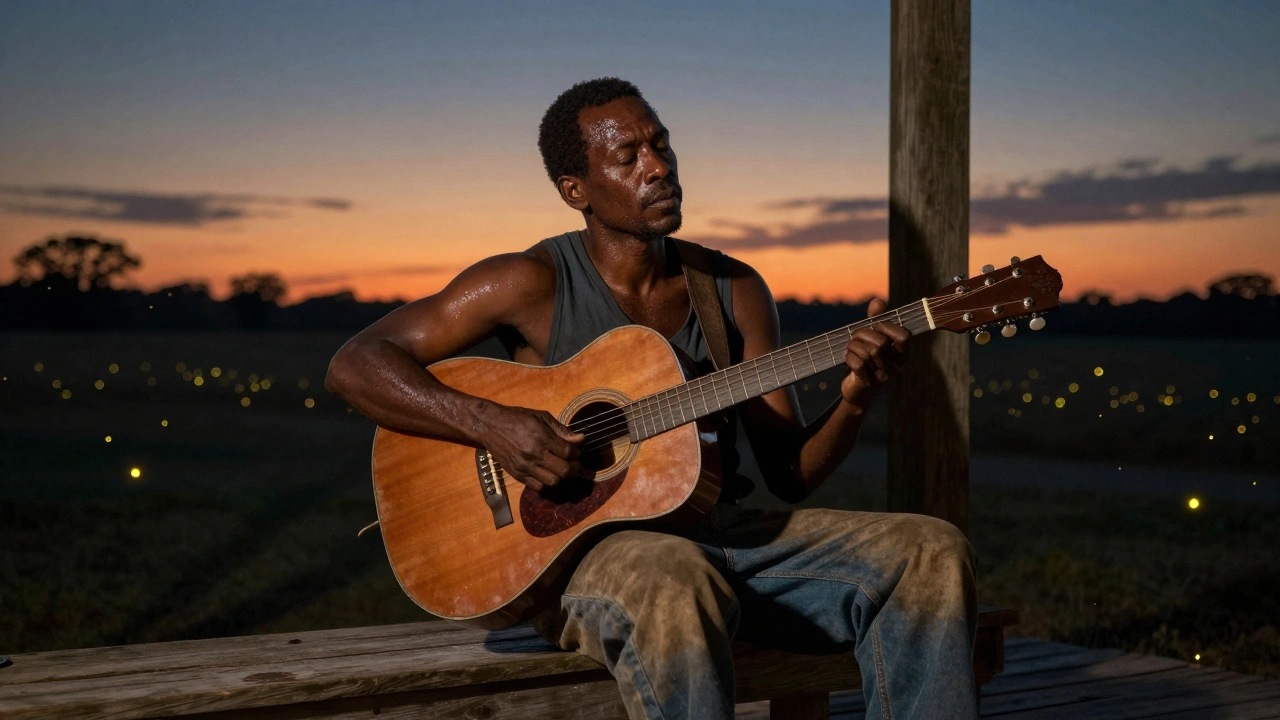
Before there was Chuck Berry or Led Zeppelin, there were sharecroppers in the Mississippi Delta singing about hard days, broken trains, and women who left without a note. These songs weren’t written on paper. They were passed down in fields, juke joints, and porch steps. The structure? Simple: three lines, the third repeating the first, with a twist. The sound? Raw, emotional, built on call-and-response patterns and bent notes that sounded like someone crying into a guitar.
Artists like Robert Johnson, Charley Patton, and Son House didn’t just play music - they told stories of survival. Their guitars were often homemade. Their amps? None. But the feeling? It carried. That feeling didn’t disappear. It traveled.
The Great Migration: Blues Moves North
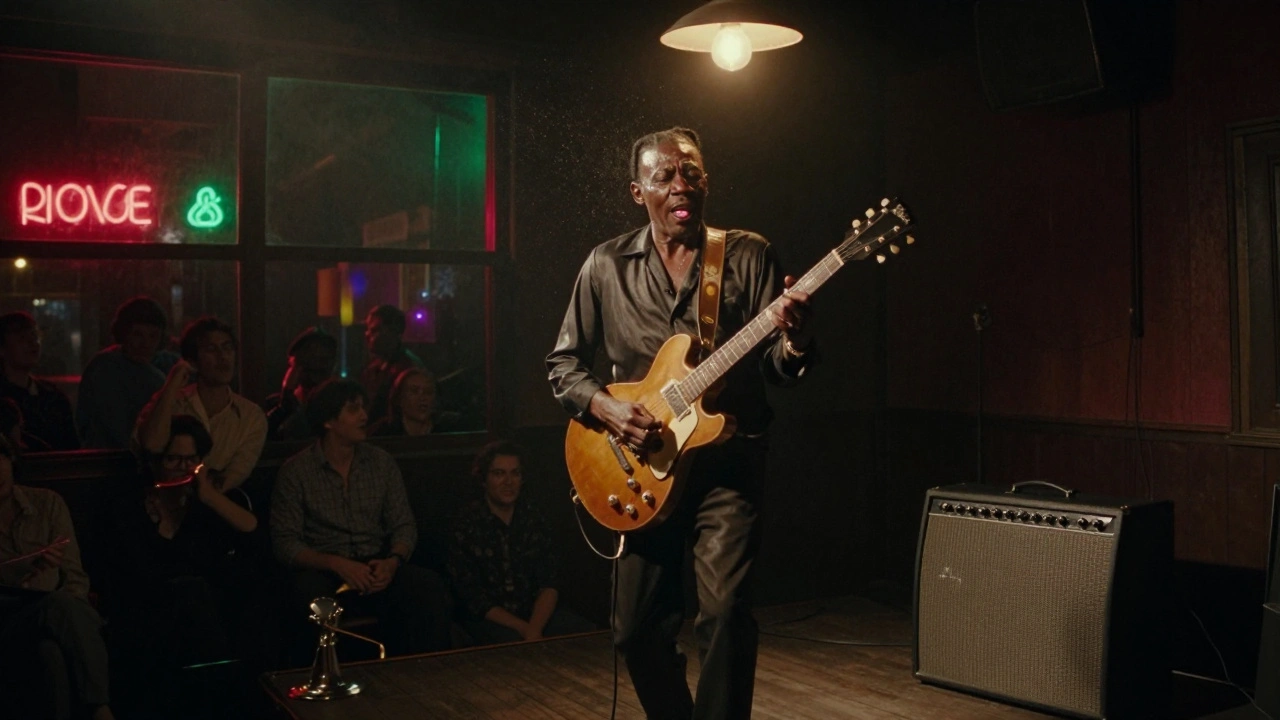
In the 1940s, hundreds of thousands of Black families left the South for cities like Chicago, Detroit, and St. Louis. They brought their music with them. But the Delta’s acoustic guitars couldn’t compete with factory noise and crowded bars. So they plugged in.
Muddy Waters turned a slide guitar into a snarling beast. Howlin’ Wolf howled over amplified harmonicas. Willie Dixon wrote bass lines that became the backbone of everything that came after. This was Chicago blues - tighter, punchier, electric. And it was the direct blueprint for what rock ’n’ roll would become.
The Birth of Rock ’n’ Roll: Not a New Sound, Just a New Name
When Bill Haley’s "Rock Around the Clock" hit number one in 1955, it wasn’t because it was something entirely new. It was because it took the 12-bar blues structure, sped up the tempo, added a backbeat, and gave it a white teenager’s label. The same chord progression - I-IV-V - that Robert Johnson used in "Sweet Home Chicago" became the foundation of Elvis Presley’s "Hound Dog" and Little Richard’s "Long Tall Sally."
Elvis didn’t invent rock. He popularized it. And he didn’t do it alone. Black artists like Fats Domino, Bo Diddley, and Sister Rosetta Tharpe were already doing it. Tharpe’s gospel-infused electric guitar playing in the 1930s and 40s? That’s where the rock guitar solo began. She was playing like a rock star before the term existed.
The Electric Guitar: The Instrument That Connected Them
The electric guitar didn’t just change the volume - it changed the soul of the music. In the hands of bluesmen like T-Bone Walker, it became a voice. Not just a tool. It could cry, laugh, scream, and whisper. When Jimi Hendrix flipped his guitar upside down and let loose a feedback-drenched solo, he wasn’t breaking rules. He was following a tradition that started with a man in Mississippi bending a string until it screamed.
Chuck Berry’s guitar riffs? Straight from blues licks. His "Johnny B. Goode" intro? A variation of Muddy Waters’ "Hoochie Coochie Man." The same riff. Different name. Same heartbeat.
Lyrics, Attitude, and Rebellion
Blues lyrics were never about dancing in a ballroom. They were about being tired, broke, betrayed, or just plain fed up. Rock ’n’ roll took that same attitude - the defiance, the restlessness - and wrapped it in denim and slicked-back hair.
When Jerry Lee Lewis smashed piano keys and sang about burning down a house, he wasn’t inventing chaos. He was channeling the same energy that made Howlin’ Wolf howl at the moon. The rebelliousness? That came from the blues. The youth culture? That just gave it a microphone.
Why This Matters Today
Look at any rock band from the last 60 years - The Rolling Stones, The White Stripes, Gary Clark Jr., even modern acts like The Black Keys - and you’ll hear the same structure: a 12-bar progression, a driving rhythm, a vocal that sounds like it’s been through hell.
Modern blues artists still use the same scales, the same call-and-response, the same emotional honesty. And rock bands? They still borrow licks from B.B. King and Albert King. The DNA hasn’t changed. It’s just been passed down.
There’s no such thing as "pure" rock. There’s only blues that got louder.
Key Elements That Link Blues and Rock ’n’ Roll
- 12-bar blues progression: The same three-chord pattern (I-IV-V) used in both
- Blue notes: Flattened 3rd, 5th, and 7th notes that create tension and emotion
- Call-and-response: Vocal line answered by guitar or band
- Driving backbeat: Emphasis on beats 2 and 4 - the heartbeat of rock
- Improvisation: Solos aren’t written - they’re felt

Who Really Started Rock ’n’ Roll?
Most people point to Elvis or Chuck Berry. But the truth? Rock ’n’ roll was born in the 1940s, in Black neighborhoods, through artists who never got the credit. Sister Rosetta Tharpe’s 1944 recording of "Strange Things Happening Every Day" used electric guitar, a driving rhythm, and gospel energy - it’s the first true rock song. Chuck Berry built on it. Elvis made it mainstream. But the roots? They’re deep in the Delta.
How Blues Shaped Rock’s Sound
Let’s break it down:
| Element | Blues Origin | Rock Adaptation |
|---|---|---|
| Chord Progression | 12-bar I-IV-V | Same structure, faster tempo |
| Vocal Style | Raw, emotional, bent notes | Shouted, snarled, belted |
| Guitar Technique | Slide, bending, vibrato | Distorted solos, feedback |
| Rhythm | Swing feel, shuffle beat | Backbeat (snare on 2 and 4) |
| Lyric Themes | Hard times, love lost, travel | Rebellion, freedom, youth energy |
Why the Blues Still Lives in Rock
Modern rock bands don’t just play blues covers - they play blues in their bones. The Black Keys? Their whole sound is stripped-down Chicago blues with a garage edge. Gary Clark Jr.? He plays like B.B. King’s ghost sat on his shoulder. Even bands like Foo Fighters and Arctic Monkeys use blues-based riffs that trace back to Muddy Waters.
When you hear a guitar solo that feels like it’s bleeding? That’s the blues. Not a style. A language. And rock didn’t replace it. It just learned to speak it louder.
Did rock ’n’ roll steal from the blues?
It didn’t steal - it inherited. Black musicians created the blues, and white artists later popularized its sound under a new name. Many early rock hits were direct covers of blues songs, often without credit or payment to the original artists. That’s a history of exploitation. But the music itself? It’s a shared legacy. The DNA is the same.
Can you tell if a song is blues or rock just by listening?
Sometimes. Blues tends to be slower, more about feeling than energy. Rock is faster, louder, and built for movement. But the chord progressions? Often identical. A song like "Hound Dog" is blues in structure, rock in delivery. The line isn’t sharp - it’s blurry on purpose.
Why do blues and rock sound so similar today?
Because they’re the same tree. Blues is the root. Rock is the branch. Even modern rock that sounds totally different - like indie or metal - still uses blues scales, bending techniques, and emotional phrasing. You can’t remove the root without killing the tree.
Who are the most important blues artists for rock fans to know?
Start with Muddy Waters, Howlin’ Wolf, B.B. King, and Robert Johnson. Then listen to T-Bone Walker and Sister Rosetta Tharpe. These artists gave rock its rhythm, its tone, and its attitude. If you know their music, you’ll hear their fingerprints on every rock solo you love.
Is blues still being made today?
Absolutely. Artists like Fantastic Negrito, shemekia Copeland, and Corey Harris keep the tradition alive. They mix old-school blues with modern themes - inequality, addiction, urban life - just like the Delta musicians did in the 1930s. The music didn’t die. It just changed its clothes.
Where to Go From Here
If you want to hear the real connection, listen to the same song in both versions. Compare Muddy Waters’ "Hoochie Coochie Man" to The Rolling Stones’ cover. Or hear Sister Rosetta Tharpe’s "This Train" next to Jimi Hendrix’s "Voodoo Child." The lineage is clear. You don’t need a music degree. Just an ear and an open mind.
The blues didn’t lead to rock. It became rock. And as long as someone plays a guitar and lets it scream, that DNA will keep beating.