Robert Hill doesn’t just play slide guitar-he builds his whole sound around it. If you’ve ever watched him live, you know it’s not just about the slide on his finger. It’s the whole chain: the amp, the pedals, the tuning, even how he holds the pick. His setup isn’t flashy, but it’s precise. And that’s what makes it work night after night on stage.
What’s in Robert Hill’s Slide Rig?
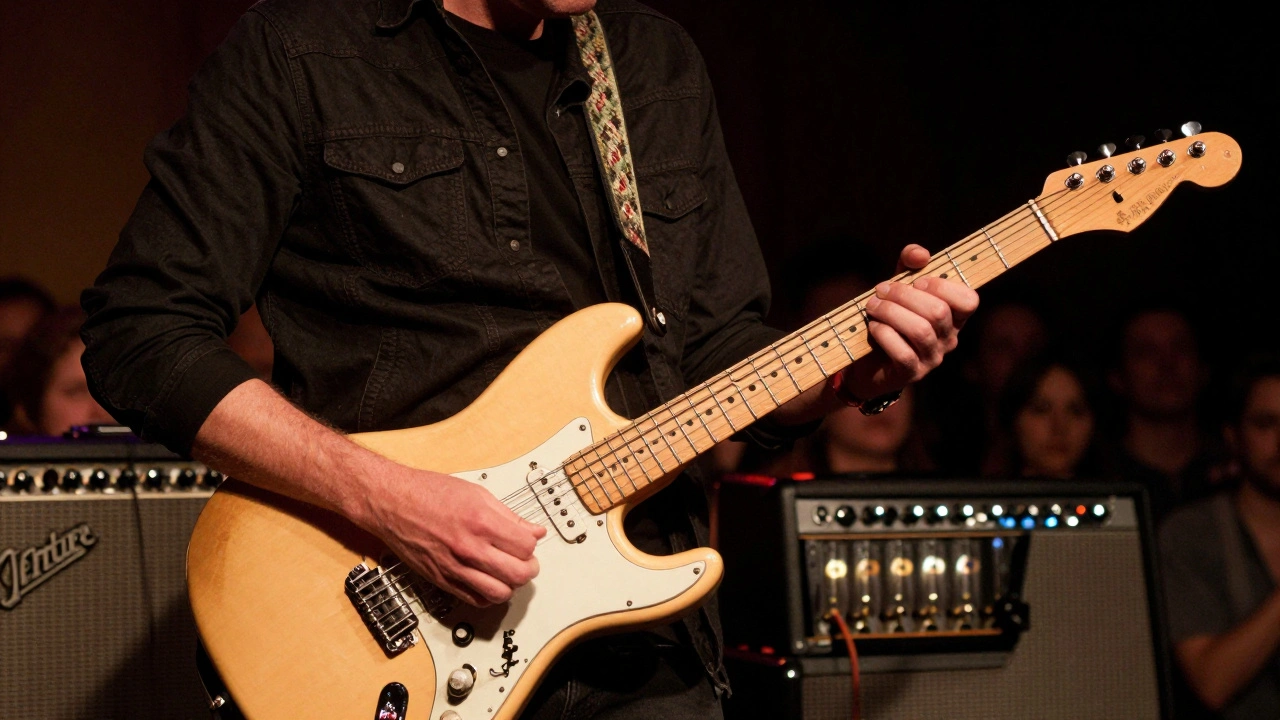
Robert Hill uses a Fender Telecaster a solid-body electric guitar known for its bright, cutting tone and single-coil pickups-a 1973 model, stripped down, no pickguard, just bare wood. He replaced the stock bridge with a Bigsby vibrato tailpiece a mechanical vibrato system that adds subtle pitch variation and sustain for better string tension control. The strings? .011-.052 gauge a heavier string set that provides more sustain and resistance for slide playing. He tunes to open E (E-B-E-G#-B-E), which lets him slide across the whole neck with one finger and still hit full chords.
He doesn’t use a bottleneck. He plays with a steel slide a metal tube worn on the ring finger that produces a smooth, singing tone made from .5-inch-diameter stainless steel. It’s weighted slightly-heavy enough to stay put, light enough to glide. He says it’s like holding a tiny tuning fork that rings through the amp.
The Pedal Chain: Less Is More
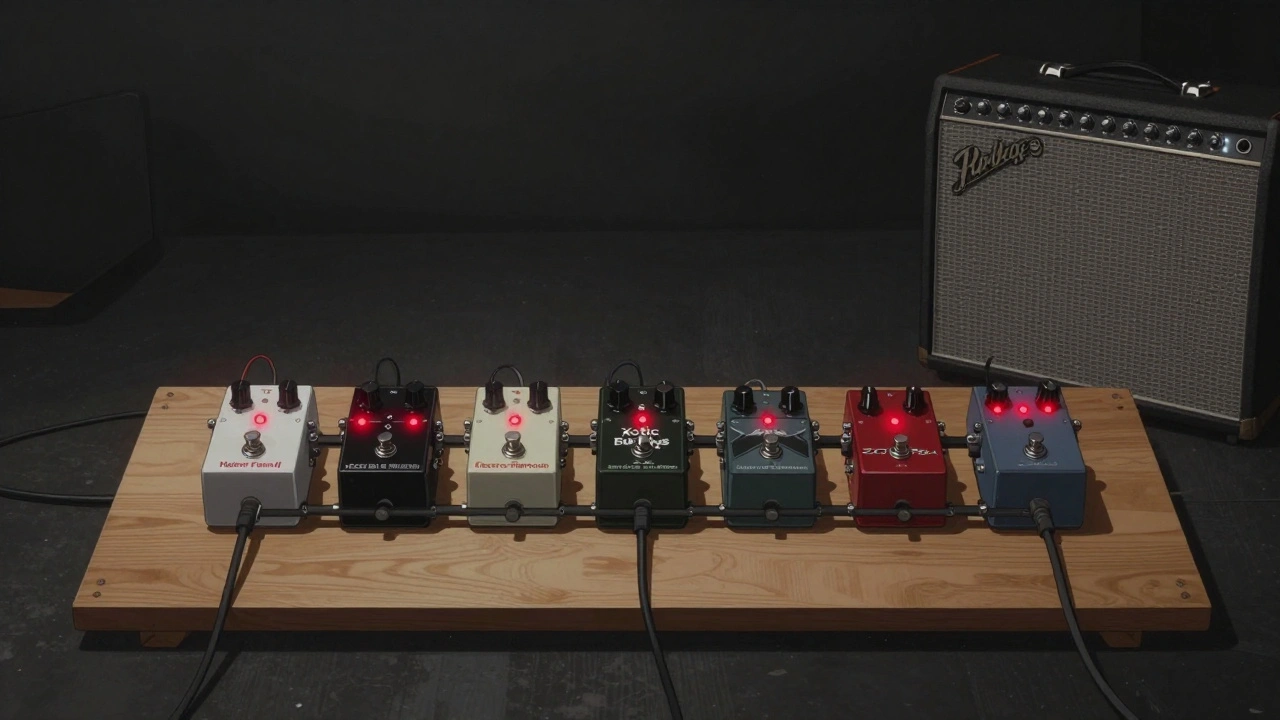
Robert’s pedalboard is small. Too many effects kill the slide tone. He only uses three:
- TC Electronic Hall of Fame II a digital reverb pedal known for natural, spacious delays and lush ambient textures-set to a medium decay, just enough to make the slide sing without turning it into a swamp.
- Xotic Effects BB Plus a boost pedal that adds warmth and compression without coloring the tone-used only to push the amp into natural breakup during solos.
- Electro-Harmonix Micro Synth a polyphonic synth pedal that adds a subtle octave layer under sustained notes-on only one song. He calls it his "ghost note" trick.
He runs everything into a Fender Deluxe Reverb a classic tube amplifier known for its clean headroom and warm overdrive when pushed-a 1965 reissue. No preamp pedal. No DI box. He cranks the amp to 7, leans into it, and lets the natural compression do the work. The room fills with a thick, singing sustain that doesn’t sound processed. It sounds alive.
How He Plays It Live
Robert doesn’t use a capo. He doesn’t switch guitars mid-set. He plays everything in open E, even songs originally in A or D. He transposes everything by ear, and his band follows. It’s risky, but it works because he’s got the muscle memory. He slides from the 12th fret to the 7th in one fluid motion-no hesitation, no dead notes. His right hand? He uses a heavy .88mm pick, held low, almost parallel to the strings. He doesn’t strum-he sweeps. It’s more like a brush stroke than a pick attack.
He keeps his left hand relaxed. No pressure. The slide doesn’t press down-it glides. He says, "If you’re pushing, you’re fighting the string. Let the weight of the steel do the work. The tone comes from the vibration, not the grip."
He doesn’t use a metronome on stage. He listens to the room. If the audience is quiet, he slows down. If they’re moving, he pushes the tempo. His slide work breathes. It doesn’t just play notes-it reacts.
Why This Setup Works
Most slide players chase tone with pedals. Robert doesn’t. He knows the magic happens between the guitar and the amp. The Fender Deluxe Reverb has a sweet spot-right around 7. Push it lower, and it’s too clean. Push it higher, and it turns muddy. He found that spot years ago. It’s the same every night.
The .011-.052 strings give him the resistance he needs. Lighter strings buzz. Heavier ones feel stiff. This middle ground lets him slide cleanly without losing sustain. And the stainless steel slide? It doesn’t wear down like brass or glass. He’s had the same one for 11 years.
He doesn’t tune between songs. He tunes once, before the show. The room temperature in the venue, the humidity, even the altitude-he adjusts for it all by ear. He says, "Guitars don’t like being static. They breathe. So do I."
What You Can Steal From His Rig
You don’t need his exact gear to get his tone. But you do need to understand the principles:
- Start with a guitar that rings clearly. A Telecaster, a Strat, even a resonator-all work if the action is low and the pickups are bright.
- Use heavier strings. .011 or higher. They hold pitch better and give you more sustain.
- Try stainless steel slides. They’re durable, bright, and cut through a mix better than glass or ceramic.
- Use reverb, but not too much. A plate or room setting is better than a hall. You want space, not echo.
- Let your amp breathe. Crank it just enough to get natural breakup. Tube amps respond to touch. Pedals can’t replace that.
- Play with your whole hand, not just your finger. Your arm, your wrist, your shoulder-they all control the glide.
Robert’s rig isn’t about gear. It’s about intention. He doesn’t play to impress. He plays to connect. And that’s why his slide sound sticks with you long after the last note fades.
What guitar does Robert Hill use for slide?
Robert Hill uses a 1973 Fender Telecaster with a Bigsby vibrato tailpiece. He prefers its bright, articulate tone and how well it responds to slide playing. The guitar has no pickguard, and he uses .011-.052 gauge strings for better sustain and control.
What slide does Robert Hill use?
He uses a stainless steel slide, .5 inches in diameter, that he’s had for over a decade. It’s heavier than glass or ceramic slides, which gives him more control and a brighter, more cutting tone-perfect for live performance.
What amp does Robert Hill use live?
He uses a 1965 Fender Deluxe Reverb reissue. He cranks it to around 7 on the volume dial to get natural tube breakup. He doesn’t use preamp pedals or external effects-just the amp and his guitar.
What pedals are in Robert Hill’s slide rig?
He only uses three: a TC Electronic Hall of Fame II reverb, an Xotic BB Plus boost, and an Electro-Harmonix Micro Synth. The reverb adds space, the boost pushes the amp for solos, and the synth adds a subtle octave layer on one song. He keeps it minimal to preserve the natural tone of the slide.
Why does Robert Hill tune to open E?
Open E (E-B-E-G#-B-E) lets him play full chords with a single slide position and makes it easy to move up and down the neck. He transposes all songs into this tuning, which gives him consistency and allows him to play without switching guitars or using a capo.
Next Steps for Your Own Slide Setup
If you want to build a live slide rig like Robert Hill’s, start here:
- Try a heavier string set on your current guitar. Even if you’re used to .009s, go up to .011s for a week. Notice how the slide feels different.
- Record yourself playing a simple slide phrase-just one note, held. Play it through your amp. Now turn off all pedals. Does it still sound good? If not, your amp or guitar might need adjustment.
- Experiment with slides. Try steel, brass, and glass. Steel cuts through. Glass is warmer. Brass is midrange-heavy. Find what matches your voice.
- Don’t chase gear. Chase tone. Robert’s rig is simple because he knows what he needs. You don’t need five pedals to sound good. You just need to know how to use one.
Slide guitar isn’t about complexity. It’s about honesty. The best slide players don’t hide behind effects. They let the guitar and the amp do the talking. And if you listen closely, you’ll hear Robert Hill’s rig isn’t just gear-it’s a conversation between a man, his instrument, and the room.