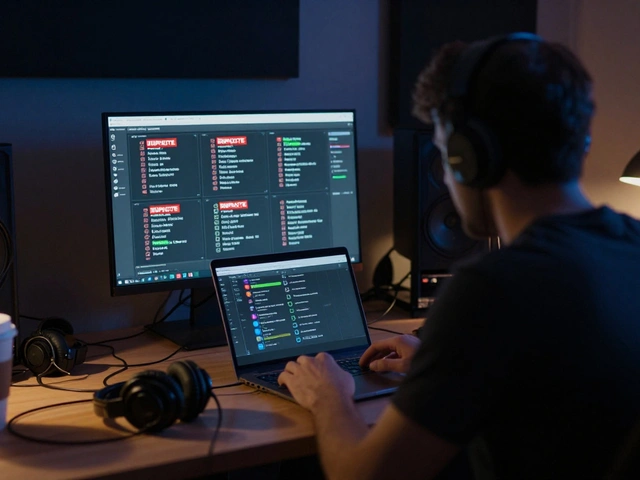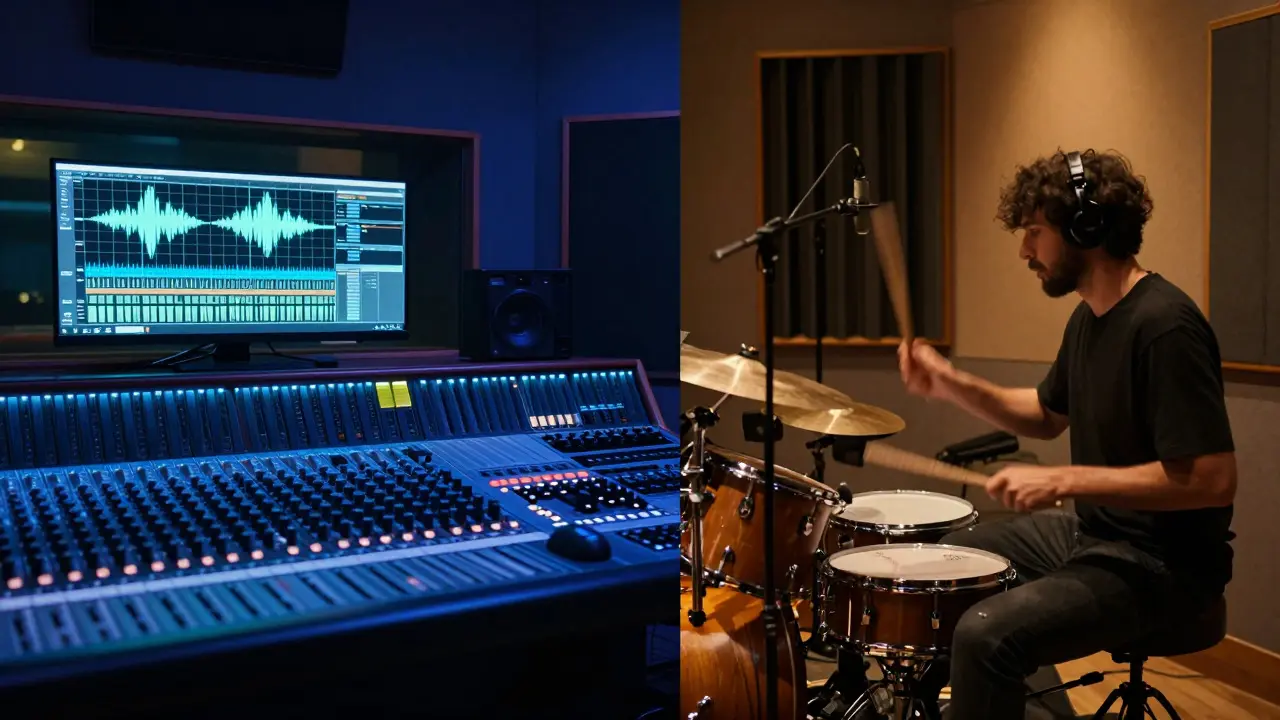
There is a moment in every recording session where the producer has to make a call that defines the soul of the track. Do you trust the human hands of a drummer sitting behind a kit, or do you program a grid of samples on your DAW? At Robert Hill Productions is a creative studio environment focused on high-fidelity audio engineering and modern music composition, this debate isn't just about technical preference; it's about the emotional impact of the rhythm section. The choice between Drum Programming is the process of creating rhythmic patterns using digital audio workstations and sample libraries and Live Drums is the performance of acoustic or electronic kits by a human musician in real-time changes how listeners feel about a song before they even recognize the melody.
The Human Element vs. The Grid
When you listen to a track, your brain processes rhythm differently depending on its source. Live drums carry micro-timing variations that no algorithm can perfectly replicate. A human drummer might rush slightly into a fill or drag their foot on the snare during a breakdown. These imperfections are what we call "groove." In contrast, drum programming offers absolute precision. If you need a kick drum to hit exactly on beat 1, 5, and 9, the computer does it without hesitation. But too much precision can make a track feel sterile, like a metronome wearing a suit. The challenge for producers at Robert Hill Productions is finding the middle ground where the rhythm feels tight enough to be radio-ready but loose enough to keep the listener engaged.
Technical Workflows in Modern Studios
The workflow for each method requires different skills and tools. For live drums, you need a skilled engineer who knows how to tune a kit, place microphones correctly, and manage phase coherence. You are capturing a physical event in time. For drum programming, you are sculpting sound from static files. This involves selecting the right samples, adjusting velocity curves, and automating subtle pitch shifts to mimic the natural decay of an acoustic shell. Many producers now use a hybrid approach, recording a basic live pattern and then quantizing only the most critical hits while leaving the ghost notes untouched. This method preserves the energy of the performance while ensuring the mix sits firmly in the pocket.
Sonic Characteristics and Frequency Response
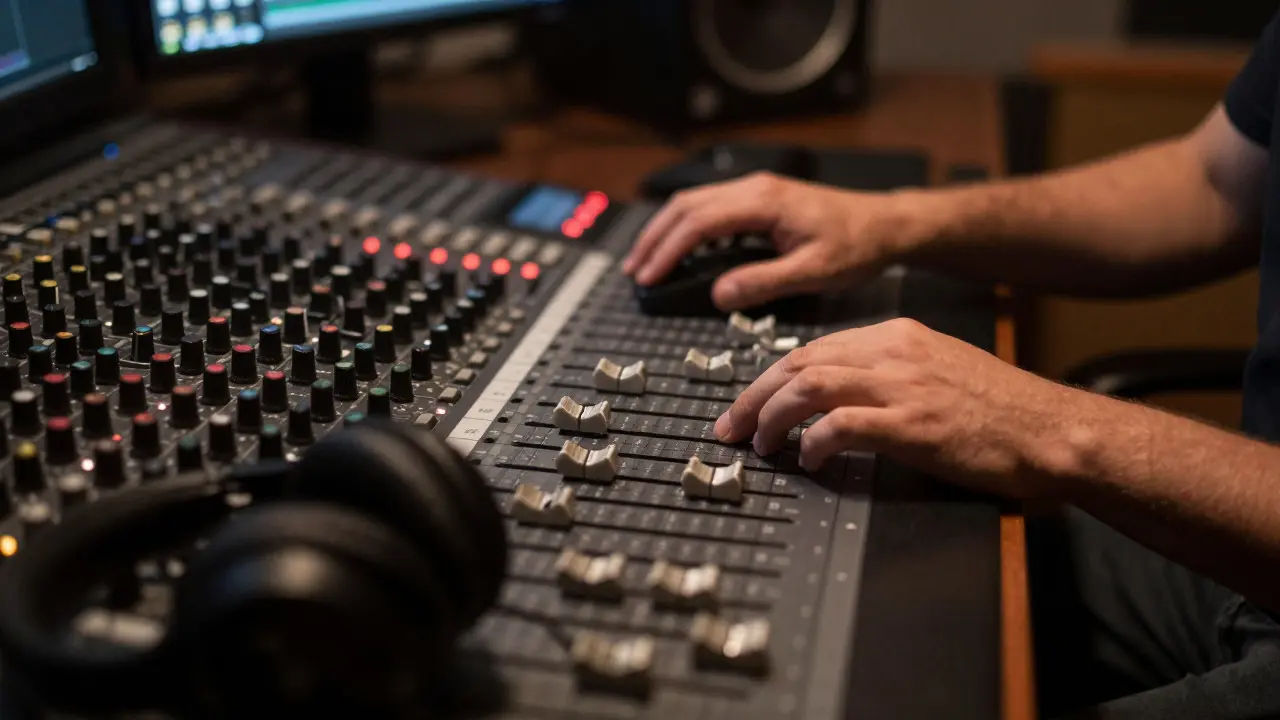
The tonal quality of programmed drums versus live drums differs significantly due to how the sound is generated. Sample-based drums often have a consistent frequency response because they are identical every time they trigger. This consistency helps in mixing, as you don't have to EQ out random resonances from a specific cymbal strike. However, live drums introduce dynamic frequency changes. A harder hit on a snare drum produces more high-end transient energy than a softer hit. This dynamic range adds texture to the mix. When working with complex arrangements, such as those found in rock or jazz genres, the organic noise floor of live drums can blend more naturally with other acoustic instruments. In electronic or pop contexts, the clean transients of programmed drums allow for clearer separation in a dense mix.
| Feature | Drum Programming | Live Drums |
|---|---|---|
| Timing Precision | Absolute (Grid-based) | Variable (Human feel) |
| Tonal Consistency | High (Identical samples) | Low (Dynamic variation) |
| Setup Time | Moderate (Sample selection) | High (Miking and tuning) |
| Editability | Non-destructive (Easy changes) | Destructive (Requires re-recording) |
| Best For | Electronic, Pop, Hip-Hop | Rock, Jazz, Folk |
Cost and Resource Considerations
Budget plays a huge role in this decision. Hiring a professional session drummer costs money, and if the take isn't perfect, you pay again for another session. Drum programming requires upfront investment in software and high-quality sample libraries, but once purchased, the marginal cost of creating a new beat is zero. For independent artists working with limited funds, programming allows for rapid iteration. You can change the entire groove in minutes without calling anyone. However, if the project demands a specific artistic vision that relies on improvisation, the cost of hiring a specialist is usually worth the investment. At Robert Hill Productions, we often advise clients to consider the genre first. If the song is strictly four-on-the-floor house music, programming is likely the more efficient path. If it's a blues ballad, the nuance of a live player is irreplaceable.
Hybrid Approaches for Maximum Impact
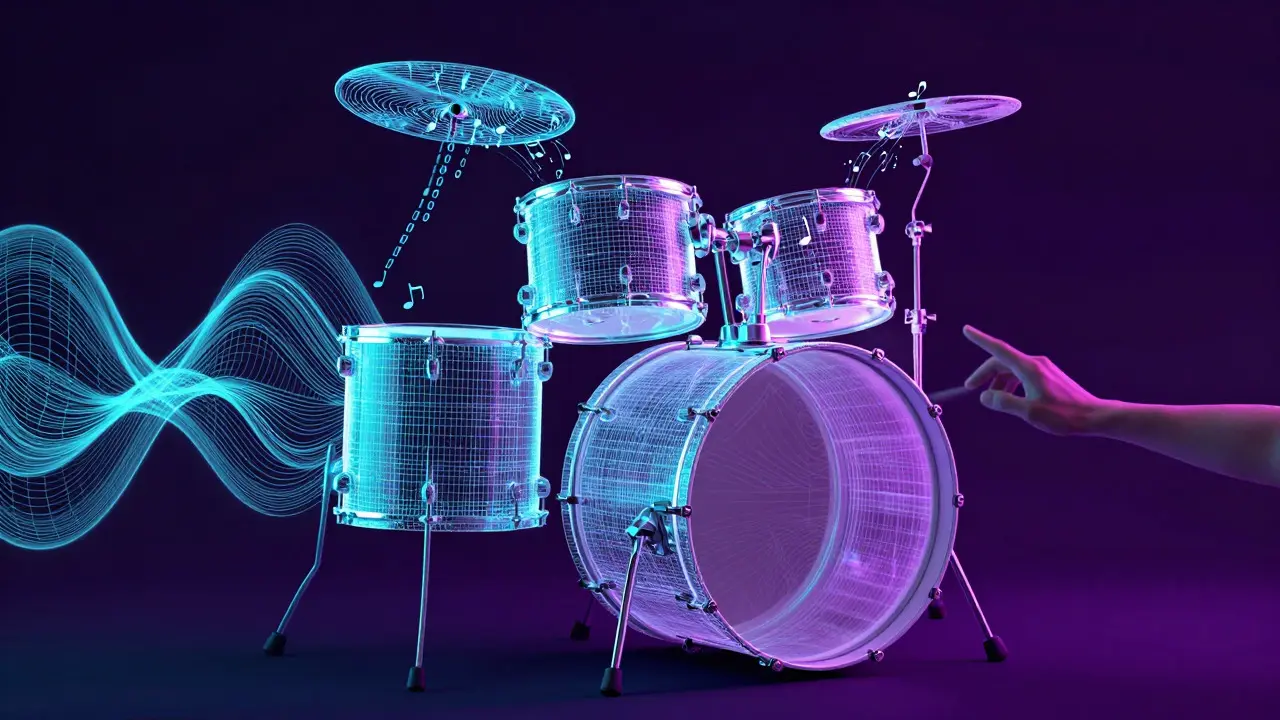
The most successful productions today rarely stick to one extreme. Producers frequently record a live drummer playing along to a click track to capture the energy and dynamics. Then, they import that performance into the DAW. From there, they might replace the overheads with crisp samples to tighten the top end, or they might nudge the timing of the kick drum to lock it in with the bass guitar. This hybrid technique gives you the best of both worlds: the dynamic push-and-pull of a human performance and the sonic clarity of digital processing. It also allows for creative experimentation. You can stretch a live fill, reverse a crash, or layer multiple snare samples over a single hit to create a massive, punchy sound that neither method could achieve alone.
Choosing the Right Path for Your Project
Ultimately, the decision comes down to the story the song needs to tell. Ask yourself: Does this track need to feel mechanical and precise, or does it need to breathe and swing? If you are producing for a video game soundtrack, you might prioritize the loopability and consistency of programmed drums. If you are producing for a film score, the emotional weight of live percussion might serve the narrative better. There is no wrong answer, only the right answer for the specific context. By understanding the strengths and limitations of both methods, you can make informed choices that elevate the final product. Whether you choose to hit the record button on a microphone or a mouse cursor, the goal remains the same: to move the listener through rhythm.
Is drum programming cheaper than hiring a live drummer?
Generally, yes. Once you have the software and samples, creating beats costs nothing extra. Hiring a drummer involves hourly fees and potential rebooking costs if takes are not satisfactory. However, high-end sample libraries can be expensive upfront.
Can you make programmed drums sound like live drums?
Yes, by introducing slight timing offsets, varying the velocity of hits, and adding room reverb or ambient noise. Using multi-sample kits that respond dynamically to velocity helps mimic the natural inconsistencies of acoustic instruments.
Which genres benefit most from live drums?
Genres that rely heavily on dynamic expression and improvisation, such as Jazz, Rock, Blues, and Funk, typically benefit most from live drums. The human element adds a sense of life and unpredictability that programmed drums often lack.
What is a hybrid drumming approach?
A hybrid approach involves recording live drums and then editing them in a DAW. This might include quantizing certain hits, replacing individual sounds with samples, or layering digital elements over the live performance to enhance clarity and power.
Do I need a professional drummer for a good mix?
Not necessarily. A skilled programmer can create a compelling rhythm section. However, a professional drummer brings an intuitive understanding of dynamics and feel that can save time in the mixing stage by providing a balanced performance from the start.