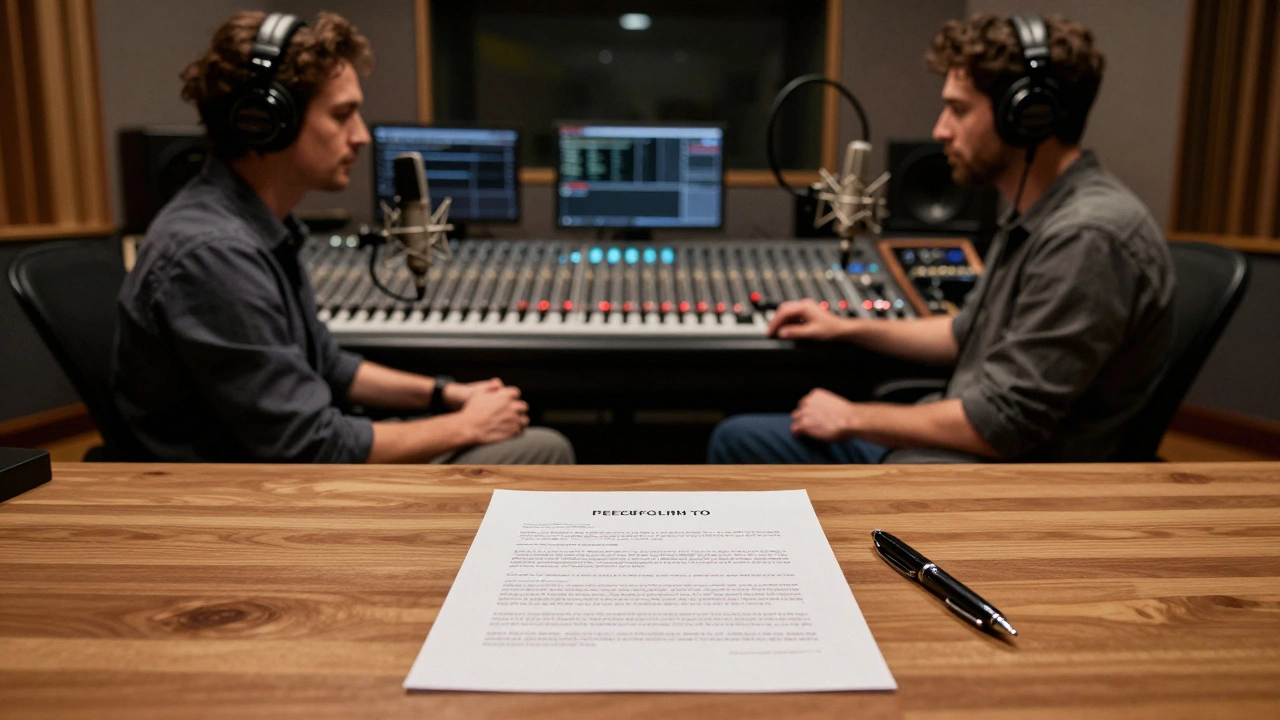
Quick Summary of Key Terms
- Ownership: Distinguish between the sound recording (Master) and the underlying music (Composition).
- Payment: Decide between a one-time flat fee (Buyout) or a percentage of earnings (Royalties).
- Credit: Agree on exactly how the artist's name appears (e.g., "feat. Artist Name").
- Rights: Clarify if the featured artist can use the song for their own promotion.
Breaking Down the Master and Publishing Divide
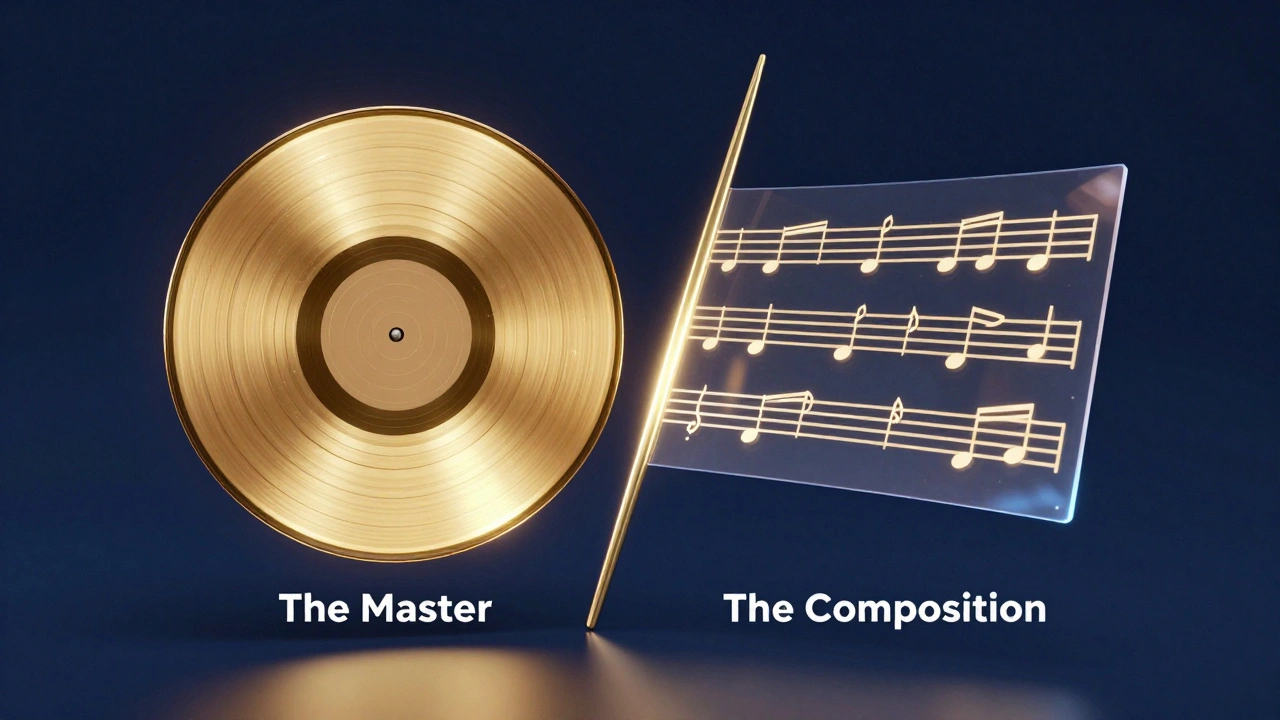
Before you talk money, you have to understand that every song has two separate pieces of intellectual property. First, there is the Sound Recording (often called the "Master"). This is the actual audio file you hear. Second, there is the Composition, which includes the lyrics, melody, and chord progressions.
If you're a featured artist, you might contribute a verse and some vocal melodies. That makes you a co-writer. If you don't get a share of the composition, you're essentially giving away your songwriting rights for free. Most professional contracts split the composition based on the percentage of the song written. If you wrote 25% of the lyrics and the melody for your verse, you should generally own 25% of the publishing. This is where Performing Rights Organizations (PROs) like ASCAP or BMI come in to ensure those royalties actually reach your bank account.
Compensation Models: Flat Fees vs. Royalties
How do you actually get paid? There are three common ways this goes down. The first is the "Work for Hire" or Buyout. In this scenario, the lead artist pays the feature a one-time fee-say, $500 to $5,000-and the feature signs away all rights to the recording. This is common for session musicians or newer artists who need quick cash.
The second model is the royalty split. Here, the featured artist gets a percentage of the streaming revenue. For a mid-level artist, a 10% to 25% split of the master royalties is standard, depending on how much of the song they occupy. If the feature is a massive star, they might demand 50% of the master.
The third option is a hybrid: a smaller upfront advance followed by a percentage of the backend. This reduces the risk for the lead artist while giving the feature a stake in the song's success. Let's look at how these compare side-by-side.
| Model | Upfront Pay | Long-term Equity | Risk Level | Best For |
|---|---|---|---|---|
| Buyout | High | None | Low | Session players / Newcomers |
| Royalties Only | None/Low | High | High | Established artists / Strategic partners |
| Hybrid | Moderate | Moderate | Medium | Balanced collaborations |
The 'Fine Print' That Actually Matters
Most people focus on the money and forget the logistics. Your contract needs to cover a few specific "what-if" scenarios. First, consider the Approval Rights. Does the featured artist get to approve the final mix? Do they have a say in the cover art? If a feature is a big name, they will almost always insist on approving how their image is used in the music video.
Then there is the issue of Exclusivity. The lead artist might want to prevent the feature from appearing on another similar track for three months to avoid "market saturation." While this is common in major label deals, it's rare in indie collaborations. Be careful here-don't let a small feature fee lock you out of other lucrative opportunities.
Don't ignore the Marketing Obligations. If you are the lead artist, you want the feature to post the song on their Instagram or TikTok. If you are the feature, you don't want to be legally forced to promote a song you don't actually like. The contract should clearly state if promotion is mandatory or "best effort." For example, a contract might require one permanent Instagram post and three story mentions during release week.
Managing Credits and Branding
It seems trivial, but credit is currency in the music industry. A Credit Clause defines exactly how the artist is named. There is a huge difference between "Song Title (feat. Artist X)" and "Song Title by Lead Artist and Artist X." The latter implies a co-lead status, which usually comes with more ownership and a larger share of the royalties.
You should also define where the credit appears. Does it need to be in the YouTube description? On the Spotify metadata? In the physical liner notes? If you're the featured artist, ensure the contract specifies that the credit must be consistent across all Digital Service Providers (DSPs). If the lead artist forgets to add your name to the metadata, you might not get your automatic royalty payouts from the distributor.

Common Pitfalls to Avoid
One of the biggest mistakes is using a generic template from the internet without editing the "governing law" section. If you're in Portland and the other artist is in London, which court handles the dispute? Always specify the jurisdiction. Without this, you could spend more on legal fees than the song ever made in revenue.
Another trap is the "all-in" fee. Some lead artists offer a large sum of money but include a clause that says this fee covers both the recording AND the publishing. This is a bad deal for the writer. The recording (the Master) is a one-time performance; the publishing (the Composition) is a lifelong asset. Never trade your lifelong copyright for a quick check unless the amount is truly life-changing.
Finally, watch out for "Right of First Refusal." Some contracts state that if the song is licensed for a movie or commercial, the original artists must be the ones to provide the vocals. While this sounds great, it can complicate things if the movie studio wants a different vibe or if the artists are no longer on speaking terms.
What is a standard royalty percentage for a featured artist?
There is no single standard, but typically, a featured artist who provides a verse and chorus receives between 10% and 25% of the master royalties. If the featured artist is a co-writer, they should also receive a proportional share of the publishing (composition) royalties, often split based on the percentage of the song they wrote.
Do I need a contract if I'm just doing a favor for a friend?
Yes. Most legal disputes between friends happen precisely because they didn't have a contract. A simple "split sheet" that outlines who owns what percentage of the song is enough to prevent future arguments if the song becomes a commercial success.
What is the difference between a buyout and a royalty deal?
A buyout is a one-time payment where the artist gives up all future claims to the money the song makes. A royalty deal means the artist keeps a percentage of the song's earnings over time. Buyouts provide immediate security, while royalties provide long-term passive income.
Can a featured artist demand a share of the Master?
They can, but it depends on their leverage. A high-profile artist will often demand a percentage of the Master because their name adds significant value to the song's potential reach. A session artist typically only gets a flat fee unless they contributed significantly to the production.
What happens if the lead artist refuses to release the song?
This is why "Release Obligations" are important in a contract. A good agreement will state that the lead artist must release the song within a certain timeframe (e.g., 6 months) or the rights revert back to the featured artist, or the lead artist pays a "kill fee."
Next Steps for Your Collaboration
If you're about to start a collab, don't let the legal talk kill the creative vibe. The best way to handle this is to agree on the big points *before* you enter the studio. Once the song is a hit, emotions run high and memories of "who said what" fade. Use a split sheet immediately after the writing session.
For those working with professional labels, always have an entertainment lawyer review the "Grant of Rights" section. This is where the label tries to own your voice in perpetuity. Ensure your contract is limited to that specific recording and doesn't give them ownership of your overall brand or future works. If you're an indie artist, using digital tools like DistroKid or TuneCore to set up automatic royalty splits can automate the payment process and remove the need for monthly invoicing.