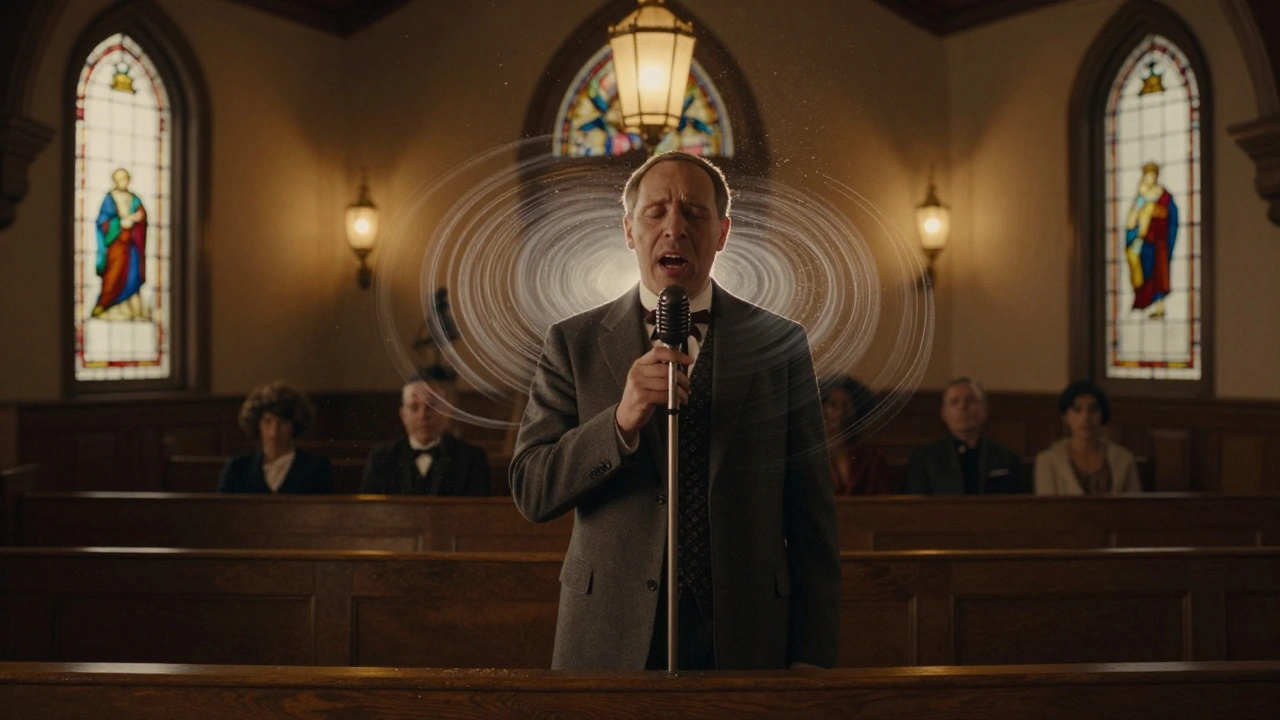
Robert Hill’s gospel vocals don’t just sing-they lift. There’s a reason his voice cuts through dense choir arrangements and still feels intimate, like a prayer spoken just for you. That sound isn’t magic. It’s carefully shaped with reverb and delay, two effects that, when used wrong, can turn sacred moments into muddy messes. But when they’re done right, they create space, depth, and emotional weight that pulls listeners into the song.
Why Robert Hill’s Vocal Sound Is Different
Robert Hill doesn’t use studio tricks to make his voice sound bigger. He uses them to make it feel more real. His recordings, especially from live sessions at historic churches in Atlanta and Memphis, have a natural glow. You hear the room. You hear the breath. You hear the slight waver in his voice as he holds a note-not because he’s off-pitch, but because he’s feeling it. That’s the heart of gospel. And reverb and delay? They’re not there to hide imperfections. They’re there to honor them.Compare his work to modern pop vocals, where autotune and tight slapback delays erase human texture. Hill’s sound is the opposite. It breathes. It breathes because the effects are chosen and placed with intention.
Reverb: The Space Between the Notes
For Robert Hill, reverb isn’t about making the voice sound like it’s in a cathedral. It’s about making it sound like it’s in a living space-one where people are crying, clapping, and singing along.Most engineers reach for a large hall reverb on gospel vocals. That’s a mistake. A huge hall turns vocals into echoes. Hill’s producer, Marcus Bell, uses a medium-sized room algorithm-something that mimics the acoustics of a 1920s Baptist church with wooden pews and stained glass. The decay time? Between 1.8 and 2.4 seconds. Long enough to feel expansive, short enough to keep the vocal tight in the mix.
He also layers in a subtle plate reverb on the tail end of sustained phrases. This adds a shimmer without clouding the consonants. You can hear it on "I’m Going to Live the Life I Preach"-the way the word "life" lingers just a breath longer than the rest. That’s not an accident. It’s a deliberate choice to let emotion hang in the air.
Key settings for Robert Hill-style reverb:
- Decay time: 1.8-2.4 seconds
- Pre-delay: 25-40 ms
- High-frequency damping: 50-60% (to avoid harshness)
- Wet/dry mix: 15-20%
- Use a room or plate algorithm, not hall or cathedral
Delay: The Echo That Feels Like a Response
Delay on Robert Hill’s vocals isn’t rhythmic. It’s spiritual. Think of it like call-and-response in a church service. The lead singer sings. The congregation echoes. That’s the feel.Hill’s team uses a single, dotted-eighth note delay (about 375 ms at 120 BPM) on select phrases. Not on every word. Not even every line. Just the climactic ones-"I’m saved," "I’m free," "I’m going home." The delay comes in softly, panned slightly left or right, and is filtered to remove high-end harshness. It doesn’t repeat. It responds.
On "The Blood Speaks," you hear the delay on the word "speaks." It echoes once, then fades into the room reverb. No second repeat. No ping-pong. Just one gentle echo, like a voice from the back pew answering back.
He avoids slapback delays (under 100 ms). Those make vocals sound like old rock records. He avoids long, rhythmic delays (quarter or eighth note patterns) because they turn sacred moments into dance tracks.
How to get it right:
- Use dotted-eighth note delay (375 ms at 120 BPM)
- Filter out frequencies above 5 kHz
- Set feedback to 15-20% (one repeat only)
- Pan delay slightly off-center (10-20% left or right)
- Only engage delay on 2-3 words per verse
How Reverb and Delay Work Together
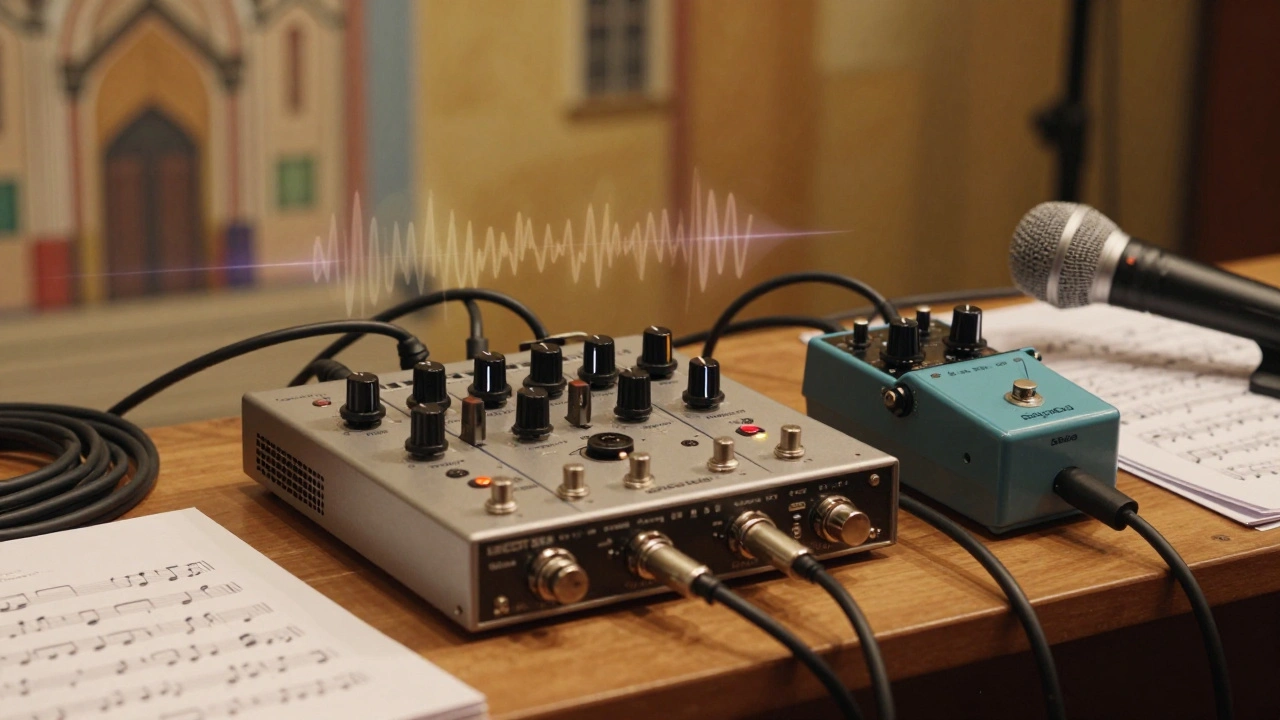
The real secret isn’t in how each effect is used alone-it’s how they’re layered.Here’s the signal chain Robert Hill’s vocal chain uses:
- Vocal track (clean, no compression yet)
- High-pass filter at 100 Hz (removes rumble)
- Subtle compression (4:1 ratio, slow attack, fast release)
- Room reverb (15% wet)
- Delay (dotted-eighth, 15% wet, filtered)
- Final compression (2:1 ratio, gentle gain reduction)
The reverb goes first. It creates the space. The delay rides on top of that space, adding a human echo without overwhelming it. The final compression glues everything together without squashing the dynamics.
Try this: if you put the delay before the reverb, the echoes get swallowed. If you put too much reverb after the delay, the whole thing turns into a fog. The order matters. The balance matters.
What Not to Do
There are three traps most producers fall into with gospel vocals:- Overdoing the reverb-makes the voice sound distant, like it’s in another room. Gospel needs presence.
- Using stereo delay-it creates a wide, unnatural image. Hill’s vocals are centered, intimate. Stereo delays break that.
- Automating effects-changing reverb or delay levels throughout the song feels gimmicky. The effect should be consistent. The emotion changes. The effects support it.
Also, avoid using presets. No "Gospel Choir" or "Church Reverb" factory setting will give you Robert Hill’s sound. Those presets are designed for pop or worship bands. They’re too bright, too long, too loud.
Real-World Example: "I’m Going to Live the Life I Preach"
This track, recorded live at New Birth Missionary Baptist Church in 2024, is a masterclass in restraint. The vocal is miked with a Shure SM7B, no pop filter, just a simple windscreen. The room reverb comes from a Lexicon PCM42 (or a modern plugin like Soundtoys EchoBoy in Room mode). The delay is a single tap from a Roland Space Echo emulation.Listen to the line: "I’m going to live the life I preach."
On the word "preach," you hear:
- A soft room reverb tail
- A single, filtered delay echo, panned slightly left
- A faint crowd murmur underneath-recorded live, not added
That’s it. No auto-tune. No doubling. No harmonizers. Just voice, space, and echo. And it moves people.
Pro Tip: Record the Room
One thing Robert Hill’s team does that most producers skip: they record the room ambience separately. Before the vocal session, they place a stereo pair of small-diaphragm condensers 8 feet back from the singer. They capture the natural reverb of the space-no plugins, no artificial settings.Then, they blend that ambient track at 5-8% under the vocal. It’s not reverb. It’s the actual room. That’s what gives his recordings their authenticity. You can’t fake that with a plugin.
Final Thought: Less Is More
Robert Hill’s gospel vocals don’t need effects to be powerful. They need effects to be honest. The goal isn’t to make the voice sound perfect. It’s to make it sound human. Reverb and delay aren’t there to fix mistakes. They’re there to carry emotion.When you’re mixing gospel vocals, ask yourself: Does this effect make the listener feel closer to the singer-or farther away?
If it’s farther, turn it down.
Can I use reverb and delay on other gospel singers the same way?
Yes, but only if their style matches Robert Hill’s-raw, emotional, and rooted in live church recordings. If the singer uses a polished, studio-processed sound (like some contemporary gospel artists), then heavy reverb and delay can work differently. Hill’s approach is specific to live, unfiltered vocal performances. For more modern styles, try shorter reverb decay times and no delay at all.
What plugins emulate Robert Hill’s reverb and delay sound?
For reverb, try Soundtoys EchoBoy (Room mode), Lexicon PCM Native Reverb, or Valhalla VintageVerb with the "Room" preset. For delay, use Soundtoys EchoBoy or Empirical Labs EL8 Distortion (in delay mode) with the "Analog Tape Delay" setting. Avoid presets labeled "Gospel" or "Church"-they’re usually too bright and too long.
Should I use stereo or mono reverb on gospel vocals?
Always use mono reverb and delay. Gospel vocals are meant to feel personal, like someone is singing directly to you. Stereo effects widen the sound too much and pull the voice out of the center. Mono keeps the focus tight and intimate.
Is it okay to use autotune on gospel vocals?
No, not if you’re aiming for Robert Hill’s sound. Gospel music thrives on human imperfection-the slight crack in the voice, the breath before the note, the way the pitch wavers under emotion. Autotune removes that soul. Even if a note is slightly off, it often adds more emotional truth than perfect pitch.
How do I avoid muddiness when using both reverb and delay?
Use high-pass filters on both effects. Set the reverb to cut below 200 Hz and the delay to cut below 500 Hz. This keeps low-end frequencies clean. Also, keep the wet levels low-under 20% total. Let the natural vocal carry the song. Effects should support, not dominate.