Most listeners tune into Robert Hill for the melodies. They hear the crisp production, the layered harmonies, and the rhythmic precision that defines his discography. But if you look closer at the liner notes, the album artwork, or even just read between the lines of his lyrics, a different picture emerges. Hill isn't just making songs; he is building worlds. And those worlds are constructed from more than just chords and beats.
For years, Robert Hill has quietly credited two non-musical pillars for his creative direction: literature and visual art. While many artists cite other musicians as their primary influences, Hill’s approach is distinctly interdisciplinary. He treats a novel like a symphony and a painting like a mood board for an entire record. This article breaks down exactly how these external inspirations translate into the sonic landscapes we recognize today.
The Literary Blueprint: Narrative Structure in Songwriting
When you listen to Hill’s earlier work, particularly around his breakthrough era, there is a distinct narrative arc that feels less like a collection of singles and more like chapters in a book. This wasn’t accidental. Hill has often spoken about his deep immersion in modernist literature during his formative years.
Take the concept of stream-of-consciousness writing, popularized by authors like Virginia Woolf and James Joyce. Hill adopts this technique in his vocal delivery. Instead of sticking to rigid verse-chorus structures, he lets the melody drift, mimicking the flow of thought rather than the rigidity of traditional pop songwriting. The result is a listening experience that feels intimate and unfiltered, as if the listener is overhearing a private monologue.
Consider the track "Midnight Static." On the surface, it’s a moody electronic ballad. But structurally, it mirrors the fragmented storytelling found in F. Scott Fitzgerald’s The Great Gatsby. The verses jump in time, the chorus offers a distorted perspective, and the bridge resolves not with a climax, but with a lingering question. Hill uses literary devices like unreliable narration to create ambiguity in his lyrics. You aren't told what happened; you are shown the emotional residue of the event.
- Character Development: Hill often creates alter-egos in his albums, similar to how an author develops protagonists. These characters evolve across tracks, gaining depth and complexity.
- Pacing and Tension: Just as a novelist controls pacing through sentence length and chapter breaks, Hill manipulates tempo and instrumentation to build suspense before a lyrical reveal.
- Symbolism: Recurring motifs in his lyrics-like water, mirrors, or urban decay-serve as symbols that gain meaning over the course of an album, much like recurring imagery in poetry.
This literary approach demands patience from the listener. It requires you to engage with the text of the song, not just the rhythm. It transforms passive listening into active interpretation.
Visual Art: Painting with Sound
If literature provides the structure, visual art provides the color. Robert Hill’s relationship with visual aesthetics is profound. He doesn’t just commission artwork for his albums; he collaborates with visual artists from the very first demo stage. For Hill, a song begins as a texture, a hue, a shape.
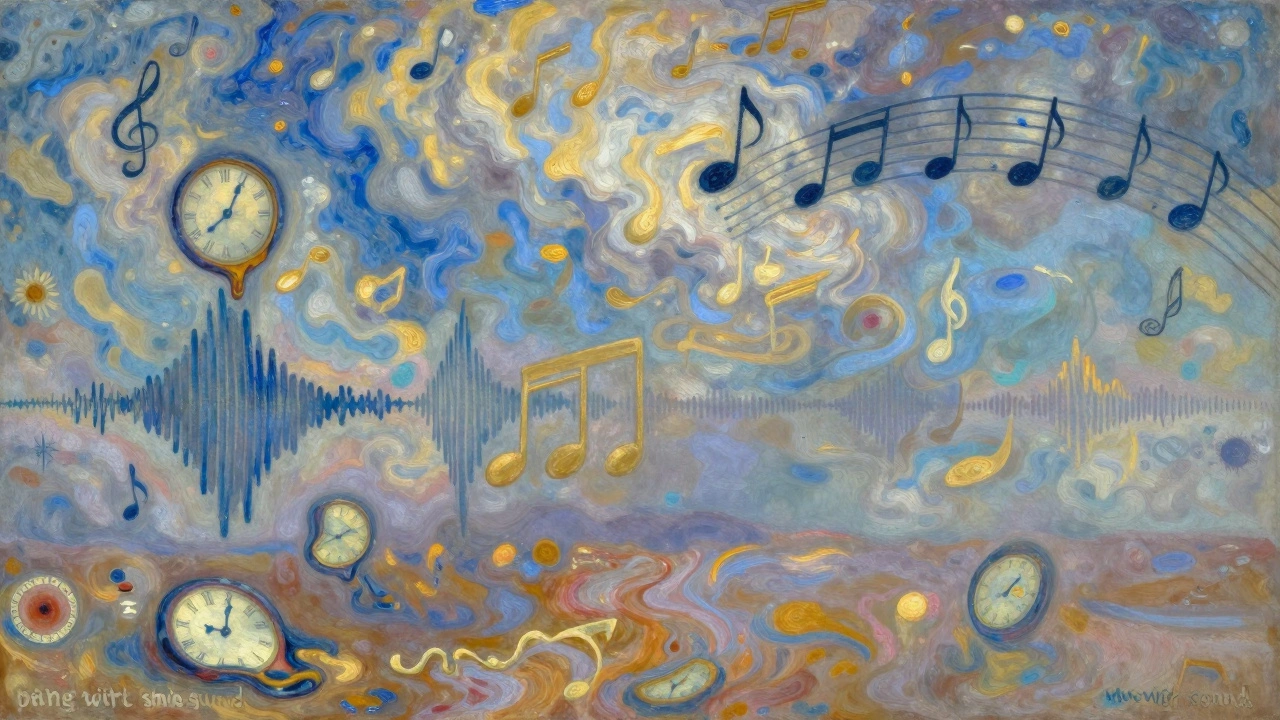
Hill has frequently referenced the Impressionist movement, particularly the works of Claude Monet. Impressionism focuses on capturing the fleeting effect of light and atmosphere rather than precise details. In musical terms, this translates to Hill’s use of ambient textures and reverb. He layers sounds so they blur together, creating a 'sonic canvas' where individual instruments lose their sharp edges and merge into a cohesive whole.
Look at the album cover for his mid-career release, *Chromatic Drift*. The image is a wash of blues and grays, reminiscent of a stormy seascape. The music inside matches this perfectly. The basslines are murky and submerged, while the high hats sparkle like raindrops on water. Hill explicitly stated that he wanted the listener to 'feel the dampness' of the track. This synesthetic approach-where sound evokes visual sensations-is central to his identity.
Furthermore, Hill draws heavily from Surrealism. Artists like Salvador Dalí manipulated reality to explore the subconscious. Hill does the same with audio engineering. He might reverse a guitar riff, pitch-shift a vocal sample until it becomes unrecognizable, or place a sound effect in the far left channel to disorient the listener. These techniques disrupt expectations, forcing the brain to pay attention to the unexpected, much like stumbling upon a melting clock in a desert landscape.
| Influence Source | Musical Application | Key Technique | Listener Experience |
|---|---|---|---|
| Literature (Narrative) | Song structure and lyricism | Stream-of-consciousness vocals | Intimate, story-driven engagement |
| Literature (Poetry) | Rhyme schemes and metaphors | Symbolic repetition | Intellectual curiosity and reinterpretation |
| Visual Art (Impressionism) | Atmosphere and texture | Heavy reverb and layering | Ethereal, immersive mood |
| Visual Art (Surrealism) | Sound design and arrangement | Disorienting audio effects | Unexpected, dream-like confusion |
The Intersection: Where Words Meet Images
The magic happens when Hill combines these two forces. He doesn't keep them separate. A literary theme might be expressed through a visual aesthetic, which then dictates the musical tone. For example, if he is exploring a theme of isolation (a common literary trope), he might choose a minimalist visual style (negative space in art) and translate that into sparse instrumentation (silence as a musical tool).
This holistic approach makes his albums feel like complete artistic statements rather than just collections of songs. When you buy a Robert Hill record, you are buying into a curated experience that engages multiple senses simultaneously. It’s why his live performances are often accompanied by projected visuals that sync with the lyrical content, reinforcing the connection between what you see, what you read, and what you hear.
Hill’s method also challenges the industry standard of single-driven releases. In an era where streaming platforms prioritize immediate hooks, Hill’s interdisciplinary approach encourages deep listening. Fans often report re-listening to his albums years later, discovering new connections between the lyrics and the sonic textures they missed before. This longevity is a testament to the richness of his source material.
Practical Takeaways for Creators
You don’t have to be Robert Hill to benefit from looking beyond your craft. Whether you are a musician, writer, or designer, cross-pollinating your interests can lead to breakthrough creativity. Here is how you can apply Hill’s philosophy to your own work:
- Read Outside Your Genre: If you write code, read poetry. If you paint, read detective novels. Different disciplines solve problems differently. Poetry teaches economy of language; detective novels teach pacing and clue placement.
- Analyze Visuals Like Audio: Look at a painting and ask: What is the tempo? Where is the silence? Which elements are loud and aggressive, and which are soft and receding? Translate those observations into your own medium.
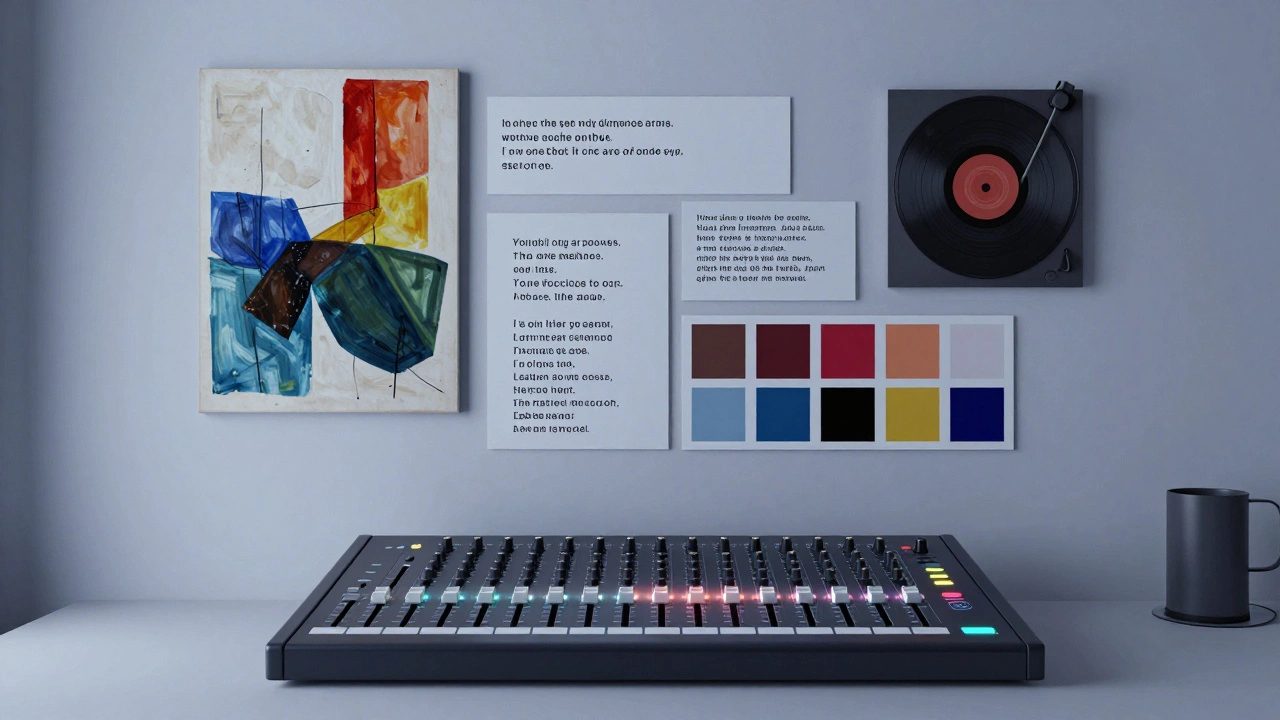
- Create Mood Boards for Concepts: Before starting a project, gather images, quotes, and colors that represent the feeling you want to evoke. Use these as reference points throughout the creation process to maintain consistency.
- Embrace Ambiguity: Don’t explain everything. Let your audience fill in the gaps. Whether through abstract lyrics or ambiguous visuals, leaving room for interpretation invites deeper engagement.
By stepping outside the boundaries of your primary discipline, you unlock new tools and perspectives. You stop being just a technician of your craft and start becoming an artist in the truest sense.
Why This Matters Now
In a digital age saturated with content, originality is harder to find than ever. Algorithms push us toward similar sounds, similar stories, and similar visuals. Robert Hill’s commitment to interdisciplinary inspiration is a rebellion against this homogenization. It reminds us that art is not isolated; it is a conversation between mediums, eras, and minds.
As we move further into 2026, the lines between media continue to blur. Interactive novels, visual albums, and immersive experiences are becoming the norm. Hill’s early adoption of this mindset positions him not just as a musician, but as a pioneer of integrated storytelling. His work serves as a blueprint for the next generation of creators who refuse to be boxed into a single category.
So, the next time you put on a Robert Hill album, try something different. Close your eyes and imagine the scene. Read the lyrics as a poem. Look at the cover art as a map. You might just hear the music differently-and perhaps, you might just start seeing your own work in a new light.
What specific authors influence Robert Hill's songwriting?
While Hill rarely names a single favorite, interviews suggest strong influences from modernist writers like Virginia Woolf and James Joyce due to their stream-of-consciousness style. He also cites F. Scott Fitzgerald for narrative structure and thematic depth, particularly regarding memory and perception.
How does Robert Hill use visual art in his music production?
Hill uses visual art as a conceptual guide. He collaborates with visual artists early in the process, using their color palettes and compositions to determine the mood, texture, and instrumentation of his tracks. For example, Impressionist paintings inspire his use of reverb and blended sonic layers.
Is Robert Hill's music considered difficult to understand?
Not necessarily difficult, but it requires active listening. Because his lyrics often rely on symbolism and non-linear narratives, listeners may need to engage more deeply to grasp the full meaning. However, this complexity rewards repeated listens with new discoveries.
Can I apply Robert Hill's interdisciplinary approach to my own creative work?
Absolutely. You can start by consuming art forms outside your own field. If you're a writer, study visual composition. If you're a musician, analyze literary pacing. Creating mood boards and focusing on sensory translation (e.g., describing a sound as a color) can help integrate these influences.
Which Robert Hill album best demonstrates his literary influences?
Many fans point to his mid-career albums as the peak of his narrative experimentation. Tracks like "Midnight Static" showcase fragmented storytelling and unreliable narration, directly mirroring techniques found in modernist literature.