Quick Takeaways
- Automation removes the 'middleman' stress and prevents payment disputes.
- Direct splits ensure every collaborator gets paid in their own currency and account.
- Most platforms integrate directly with major distributors like DistroKid or TuneCore.
- Tax compliance is handled automatically, meaning you don't have to issue 1099s manually for every tiny session fee.
The Real Cost of Manual Royalty Splits
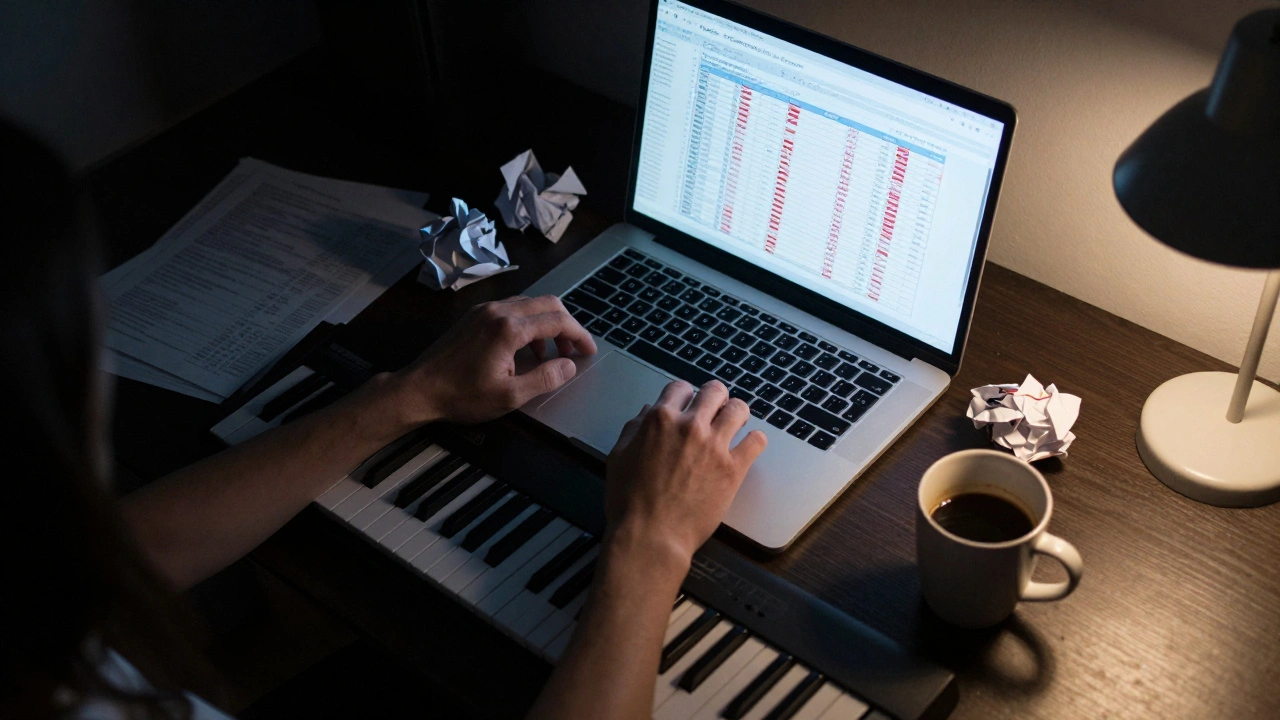
Most independent artists start with a simple agreement: "We'll split everything 50/50." That sounds easy until the checks actually arrive. When a single song generates revenue from Spotify, a digital music, podcast, and video service that gives you access to millions of songs, Apple Music, and YouTube, the money doesn't arrive in one neat pile. It comes in staggered payments, often after a 90-day delay.
If you are the primary account holder, you are legally responsible for the taxes on the full amount before you pay your collaborators. This means if you earn $1,000 and send $500 to a producer, the government still thinks you earned $1,000. Unless you have a bulletproof accounting system, you'll end up paying taxes on money you already gave away. Automated splits solve this by directing the funds to the right person before they ever hit your bank account, shifting the tax burden to the actual earner.
How Automated Split Systems Actually Work
At its core, a split payment system is a layer of financial logic that sits between the Digital Distribution, the process of making a music recording available on digital platforms service and the bank accounts. When a distributor like DistroKid, a digital music distribution service that allows musicians to upload music to stores processes a payment, the system checks the "split sheet" attached to that specific ISRC code (the unique ID for your song).
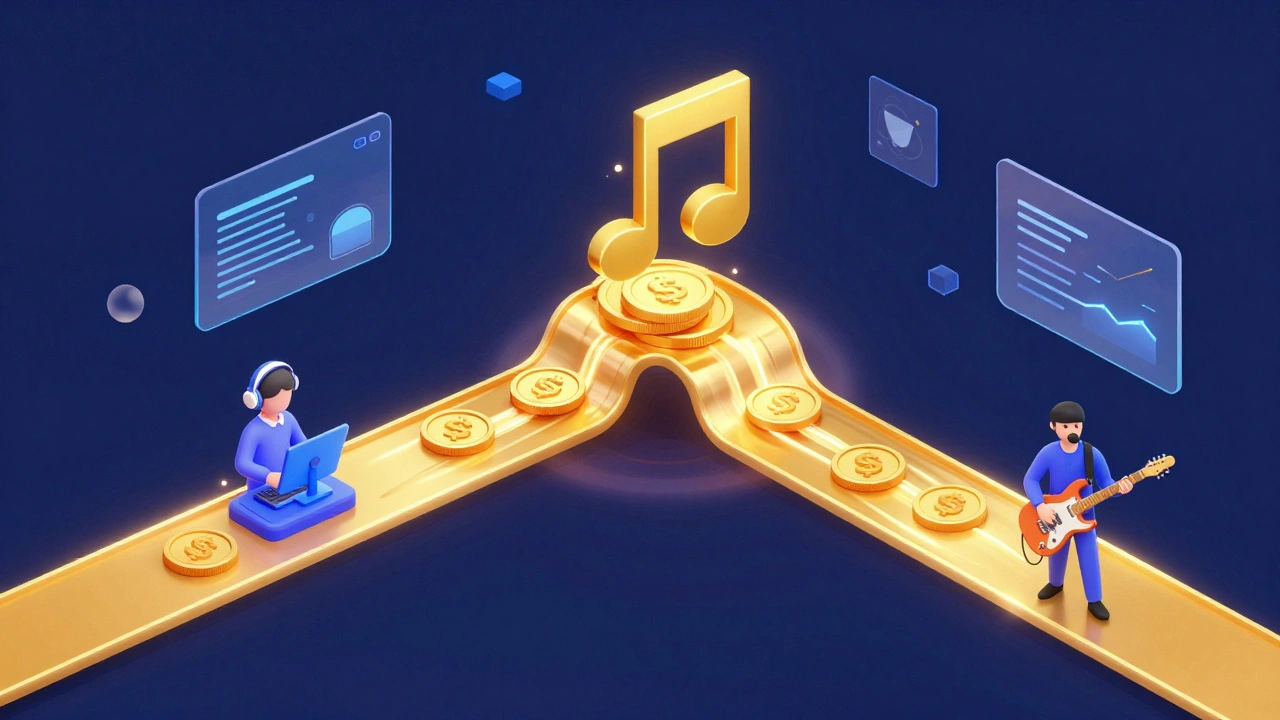
The system then triggers a series of micro-transactions. For example, if a song has a 40% split for the songwriter, 40% for the producer, and 20% for the vocalist, the platform divides the incoming $100 payout into $40, $40, and $20. These funds are routed instantly. This eliminates the "I'll pay you when I get paid" conversation, which is often a source of tension in creative collaborations.
| Feature | Manual Spreadsheets | Payment Apps (Venmo/PayPal) | Automated Split Platforms |
|---|---|---|---|
| Payment Speed | Slow (Monthly/Quarterly) | Instant (after manual calc) | Real-time / Automatic |
| Tax Liability | Primary artist pays all | Primary artist pays all | Distributed per person |
| Transparency | Low (Trust based) | Medium (Transaction logs) | High (Direct dashboards) |
| Error Rate | High (Human error) | Medium | Low (Systematic) |
Top Platforms for Automating Your Money
Depending on where you are in your career, different tools will fit better. Some are built directly into the distribution process, while others are standalone financial tools for larger catalogs.
DistroKid is widely considered the gold standard for indie artists because of its "Splits" feature. You simply enter the email addresses of your collaborators and the percentage they deserve. The platform handles the rest. It's a closed loop: distribution and payment happen in one place, which reduces the number of third-party tools you need to manage.
For those managing more complex rights, Songtrust, a global music publishing administration service is essential. While DistroKid handles the recording (the "sound recording" or master), Songtrust handles the songwriting (the "composition"). This is a critical distinction. If you wrote the lyrics but didn't play the drums, you are entitled to publishing royalties, which are separate from the streaming payouts. Songtrust ensures these royalties are collected from PROs (Performance Rights Organizations) and split correctly.
If you're running a full-scale label, you might look into Infinite Catalog, a royalty management software designed for independent labels and artists. This is more of an enterprise-grade tool. It allows for "recoupable' balances," meaning the label can take 100% of the earnings until the advance paid to the artist is paid back, and then automatically switch to a 50/50 split. This level of logic is impossible to manage in a simple spreadsheet once you have more than five artists on your roster.
Common Pitfalls When Setting Up Splits
Automation is great, but garbage in equals garbage out. One of the biggest mistakes musicians make is failing to agree on percentages before the song is uploaded. It's easy to agree on a 50/50 split when the song is a demo, but when it hits 10 million streams, suddenly everyone remembers they "did a lot more work than they thought." Always have a signed split sheet-even a digital one-before the track goes live.
Another trap is ignoring the difference between Mechanical Royalties and royalties paid to the songwriter whenever a copy of a song is made (including streams) and performance royalties. Many artists set up a split for the "master" (the recording) but forget to set up a split for the "publishing" (the song itself). If you only use a distributor's split tool, you might be leaving 50% of your total potential earnings on the table because those don't flow through the distributor; they flow through organizations like ASCAP or BMI.

A Pro's Workflow for a New Release
If you want to do this the right way and avoid any legal or financial headaches, follow this sequence:
- The Split Sheet: Before the final mix is finished, create a document listing every contributor and their agreed-upon percentage for both the master and the publishing.
- The Distribution Setup: Upload the track to your chosen distributor and immediately enter the email addresses for the master splits. This ensures the money is carved up the second it's earned.
- The Publishing Registration: Register the song with a publishing administrator like Songtrust or directly with your PRO. Use the same percentages from your split sheet.
- The Verification: Have every collaborator log into their respective dashboards to confirm they see the song and the correct percentage. Doing this on day one prevents "Where is my money?" emails six months later.
Future-Proofing Your Music Revenue
As the industry moves toward more transparent payment models, we're seeing the rise of "smart contracts." While still in the early stages for most, the idea is that the royalty split is coded directly into the file. This would mean no matter where the song is sold or streamed, the payment is automatically divided by the code itself, bypassing the need for a central administrator.
Regardless of the tech, the goal remains the same: getting the right money to the right person without a headache. By moving away from manual payments and embracing these automated platforms, you stop being an accountant and start being a musician again. You can focus on the next hook or the next tour, knowing that your collaborators are being taken care of automatically.
Do I need a lawyer to set up royalty splits?
For simple collaborations and indie releases, you don't need a lawyer. A signed split sheet and a reputable platform like DistroKid are usually enough. However, if you're signing a long-term deal or managing high-value copyrights, having a lawyer review your contracts is a smart move to ensure you aren't signing away your publishing rights permanently.
Can I change the split percentages after the song is released?
Yes, most platforms allow you to edit splits. However, this usually only affects future earnings. Money that has already been paid out cannot be "clawed back" by the platform. You would have to settle those previous payments manually between the parties involved.
What happens if a collaborator doesn't have a DistroKid account?
In most cases, the collaborator will receive an email inviting them to set up a free "Splitter" account to collect their funds. They don't necessarily need to pay for a full distribution subscription just to receive money from your splits.
Is there a fee for using automated split services?
Some distributors include splits for free as part of their annual subscription. Others, especially publishing administrators, may take a small percentage (usually 15-20%) of the royalties they collect on your behalf as a management fee.
What is the difference between a Master split and a Publishing split?
The Master split refers to the ownership of the actual audio recording (the file you hear). The Publishing split refers to the ownership of the underlying composition (the melody and lyrics). You can own 100% of the Master but only 25% of the Publishing if you collaborated with three other songwriters.
Next Steps for Your Workflow
If you're currently managing your royalties in a spreadsheet, your first priority should be an audit. List every song you've released and identify which ones have "hidden' collaborators who haven't been paid yet. Once you have that list, pick a platform that matches your scale-DistroKid for simplicity, Songtrust for publishing, or Infinite Catalog for label management.
For those with a growing catalog, set up a dedicated business email for your music finances. This keeps your split notifications and tax documents separate from your personal mail and ensures that when you eventually bring on a manager or accountant, you can give them a clean paper trail of every dollar earned and distributed.