Most artists burn out not because they lack talent, but because they rely on just one way to get paid. A single gig, one gallery, or a single streaming platform can vanish overnight. In 2026, the artists who are thriving aren’t the ones with the biggest following-they’re the ones with multiple revenue streams. You don’t need to become a business guru. You just need to build a few solid, realistic ways to earn money that don’t all depend on the same audience, platform, or trend.
Stop Betting Everything on One Song or One Show
Think about it: if your only income comes from Spotify royalties, you’re playing a game where the odds are stacked against you. The average artist earns less than $0.003 per stream. To make $1,000 a month, you’d need over 330,000 streams. That’s not impossible, but it’s not reliable either. What if your album gets buried in an algorithm update? What if your local venue shuts down? What if your fanbase ages out and moves on?
Artists who survive long-term don’t wait for luck. They layer income like insulation. One stream might keep the lights on, but five different streams? That’s security.
Teach What You Know
You’ve spent years mastering your craft. Someone else is willing to pay to learn it. Teaching doesn’t mean you have to become a professor. It means creating simple, valuable experiences for people who want to get better.
Here’s what’s working right now:
- One-time online workshops: A painter in Portland sells a $49 90-minute class on ‘Mixing Earth Tones’-sold 1,200 copies last year.
- Monthly Patreon-style tutorials: A musician offers a new chord progression or songwriting tip every week for $8/month. 370 subscribers.
- Local in-person classes: Community centers and libraries pay artists $150-$300 per session to teach kids or seniors. No fancy gear needed.
You don’t need a website. Start by asking your Instagram followers: ‘What part of my process do you wish you could learn?’ The answer is your curriculum.
Sell Digital Products That Scale
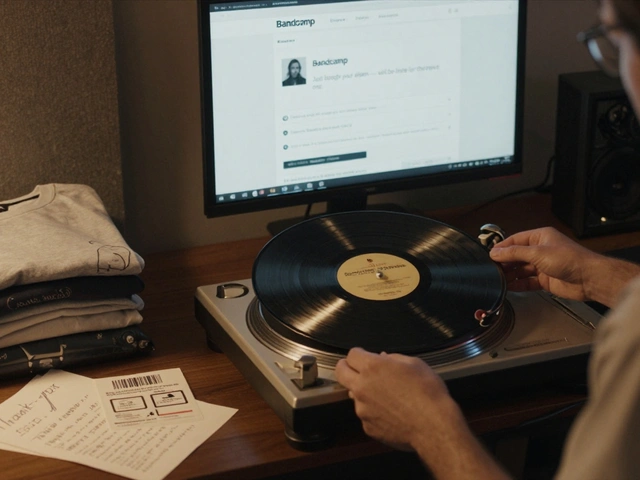
Physical art takes time, materials, and shipping. Digital products? You create them once. Sell them forever.
Examples that actually sell:
- Printable wall art: A collage artist sells $12 digital prints of abstract cityscapes. She made $8,000 last year just from Etsy.
- Presets and brushes: A photographer sells Lightroom presets that mimic her signature look. $15 each. 600 sales.
- Sound packs: A composer sells 10 ambient loops for $20. Used by indie game developers and podcasters.
- Templates: A graphic designer sells Canva templates for album covers. $25. 400 downloads.
You don’t need to be a coder. Use tools like Gumroad, Ko-fi, or Etsy. Upload once. Set a price. Let it run while you sleep.
Licensing Your Work
Most artists think licensing is for big studios. It’s not. You can license your art to small businesses, apps, and even local shops.
Here’s how it works:
- A coffee shop in Eugene wants your painting on their mugs. You license it for $500 + 5% royalty per mug sold.
- A meditation app needs 5 background textures. You sell them a non-exclusive license for $300.
- A yoga studio uses your line drawings in their class handouts. You charge $100 per year for usage rights.
Platforms like ArtStation is a platform where artists showcase and license their work to commercial clients and Shutterstock is a stock media marketplace where artists upload content for licensing make this easy. Upload 10 pieces. Get paid every time someone downloads them. No negotiation needed.
Collaborate With Non-Artists
Why limit your audience to other artists? Partner with people in totally different fields.
Examples:
- A ceramicist teams up with a local herbalist to create hand-thrown tea infusers with custom glazes. They split profits 50/50. Sales doubled.
- A poet writes short verses for a skincare brand’s product packaging. Gets paid per unit sold.
- A street photographer sells limited-edition prints to a boutique hotel. The hotel displays them, promotes them, and pays you $200 per print.
You’re not selling art-you’re selling a story, a feeling, a vibe. Someone else already has the audience. You bring the creativity. Win-win.
Offer Custom Commissions (The Smart Way)
Commissions can be a goldmine-or a time-suck. The key? Structure them like a service, not a charity.
Do this:
- Set a base price for each type of project. Example: ‘Portrait: $450’
- Require 50% upfront. No work starts until it’s paid.
- Limit revisions to two. Anything extra? $75/hour.
- Use a simple contract. Free templates exist on LegalZoom is an online service that provides legal documents and contracts for freelancers and small businesses or Bonsai is a platform for freelancers to create contracts, invoices, and manage client relationships.
Stop saying ‘I’ll do it for exposure.’ You’re not a charity. You’re a professional. People pay for professionals.
Build a Membership or Subscription
People love access. Not just to your art-but to your process.
Try a $15/month membership:
- Early access to new work
- Behind-the-scenes videos
- Monthly live Q&A
- Exclusive downloadable content (like brush sets or sheet music)
One painter in Portland has 210 members. That’s $3,150 a month, automatic. She doesn’t chase clients. They come to her.
Use platforms like Patreon is a membership platform that lets creators earn recurring income from supporters or Substack is a newsletter platform that allows creators to monetize written content through subscriptions. It’s not about being ‘popular.’ It’s about being consistent.
What You’re Really Building Is Resilience
Diversifying your income isn’t about making more money. It’s about making sure you can keep creating-even if the world changes.
One artist lost her gallery show when the building was sold. But she still had:
- Her online workshops (earning $1,200/month)
- Her digital prints (earning $800/month)
- Her Patreon (earning $1,500/month)
- Her licensing deals (earning $400/month)
She didn’t panic. She kept painting.
You don’t need to do all of this at once. Start with one. Then another. In six months, you’ll have three. In a year, five. And suddenly, you’re not just an artist. You’re a sustainable creative business.
Start Today. Pick One.
Don’t wait for ‘perfect.’ Pick one revenue stream that feels doable:
- Create one digital product this week.
- Offer one workshop next month.
- Reach out to one local business for a collaboration.
- Set up a simple Patreon with three perks.
That’s it. One step. Then another. The rest follows.