Quick Wins for Your Rhythm Section
- Use a mix of close mics and room mics to get both punch and space.
- Avoid perfect quantization in MIDI; shift notes slightly to create "swing."
- Layer acoustic samples with electronic triggers for a modern, hybrid sound.
- Focus on the relationship between the kick drum and the bass guitar first.
- Use saturation and compression to glue the kit together.
The Art of Capturing Live Drums
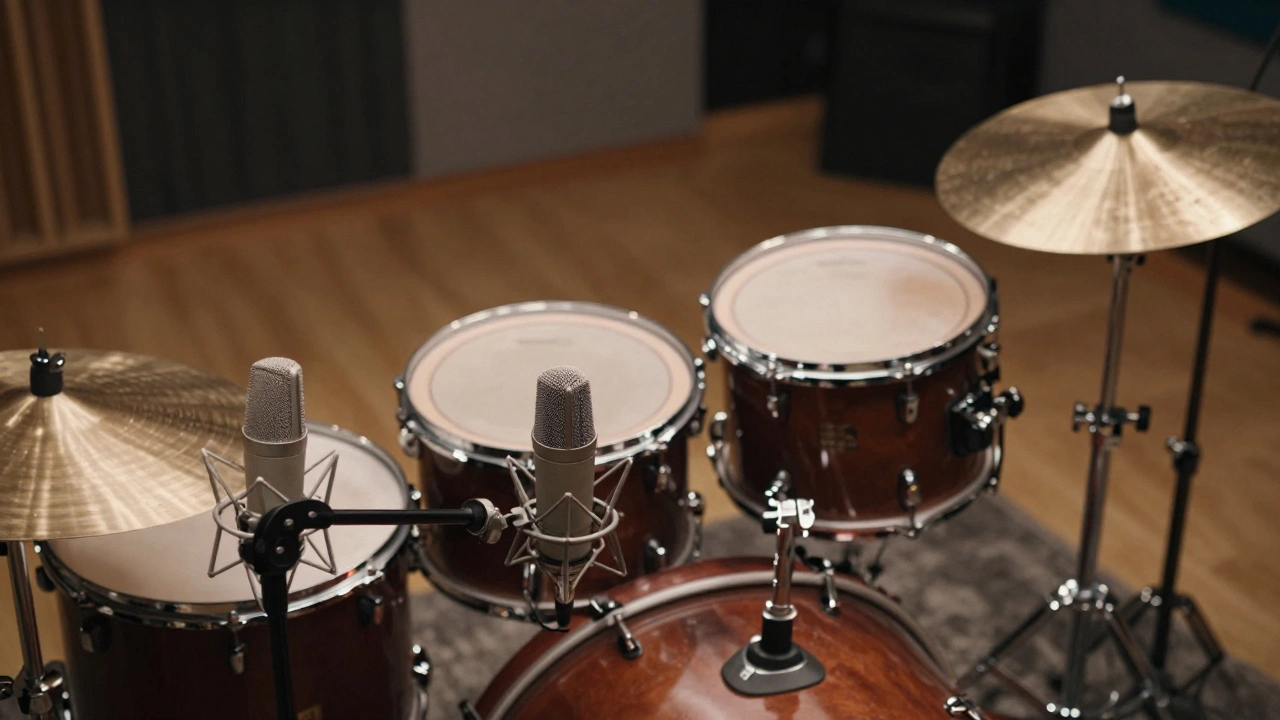
Recording a live kit is one of the most challenging tasks in a studio because you're dealing with loud, explosive sounds that bleed into every single microphone. The secret isn't having the most expensive gear, but knowing where to put the mics.To start, you need to understand that Drum Microphones is a specialized set of transducers designed to handle high sound pressure levels (SPL) and capture the specific frequencies of a drum kit. For a standard setup, you'll want a dynamic mic on the kick and snare and condensers for the overheads.
The kick drum is the foundation. If you only have one mic, put it just inside the beat hole of the resonant head to get that "thump." If you want more "click" (the sound of the beater hitting the skin), add a second mic on the outside. For the snare, a top mic captures the hit, while a bottom mic captures the snap of the wires. But the real magic happens with the overheads. Many beginners treat overheads as just "cymbal mics," but they are actually your main drums mics. If you position two Condenser Microphones is sensitive microphones that use a capacitor to convert sound into an electrical signal, ideal for capturing high-frequency detail in a spaced pair or X-Y configuration, you capture the entire kit's image and the natural air of the room.
Don't ignore the room mics. Placing a pair of mics ten feet away from the kit allows you to compress them heavily in the mix, creating that massive, explosive sound you hear in rock records. It turns a sterile recording into a living, breathing performance.
Mastering Drum Programming and MIDI
Sometimes you don't have a drummer or a treated room. That's where MIDI is Musical Instrument Digital Interface, a technical standard that allows electronic musical instruments and computers to communicate comes in. The biggest mistake people make with drum recording and programming is making things too perfect. A machine that hits every note exactly on the beat sounds robotic and lifeless.To fix this, use "humanization." Most DAW is Digital Audio Workstation, software used for recording, editing, and producing audio files software like Ableton Live or Logic Pro has a function to randomly shift MIDI notes by a few ticks. Even better, record your parts using a MIDI controller or electronic pads instead of drawing them with a mouse. Your natural timing errors are actually what make the groove feel "right."
Velocity is your other secret weapon. In a real performance, a drummer never hits the snare with the exact same force every time. Vary your velocities-make the ghost notes quiet and the backbeat loud. This creates a three-dimensional feel that tricks the listener's brain into thinking a human is playing.
| Feature | Live Recording | MIDI Programming |
|---|---|---|
| Authenticity | High (Natural feel) | Medium (Requires manual tweaking) |
| Control | Low (Hard to change notes later) | High (Easy to edit every hit) |
| Setup Time | High (Mic placement/tuning) | Low (Instant start) |
| Cost | Variable (Gear + Room) | Low (Software/Plugins) |

The Hybrid Approach: The Best of Both Worlds
Modern production often uses a hybrid setup. You might record a live drummer for the feel, but blend in Sample Libraries is Collections of high-quality pre-recorded audio samples of instruments, often mapped to MIDI to add punch. This is common in pop and metal where the drums need to be surgically clean but still sound organic.One way to do this is through drum triggering. You place a trigger sensor on the snare drum that sends a MIDI signal every time the head is hit. You can then blend the natural sound of the snare with a high-end sample. This ensures that even if the room acoustics were poor, you have a consistent, powerful snap on every hit.
Another trick is layering a programmed electronic kick underneath a live kick. The live kick provides the "air" and the character, while the programmed Sub-bass is Frequencies below 60Hz that provide a deep, felt rather than heard, low-end impact provides the consistent low-end weight that translates well to club systems and car speakers.
Mixing for Impact and Glue
Once you've captured or programmed your beats, you have to make them sit right in the mix. The most important relationship in your rhythm section is between the kick drum and the bass guitar. If they fight for the same space, your mix will sound muddy.Use a technique called sidechaining. This involves using a Compressor is An audio processor that reduces the dynamic range of a signal by attenuating the loudest peaks to briefly lower the volume of the bass guitar whenever the kick drum hits. This creates a "pocket" for the kick to punch through without losing the low-end energy of the bass.
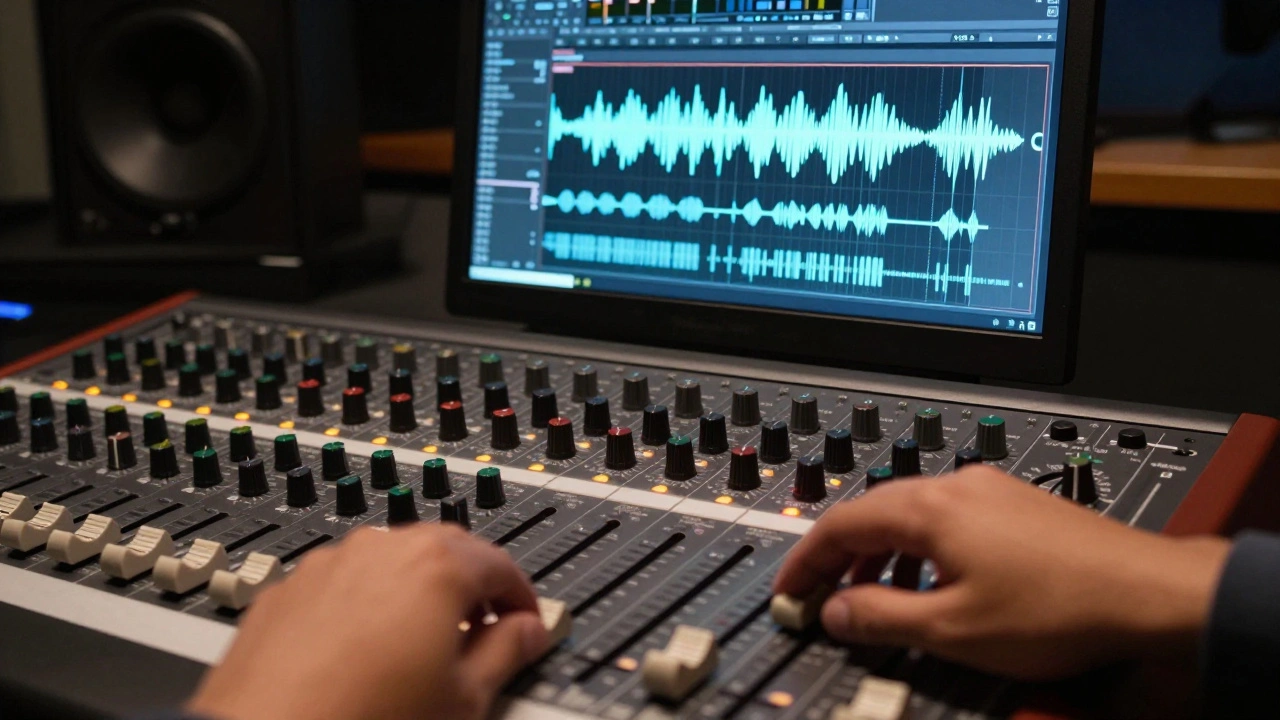
To get the kit to sound like a single instrument rather than a collection of separate microphones, use a drum bus. Send all your drum tracks to one stereo group and apply a gentle amount of compression. This "glues" the elements together. Parallel compression is another pro move: send your drums to a separate bus, smash them with a heavy compressor, and then blend that distorted, aggressive signal back in with the original clean drums. It adds weight and excitement without killing the transients.
Common Pitfalls and How to Avoid Them
One of the most frequent mistakes is over-processing. It's tempting to put a heavy EQ and a compressor on every single drum track, but this often strips away the life of the recording. If the drums sound thin, try changing the mic position before reaching for a plugin. Moving a mic just two inches can change a "boxy" sound into a "punchy" one.Another issue is ignoring the phase. When you use multiple microphones on one source, the sound hits each mic at a different time. This can cause certain frequencies to cancel each other out, making the drums sound hollow. Always check the phase relationship between your overheads and your snare. Flip the phase (polarity) on one of the channels; if the low end suddenly disappears, flip it back. If the low end increases, keep it flipped.
Lastly, avoid the temptation to quantize everything to 100%. In genres like jazz, funk, or indie rock, the "push and pull" of the tempo is where the emotion lives. If the drummer is slightly ahead of the beat, the song feels urgent. If they're slightly behind, it feels laid back. If you snap everything to the grid, you kill that emotional narrative.
Do I really need a treated room to record drums?
While a professional studio is ideal, you can get great results in a living room by using "gobos" (acoustic baffles) or even hanging heavy blankets to stop sound from bouncing off hard walls. The key is controlling the reflections so they don't clutter your recording.
What is the best way to make MIDI drums sound real?
Focus on velocity and timing. Use a variety of samples for the same drum (round robins) so that every hit isn't identical. Manually shift some notes slightly off the grid and avoid using the same velocity for every snare hit.
How many microphones are necessary for a basic drum kit?
You can actually record a whole kit with just one or two microphones (the Glyn Johns or Recordist techniques). However, for a standard modern sound, a 4-mic setup (Kick, Snare, and two Overheads) is the gold standard for balance and flexibility.
What is the difference between a dynamic and a condenser mic for drums?
Dynamic mics are rugged and handle high volume well, making them perfect for the kick and snare. Condensers are more sensitive and capture more detail, which is why they are used for overheads and room mics to get the full shimmer of the cymbals.
Why does my kick drum sound like a pillow?
This usually happens due to a lack of "attack" frequencies. Try moving the mic closer to the beater or using a sample replacement tool to add a crisp click to the start of the hit. Also, check if there is too much dampening (blankets or pillows) inside the drum.