Most blues bands fail because they treat the slide guitar as just another instrument in the mix. It’s not. The slide guitar is a lead voice that requires specific harmonic and rhythmic support to shine without drowning out the rest of the ensemble. When you arrange around it, you aren’t just placing musicians on a stage; you’re building a sonic architecture where every note serves the melody.
If your slide parts sound muddy or get buried under heavy strumming, the problem isn’t usually the player. It’s the arrangement. You need to carve out space for the glissandos and bends that define the genre. This guide breaks down how to structure your rhythm section, choose the right chords, and manage dynamics so the slide cuts through like it should.
Key Takeaways
- The slide guitar acts as the primary melodic voice, requiring the rhythm section to play in a supportive, non-competing manner.
- Open tunings (like Open G or Open D) are essential for authentic blues slide tones and easier fretting techniques.
- Rhythm guitarists must avoid full-barre chords and use sparse, percussive strumming patterns to leave frequency space open.
- Bass lines should lock tightly with the kick drum and emphasize root notes to provide a solid foundation without cluttering the midrange.
- Dynamics are critical; the band should drop volume during solo sections to let the slide’s sustain and vibrato breathe.
Defining the Role of the Slide Guitar
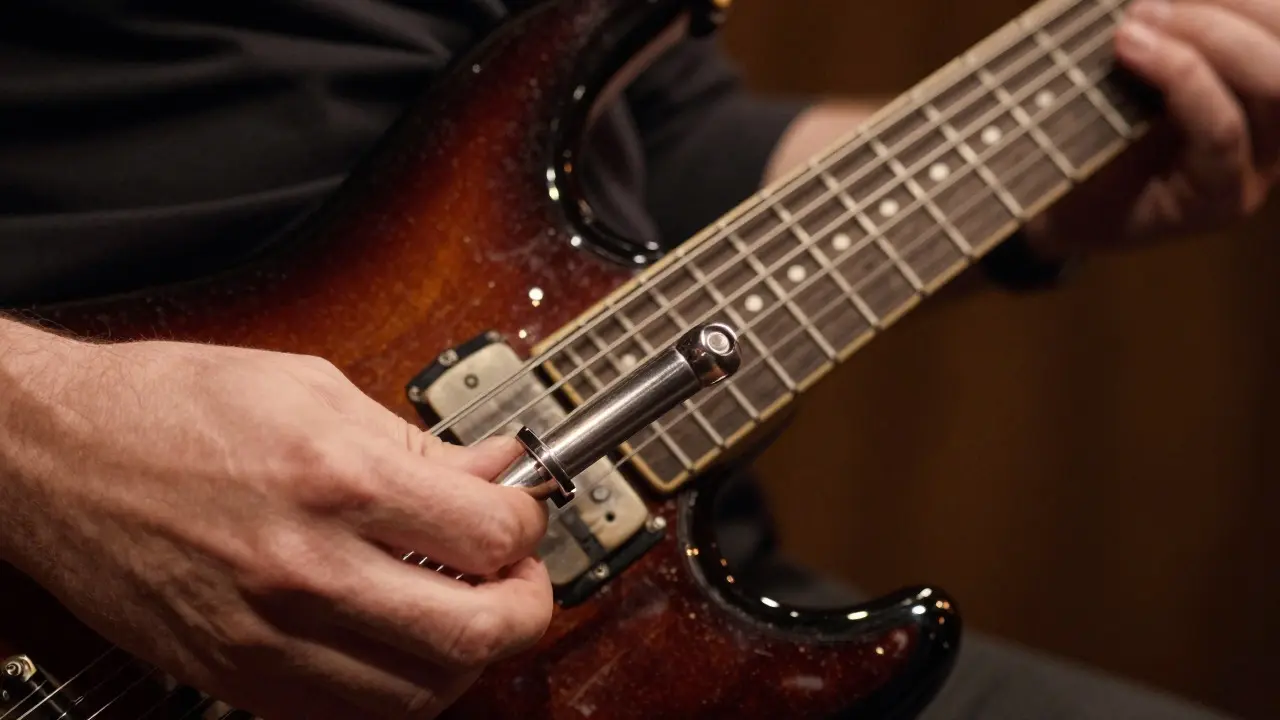
To arrange effectively, you first have to understand what the slide guitar actually does. Unlike standard electric guitars that rely on precise finger placement for pitch, the slide guitar uses a metal or glass tube pressed against the strings. This creates a continuous tone that can bend notes smoothly, mimicking the human voice. In a blues context, this instrument often takes on the role of both lead and texture simultaneously.
Because the slide produces a wide frequency spectrum-covering lows, mids, and highs-it naturally competes with other instruments if not managed. A standard electric guitar playing complex chord progressions will clash with the slide’s sustained notes. Therefore, the arrangement must shift the burden of harmony away from the rhythm section and onto the bass and drums, allowing the slide to occupy the melodic center stage.
Choosing the Right Tuning and Setup
You can’t arrange a blues band properly if the slide guitar isn’t set up for the job. Most professional slide players use open tunings. The most common are Open G (D-G-D-G-B-D) and Open D (D-A-D-F#-A-D). These tunings allow the player to strike all six strings at once and hear a major chord, which simplifies the process of finding key centers quickly.
When selecting a tuning, consider the tonal weight you want. Open G tends to be brighter and more cutting, making it ideal for outdoor festivals or loud venues. Open D is warmer and darker, better suited for intimate club settings or studio recordings. If you’re arranging for a specific song, match the tuning to the key of the song to minimize the number of capo positions needed, which keeps the transition between songs smoother for the whole band.

Structuring the Rhythm Section
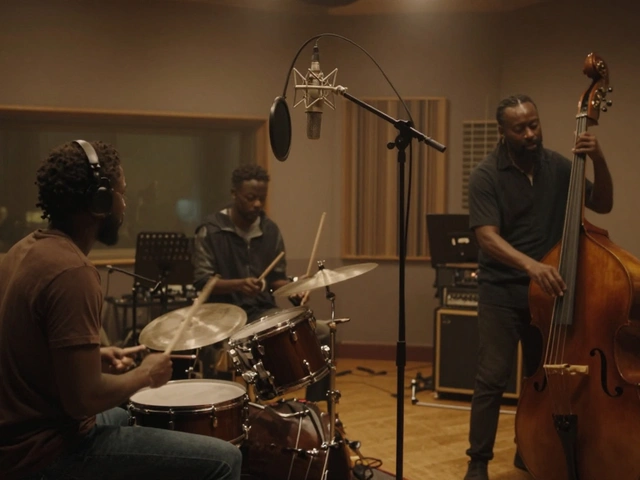
This is where most arrangements go wrong. The rhythm section-typically consisting of rhythm guitar, bass, and drums-must act as a unified machine that supports rather than leads.
- Rhythm Guitar: Avoid barre chords. Instead, use single-note bass lines or simple triads. Strum sparingly. A common technique is to play only the off-beats or the "and" of the beat, leaving the downbeats clear for the bass and kick drum. This creates a pocket that the slide can glide over without collision.
- Bass Guitar: The bassist is the anchor. They should stick primarily to root notes and occasional fifth/octave movements. Complex walking bass lines are generally inappropriate for a slide-focused blues arrangement because they introduce too many moving parts in the low-mid range, where the slide also operates.
- Drums: Keep the hi-hat pattern steady but dynamic. Use ghost notes on the snare to maintain groove without increasing volume. During slide solos, the drummer should simplify their fill patterns and focus on keeping time, perhaps dropping the ride cymbal for a softer brush feel if the mood allows.
Managing Frequency Space and Dynamics
Sound is physical. If two instruments occupy the same frequency range at the same time, they create interference. The slide guitar typically dominates the mid-range (200Hz to 2kHz). To prevent mud, the rhythm guitar should be EQ’d to boost the highs slightly while cutting the mids, pushing its tone to the top end. The bass should be tight, with minimal overhang into the 100Hz+ range unless necessary for sustain.
Dynamics are your best friend here. A great blues arrangement breathes. Start the song with just the slide and bass. Bring in the drums softly. As the energy builds, add the rhythm guitar. For the final chorus or outro, pull back again. This ebb and flow highlights the slide’s emotional peaks. If the band plays at 80% volume throughout the entire song, the slide will sound flat and lifeless. Contrast creates interest.
Practical Arrangement Examples
Let’s look at two common scenarios to see how these principles apply in real time.
| Element | Intimate Club Setting | Large Festival Stage |
|---|---|---|
| Slide Volume | Moderate, clean tone | High gain, heavy compression |
| Rhythm Guitar | Sparse, acoustic-like strumming | Percussive, muted picks |
| Bass | Fingerstyle, warm tone | Picked, bright, aggressive attack |
| Drums | Brushes or soft sticks | Hard sticks, crash cymbals |
| Dynamic Range | Wide (quiet to loud) | Narrow (consistently loud) |
In an intimate club, you might start a song with just the slide and bass. The audience leans in. You bring in the drums with brushes. Then, halfway through, you add the rhythm guitar. This gradual build-up keeps people engaged. On a large festival stage, however, you need immediate impact. Start with full band energy, but ensure the slide has enough headroom in the PA system to cut through the crowd noise. The arrangement remains similar, but the execution is louder and more direct.
Common Pitfalls to Avoid
- Overplaying: The biggest mistake is having the rhythm guitarist play complex fills during the slide solo. Silence is gold. Let the slide speak.
- Wrong Tuning: Using standard E tuning for slide makes bending notes difficult and limits the harmonic possibilities. Stick to open tunings.
- Ignoring the Bass: If the bassist gets lost in fancy licks, the foundation crumbles. The slide needs a stable floor to dance on.
- Static Volume: Playing the whole song at the same intensity kills the emotion. Use swells and drops to highlight key phrases.
Next Steps for Your Band
Try rearranging one of your standard blues numbers using these principles. Pick a song in G major. Switch the slide guitar to Open G. Have the rhythm guitarist strip their part down to just the root note on the downbeat. Ask the bassist to lock with the kick drum. Play it through once. Listen to how much clearer the slide sounds. Then, try adding dynamics: start quiet, build to a climax, and end soft. You’ll hear the difference immediately. The slide stops fighting for attention and starts leading the conversation.
Experiment with different combinations. Maybe swap the roles for a second song, letting the rhythm guitar take a bit more space while the slide plays shorter, punchier riffs. Flexibility is key. The goal is always to serve the music, not to show off individual technical prowess. When the arrangement supports the slide, the whole band sounds tighter, more cohesive, and far more emotionally resonant.
What is the best tuning for a blues slide guitar?
Open G (D-G-D-G-B-D) and Open D (D-A-D-F#-A-D) are the most popular choices. Open G is brighter and works well for live performances, while Open D is warmer and better for studio work or slower ballads.
Should the rhythm guitar play chords when the slide is soloing?
Generally, no. Full chords create frequency clashes. Instead, the rhythm guitar should play single notes, simple triads, or stop playing entirely to let the slide occupy the harmonic space.
How do I make the slide guitar cut through a loud mix?
Use a high-gain amplifier setting with moderate compression to sustain notes. Ensure the slide is positioned centrally in the stereo field. Also, ask the rhythm section to reduce their volume by 20-30% during solo sections to create dynamic contrast.
Can a standard electric guitar be used for slide?
Yes, but it’s less effective. Standard tuning makes bending notes difficult. If you must use standard tuning, keep the action very low and use light gauge strings to facilitate smooth sliding. However, switching to an open tuning is highly recommended for a true blues sound.
What role does the bass play in a slide guitar arrangement?
The bass provides the harmonic foundation. It should focus on root notes and lock rhythmically with the kick drum. Avoid complex melodic lines that compete with the slide’s midrange frequencies. Think of the bass as the floorboards of a house; they need to be solid and stable.