You just finished mixing your latest single. It sounds incredible. You’re ready to hit "Distribute" on your platform of choice. But then you hit a wall: the form asks for an ISRC code and a unique product identifier for physical or digital packaging. If you don’t have these, your release is stuck in limbo. This isn't just bureaucratic red tape; it’s the backbone of how the music industry tracks ownership, royalties, and sales data across every streaming service and store on earth.
Many independent artists and small labels still treat ISRCs and UPCs as afterthoughts, generating them manually or reusing old codes. This is a mistake that can cost you thousands in lost royalties later. Let’s break down exactly what these identifiers are, why they matter more than ever in 2026, and which tools actually save you time versus those that just add complexity.
Understanding the Core Identifiers: ISRC vs. UPC
Before picking a tool, you need to know what you’re managing. These two codes serve different purposes and often get confused by new distributors.
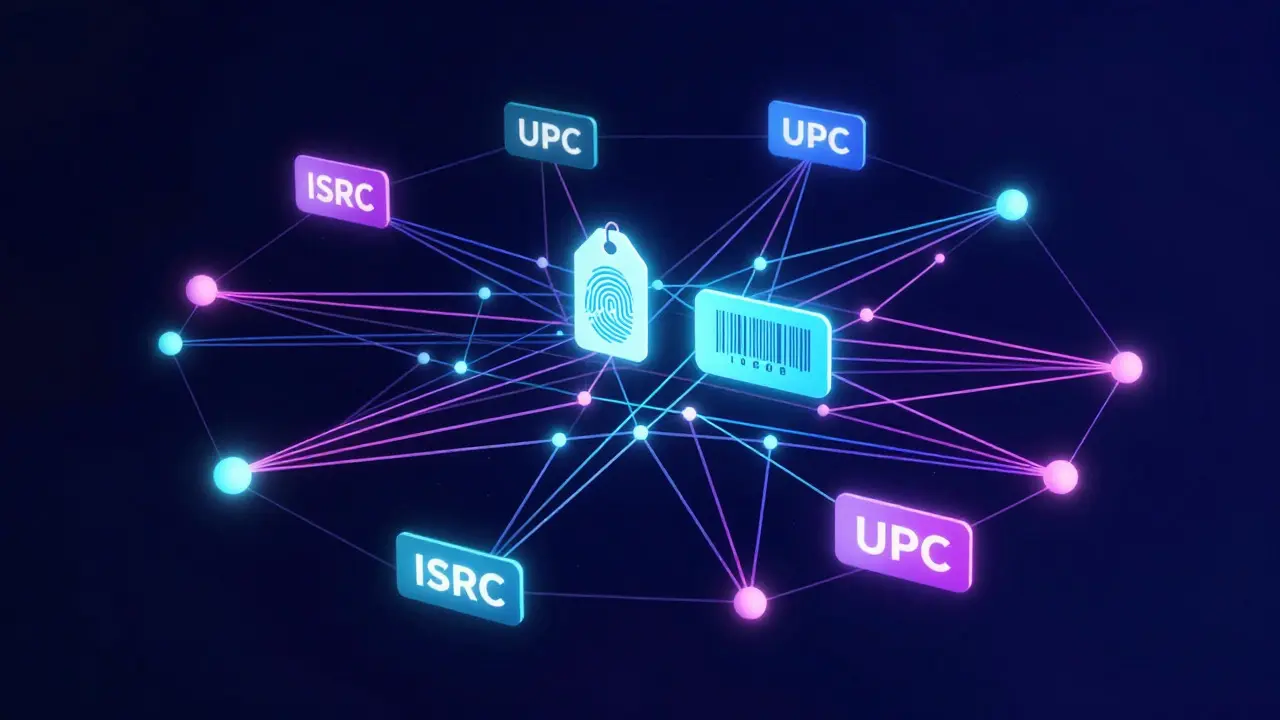
International Standard Recording Code (ISRC) is a unique alphanumeric code assigned to each individual audio recording. Think of it as the fingerprint of a specific song. If you record a track in New York, its ISRC stays with that specific recording forever. If you remix it, the remix gets a new ISRC. If another artist covers it, their version gets a completely different ISRC. This allows streaming services like Spotify and Apple Music to distinguish between the original master and any derivative works.
Universal Product Code (UPC), also known as EAN-13 in many regions, is a barcode number used to identify a physical or digital album or compilation. While an ISRC identifies a *song*, a UPC identifies the *package* containing the songs. For example, a 10-track EP will have one UPC for the whole project, but ten distinct ISRCs for each track inside it. Digital-only singles usually require a UPC if they are being sold as a standalone unit, though some platforms allow free distribution without one if no retail price is set.
| Feature | ISRC | UPC / EAN-13 |
|---|---|---|
| Identifies | Individual audio recording (track) | The entire album, EP, or single package |
| Format | 12 characters (CC-XXX-YY-NNNNN) | 12 or 13 digits |
| Lifespan | Permanent to that specific recording | Tied to the specific collection/project |
| Primary Use | Royalty tracking, radio airplay monitoring | Retail sales, inventory management, digital storefront listing |
| Who Assigns It? | Record label or distributor via national agency | Record label or distributor via GS1 |
Why Manual Management Fails at Scale
If you only release one single a year, you might get away with asking your distributor to generate these codes for you. Most major distributors like DistroKid, TuneCore, or CD Baby offer this service. However, relying solely on them creates risks. What happens if you switch distributors? Do you keep the same ISRCs? Usually, yes, but you have to ensure the metadata transfers correctly. What if you want to pitch your song to a sync agent before it goes public? You need the ISRC ready immediately.
The real problem arises when you start releasing multiple projects simultaneously or manage several artists. Manually copying and pasting codes from email threads into spreadsheets leads to errors. A single typo in an ISRC means that royalty payment might go to the wrong account or disappear entirely because the PRO (Performance Rights Organization) can’t match the play to your registration. This is where dedicated manager tools become essential.
Top Tools for Managing ISRCs and UPCs
There isn’t one single "official" app that everyone uses, but there are three categories of tools that professionals rely on. Each serves a different stage of the release workflow.
1. Dedicated Metadata Platforms
These are specialized software solutions designed specifically for catalog management. They act as a central database for all your recordings, ensuring that every ISRC and UPC is generated according to strict standards and stored securely.
- Discogs: While primarily a marketplace, Discogs has robust labeling features that help maintain consistent ISRC data for vinyl and CD pressings. It’s less useful for pure digital planning but critical for physical releases.
- SoundBase: A cloud-based metadata solution often integrated with larger distribution workflows. It allows teams to assign ISRCs collaboratively, preventing duplicate codes across different departments.
- Custom Spreadsheets with Validation Scripts: Many indie labels use Excel or Google Sheets with VBA scripts that validate the format of an ISRC (checking country code, registrant code, etc.) before submission. It’s low-tech but highly effective for small operations.
2. Distribution Platform Integrations
Most modern distributors now have built-in ISRC/UPC generators. When you upload a file, the system checks if you’ve provided a code. If not, it generates one automatically based on your account details. The benefit here is convenience; the drawback is dependency. If you leave the platform, you must export your metadata carefully to ensure you retain ownership of the codes.
3. National Agency Directories
In the US, the Recording Industry Association of America (RIAA) oversees the assignment of ISRCs through designated agencies. In other countries, local bodies handle this. Some tools connect directly to these registries to verify that a code hasn’t already been assigned to someone else, reducing the risk of collisions.
Best Practices for Generating and Storing Codes
Regardless of the tool you choose, how you handle the data matters as much as the software itself. Here are the non-negotiable rules for keeping your catalog clean.
- Generate Before Upload: Don’t wait for the distributor to create the code. Generate it yourself or have your team do it during the pre-release phase. This gives you control and allows you to register the work with your PRO before the song is even live.
- One Song, One ISRC: Never reuse an ISRC for a different version of a song. If you make an acoustic version, a remix, or a live take, it needs a new ISRC. Reusing codes confuses royalty systems and can lead to audits.
- Standardize Your Naming Convention: Your internal file names should include the ISRC. For example: `Artist_Song_Title_ISRC-XXXXX.wav`. This ensures that if you ever lose your spreadsheet, the code is embedded in the asset itself.
- Keep a Master Database: Whether it’s a simple CSV file or a complex SQL database, you need a single source of truth. This database should link the ISRC, UPC, Artist Name, Track Title, Release Date, and Distributor ID.
- Verify Physical Pressings: If you are pressing CDs or Vinyl, send the ISRC list to the manufacturing plant early. Errors here are expensive to fix because you can’t change the barcode once it’s printed on the sleeve.

Common Pitfalls and How to Avoid Them
Even experienced managers make mistakes. The most common error is the "Ghost ISRC." This happens when an ISRC is generated but never registered with a PRO or publisher. The song plays on Spotify, but the money goes into a black hole because the rights organization doesn’t recognize the code. To avoid this, integrate your ISRC generation process with your PRO registration portal. Many PROs now allow bulk uploads of ISRCs, so plan your workflow accordingly.
Another pitfall is the "UPC Mismatch." This occurs when a digital single is given a UPC, but the metadata doesn’t reflect that it’s a single rather than an album. Some stores may hide the track if the UPC suggests a multi-track album but only one file is present. Always double-check the "Release Type" field in your distributor’s dashboard against your UPC usage.
Future-Proofing Your Catalog
The music industry is moving toward greater transparency. With the rise of blockchain-based royalty splits and direct-to-fan platforms, the integrity of your ISRCs becomes even more critical. These new systems rely on immutable identifiers to split revenue in real-time. If your ISRC data is messy, you won’t be able to plug into these next-generation systems efficiently.
Start treating your ISRCs and UPCs not as administrative chores, but as core intellectual property assets. They are the keys that unlock your earnings. By using the right tools and maintaining a disciplined workflow, you ensure that every stream, sale, and broadcast is tracked accurately. It takes a bit of setup upfront, but the peace of mind-and the guaranteed payments-make it worth every minute.
Do I need a UPC for every digital single?
Not always. If you are distributing for free (streaming only), some platforms allow you to skip the UPC. However, if you intend to sell the single for a fixed price (e.g., $0.99 or $1.29) on iTunes or Amazon, a UPC is mandatory. Check your specific distributor’s requirements, as policies vary slightly.
Can I change my ISRC after a song is released?
Technically, yes, but it is highly discouraged. Changing an ISRC breaks the link between the existing streams and your royalty records. Unless there is a proven error, keep the original ISRC. If you must change it, notify your distributor and PRO immediately to update their databases.
What is the difference between a UPC and an EAN?
They are essentially the same thing. UPC is the 12-digit standard used primarily in North America. EAN-13 is the 13-digit international standard. Most global retailers accept both, but if you are selling internationally, EAN-13 is safer. Many distributors use the terms interchangeably.
How do I find out who owns an ISRC?
You can search for an ISRC in public databases like the IFPI (International Federation of the Phonographic Industry) registry or through your PRO’s online portal. This is useful for due diligence if you are considering licensing a track or checking for copyright infringement.
Do remixed versions need a new ISRC?
Yes. Any significant alteration to the audio, including remixes, edits, or live recordings, requires a new ISRC. This helps differentiate the original master from derivative works in royalty reporting. Minor EQ adjustments usually don't require a new code, but full remixes definitely do.