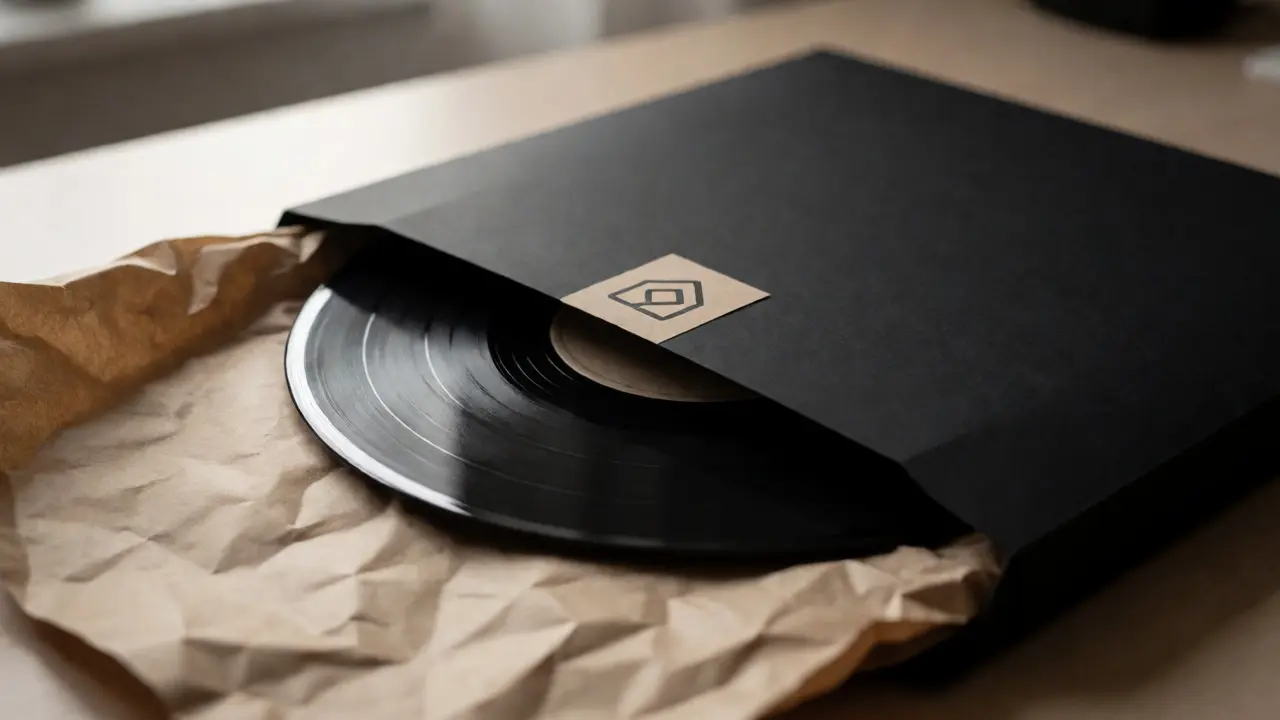
You spent months recording that album. You designed the cover art until your eyes crossed. But if you hand a fan a vinyl record in a plain brown box with bubble wrap, you just killed the vibe before the needle even hits the groove. Merch packaging isn't just about keeping the product safe; it's the first physical touchpoint of your brand. In an era where fans share their hauls on Instagram Stories and TikTok, the box is part of the product.
Think about the last time you bought something online from a creator you loved. Did you keep the box? Did you post a photo of it? If the answer is no, the packaging failed. For musicians, merch packaging is the strategic design of containers and materials used to ship music-related goods, serving as a critical extension of the artist's brand identity and fan engagement strategy. It’s not overhead; it’s marketing. Here is how to make your unboxing moment count without breaking the bank or the planet.
Why the Box Matters More Than You Think
We live in a visual economy. When a fan orders a t-shirt or a cassette, they are buying into a feeling. The arrival of the package is the climax of that purchase journey. A generic Amazon-style box screams "commodity." A branded, thoughtful package screams "community." According to consumer behavior studies, over 40% of consumers will share an image of a unique unboxing experience on social media. That’s free advertising. Every hashtagged story is a mini-billboard for your next tour date or single release.
But it’s deeper than likes. Unboxing sets the expectation for quality. If the shirt arrives wrinkled in a flimsy mailer, the fabric feels cheap regardless of its actual thread count. If the vinyl slides around in a loose box, the sleeve corners get dinged before the record is played. Protecting the asset is step one. Elevating the ritual is step two. Your packaging tells the fan: "We care about this object as much as you do." This emotional connection drives repeat purchases and word-of-mouth referrals, which are far more valuable than paid ads for independent artists.
The Core Elements of Effective Music Merch Packaging
You don’t need a million-dollar budget to nail this. You need intentionality. Focus on three pillars: protection, presentation, and personalization. Let’s break down what actually works for bands and solo artists shipping everything from hoodies to posters.
- Structural Integrity: Never sacrifice safety for style. Vinyl records are fragile. Use rigid cardboard mailers specifically designed for LPs (12-inch) rather than standard boxes that allow shifting. For apparel, poly mailers are fine, but ensure they are opaque so privacy is respected.
- Brand Consistency: Your colors, fonts, and logo should appear subtly on the exterior. Stickers work great here. They are cheap, easy to apply, and highly collectible. Fans often peel them off and stick them on laptops or water bottles, extending your brand’s visibility long after the merch is worn out.
- Tactile Experience: Texture matters. Matte finishes feel premium compared to glossy ones. Thick cardstock inserts feel substantial. Avoid thin, flimsy tissue paper that tears when you try to open it. If you use tape, consider custom-printed tape with your logo or a catchy slogan. It’s a small detail that shows you sweat the small stuff.
Consider the hierarchy of information inside the box. The top layer should be the most visually appealing item or a thank-you note. Don’t bury the receipt at the bottom under layers of packing peanuts. Make the first thing they see something worth photographing.
Eco-Friendly Options That Actually Look Cool
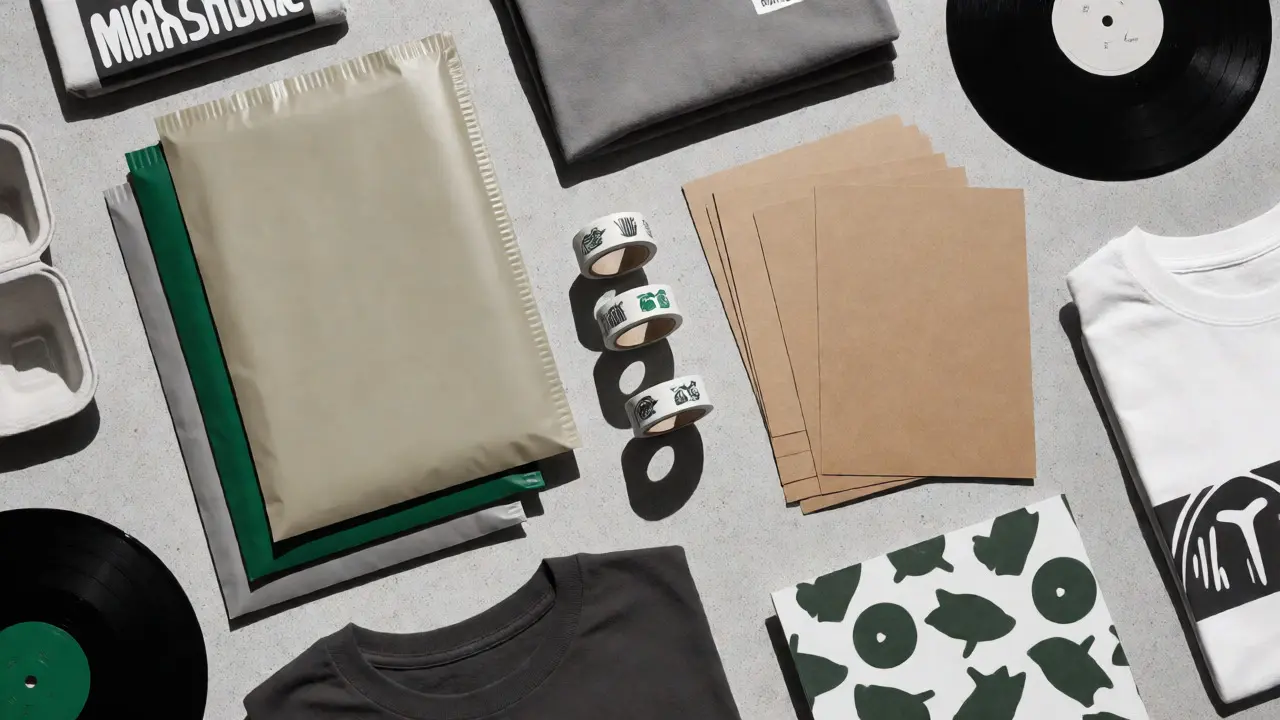
Sustainability isn’t just a buzzword anymore; it’s a dealbreaker for Gen Z and Millennial fans. If your merch comes wrapped in non-recyclable plastic foam, you’re signaling outdated values. Fortunately, eco-friendly packaging has gotten way cooler. You don’t have to look like you’re selling oatmeal.
Kraft paper is a durable, biodegradable paper material made from wood pulp, commonly used in sustainable packaging due to its natural aesthetic and recyclability. It pairs perfectly with black ink stamps or minimalist white labels. It looks raw, authentic, and punk-rock appropriate. Another option is mushroom-based packaging (mycelium), which is compostable and surprisingly sturdy. While more expensive upfront, it creates a memorable talking point. "Hey, my record came in a box made of mushrooms!" is a line fans love to tell friends.
| Material | Best For | Cost Level | Eco-Impact | Unboxing Vibe |
|---|---|---|---|---|
| Corrugated Cardboard Mailer | Vinyl, CDs, Books | Low-Medium | Highly Recyclable | Professional, Secure |
| Poly Mailer (Recycled) | Apparel, Posters | Very Low | Recyclable (check local rules) | Casual, Fast |
| Kraft Paper Wrap + Tape | Art Prints, Zines | Low | Biodegradable | DIY, Authentic |
| Mycelium Molded Pulp | Fragile Items, Limited Editions | High | Compostable | Innovative, Premium |
| Custom Branded Box | Bundles, VIP Merch | Medium-High | Recyclable | Luxury, Collectible |
Avoid plastic void fill. Use crumpled kraft paper, shredded recycled newspaper, or even old lyric sheets printed on scrap paper. It adds personality and reduces waste. If you must use plastic, opt for compostable cornstarch bags instead of traditional polyethylene.
Personalization: The Secret Weapon for Independent Artists
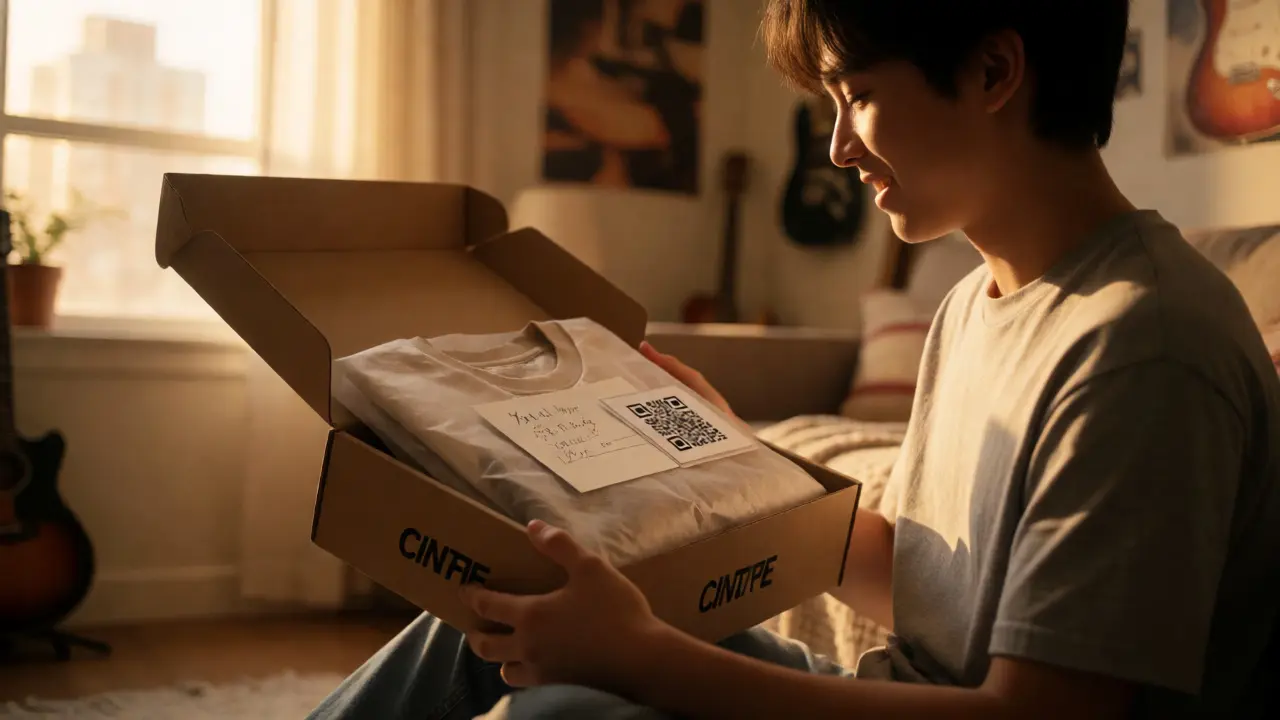
Big retailers can’t personalize every order. You can. This is your competitive advantage. A handwritten note is cliché for a reason-it works. But let’s go further. Include a QR code that leads to an exclusive acoustic version of a track, a behind-the-scenes video, or a discount code for their next purchase. This bridges the gap between physical merch and digital content, creating a loop that keeps fans engaged.
Segment your audience. If someone buys a bundle, treat them differently than someone who bought a single sticker. Maybe the bundle gets a numbered certificate of authenticity. Maybe the first 50 customers get a signed insert. These micro-moments of delight cost pennies but generate immense goodwill. People remember how you made them feel. A personalized touch makes the fan feel like a collaborator in your journey, not just a transaction number.
Don’t forget the return policy. Make it clear and friendly. Put it on the packaging itself, not just buried in an email. "Love it or send it back-no questions asked" builds trust. Trust converts hesitant browsers into buyers.
Logistics and Cost Control: Keeping Your Margins Alive
Here’s the hard truth: pretty packaging costs money. If you spend $3 on packaging for a $15 t-shirt, your margin evaporates. You need a system. Start by measuring your products precisely. Shipping carriers charge by dimensional weight, not just actual weight. A bulky, empty box costs more to ship than a snug-fitting one. Invest in a few different sizes of mailers to avoid paying to ship air.
Order in bulk. Custom printing has high setup fees but low per-unit costs at scale. If you’re releasing a new album, print 500 stickers or 200 custom tapes at once. Store them. Use them across multiple sales channels. Negotiate with local printers; sometimes a small shop in Portland or Brooklyn will give you better rates than a giant online vendor because they want the portfolio piece.
Test your packaging. Before you launch, send a sample to a friend in another state. Ask them to film the unboxing. Watch it. Does it take too long to open? Is the tape impossible to tear? Do the corners get crushed? Fix these issues before you ship hundreds of units. One bad review about damaged goods can hurt your reputation more than ten good reviews help it.
Common Pitfalls to Avoid
Even experienced sellers mess up packaging. Here are the traps to watch out for:
- Over-Packaging: Wrapping a keychain in five layers of bubble wrap is silly. Match the protection level to the fragility of the item.
- Ignoring International Rules: Customs forms require specific descriptions. "Merch" might get flagged. Be precise: "Cotton T-Shirt," "Vinyl Record." Also, check if your country restricts certain materials like straw or specific plastics.
- Forgetting the Label: Print labels on waterproof paper or laminate them. Rain happens. A smeared address means a lost package.
- Static Branding: Update your packaging seasonally. If you drop a new single, change the sticker or the insert. Give fans a reason to buy again just to see what’s in the box this time.
Remember, your packaging is a conversation starter. Make it easy to talk about. Keep it simple, keep it green, and keep it true to your sound. If you’re a garage rock band, a rough, stamped kraft box fits. If you’re a synth-pop duo, sleek, matte black mailers might suit you better. Align the container with the content.
How much should I spend on merch packaging?
Aim for 5-10% of the product's retail price. For lower-priced items like stickers, keep it under $0.50. For higher-value items like vinyl bundles, you can justify spending $2-$4 on premium packaging. Always calculate the total landed cost (product + packaging + shipping) to ensure you maintain a healthy profit margin.
Is custom printed packaging worth it for small bands?
Not always. Custom printing has high minimum order quantities. Instead, start with blank, high-quality mailers and add value through custom stickers, stamps, or printed tissue paper. This allows you to test designs without huge inventory risks. Once you have consistent volume, move to fully custom boxes.
What is the best packaging for vinyl records?
Use rigid cardboard mailers specifically sized for 12-inch records. Ensure the record cannot slide vertically or horizontally inside. Add corner protectors if shipping internationally. Avoid using standard square boxes unless you fill all empty space with stiff cardboard inserts to prevent crushing during transit.
How do I handle international shipping packaging?
Use waterproof labels and reinforced tape. Include a commercial invoice clearly stating the contents and value. Check destination country regulations for restricted materials. Consider using DHL eCommerce or similar services that offer integrated customs clearance for smaller packages to reduce delays.
Should I include a return label in the package?
Yes, especially for apparel. Including a prepaid return label removes friction for the customer. It signals confidence in your product quality. Even if only 5% of customers use it, the increased conversion rate from reducing purchase anxiety usually outweighs the cost of unused labels.