When you’re shooting a music documentary, the interview isn’t just another scene-it’s the heartbeat. It’s where the artist tells you why they wrote that song, how they survived the tour from hell, or what really happened in that studio session everyone talks about. But if you’re using just one camera, you’re missing half the story. That’s where multi-cam interview shoots come in. They don’t just look better-they make the truth easier to find.
Why One Camera Isn’t Enough for Music Docs
Think about how people talk when they’re telling a real story. Their hands move. Their eyes dart. They pause. They laugh. They get quiet. A single camera catches the face. But the soul? That lives in the little things: the way a guitarist taps their foot when they remember their first gig, or how a drummer’s voice cracks when they talk about losing a bandmate.
With one camera, you’re forced to choose: focus on the eyes, or the hands, or the background where their old vinyl collection sits. You can’t capture all of it. And when you edit, you’re left with stiff, repetitive shots that feel like a news report-not a personal confession.
Multi-cam setups fix that. You set up three or four cameras, each with a different angle. One on the face. One on the hands. One wide to show environment. One close on the instrument they’re holding. Now you’re not just recording words-you’re recording presence.
The Four Angles That Make It Work
Not all cameras are created equal in a music doc interview. Here’s what actually works, based on shoots with artists from the Pacific Northwest to Nashville:
- Face Shot (Medium Close-Up): This is your anchor. 24mm to 35mm lens, eye-level. It’s where the emotion lives. You want to see the micro-expressions-the flicker of sadness, the sudden spark of pride.
- Hand/Instrument Shot: A 50mm or 85mm lens, tight. If they’re holding a guitar, a worn-out drumstick, or a notebook full of scribbled lyrics, this camera catches it. It’s not decoration-it’s evidence.
- Environmental Wide: Shot from 8-12 feet back with a 16mm lens. This shows where they are: their garage studio, the basement where they wrote their first album, the window of their childhood home. Context is power.
- Over-the-Shoulder (OTS): This one surprises people. You place a camera behind the interviewer, framing the artist from behind. It creates a subtle sense of intimacy. It feels like you’re sitting right there, listening.
These four angles don’t just give you options. They give you truth. When the artist says, "I never felt like I belonged," and you cut to the shot of their hands trembling as they hold a faded fan letter, that’s when the audience feels it.
Lighting: It’s Not About Looks, It’s About Mood
People think lighting for interviews means soft boxes and ring lights. In music docs? That’s wrong. You don’t want pretty. You want real.
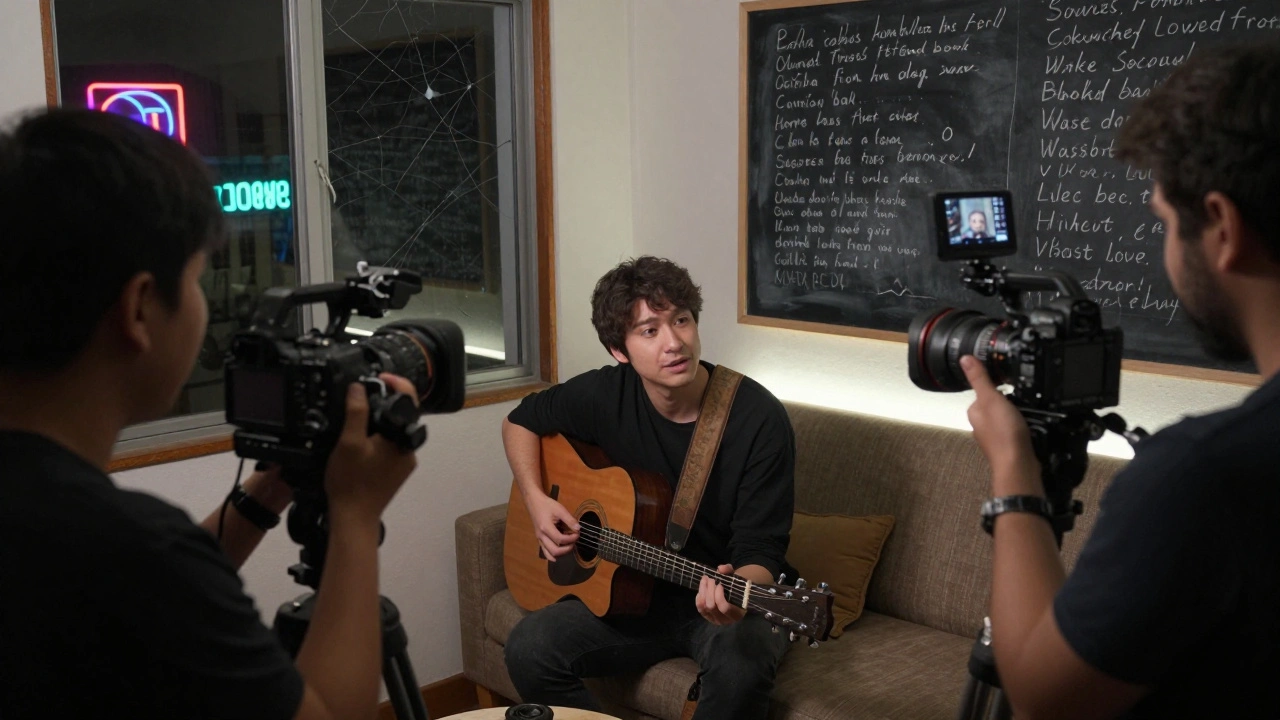
Use what’s already there. A single lamp in the corner. The glow of a neon sign outside the window. The flicker of an old CRT TV playing their old music video. These aren’t flaws-they’re texture.
Here’s what works in practice:
- Backlight the subject with a practical light (like a floor lamp) to separate them from the wall. It adds depth without looking staged.
- Use colored gels sparingly. A faint blue on one side for cool memories. A warm amber on the other for happy ones. But never more than one color per camera.
- Never light the interviewer. If they’re invisible in the frame, the artist forgets they’re being filmed. That’s when the real talk starts.
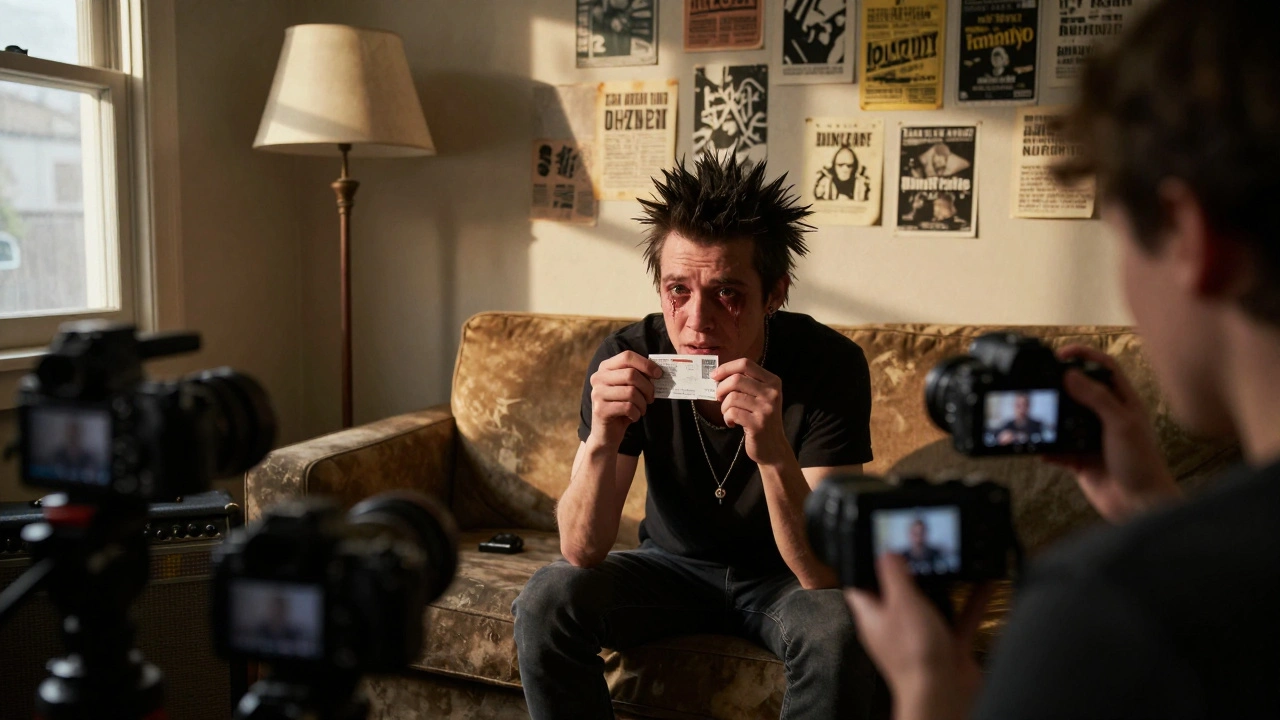
On a shoot with a punk bassist in Eugene, we used only the light from their broken amp and a single LED strip under the couch. The result? Raw. Unfiltered. The kind of footage that gets nominated.
Crew Size and Workflow
You don’t need a crew of ten. In fact, the bigger the team, the more the artist shuts down.
Here’s the sweet spot:
- Director/Producer: One person. They ask the questions, guide the tone, and make sure you’re not missing emotional beats.
- Camera Operator 1: Handles the face shot. Must be quiet, patient, and good at reading micro-expressions.
- Camera Operator 2: Handles the hand/instrument shot. They need to move fast-no tripod delays.
- Audio Engineer: One person with two mics: lavalier on the artist, and a shotgun on the interviewer. No boom poles unless you’re shooting in a silent room.
- Assistant (optional): Just to change batteries, swap cards, and hand the artist water. No one else.
That’s five people max. More than that? You’re a TV studio. Less than that? You’re not covering all the angles.
How to Avoid the "Interview Fatigue" Trap
Artists are tired. Touring, promoting, reliving trauma-it’s exhausting. And if you ask the same questions over and over, they’ll give you canned answers.
Here’s how to keep it real:
- Shoot in their space. Not a studio. Not a hotel room. Their living room. Their rehearsal space. The place where they feel safe.
- Start with a 10-minute warm-up chat. Talk about their dog. Their favorite snack. The weirdest thing they bought on tour. Let them relax before the mic goes on.
- Record everything. Even the "off" moments. The silence. The sigh. The laugh they can’t explain. These become your golden edits.
- Let them talk past the answer. If they go off-script, don’t interrupt. Just nod. The best moments happen after the question is done.
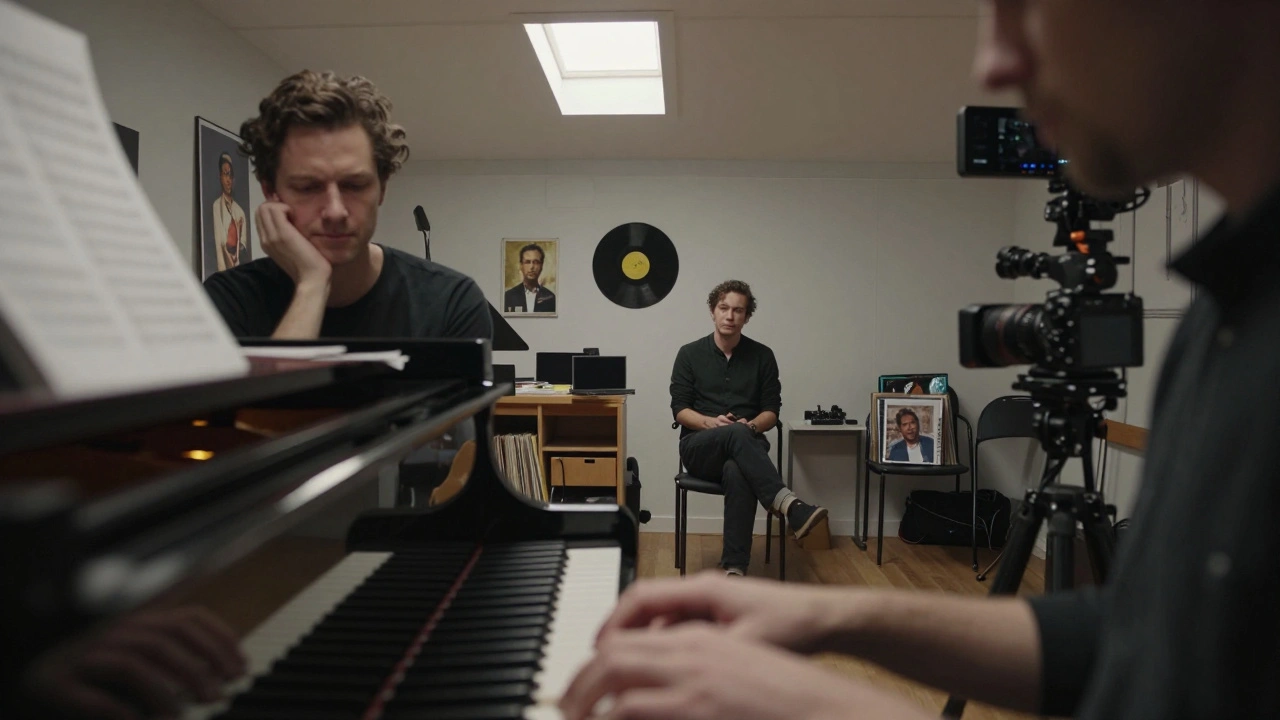
On a shoot with a jazz pianist in Portland, we kept the cameras rolling after she finished talking about her father’s death. She stared at her hands for 47 seconds. Didn’t say a word. That 47-second silence? It opened the whole film.
Editing: The Magic Happens in the Cut
With four cameras, you have four times the footage. That’s not a problem-it’s a gift.
Here’s how to use it:
- Sync all clips by audio. Use the lavalier track as your base. It’s the cleanest.
- Watch each take once. Don’t edit yet. Just feel it. Which angle made you lean in? Which one made you feel like you were there?
- Use the environmental shot to transition. If they say, "I moved to Seattle in ‘98," cut to the wide shot of their old apartment building. No narration needed.
- Don’t over-cut. Let moments breathe. Two seconds of silence with the hand shot? That’s more powerful than three quick cuts.
- Use the OTS shot only once or twice. It’s emotional glue. Too much and it feels manipulative.
The goal isn’t to make it look "professional." It’s to make it feel true. And truth doesn’t need polish. It needs space.
What You Don’t Need
Here’s what doesn’t matter:
- 4K resolution. Most music docs are watched on phones. 1080p is fine. Focus on lighting and emotion.
- Expensive cameras. A Sony A7S III, a Canon C70, or even a recent iPhone can work if you know how to use them.
- Multiple lighting kits. One good light source and natural light beat five studio lights every time.
- Pre-written questions. The best interviews come from listening, not reading.
It’s not about gear. It’s about presence.
Real Example: The Black Cat Sessions
On a documentary about underground punk bands in the early 2000s, we shot a 90-minute interview with a vocalist who hadn’t spoken publicly in 15 years. We used four cameras:
- Face: Canon C70, 35mm
- Hands: Sony A7S III, 85mm
- Environment: Sony FX6, 16mm (showing their old zine collection and a broken amp)
- OTS: Panasonic GH5, 50mm
We used one lamp and the natural light from a skylight. No audio booms. No monitors. Just a quiet room and four cameras rolling.
At minute 42, she said: "I thought if I stopped singing, I’d stop being alive." We cut to her hands, clutching a torn ticket from her first show. No music. No voiceover. Just that shot for 12 seconds.
The film won Best Documentary at Tribeca. Not because of fancy gear. Because we didn’t look away.
Final Rule: Don’t Shoot Interviews. Record Conversations.
Multi-cam isn’t a technique. It’s a mindset. You’re not filming someone talking. You’re capturing a moment that will never happen again.
If you’re thinking about camera angles, lighting ratios, or shot lists-pause. Ask yourself: What are they really saying? What are they not saying? Where is the truth hiding?
Then point the cameras there.
Do I need expensive cameras for multi-cam music documentary interviews?
No. You don’t need top-of-the-line gear. What matters is how you use what you have. A Canon C70, Sony A7S III, or even a recent iPhone can capture powerful footage if you’re focused on lighting, framing, and emotion. Many award-winning music docs were shot on mid-range gear. The difference isn’t the camera-it’s the intention.
How many cameras are enough for a music documentary interview?
Four is the sweet spot: one for the face, one for hands/instrument, one wide for environment, and one over-the-shoulder. This gives you enough variety to tell a full emotional story without overwhelming your editing workflow. Three can work, but you’ll miss key details. Five or more usually just creates clutter.
Should I use a boom mic or lavalier for interviews?
Use both. A lavalier on the artist gives you clean, consistent audio. A shotgun mic on the interviewer picks up natural room tone and subtle reactions. Together, they create depth. Avoid boom mics unless you’re in a silent room-most interview spaces have background noise (AC, traffic, fridge hum) that booms can’t filter out.
How do I keep the artist from feeling nervous during the shoot?
Make the space feel like home. Shoot where they’re comfortable. Let them sit in their favorite chair. Don’t use bright lights or big equipment. Keep the crew small-no more than five people. Talk to them before you start. Ask about their dog, their last meal, their favorite song. Build trust before you roll the cameras.
What’s the biggest mistake people make in multi-cam interviews?
Trying to make it look "perfect." Music documentaries aren’t about polished visuals. They’re about raw truth. If you spend too much time adjusting lights or re-shooting takes, you lose the moment. The best footage often comes from the first or last 10 minutes of the session-when the artist forgets they’re being filmed.