Your EPK isn’t just a folder of photos and a resume. It’s your first impression on journalists, bookers, and industry insiders. And if it doesn’t have real, compelling press quotes, it’s going to get ignored. A well-placed testimonial from a respected outlet or industry voice can turn a "maybe" into a "yes" - fast.
Why press quotes matter more than you think
Think about how journalists work. They don’t have time to dig through your Spotify stats or YouTube views. What they do have time for? A quote from someone they trust. A quote from The New York Times, Rolling Stone, or even a local radio host who’s covered 200 bands this year. That’s social proof in its purest form.
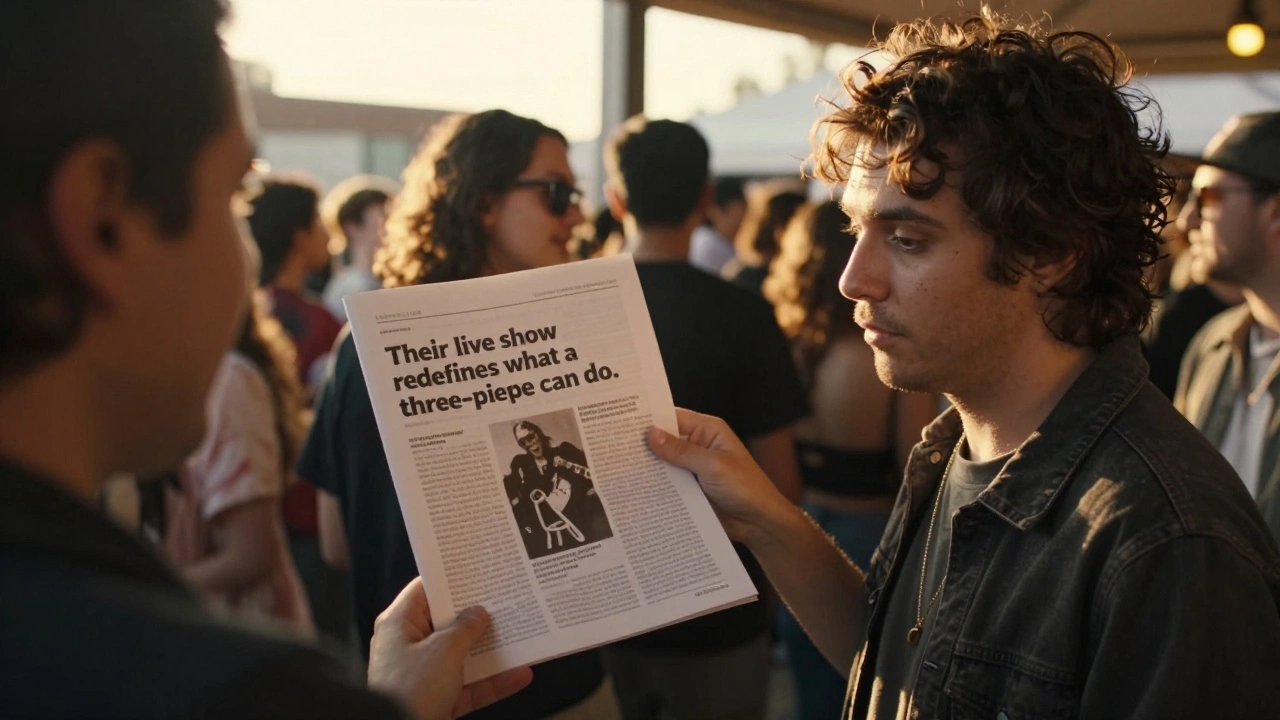
One indie band in Portland landed a national tour after a single quote from a regional music magazine: "Their live show doesn’t just entertain - it redefines what a three-piece can do." That line was printed on their EPK, shared in emails, and posted on their website. It became their calling card.
Without quotes, your EPK is a blank canvas. With even one strong quote, it becomes credible, memorable, and worth a second look.
Where to find press quotes - and how to ask for them
You don’t have to wait for the media to notice you. You can go out and get quotes yourself. Here’s how:
- Review past coverage - If you’ve been interviewed, reviewed, or featured before, dig up those articles. Highlight the best 1-2 lines. Even if it’s from a small blog, if it’s genuine and enthusiastic, it counts.
- Ask for quotes after shows - After a performance, thank the reviewer or journalist in person. Say: "I really appreciated your write-up. Would you mind if I used a line or two from it in my EPK?" Most people say yes.
- Reach out to past interviewers - Send a polite email: "Hi [Name], I’m updating my EPK and wanted to see if I could include your quote from our chat in March 2024. It meant a lot to me. Here’s the link to the piece - let me know if you’d like me to tweak anything."
- Use fan reviews - If a fan wrote a detailed blog post or YouTube video praising your work, ask if you can quote them. "This show changed how I think about live music," says a fan from Austin. That’s human, real, and powerful.
Don’t wait for perfect quotes from big names. Start with what you have. Even a quote from a local newspaper or a college radio station adds legitimacy.
How to pick the right quotes
Not every quote is equal. A generic "Great show!" won’t help. You need quotes that:
- Are specific - "Their setlist blended punk energy with orchestral arrangements" beats "They were awesome."
- Include context - "After seeing them at SXSW 2024, I booked them for our festival." That’s a booking agent’s dream.
- Name-drop - "As featured in Alternative Press" or "Called "one of the most original voices in indie rock" by Rolling Stone" adds instant authority.
- Sound human - Avoid corporate-speak. "The performance was electrifying" is better than "The artist delivered a high-impact auditory experience."
Test this: If you read the quote out loud to a stranger, would they understand why it matters? If not, scrap it.
Formatting quotes for your EPK
Just pasting a block of text won’t cut it. Structure it so it’s easy to scan:
- Start with the source - Who said it? Where did they say it?
- Use quotation marks around the actual quote.
- Include the date - "As featured in Seattle Weekly, June 2024"
- Link to the original (if online) - Even if it’s just a URL in small print.
Example:
"Their new album is a masterclass in emotional storytelling." - Clara Ruiz, Music Editor, The Portland Observer, April 2025
That’s clean. That’s credible. That’s what works.
What not to do
Here are the three biggest mistakes artists make:
- Using fake quotes - Never make up a quote. Journalists and industry pros spot this instantly. It destroys trust.
- Overloading - Three powerful quotes are better than ten weak ones. Pick your top 3-5.
- Ignoring attribution - If you don’t name the source, the quote loses all value. "Someone said it was great" doesn’t work.
Also, avoid quotes that are too vague: "Amazing talent!" or "They’re the real deal." These are fluff. They don’t convince anyone.
When you have zero press quotes
If you’re just starting out and haven’t gotten any coverage yet, don’t panic. Here’s what to do instead:
- Use fan testimonials - A 150-word review from a loyal listener can be more authentic than a generic media quote. "I’ve seen them live 7 times. Every show feels different. They’re the reason I started going to local gigs again."
- Quote a producer or collaborator - "Working with [Your Name] was one of the most inspiring sessions I’ve had in years." - [Producer Name], Studio X
- Quote a venue owner - "We’ve hosted over 500 acts this year. [Your Name] was one of the few who got an encore request on opening night." - [Venue Name], [City]
These aren’t "press" quotes - but they’re still social proof. And they’re real.
Where to put your quotes in the EPK
Don’t bury them. Put them where they’ll be seen:
- Top of the bio page - Right under your headline. This is prime real estate.
- On your website’s homepage - A rotating carousel of quotes works well.
- In your press kit PDF - Make sure they’re bolded and formatted clearly.
- In your email signature - "Featured in [Outlet]: [Quote]" - subtle, but effective.
Everywhere your EPK goes, your quotes should go with it.
Update them - always
Your EPK isn’t a static document. It’s a living portfolio. Every time you get new coverage, add the quote. Remove outdated ones. A quote from 2020 might not mean much in 2026. Keep it fresh.
Set a reminder: Every three months, review your EPK. Did you get any new reviews? Any new interviews? Add them. Take out the ones that feel weak. This habit alone will keep your EPK sharp and credible.
Final thought: Your quotes are your reputation
Press quotes aren’t just decoration. They’re your reputation in print. They’re proof that someone else - someone with credibility - believes in what you do.
Don’t wait for the spotlight to find you. Go out and collect the proof. One quote at a time.
Can I use quotes from social media for my EPK?
Yes - but only if they’re detailed and come from credible sources. A simple "Love this band!" on Instagram won’t cut it. But if a music blogger with 10K followers wrote a thoughtful review of your album and posted it on Twitter, you can ask to use a key line. Always credit the original source and include the platform (e.g., "As shared on X by @IndieMusicCritique").
What if a journalist says "feel free to use this" but doesn’t give me the quote?
Go back to the original article. Copy the most impactful line, then send them a quick message: "I’m using this quote from your piece - "[quote]" - in my EPK. Let me know if you’d prefer I tweak it." Most will say yes. If they don’t respond, use it anyway - they already gave permission.
Should I include quotes from non-music media?
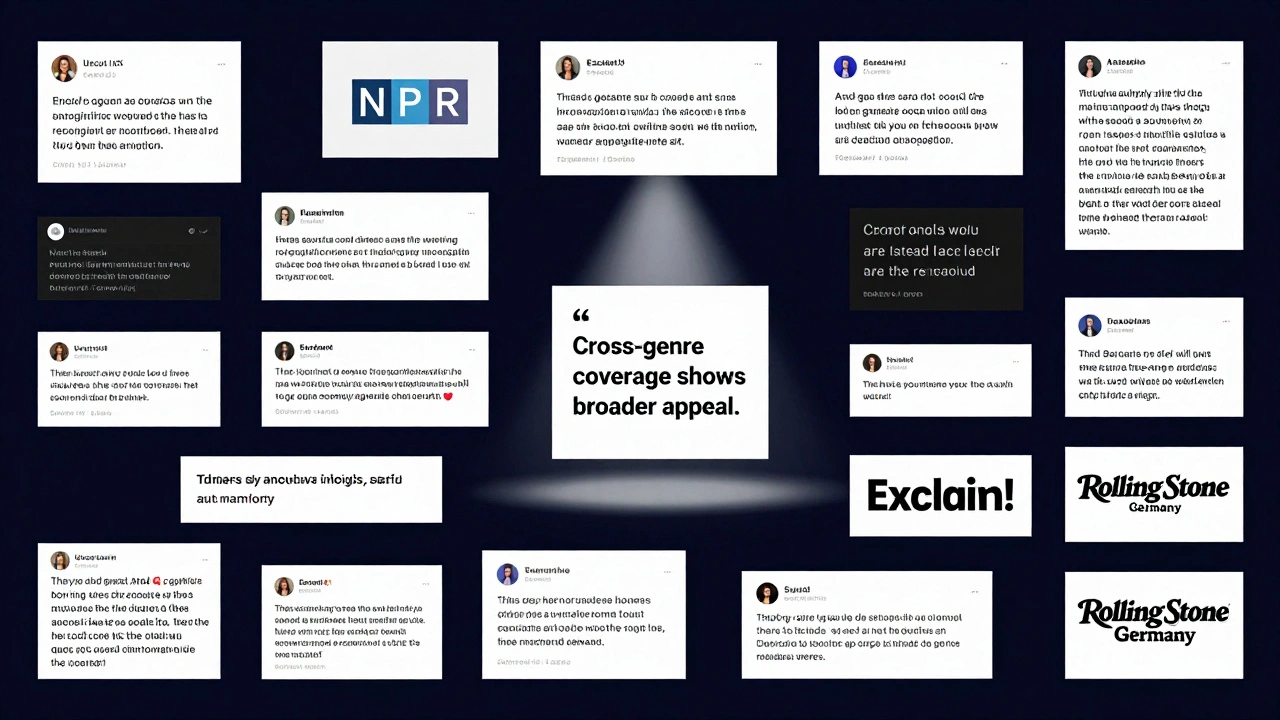
Absolutely. If Time wrote about your song’s cultural impact, or NPR featured you in a story about art and mental health, those are gold. You don’t need to be in music magazines to be taken seriously. Cross-genre coverage shows broader appeal and can open doors to non-traditional venues, festivals, or sponsorships.
How many quotes should I include?
Three to five is ideal. Too few and you lack impact; too many and you overwhelm. Pick the ones that cover different strengths - one for live performance, one for songwriting, one for innovation or impact. Quality over quantity always wins.
Can I use quotes from international outlets?
Yes - and you should. If you’ve been covered in Uncut (UK), Rolling Stone Germany, or Exclaim! (Canada), include them. International press signals global appeal. It’s especially valuable if you’re touring abroad or applying for grants that look for international recognition.