Imagine a world where the most profitable music genre in America was created by people who were legally barred from owning property. That is the paradox at the heart of Blues is a musical form that emerged from the African American experience in the Deep South, blending work songs, spirituals, and field hollers into a narrative of survival and expression. For decades, historians focused on the soulful melodies and guitar riffs, but they often ignored the cold, hard economics that kept the genre alive. The story of the blues is not just about art; it is a case study in how race, labor, and capitalism collided in early 20th-century America.
To understand why the blues became a global phenomenon, you have to look past the stage lights and examine the ledger books. This isn't just a music lesson. It is an economic analysis of how a marginalized community turned their hardship into a commodity, only to see that commodity exploited by a system designed to keep them down. We are looking at a specific era: roughly 1920 to 1950, when the "Commercialization of the Blues" reshaped both the industry and the culture.
The Economic Roots of the Sound
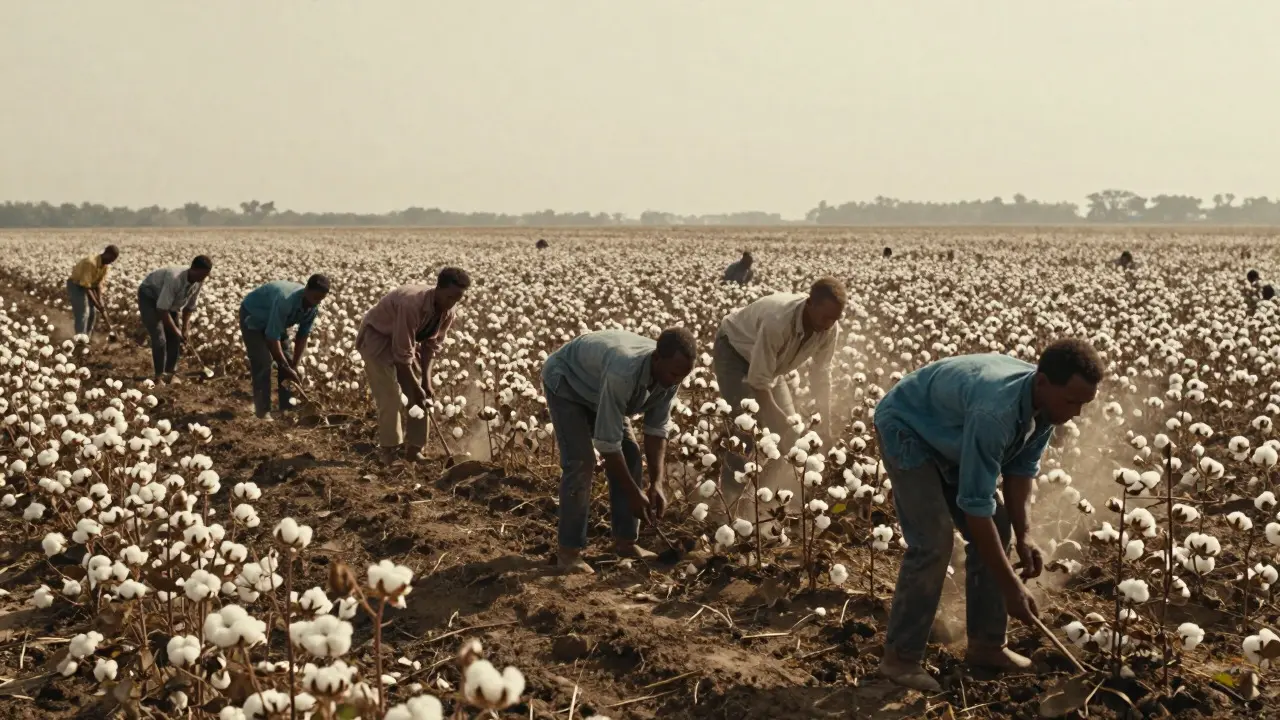
You cannot separate the blues from the land it grew in. In the post-Reconstruction South, the sharecropping system trapped millions of African Americans in a cycle of debt. This wasn't just poverty; it was a specific economic structure that dictated daily life. When a farmer worked the cotton fields, he didn't just sing for fun. He sang to coordinate labor, to mark time, and to process the pain of physical exhaustion. These "field hollers" were the raw material. They had no melody in the traditional sense, just rhythm and call-and-response patterns that allowed workers to synchronize their movements.
As industrialization pushed more people into cities like Memphis, Chicago, and St. Louis, these rural sounds transformed. The guitar replaced the human voice as the primary instrument because it was portable and cheap. A young man could buy a used guitar for a few dollars, something out of reach for a piano or a horn section. This accessibility meant that anyone with a story could tell it. The shift from rural to urban also changed the lyrical content. Instead of complaining about bad weather or harsh masters, the lyrics started focusing on train schedules, factory jobs, and the loneliness of city life. The economy of the Great Migration literally wrote the songbook.
The Race Card in the Record Industry
In the 1920s, the recording industry was a white-dominated space. Major labels like Columbia and Victor saw African American music as a niche market, too risky for their mainstream investors. So, they created a workaround: "race records." This was a marketing category, not a musical one. Labels would record Black artists, but only sell those recordings in Black neighborhoods or through segregated distribution channels. It was a way to monetize the talent without risking the reputation of their white customer base.
This segregation in sales had a profound effect on the music itself. Because the audience was primarily Black, the lyrics could be brutally honest. You could talk about broken hearts, cheating partners, and bad bosses without worrying about white moral standards. But it also meant the artists were paid less. The royalty rates for race records were often lower than those for "popular" music. A white artist might get a flat fee plus royalties, while a Black artist often received a one-time payment that barely covered studio time. This disparity set the stage for decades of economic exploitation in the music industry.

The Chitlin' Circuit: Building an Independent Economy
When major labels refused to book Black artists for integrated shows, the community built its own infrastructure. This network of theaters, clubs, and venues across the country became known as the Chitlin' Circuit. It was not just a tour route; it was a parallel economy. Black entrepreneurs owned the venues, managed the bands, and controlled the ticket sales. For a while, this gave Black musicians a level of financial autonomy that was rare in any other aspect of their lives.
However, this independence came with risks. Without the backing of a major label's marketing machine, artists relied entirely on word-of-mouth and local radio. If a club owner went bankrupt or a band got stuck in a town due to poor roads, there was no corporate safety net. Yet, this circuit preserved the authenticity of the blues. Artists played for audiences that understood the context, the jokes, and the pain. It was a closed loop of support that kept the genre vibrant even when the national spotlight ignored it.
Exploitation and the Rise of the "Blues Baron"
By the late 1940s, the landscape shifted. Small, independent labels began to consolidate power. Figures like Sam Phillips (who later founded Sun Records) and various Chicago-based promoters realized that the blues had crossover potential. They started signing Black artists to contracts that were notoriously unfair. Many of these deals involved "blanket agreements," where the label owned every note the artist ever made, forever. There were no buyout clauses. There were no clear royalty statements. If an artist wanted to leave, they often had to pay the label back the money they had been owed.
This era saw the rise of the "Blues Baron," a term often used to describe powerful figures in the Chicago blues scene who controlled the flow of music from the Delta to the nation. They booked the shows, owned the studios, and decided which artists got airtime. While some of these figures genuinely loved the music, others viewed it purely as a cash cow. The result was a generation of brilliant musicians who died broke, their catalogs generating millions for companies they never met. This dynamic highlighted a critical failure in the business model: the lack of legal protection for Black creators in a predominantly white legal system.

The Crossover Moment and Cultural Shift
The 1960s brought a seismic change. White rock bands like The Rolling Stones and Cream began covering blues songs. Suddenly, the sound that had been confined to race records was topping the Billboard charts. For Black artists, this was a double-edged sword. On one hand, it validated their art form on a global scale. On the other, it stripped the music of its cultural context. White audiences listened to the blues as entertainment, detached from the history of slavery and segregation that gave it meaning.
Economically, this crossover opened new doors. Black artists could now play integrated festivals like Monterey Pop and Woodstock. They could sign with major international labels. But the power dynamics remained skewed. The profits from the rock-blues explosion largely flowed to the white frontmen and their managers. The original creators were still fighting for basic rights. This period marked the transition of the blues from a regional folk tradition to a global commercial product, changing how we define "authenticity" in music today.
Legacy: What the Blues Taught Us About Business
Today, when we listen to modern R&B or hip-hop, we are hearing echoes of the blues. The business lessons from that era are still relevant. The story of the blues shows us that creativity does not guarantee equity. It highlights the importance of contract literacy, intellectual property rights, and diversified revenue streams for artists. It also reminds us that cultural artifacts are often shaped by economic forces that have nothing to do with artistic merit.
For historians and business students alike, the blues offers a unique lens. It is a case study in how a marginalized group can create immense value within a restrictive system. It demonstrates the power of community-driven markets and the dangers of monopolistic control. As we navigate the digital age, where streaming services dominate and artist payouts are controversial, the ghosts of the blues barons are still watching. The question remains: who owns the story, and who gets to profit from it?
What was the economic impact of the Great Migration on blues music?
The Great Migration moved millions of African Americans from the rural South to Northern cities. This shift changed the blues from acoustic, rural field hollers to electric, urban styles. Economically, it created new markets in cities like Chicago and Detroit, allowing for larger audiences and higher ticket prices, but also introduced competition from jazz and gospel.
Why were "race records" created by major labels?
Major labels created "race records" to segregate the market. They wanted to sell music to Black consumers without risking alienating their white customer base. This allowed them to exploit Black talent with lower production costs and restricted distribution, keeping the profits within the white-controlled corporate structure.
How did the Chitlin' Circuit help Black musicians financially?
The Chitlin' Circuit provided a safe and reliable touring route for Black artists in a segregated society. By booking exclusively at Black-owned venues, musicians guaranteed steady income and avoided the risks of traveling through hostile territories. It fostered a self-sustaining economic ecosystem within the Black community.
Did white rock bands steal the blues?
While many white rock bands popularized the blues globally, the term "stole" is complex. Legally, many covers were licensed, but culturally, the context was lost. Economically, the profits disproportionately favored the white performers and their management, leaving the original Black innovators with less financial reward despite their foundational contribution.
What role did the guitar play in the democratization of blues?
The guitar was affordable and portable, making it accessible to working-class musicians. Unlike expensive instruments like pianos or horns, a guitar could be bought with a week's wages. This lowered the barrier to entry, allowing anyone with a story to become a performer, which fueled the rapid growth of the genre in the 1920s and 30s.