Key Takeaways
- A cover songs catalog for an artist like Robert Hill tracks how original compositions are reinterpreted across different eras, styles, and genres.
- Traditional covers often rely on acoustic instrumentation and historical fidelity, while contemporary versions experiment with production techniques and genre-blending.
- Understanding the distinction between a 'traditional' arrangement and a 'contemporary' adaptation helps listeners appreciate the evolution of musical interpretation.
- Effective catalogs organize entries by release date, style shift, or thematic connection to provide clear navigation for fans and researchers.
When you look at a musician’s body of work, the original compositions usually get the spotlight. But the stories hidden in their cover songs-the tracks they borrowed from others-often reveal just as much about their artistic identity. For someone like Robert Hill, a figure who might represent a specific local legend, a niche folk artist, or a broader archetype of musicians who bridge generations, the way he approaches these borrowed melodies tells a story of influence, adaptation, and personal expression.
This isn't just about listing titles. It's about understanding the landscape of a cover song catalog. We need to separate the wheat from the chaff: which tracks are faithful tributes to the past, and which are bold reinventions for today? Let’s break down how to map this out, why it matters, and what defines the split between traditional and contemporary interpretations.
What Is a Cover Song Catalog?
A cover song catalog is more than a simple tracklist. It is a curated collection of recordings where an artist performs a composition written by someone else. In the context of Robert Hill, this catalog serves as a mirror reflecting his influences. Did he pull from the deep well of American folk traditions? Or did he reach toward modern pop structures?
The value of a dedicated catalog lies in its ability to show progression. Early in a career, covers might be safe, standard renditions meant to establish credibility. Later, they become experiments. By organizing these tracks, we can see the trajectory of an artist’s taste. For listeners, it’s a roadmap. For historians, it’s evidence of cultural exchange. For the artist, it’s a statement of respect-or rebellion-against the source material.
Consider the difference between a live bootleg and a studio release. A robust catalog distinguishes between these contexts. A rough, unpolished live version of a classic blues tune carries a different weight than a slick, produced radio single. Both are covers, but they serve different purposes in the artist’s narrative.
Traditional Covers: Honoring the Roots
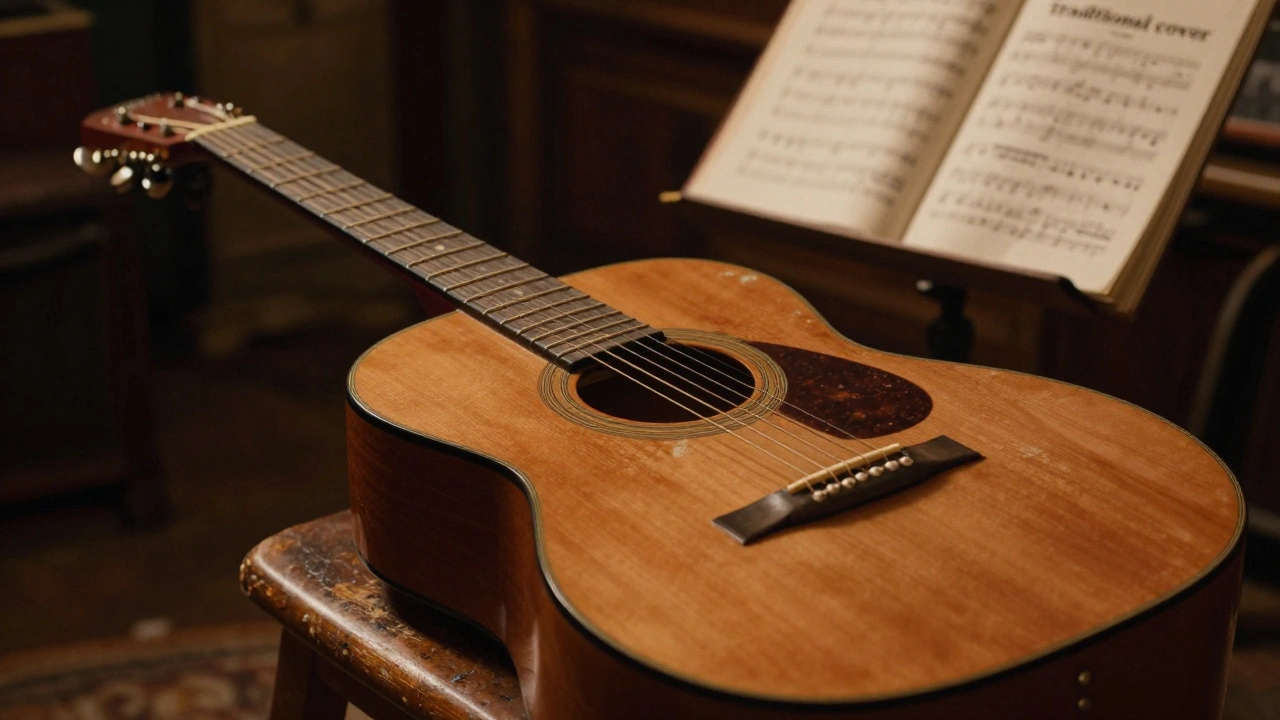
When we talk about "traditional" covers in a catalog, we aren’t necessarily talking about age. We’re talking about approach. A traditional cover aims to preserve the spirit, structure, and often the instrumentation of the original. If Robert Hill recorded a traditional folk ballad, he likely used acoustic guitar, minimal percussion, and a vocal style that prioritized storytelling over technical flourish.
These tracks act as anchors. They connect the artist to a lineage. Think of artists like Bob Dylan or Joni Mitchell; when other musicians cover their early work in a traditional sense, they are participating in a ritual of preservation. The goal is authenticity. You want the listener to feel like they are hearing the song as it was meant to be heard, perhaps filtered through a slightly different voice, but without distortion.
In a catalog, traditional covers often cluster around specific genres: bluegrass, country, old-time folk, or classic rock. They share common attributes:
- Instrumentation: Acoustic guitars, pianos, fiddles, harmonicas.
- Vocal Style: Clear, narrative-driven, often with regional accents preserved.
- Arrangement: Faithful to the original chord progressions and tempo.
- Intent: To honor the songwriter and maintain cultural continuity.
For example, if Robert Hill covered a Woody Guthrie song, a traditional approach would keep the driving rhythm and the protest-laden lyrics intact. There’s no auto-tune, no synthesizer beds. Just raw emotion and wood strings. This creates a sense of timelessness. These tracks don’t date easily because they tap into universal human experiences framed in a classic package.

Contemporary Covers: Reinventing the Wheel
On the flip side, contemporary covers take the skeleton of a song and build a new body around it. This is where Robert Hill might surprise you. Maybe he takes a 1950s doo-wop hit and strips it down to a haunting, ambient electronic soundscape. Or perhaps he speeds up a slow folk dirge into an upbeat indie-rock anthem.
Contemporary covers are about perspective. They ask, "What does this song mean now?" They use modern production tools-digital audio workstations (DAWs), synthesizers, drum machines-to reshape the sonic landscape. The focus shifts from preserving the past to making the song relevant to current listeners.
These entries in the catalog often signal artistic growth or experimentation. They show that the artist isn’t stuck in one lane. They are willing to risk alienating purists to reach new audiences. A contemporary cover might change the key, alter the lyrics slightly to update references, or completely flip the emotional tone. A sad song becomes triumphant; a fast song becomes melancholic.
Key characteristics of contemporary covers include:
- Production: Heavy use of effects, layering, and digital processing.
- Genre-Bending: Mixing elements from hip-hop, EDM, jazz, or alternative rock.
- Vocal Processing: Use of pitch correction, reverb, and harmonic stacking.
- Intent: To reinterpret, critique, or modernize the original work.
Imagine Robert Hill taking a traditional Celtic jig and overlaying it with glitchy beats. That’s a contemporary cover. It respects the melody but rejects the expectation of how it should sound. These tracks are often the most talked-about because they provoke reaction. Love them or hate them, they demand attention.
Mapping the Robert Hill Catalog
To truly understand the scope of Robert Hill's work, we need to visualize the data. A flat list doesn’t do justice to the nuance. We need a structure that highlights the contrast between his traditional roots and contemporary explorations. Below is a comparative breakdown of how these two types of covers typically manifest in such a catalog.
| Attribute | Traditional Covers | Contemporary Covers |
|---|---|---|
| Primary Instrumentation | Acoustic Guitar, Piano, Fiddle | Synthesizers, Drum Machines, Electric Bass |
| Vocal Approach | Natural, Narrative, Minimal Effects | Processed, Layered, Experimental |
| Fidelity to Original | High (Preserves Structure) | Low (Reimagines Structure) |
| Target Audience | Purists, Folk Enthusiasts | Modern Listeners, Genre Explorers |
| Emotional Tone | Nostalgic, Authentic | Urgent, Abstract, Innovative |
This table helps us categorize each track in the catalog. When you listen to a Robert Hill record, you can now ask: "Is this trying to take me back, or is it trying to push me forward?" That question becomes your sorting mechanism. It transforms a passive listening experience into an active analysis of artistic intent.

Why the Distinction Matters
You might wonder why we bother splitting hairs between traditional and contemporary. Why not just call them all "covers"? The distinction matters because it reveals the artist’s relationship with time. Traditional covers suggest a desire to belong to a history. Contemporary covers suggest a desire to shape the future.
For Robert Hill, this balance is crucial. If he only did traditional covers, he might be seen as a museum curator-preserving art but not adding to it. If he only did contemporary covers, he might lose the connection to the foundational elements that gave him his initial voice. The best artists, and the most interesting catalogs, contain both. They show range. They prove versatility.
Moreover, this distinction affects how the music is licensed and consumed. Traditional covers often appeal to streaming playlists focused on "Chill Folk" or "Acoustic Classics." Contemporary covers fit into "Indie Electronic" or "Modern Rock" mixes. Understanding where each track lives helps marketers, playlist curators, and fans find the right entry point.
It also impacts legacy. Decades from now, which covers will people remember? Often, it’s the ones that took a risk. The contemporary covers that aged well because they captured the zeitgeist of their era. But the traditional covers remain comfort food, reliable and warm. A healthy catalog needs both pillars.
Building Your Own Listening Guide
If you are building a personal library or researching Robert Hill, here is a practical way to engage with the catalog. Don’t just stream randomly. Create a journey.
- Start with the Traditional: Begin with the covers that sound most like the originals. This grounds you in the source material. Understand the melody and lyrics first.
- Identify the Pivot Point: Find the album or year where the style shifted. Did he start using drums? Did he add electric instruments? Mark this transition.
- Explore the Contemporary: Listen to the most experimental tracks. Notice what changed. Was it the tempo? The harmony? The mood?
- Compare Side-by-Side: If possible, listen to the original artist’s version alongside Robert Hill’s traditional cover, then his contemporary cover. Hear the evolution.
- Note the Recurring Themes: Does he always cover songs about love? About loss? About social justice? Even if the style changes, do the topics stay the same?
This method turns a catalog into a conversation. You’re not just consuming content; you’re tracing a creative path. You’ll notice patterns you missed before. You’ll hear the subtle nods to tradition even in the most modern tracks. And you’ll appreciate the courage it takes to reinvent a beloved song.
The Role of Context in Interpretation
Finally, remember that a cover never exists in a vacuum. The year it was released, the state of the music industry, and the personal life of Robert Hill all color the interpretation. A traditional cover released during a war might feel like a plea for stability. A contemporary cover released during a tech boom might feel like a celebration of innovation.
Context adds depth. It explains why certain choices were made. It helps us forgive flaws and celebrate successes. When you read the liner notes or watch behind-the-scenes footage, you’re gathering context. You’re filling in the gaps between the notes. This makes the catalog richer, more human, and more meaningful.
So, whether you’re a die-hard fan or a casual listener, dive into the covers. Look past the originals. The truth of an artist often hides in the shadows of the songs they didn’t write. In the case of Robert Hill, those shadows are filled with light-both the warm glow of tradition and the sharp beam of contemporary innovation.
How do I distinguish between a traditional and contemporary cover?
Look at the instrumentation and production. Traditional covers use acoustic instruments and mimic the original arrangement closely. Contemporary covers use modern technology, electronic elements, and often change the genre or tempo significantly.
Why is a cover song catalog important for an artist?
It shows artistic range and influence. A well-documented catalog reveals how an artist interprets existing works, highlighting their growth, stylistic shifts, and connection to musical history.
Can a cover be both traditional and contemporary?
Yes, hybrid covers exist. An artist might use traditional acoustic instruments but arrange them in a modern, unconventional structure. These blends often create unique sounds that defy simple categorization.
Where can I find the complete Robert Hill cover songs catalog?
Check major streaming platforms like Spotify or Apple Music under the artist’s name. Additionally, fan wikis, official websites, and music databases like Discogs often list comprehensive discographies including B-sides and live covers.
Do contemporary covers lose the meaning of the original song?
Not necessarily. While the sound changes, the core emotion or message often remains. Sometimes, a contemporary arrangement highlights aspects of the lyrics that were overlooked in the original version, offering a fresh perspective.