Robert Hill didn’t just play the blues-he lived them. Born in Clarksdale, Mississippi, in 1952, his music wasn’t learned from records alone. It was soaked up from Sunday sermons, juke joint nights, and the hum of streetlights in Chicago’s South Side. His sound is a living map of three major American blues traditions: the raw, earthy Delta, the soul-stirring gospel blues, and the gritty, amplified urban electric style. You hear it in every bend of his guitar, every growl in his voice. If you’ve ever wondered how one artist could carry so much history in their fingers, this is how.
The Delta: Where the Soil Sang
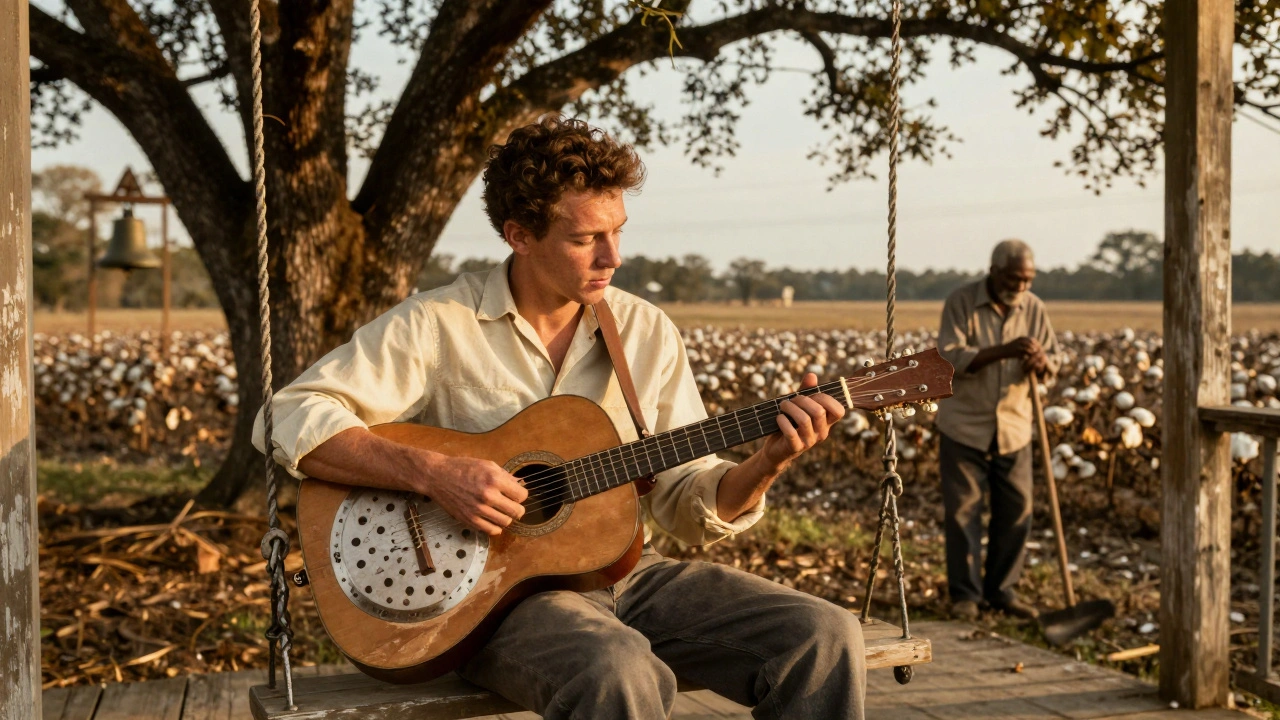
Robert Hill’s earliest memories weren’t of cartoons or school bells-they were of his grandfather, a sharecropper, humming ‘I’m a Man’ while working the fields outside Greenwood. That song, originally by Charlie Patton, was passed down like a family heirloom. Hill learned to slide his fingers across the strings not from a teacher, but by watching his uncle play on a broken-down resonator guitar in a dusty porch swing. The Delta didn’t teach rhythm-it demanded it. Every note had to carry weight, like a shovel hitting hard clay.
The Delta style is simple on paper: minor pentatonic scales, open tunings, and a heavy emphasis on vocal phrasing. But in practice, it’s chaos with purpose. Hill says he didn’t understand why his uncle would pause mid-lick for ten seconds before hitting the next note. Years later, he realized it wasn’t silence-it was breathing. That’s the Delta: space between notes matters as much as the notes themselves. He still uses that technique today, letting a single sustained bend hang in the air like smoke from a kerosene lamp.
Gospel Blues: The Church in the Backbeat
Every Sunday, Hill sat in the front pew of Mount Zion Baptist Church, hands folded, eyes closed, listening to the choir lift their voices until the rafters shook. The preacher didn’t just speak-he sang. The organist didn’t just play-he testified. And when the choir hit a high note, the whole congregation would clap in a syncopated rhythm that had nothing to do with 4/4 time. That’s where Hill learned his swing.
Gospel blues isn’t just blues with hymns. It’s blues with conviction. Hill’s vocal delivery carries the call-and-response pattern of a revival meeting. You can hear it in his 1989 album Testifyin’, where he layers his voice with a backing choir on ‘I Got a Woman’-not as ornamentation, but as spiritual dialogue. The guitar mimics the preacher’s cadence: short stabs, then long, trembling sustains. He doesn’t play licks to show off. He plays them to move people.
Unlike many bluesmen who left church behind, Hill never did. He still opens every live set with a quiet, a cappella line from an old spiritual. “The blues ain’t about sadness,” he told an interviewer in 2023. “It’s about survival. And the church taught me how to survive without giving up.”

Urban Electric: Chicago’s Thunder
At 17, Hill boarded a bus with nothing but a suitcase, a guitar, and $47. He landed in Chicago in 1969, just as the electric blues scene was exploding. He didn’t go to clubs to be seen-he went to learn. He stood in the back of Kingston Mines, watching Junior Wells blow harp with a microphone held like a pistol. He sat outside Smitty’s Corner, listening to Otis Rush’s guitar scream through a broken amp. He didn’t copy them. He absorbed them.
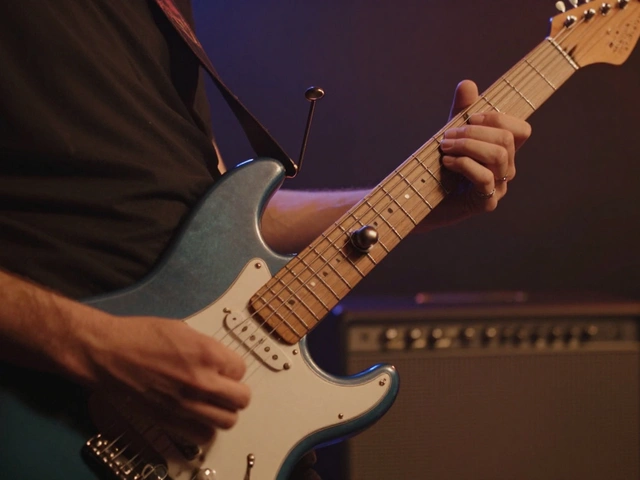
Urban electric blues changed everything. The Delta’s acoustic bite became Chicago’s electric roar. Hill traded his resonator for a Fender Telecaster, plugged into a 100-watt Marshall stack, and learned how to use feedback not as noise, but as emotion. His playing got tighter, faster, more aggressive. But he never lost the Delta’s patience or the gospel’s soul. That’s what made him different. While others chased speed, Hill chased texture. His solo on ‘Ride the Lightning’ (1992) starts with a single, clean note-then layers in distortion, vibrato, and harmonic squeals like a train pulling into Union Station at midnight.
He still uses the same amp settings he learned from Magic Sam: volume at 7, treble at 6, bass at 5, and the tone knob rolled back just enough to keep the bite without the fizz. “Electric blues ain’t about loud,” he says. “It’s about presence. You don’t need 200 watts if your heart’s in it.”

The Blend: Where Three Traditions Become One
Robert Hill doesn’t switch styles-he layers them. In his 2021 album Roots & Sparks, the title track opens with a Delta slide, then drops into a gospel choir harmony, before exploding into a Chicago-style riff that could shake loose bricks. Critics called it “a masterclass in fusion.” Hill just called it Tuesday.
His songwriting process is simple: he starts with a melody that comes to him while walking to the store. Then he asks himself three questions: Does it sound like the land? Does it sound like the church? Does it sound like the city? If the answer is yes to all three, he writes it.
He’s never used a metronome. He doesn’t need one. His rhythm comes from the heartbeat of three worlds: the slow, heavy pulse of the Mississippi Delta, the swaying cadence of the Pentecostal service, and the relentless forward drive of a Chicago subway train. His drummers say playing with him feels like riding a wave that keeps changing shape.
Legacy in the Notes
Robert Hill never became a household name. He never had a top 40 hit. But you’ll find his influence everywhere. Young blues artists in Memphis, Detroit, and even Berlin play his licks. His 1997 live recording of ‘I’m Gonna Move to the Outskirts of Town’ is studied in music schools as a textbook example of genre blending. The Rock and Roll Hall of Fame didn’t induct him-but they invited him to curate a blues exhibit in 2024.
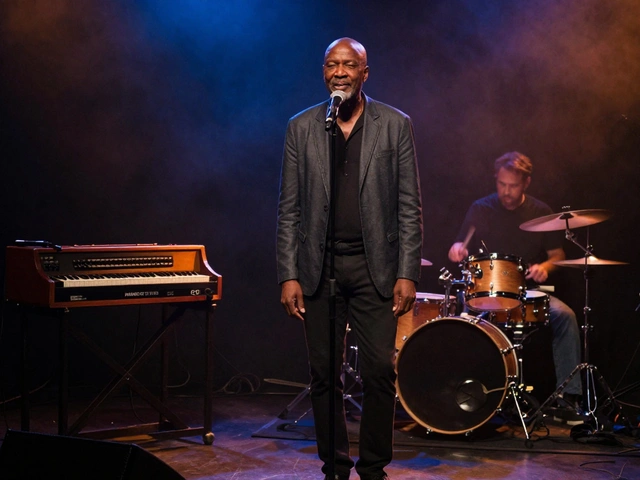
He still plays two nights a month at a small club in West Chicago. No stage lights. No merch table. Just him, his guitar, and a single mic. People come from three states to hear him. Not because he’s famous. But because when he plays, you don’t just hear the blues-you feel them.
What are the key characteristics of Delta blues?
Delta blues is defined by its raw, slide-guitar technique, use of open tunings, and emphasis on vocal expression over complex chord changes. It often features a single musician playing guitar and singing, with a slow, heavy rhythm that mirrors the labor of field work. The music is sparse but emotionally dense, with long pauses and bent notes that carry deep feeling.
How did gospel music influence Robert Hill’s playing?
Gospel music shaped Hill’s vocal phrasing, rhythmic feel, and emotional delivery. He adopted the call-and-response pattern common in church choirs and used his guitar to mimic the call of a preacher. His singing often rises and falls like a sermon, and he layers harmonies not as decoration, but as spiritual conversation. The intensity and repetition found in gospel hymns became the backbone of his most powerful performances.
What made Chicago electric blues different from Delta blues?
Chicago electric blues added amplification, drums, bass, and sometimes horns, turning the solo acoustic Delta sound into a full-band experience. The tempo picked up, the guitar became more aggressive, and feedback was used intentionally for emotional effect. While Delta blues was rooted in rural life, Chicago blues reflected urban energy-fast trains, crowded streets, and late-night clubs. Robert Hill merged the soul of the Delta with the power of the city.
Did Robert Hill ever record in a studio?
Yes, but he preferred live recordings. His most acclaimed albums-Testifyin’ (1989) and Roots & Sparks (2021)-were recorded in one take with minimal overdubs. He believed studio perfection killed the soul of the blues. His live shows were his true studio, where mistakes became moments and every note carried the weight of real experience.
Is Robert Hill still performing today?
Yes. At 74, he still performs two nights a month at a small club in West Chicago. He refuses to tour nationally, saying he doesn’t want to lose the connection to the place that shaped him. His audiences are a mix of longtime fans, young musicians, and curious newcomers-all drawn by the same thing: authenticity.
Robert Hill’s story isn’t about fame. It’s about fidelity-to roots, to rhythm, to truth. He didn’t invent a new genre. He reminded the world that the blues was never meant to be boxed. It’s a living thing, shaped by land, faith, and the noise of the city. And as long as he plays, it never forgets where it came from.