Robert Hill doesn’t just play music-he shapes it with space. His performances, whether solo piano or intimate chamber ensembles, rely on more than just technique. They live or die by the room they’re in. A too-dry hall steals warmth. A too-reverberant one turns notes into mush. The right room? It doesn’t just hold sound-it becomes part of the performance. That’s why venue acoustics aren’t an afterthought for Hill. They’re the foundation.
What Makes a Room Work for Robert Hill?
Robert Hill’s sound is delicate, nuanced, and deeply expressive. He plays early keyboard instruments-harpsichords, clavichords, and fortepianos-each with a soft attack and rich harmonic texture. These aren’t modern pianos with 500 pounds of string tension. They’re wooden, lightly strung, and respond to the faintest touch. So the room must do the same.
Forget giant concert halls with 2,000 seats. Hill thrives in spaces under 300 people. Why? Because sound travels differently in smaller rooms. In a large hall, his quiet passages vanish before they reach the back row. In a smaller space, every key press, every breath between phrases, every subtle pedal change is heard. The room doesn’t just amplify-it listens.
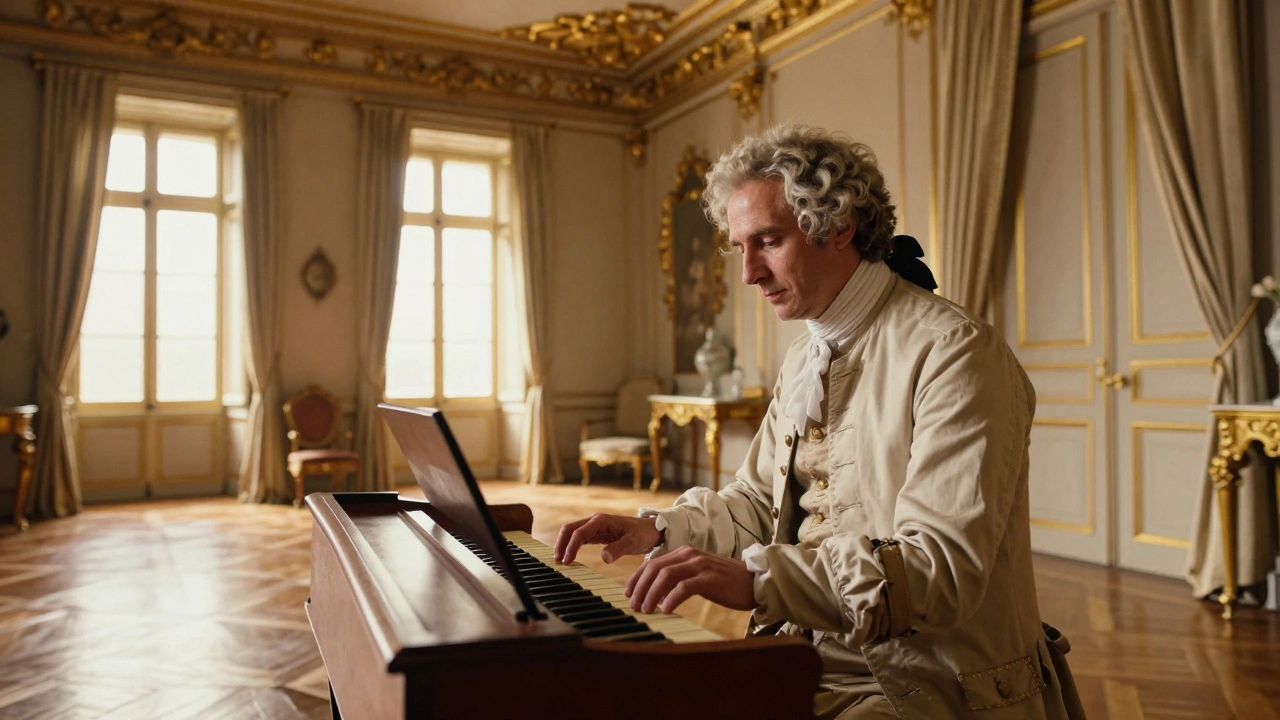
He’s played in churches, historic town halls, and even restored 18th-century salons. Each has one thing in common: natural, unforced acoustics. No digital reverb. No speaker arrays. Just wood, stone, and carefully shaped surfaces that reflect sound evenly.
The Science Behind the Sound
Good acoustics aren’t magic. They’re physics. For Hill’s repertoire, three factors matter most: reverberation time, diffusion, and absorption.
- Reverberation time-how long sound lingers after a note stops-is ideal between 1.2 and 1.6 seconds for his music. Shorter than that, and the sound feels flat. Longer, and the harmonies blur. A 19th-century French salon in Lyon measured 1.4 seconds. Hill called it "perfect for Bach."
- Diffusion means sound scatters evenly, not just bouncing straight back. Flat walls cause echoes. Curved surfaces, wooden panels, and decorative moldings break up sound waves. The 1740s concert room in Prague has hand-carved wooden rosettes on its ceiling. Hill says they "make every note feel alive, not isolated."
- Absorption is about controlling excess. Too much carpet or curtains kills warmth. Too little, and the room rings like a tin can. Hill prefers thin wool drapes, wooden floors, and stone walls with light plaster. He avoids foam panels and modern acoustic tiles-they mute the instrument’s character.
One venue he refuses to play in? The modern auditorium with a retractable ceiling and sound-dampening panels. "It’s like performing inside a refrigerator," he says. "The sound has no soul."
Real Venues That Get It Right
Not every historic building works. Some are too damp. Others have metal beams that ring. But a few have been quietly perfected over decades.
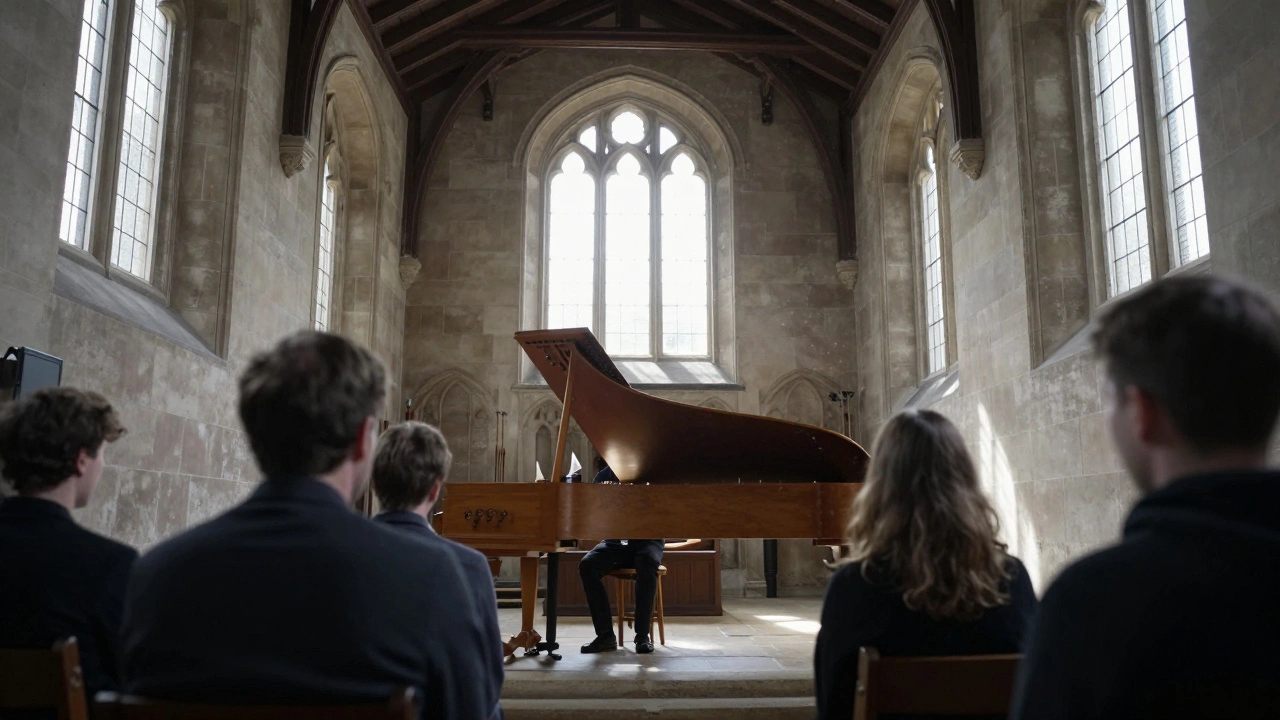
- The Wren Chapel, Oxford-built in 1665. Stone walls, wooden ceiling beams, no modern additions. Reverberation: 1.5 seconds. Hill performed there in 2023. The recording went viral among early music fans.
- De Doelen, Rotterdam (Small Hall)-a 1970s renovation of an old warehouse. Acoustic engineers studied 18th-century Dutch concert rooms and rebuilt the walls with layered oak and gypsum. It’s not old, but it sounds like it.
- Château de Vaux-le-Vicomte, France-a 17th-century ballroom with gilded stucco and parquet floors. The ceiling height is 9 meters, and the floor-to-wall ratio is exactly what early composers designed for. Hill calls it "the only place where Handel’s fugues don’t just play-they breathe."
These aren’t chosen for prestige. They’re chosen because the sound behaves the way Hill’s music demands.
What Goes Wrong in Modern Venues
Too many performance spaces today are built for amplified music-rock bands, electronic sets, or Broadway shows. They’re designed to project, not to reveal. That’s why Hill often turns down gigs.
A new venue in Berlin had everything: sleek design, LED lighting, climate control. But the walls were concrete with glass panels. Hill played one rehearsal. "It was like the notes were falling into a well," he said. "I couldn’t hear myself. I stopped halfway through."
Modern architects often rely on computer models that assume a 100-watt speaker. They don’t account for a 300-year-old harpsichord with 120 strings. The math doesn’t add up.
Even the "acoustically optimized" concert halls built in the 1990s-like the one in Helsinki-fall short for early music. Their reverberation is tuned for Mahler, not Mozart. Hill’s music needs intimacy, not grandeur.
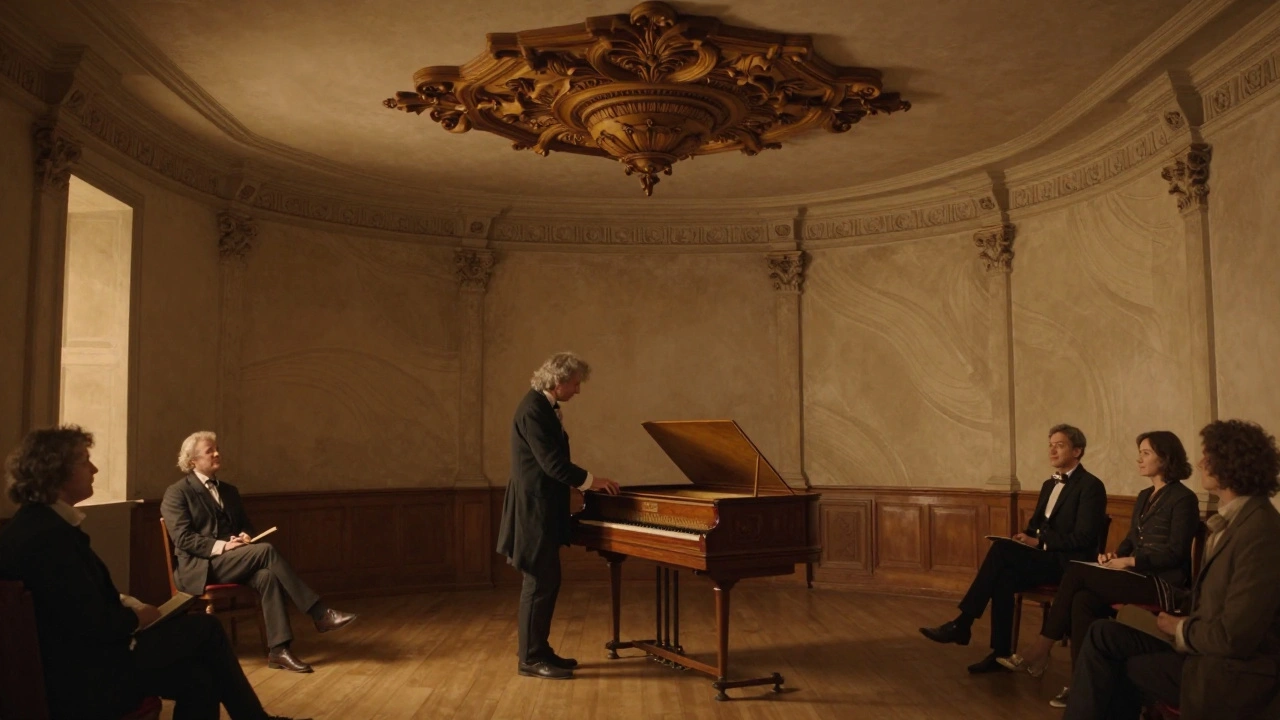
How to Find the Right Room
If you’re booking a venue for early music, don’t just ask for "good acoustics." Ask specific questions:
- What’s the reverberation time measured in seconds? (Request actual measurements, not estimates.)
- Are there any reflective surfaces-wood, stone, plaster-on the walls or ceiling?
- Is there carpeting or fabric drapes? If so, where? (They should be minimal and only in seating areas.)
- Has this space hosted unamplified chamber music before? Ask for recordings.
- Can you turn off any electronic sound systems? If not, it’s probably not the right fit.
Walk into the room before the performance. Clap your hands. Listen. A good room gives you a clear echo-like a soft ping, not a boom. If the clap sounds dull, the room will swallow Hill’s quietest passages. If it rings too long, the harmonies will blur.
Why This Matters Beyond Robert Hill
Robert Hill isn’t alone. A growing number of musicians are returning to historical instruments and repertoires. Violinists, lutenists, and sopranos are all chasing the same thing: rooms that don’t distort their sound.
The trend is changing how venues are built. In Vienna, a new early music center opened in 2025 with acoustics modeled after 1720s Salzburg. In Boston, a 1920s library was restored with original plaster and oak floors to host Baroque ensembles. These aren’t gimmicks. They’re necessary.
Music isn’t just notes on paper. It’s vibration in air. And air moves differently in different rooms. The right room doesn’t just host a performance-it completes it.
Robert Hill’s recordings are beautiful. But they’re not the whole story. The real magic happens when the space itself becomes a silent partner. That’s why his most unforgettable concerts aren’t in the biggest halls. They’re in the ones that remember how to listen.
What is the ideal reverberation time for Robert Hill’s performances?
The ideal reverberation time for Robert Hill’s music is between 1.2 and 1.6 seconds. This range allows the delicate harmonies of harpsichords and fortepianos to ring clearly without blurring. Shorter than 1.2 seconds, the sound feels dry and lifeless. Longer than 1.6 seconds, the overtones interfere and lose definition. Venues like the Wren Chapel in Oxford and the Château de Vaux-le-Vicomte measure precisely 1.4 seconds, which Hill describes as "perfectly balanced."
Why doesn’t Robert Hill perform in large modern concert halls?
Large modern concert halls are designed for amplified instruments and orchestras with high volume output. They often have long reverberation times (over 2 seconds) and hard, reflective surfaces that overwhelm the soft, nuanced tones of early keyboard instruments. Hill’s harpsichord and clavichord produce less than 10% of the sound energy of a modern piano. In a large hall, those tones get lost, drowned out by distance and excessive echo. He avoids venues where he can’t hear his own playing clearly.
Can acoustic panels improve a room for early music?
Standard acoustic panels-like foam or fiberglass tiles-are usually harmful for early music. They absorb too much high-frequency energy, which strips away the natural brightness and attack of historical instruments. Hill prefers natural materials: wooden panels, plastered walls, and stone floors. These reflect sound evenly without deadening it. If absorption is needed, thin wool drapes placed behind seating areas help control excess without dulling the tone.
What type of flooring works best for venue acoustics?
Hardwood or parquet floors are ideal. They reflect sound well and add warmth without causing echo. Carpet absorbs too much energy, especially in the mid and high frequencies that give early music its clarity. Stone floors can work if paired with wooden ceiling elements to balance the brightness. Hill has performed on bare wood in 18th-century salons and says it "gives the music a heartbeat."
How can I test if a venue is suitable for early music?
Clap your hands sharply in the center of the room. A good space will return a clear, brief echo-like a soft "pop" that fades naturally in under a second and a half. If the clap sounds muffled, the room is too dead. If it rings like a bell or echoes for more than two seconds, it’s too live. Also, ask if the venue has hosted unamplified chamber music before. Recordings from past performances are the best indicator.