Most people hear a blues song and feel it before they understand it. That deep, aching pull in the vocals, the slow crawl of the guitar, the way the lyrics circle back on themselves-it’s not random. It’s built. The same goes for a folk ballad about a train wreck or a slow-burning americana tune about a dusty porch and an old dog. These aren’t just songs. They’re structures passed down like family recipes, shaped by hardship, work, and quiet moments of truth. If you’ve ever wondered why these songs sound so familiar even if you’ve never heard them before, it’s because they follow patterns older than records, older than radio.
Blues: The Three-Chord Story
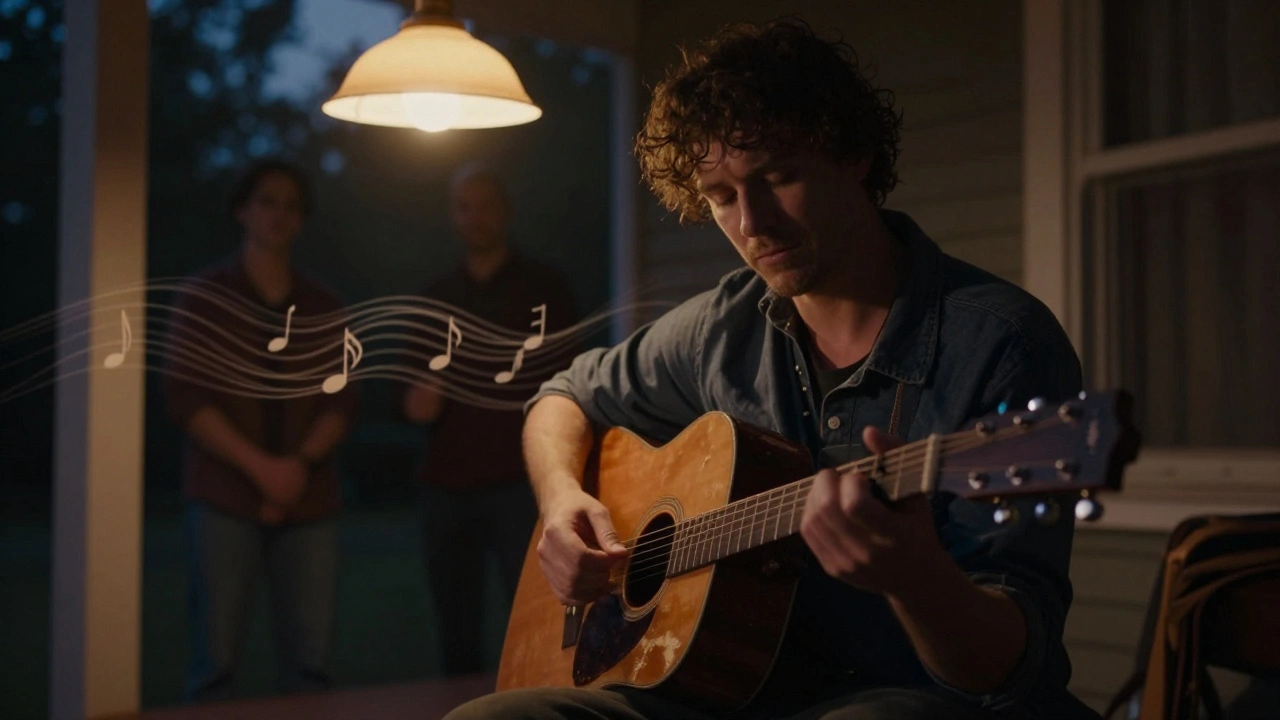
The blues is often called the root of modern popular music, and for good reason. At its core, it’s a simple formula that carries enormous emotional weight. Most traditional blues songs use a 12-bar structure. That means 12 measures, or musical bars, repeating in a set pattern. The chords? Usually just three: the I, IV, and V chords of the key. In the key of E, that’s E, A, and B7. It’s not fancy, but it’s powerful.
The lyrics follow a call-and-response pattern, often AAB. The first line states a problem. The second line repeats it for emphasis. The third line delivers the punchline, the twist, the resignation. Listen to Robert Johnson’s "Cross Road Blues"-"I went to the cross road, fell down on my knees"-then the same line repeats, then comes the answer: "Asked the Lord above, have mercy, save poor Bob if you please." That’s the blues in three lines. No extra fluff. Just truth, repeated until it sinks in.
It’s not just about chords and lyrics. The rhythm is a shuffle, not a straight beat. The guitar bends notes like a crying voice. The singer doesn’t just sing-they moan, sigh, and sometimes almost speak. That’s why blues feels so human. It’s not performed. It’s lived.
Folk: The Ballad That Tells a Life
Folk songs don’t always follow strict chord progressions. Instead, they follow story. Many traditional folk songs are ballads-narrative songs that tell a complete story, often tragic. Think "Barbara Allen," "The House of the Rising Sun," or "Danny Boy." These songs have a clear beginning, middle, and end. No bridge. No solo. Just verses and a repeating chorus that sticks like a memory.
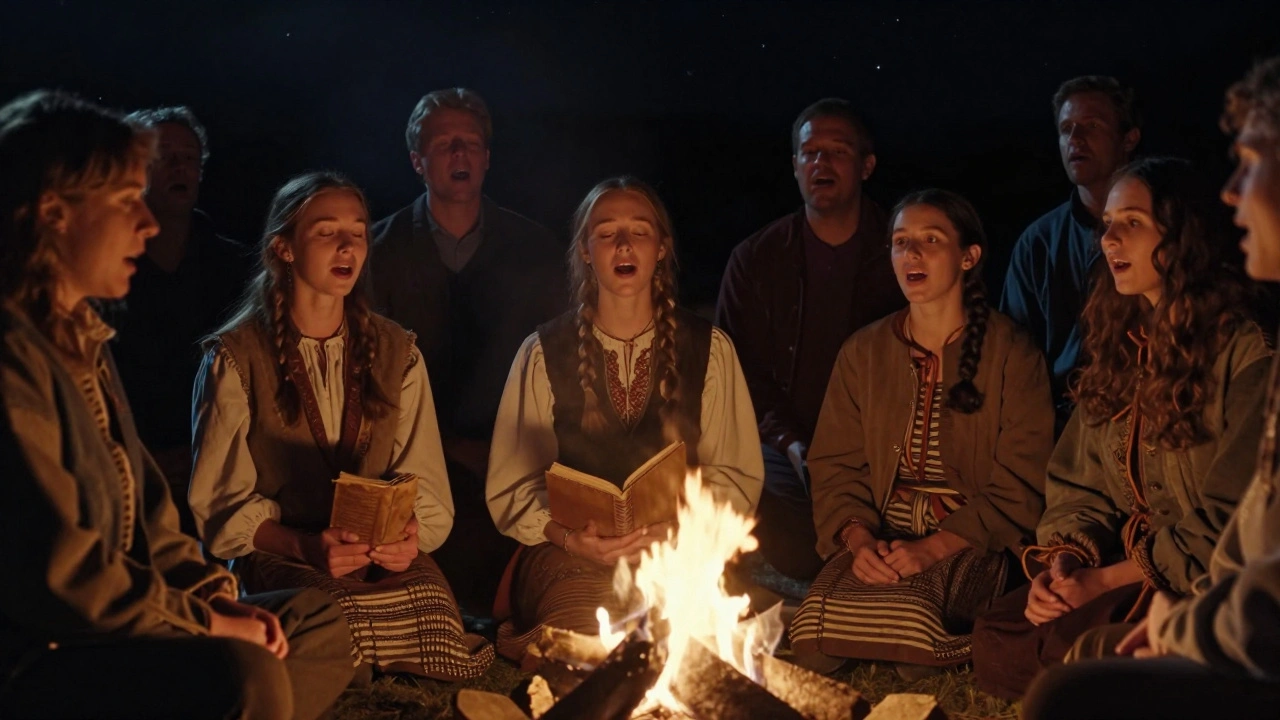
The structure? Usually AABB or ABAB, with each verse adding another piece of the story. The chorus, if there is one, repeats after every verse like a heartbeat. The melody is simple, meant to be sung by anyone, anywhere-around a campfire, in a factory, on a riverboat. That’s why folk songs survived without sheet music. They were passed mouth to ear, not page to page.
One of the most important things about folk is its adaptability. The same melody might be used for a song about a miner’s death, a sailor’s loss, or a child’s ghost. The tune stays, the words change. That’s how folk stays alive. It’s not about perfection. It’s about connection. If you’ve ever heard a group of strangers singing "This Land Is Your Land" at a protest, you’ve felt it. The song isn’t just sung. It’s shared.
Americana: The Blend That Doesn’t Try to Be Anything
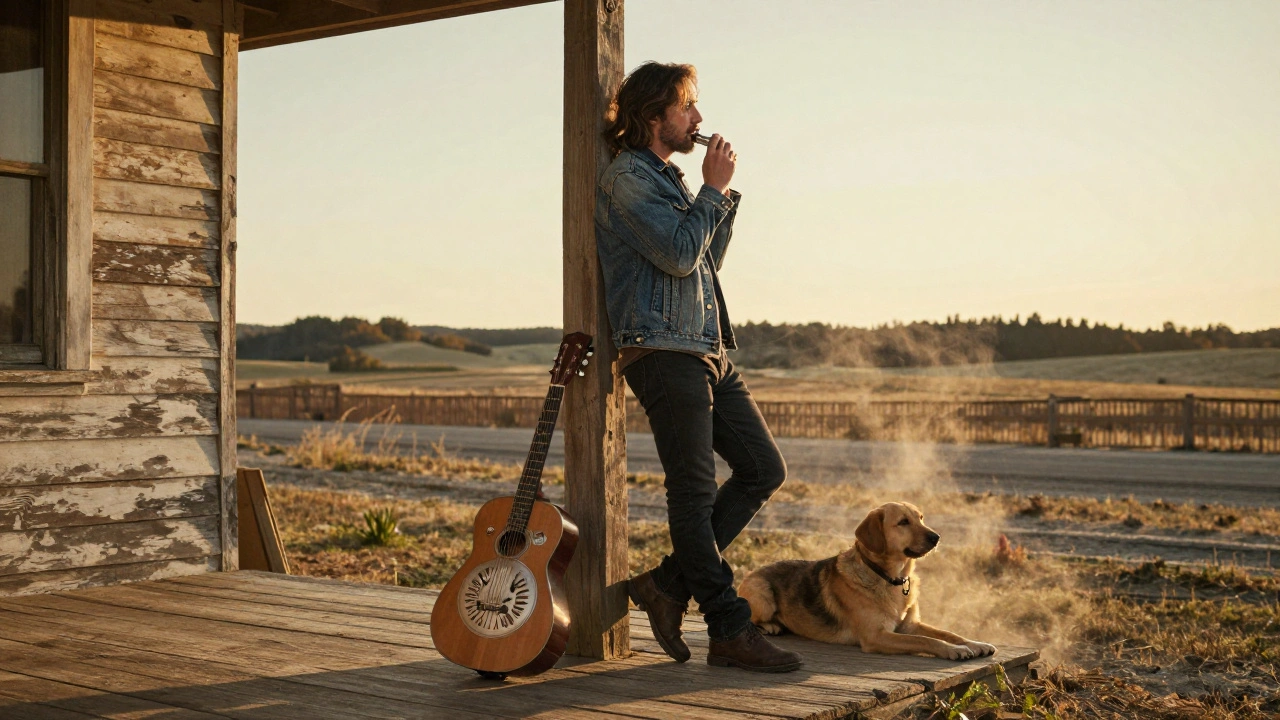
Americana isn’t a genre you can pin down with one chord progression or one instrument. It’s the sound of everything that came before-blues, folk, country, gospel, even a little rock and roll-melted together without trying to be cool. It’s what happens when a singer-songwriter from Kentucky picks up a resonator guitar, sings about a broken marriage, and lets the harmonica cry between the lines.
Structurally, americana songs often borrow from blues and folk but don’t lock into either. A song might start with a 12-bar blues verse, shift into a folk-style chorus with a repeating melody, then drop into a spoken-word bridge that sounds like a letter read aloud. The structure is loose, but never messy. It’s intentional. It’s meant to feel like a conversation, not a performance.
Look at artists like Gillian Welch or Jason Isbell. Their songs don’t chase trends. They follow old patterns but say new things. One of Isbell’s songs, "Children of Fire," uses a simple verse-chorus form, but the lyrics unfold like a novel. The music doesn’t need to change. The story does. That’s americana: truth dressed in worn-out boots, singing in a voice that’s seen too much.
Why These Forms Still Matter
Today, most pop songs are built on loops, Auto-Tune, and verse-chorus-verse-chorus-bridge-chorus formulas. It’s efficient. It’s engineered. But it doesn’t always stick. Why do you still hum "Amazing Grace" or "House of the Rising Sun" years after hearing them? Because these old forms don’t just entertain-they anchor.
The blues gives space to pain. Folk gives voice to the voiceless. Americana gives room for complexity without needing to explain everything. They don’t need a million instruments. They don’t need a producer. Just a voice, a guitar, and a story that matters.
When you learn one of these forms, you’re not just learning a song. You’re learning how people once carried their grief, joy, and wonder through music. You’re learning how to tell a truth that doesn’t need to be loud to be heard.
How to Recognize Them in Modern Music
You don’t have to listen to 1920s field recordings to hear these forms. They’re alive. Look at Chris Stapleton’s "Starting Over." It’s a 12-bar blues with modern production-but the structure? Pure. The lyrics? AAB. The guitar? Bends and slides. That’s blues.
Or take Phoebe Bridgers’ "I Know the End." It starts like a quiet folk ballad, then explodes into chaos. The first half could’ve been sung in a 1940s living room. The second half? That’s americana-emotional, raw, unpolished, real. The structure bends because the feeling demands it.
Even in hip-hop, you can hear it. Kendrick Lamar’s "Alright" uses call-and-response like a spiritual. The chant "We gon’ be alright" is the chorus, but it’s also the answer to the verse’s pain. That’s blues structure in a new language.
What to Listen For
If you want to hear these forms clearly, start by listening for these things:
- Blues: Does the song repeat the same lyric twice? Is it in 12 bars? Does the guitar slide between notes like someone sighing?
- Folk: Is there a clear story? Does the chorus repeat exactly the same way each time? Does it feel like it could’ve been sung by someone who never took a music lesson?
- Americana: Does it sound like it’s made from pieces of older songs? Is there a moment where the music drops out and the voice feels like it’s talking to you?
Don’t worry about naming the form. Just feel it. If a song makes you stop what you’re doing, if it lingers in your chest after it ends, you’re hearing something that’s been passed down for generations.
Are blues, folk, and americana the same thing?
No. Blues is rooted in African American work songs and spirituals, with a strict 12-bar form and call-and-response lyrics. Folk is about storytelling, often passed orally, with simple melodies and repeating choruses. Americana is a modern blend-it pulls from both, plus country, gospel, and rock, but doesn’t stick to one structure. They’re cousins, not twins.
Can you write a blues song without a guitar?
Absolutely. Blues is about structure and emotion, not instruments. A cappella blues exists. So do blues songs played on harmonica, piano, or even just clapping and stomping. The 12-bar form and AAB lyric pattern are what matter. The instrument just carries it.
Why do folk songs have so many versions?
Because folk songs aren’t owned. They’re shared. Before recording, people learned songs by ear. Each singer changed a line to fit their town, their pain, their time. A song about a train wreck in West Virginia might become a story about a river in Kentucky. The tune stays. The details shift. That’s how folk survives.
Is americana just country music with a different name?
No. Country music often follows Nashville formulas-clean production, polished vocals, radio-friendly structures. Americana embraces imperfection. It might include bluesy slide guitar, folk storytelling, gospel harmonies, or even punk energy. It’s not about genre purity. It’s about honesty.
Where can I hear authentic examples of these forms today?
Listen to early recordings by Charley Patton for blues, Pete Seeger for folk, and artists like The Cox Family or The Avett Brothers for americana. Modern acts like Allison Russell, Rhiannon Giddens, and Cody Johnson keep these forms alive. You don’t need to go back a century-just listen closely.
These aren’t museum pieces. They’re living traditions. Every time someone sings a blues line, tells a story in a folk ballad, or writes a song that doesn’t care about charts-you’re hearing history breathe.