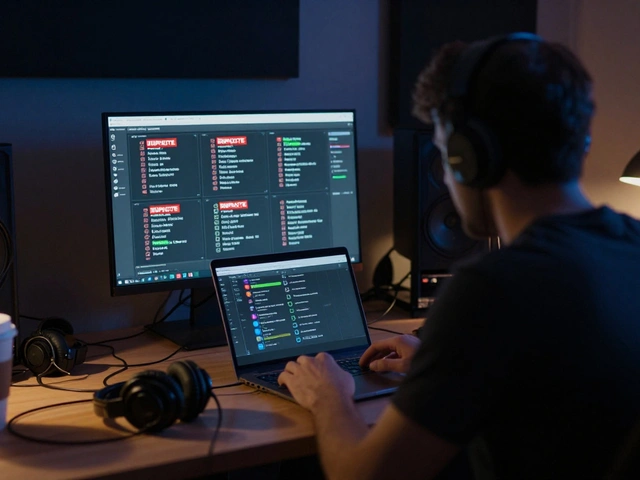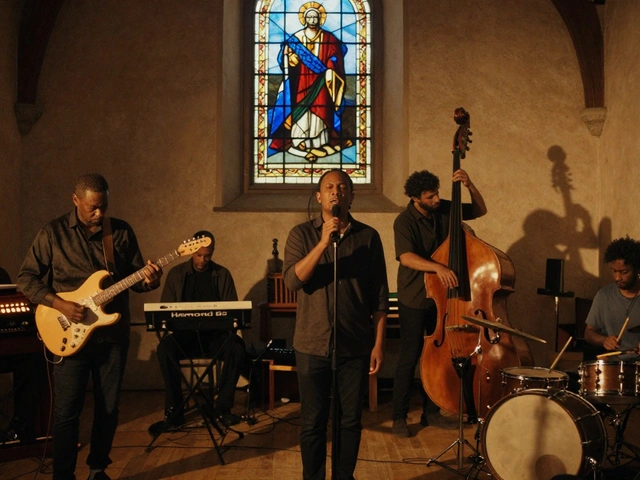
Robert Hill didn’t set out to make polished albums. His first record, Static in the Static, was recorded on a $200 microphone plugged into a laptop running free software. It had tape hiss, uneven levels, and a drum track that sounded like it was played in a closet. But people listened. Not because it was perfect, but because it felt real. That rawness became his signature. Over the next six years, his sound didn’t just change-it transformed. What started as a bedroom project became a fully realized sonic world. The evolution of Robert Hill’s production isn’t just about gear upgrades. It’s about intention.
The Lo-Fi Foundation: Imperfection as a Statement
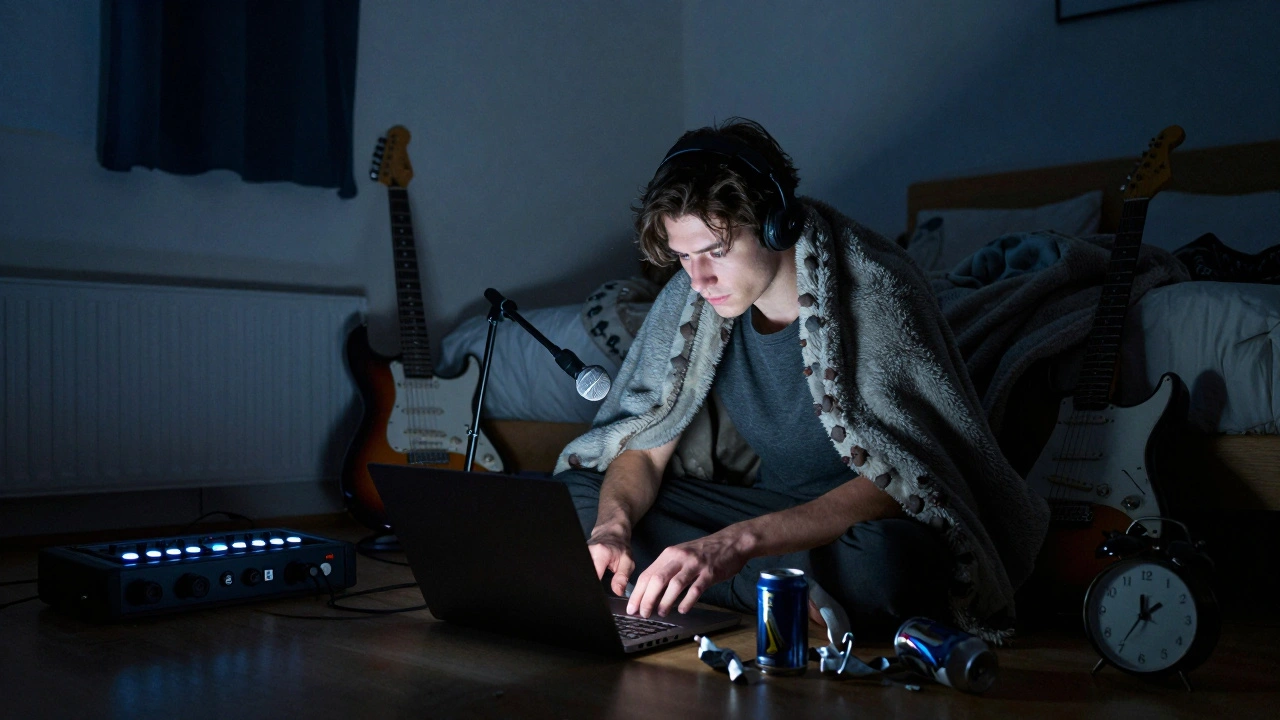
Before he had a studio, Robert Hill had a bedroom and a deadline. His 2019 debut album, Static in the Static, was made in three weeks. He used a Shure SM58, a broken preamp, and GarageBand. There were no overdubs. No reverb tails. No compression. Just vocals, a single electric guitar, and a drum machine with three presets. The album’s charm came from its limitations. You could hear the chair creak when he shifted position. You could hear the neighbor’s dog bark during the bridge of "Worn Out Shoes." Those weren’t mistakes-they were part of the story.
That album sold 12,000 copies on Bandcamp. Not because it sounded professional, but because it sounded human. Listeners connected with the vulnerability. One fan wrote: "It’s like he recorded this while crying, and didn’t care if you heard him." That emotional honesty became his brand. Critics called it "authentic lo-fi." Hill didn’t see it that way. He saw it as necessity.
The Turning Point: A Broken Gear, a New Mindset
In 2021, Hill’s laptop died mid-mix. He couldn’t afford a replacement, so he borrowed a friend’s iMac and a used Focusrite Scarlett 2i2. He didn’t upgrade his mic. He didn’t buy new plugins. But something shifted. He started listening differently. He noticed how the room’s acoustics colored his voice. He noticed how the guitar amp’s natural distortion changed when he moved it three feet. He began experimenting with placement-not just of instruments, but of himself.
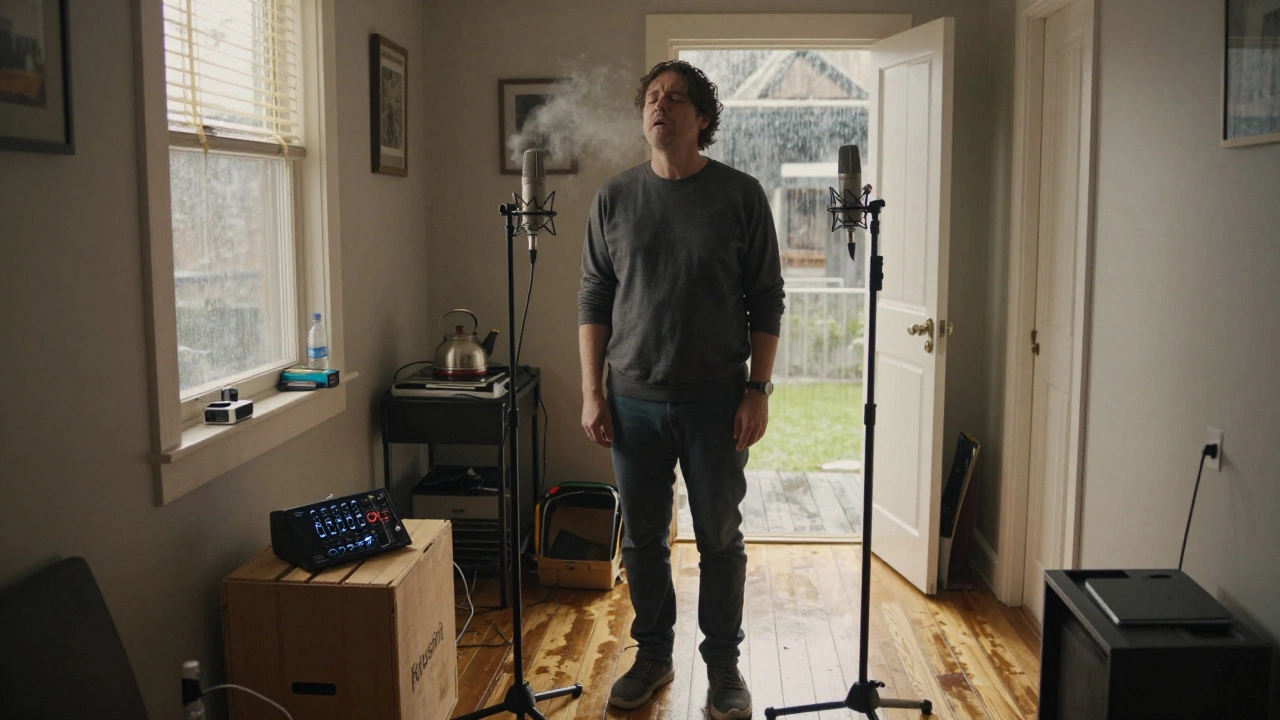
That session became the foundation for Two Steps Back (2022). For the first time, he used two microphones on his vocals: one close, one ten feet away in the hallway. He recorded ambient sounds-rain on the roof, a kettle whistling-and layered them beneath the drums. He didn’t remove the tape hiss. He turned it into texture. The album still had imperfections, but now they were intentional. The production became a narrative device.
Entering the Lush: Tools, But Not the Story
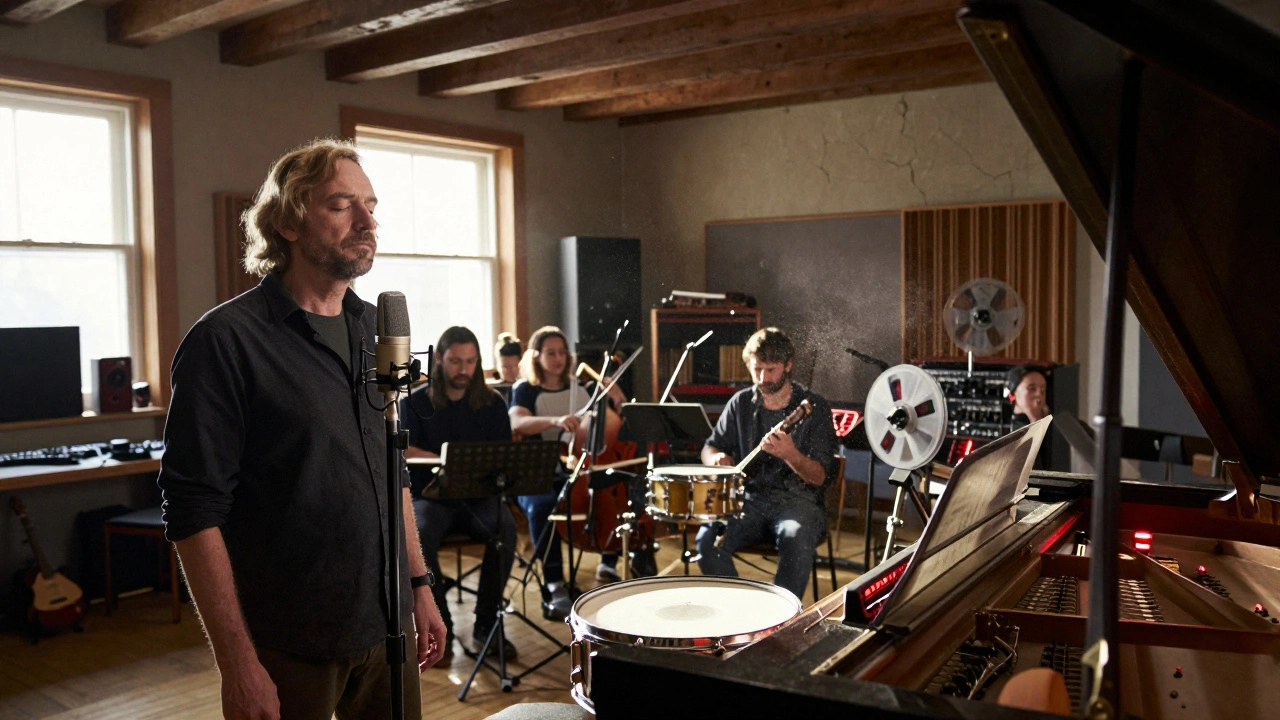
By 2024, Hill had signed with a small indie label. He got a budget. He rented a real studio. He bought a Neumann TLM 103, a vintage Telefunken V76 preamp, and a pair of Urei 1176 compressors. He hired a session drummer. He used analog tape for tracking. Critics assumed he’d lost his edge.
They were wrong.
Still Here, Still Breathing (2025) is his most lush album yet. The strings swell. The harmonies layer like fog. The kick drum has weight you can feel in your chest. But listen closer. The snare still cracks a little off-beat. The lead vocal has a breath right before the chorus that wasn’t edited out. The reverb on the piano is from a 1970s EMT plate-recorded live in the studio, not a plugin. Hill didn’t chase perfection. He chased presence.
"I used to think lo-fi meant cheap," he said in a recent interview. "Now I know it meant honest. Lush doesn’t mean clean. It means full. It means every sound has a reason to be there. If a note doesn’t serve the emotion, I cut it. Even if it’s perfect. Even if it cost $5,000."
Key Production Shifts: What Changed, What Didn’t
Here’s how his production evolved-not by gear, but by philosophy:
- Recording space: From bedroom to studio, but always chose rooms with character-old churches, basements, converted garages. He avoids treated studios unless they have creaky floors or uneven walls.
- Microphones: Started with one dynamic mic. Now uses three or four on a single vocal track, each capturing a different angle. He blends them like brushstrokes.
- Drums: Early: programmed beats with a $40 drum app. Now: live drums tracked on 12 mics, but he keeps one room mic slightly out of phase to retain the "alive" feel.
- Editing: Still leaves in mistakes. A flubbed lyric on "Hollow Ground" stayed because the emotion behind it was stronger than the note.
- Mastering: Still masters his own tracks. Uses a simple chain: analog saturation, a single EQ cut at 200 Hz, and a brickwall limiter set to -1.5 dB. No loudness wars.
The Philosophy Behind the Sound
Robert Hill doesn’t believe in "upgrade culture." He doesn’t chase the latest plugin or the most expensive mic. He chases the moment. He records when the light hits the wall just right. He waits for the right humidity to capture the natural reverb of the room. He’ll record the same take ten times, not to find the perfect one, but to find the one that feels like the first time he wrote the song.
His process is slow. He spends weeks just listening to the raw tracks before touching a fader. He listens on earbuds, on car speakers, on a Bluetooth speaker in the kitchen. He asks: "Does this sound like the feeling I had when I wrote it?" If the answer is no, he re-records-even if it’s technically flawless.
That’s why his evolution works. He didn’t become more polished. He became more precise. The lo-fi sound wasn’t a limitation-it was a filter. The lush sound isn’t an upgrade-it’s a deeper layer of truth.
What Fans Say About the Shift
Longtime listeners noticed the change. Not because the music got "better," but because it got more intimate.
"I used to listen to his first album on my walk to work," said Maria, 34, from Seattle. "Now I listen to the new one on my porch at sunrise. It’s the same feeling-just wider. Like he opened a door I didn’t know was there."
A Reddit thread from 2025 titled "Robert Hill Got Rich. Did He Lose His Soul?" had 12,000 comments. The top-rated reply: "He didn’t lose his soul. He just stopped hiding it."
Why This Matters Beyond Robert Hill
His journey is a quiet rebellion against the idea that production quality equals emotional value. In an age of AI-generated mixes and auto-tuned vocals, Hill’s path reminds us that technology doesn’t define art-it reveals it. The best production isn’t the cleanest. It’s the one that doesn’t get in the way of the feeling.
Whether you’re a musician, a podcaster, or just someone trying to create something real, Robert Hill’s evolution offers a simple truth: Start where you are. Use what you have. Listen harder than you play. And don’t mistake polish for depth.
Did Robert Hill’s music change because he got famous?
No. Robert Hill signed with a label after his second album had already gained a cult following. His shift in production wasn’t driven by fame or money-it was driven by curiosity. He didn’t change his sound to fit industry standards; he changed it because he finally had the space and tools to hear his own music more clearly. The core of his art-honesty, emotional precision, and patience-remained unchanged.
What gear did Robert Hill use for his lo-fi albums?
For his first album, Static in the Static, he used a Shure SM58 microphone, a broken USB preamp, and GarageBand on a 2015 MacBook Air. He recorded on a bed with blankets draped over the walls for sound dampening. The drum machine was a free app called DrumKit. He never used a pop filter or headphones during recording. The second album, Two Steps Back, added a used Focusrite Scarlett 2i2 interface and a single Audio-Technica AT2020 mic, but he still recorded in his apartment.
Is Robert Hill’s new sound considered "indie-pop" now?
He doesn’t label his music. Critics sometimes call it indie-pop or chamber-folk, but Hill prefers "quietly loud." His new album, Still Here, Still Breathing, features strings, layered harmonies, and analog tape saturation-but the song structures are still sparse, the lyrics still personal, and the delivery still intimate. It’s not pop because it doesn’t chase hooks. It’s not folk because it doesn’t rely on acoustic instruments. It’s simply music made to feel, not to fit a genre.
How did Robert Hill afford his studio upgrades?
He didn’t take a loan or sell his soul. He used earnings from his second album’s Bandcamp sales and live shows to buy gear slowly over two years. He rented studio time instead of buying it. He traded music for equipment-recording a local jazz band’s EP in exchange for a vintage reverb unit. He also got a small grant from a nonprofit that supports independent artists in the Pacific Northwest. His upgrades were earned, not handed to him.
Does Robert Hill still record at home?
Yes. Even after renting studios in Portland and Seattle, he still records vocals and acoustic guitar in his own apartment. He says the room has a "memory"-the way the floor creaks, the way the window rattles in the wind. He captures those sounds on purpose. He believes the place where you create matters as much as the tools you use. His home studio is now a dedicated corner with a single mic, a chair, and a lamp. He calls it his "truth room."