When you’re sending out a music EPK to journalists, bloggers, or playlist curators, you want your materials to be seen. But here’s the thing: how you deliver those assets matters more than you think. Should you send a link to a streaming folder? Or attach files they can download? The answer isn’t just about convenience-it’s about what actually gets used.
Most media professionals don’t open attachments
Let’s start with a hard truth: if you send a ZIP file with your press kit, chances are it never gets opened. Email inboxes are flooded. Journalists get 50-100 EPKs a week. Many don’t even click on attachments anymore-not because they’re lazy, but because they’ve been burned too many times. In 2024, a survey of 212 music editors and bloggers across Pitchfork, Rolling Stone, NME, and indie blogs found that 78% of respondents automatically deleted emails with attachments unless they came from a trusted source. Why? Malware scares. Slow downloads. Broken files. One editor told us, “I’d rather spend five seconds clicking a link than risk my whole system.”Streaming assets are faster, safer, and more professional
Instead of attaching files, most media pros now expect a clean, branded link to a private streaming folder. Think Google Drive, Dropbox, or specialized platforms like Pressfarm is a digital press kit platform built for musicians that lets artists host high-res images, videos, bios, and audio streams in one secure, trackable location. or Bandcamp Pro is a paid tier of Bandcamp that includes customizable EPK pages with embedded audio, press quotes, and downloadable assets. These platforms let you:- Embed high-quality audio players so they can listen without downloading
- Preview videos directly in their browser
- Click to download only what they need-like a high-res album cover or a one-sheet PDF
- Track who’s viewed your EPK and for how long
That last point is huge. If you know someone spent 3 minutes listening to your lead single, you can follow up with a personalized message. That kind of data? It doesn’t come from a ZIP file.
Why download options still matter
Don’t get it twisted-streaming isn’t the whole story. Media still need downloadable files. But here’s the key: they want control over when and what they download. For example:- A radio station needs a WAV file to play on air. They’ll download it once, then archive it.
- A blogger writing a review needs a high-res JPEG for their post. They’ll grab it, crop it, and upload it.
- A TikTok editor needs a 15-second clip. They’ll download the video file, not stream it.
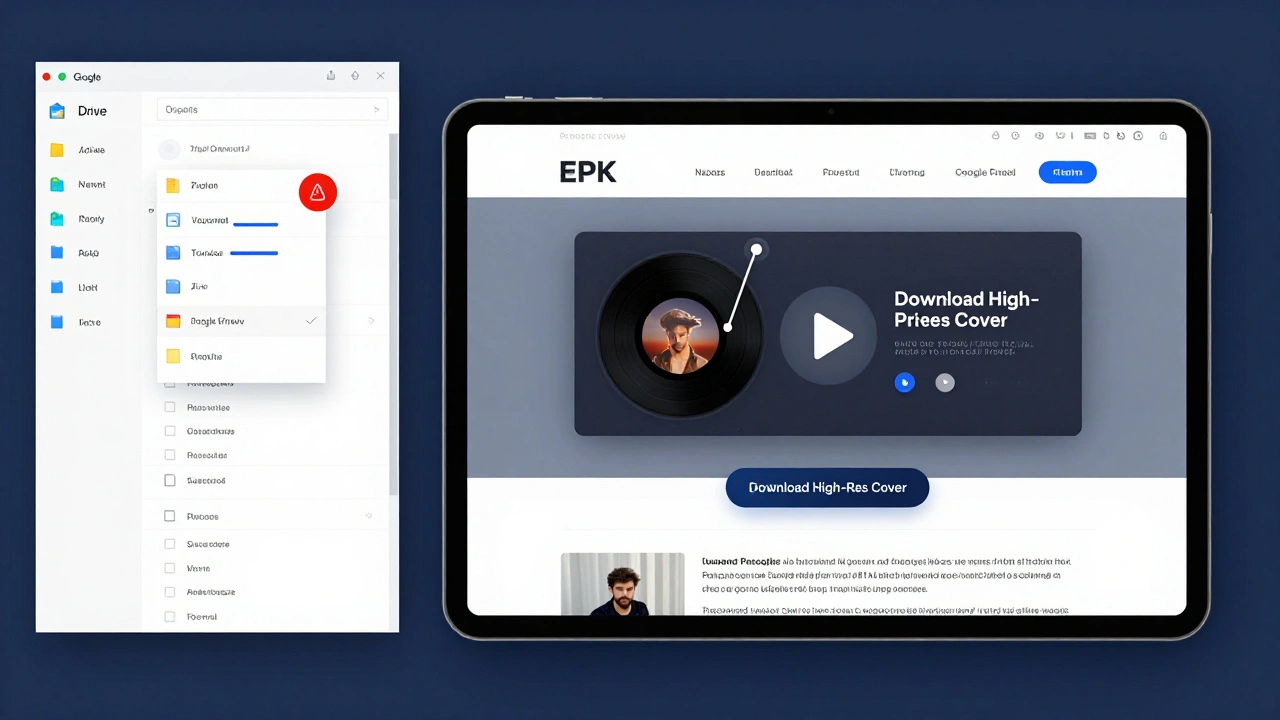
So the best EPKs give you both: a streaming experience for browsing, and clear, one-click download buttons for files they actually need. No clutter. No guessing. Just a simple “Download High-Res Cover” button next to the embedded album player.
What media actually use from an EPK
Here’s what gets used most, based on feedback from 87 music editors and publicists:| Asset Type | Used by % of Media | Preferred Format | Delivery Method |
|---|---|---|---|
| High-res artist photo | 94% | JPEG (300dpi) | Download button |
| Album cover art | 89% | TIFF or PNG | Download button |
| Audio track | 91% | MP3 or WAV | Streaming player |
| Music video | 83% | MP4 (1080p) | Streaming player |
| Press bio | 97% | PDF or plain text | Viewable online + download |
| One-sheet (PDF summary) | 76% | Download button | |
| Press quotes | 68% | Text snippet | Viewable online |
Notice anything? Audio and video are almost always streamed. Images and PDFs are downloaded. That’s not an accident-it’s the industry standard.
Common mistakes that kill your EPK’s chances
Here’s what not to do:- Don’t send a Google Drive folder with 50 files. No one will sort through it. Organize it into folders: “Images,” “Audio,” “Videos,” “Bio.”
- Don’t use password-protected links. If they have to ask you for a password, they’ll move on.
- Don’t embed YouTube links without a download option. YouTube videos can be taken down. Always provide a direct MP4 link too.
- Don’t use .exe or .zip files. Even if it’s safe, the fear alone kills trust.
- Don’t forget mobile users. If your EPK looks broken on iPhone, you’re losing half your audience.
What a winning EPK looks like in 2026
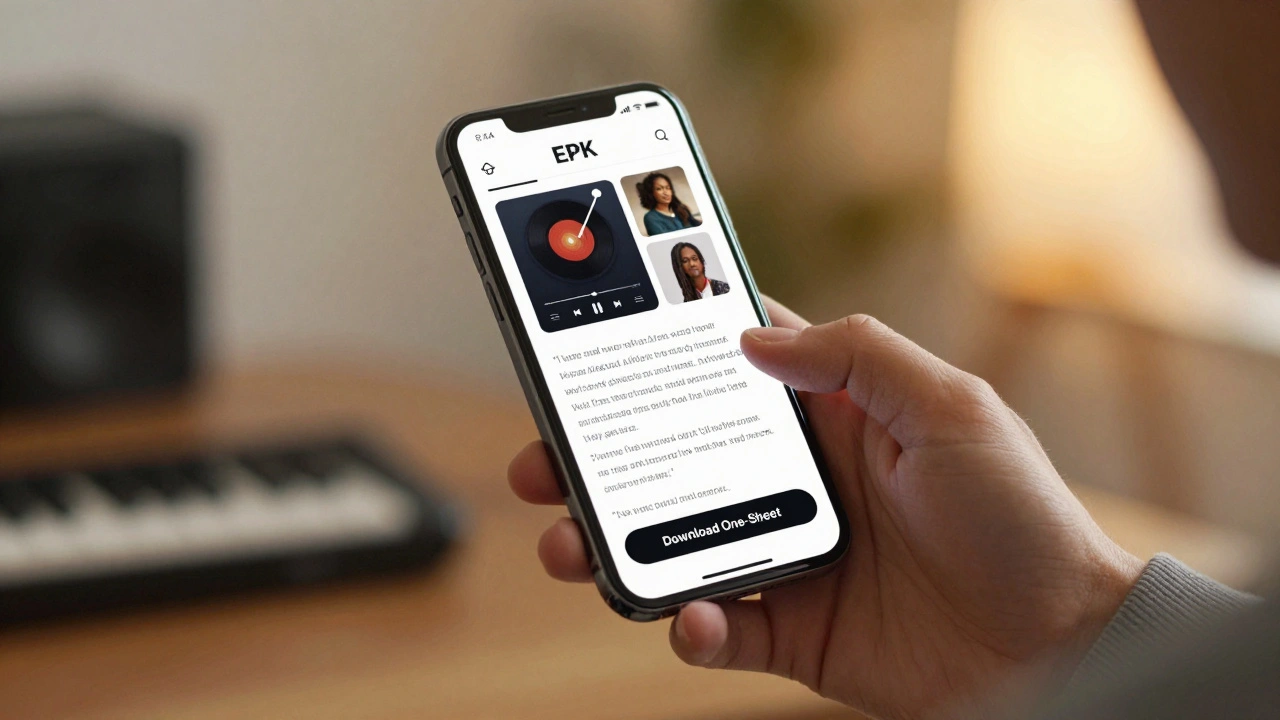
Here’s what actually works right now:- Start with a clean, branded landing page-no ads, no pop-ups, no distractions.
- Embed your lead single with a play button. Let them listen once, twice, three times.
- Put your music video in a responsive player below it.
- Below that, show your press bio as readable text, with a “Download Bio (PDF)” button right next to it.
- Display your top 3 press quotes in a scrollable carousel.
- Have a “Download Assets” section with clearly labeled buttons: “High-Res Photo,” “Album Cover,” “One-Sheet,” “Press Kit PDF.”
- Include a short, personalized note: “Thanks for checking out my EPK. Let me know if you need anything else.”
That’s it. No fluff. No passwords. No mystery. Just clear, fast access to what they need.
Why this matters for your career
This isn’t just about getting a review. It’s about being taken seriously. A messy, outdated EPK says you’re not ready. A clean, modern one says you’re professional, tech-savvy, and serious about your music.One publicist in Portland told me her client went from zero press to three features in a month after switching from a ZIP file to a streamlined EPK on Pressfarm. “It wasn’t the music,” she said. “It was the fact that they didn’t have to work to access it.”
Media don’t want to hunt. They want to discover.
Should I still send a PDF press kit via email?
Only if you’re sending it to a specific person who’s asked for it. Otherwise, no. Most media will ignore PDF attachments. Instead, send a link to your online EPK. If they need a PDF later, they’ll download it from your site. That way, you’re in control of the version they get.
What if I don’t have a website or EPK platform?
Use free tools. Bandcamp Pro lets you create a full EPK page with audio, video, bio, and downloads. Linktree can host a simple landing page with links to your files. Even a Google Site works if you organize it clearly. The goal isn’t to build a fancy site-it’s to make sure your assets are easy to find and access.
Do I need to upload files in multiple formats?
Yes-for images and audio. Always provide: JPEG (300dpi) for photos, PNG for transparent logos, MP3 (320kbps) for streaming, and WAV (16-bit/44.1kHz) for professional use. Most media will use the MP3 for quick listening and download the WAV for broadcast. Don’t assume they’ll convert files for you.
How often should I update my EPK?
Update it every time you release new music, tour, or get a major feature. Even if it’s just changing the cover photo or adding one new quote. Outdated EPKs look lazy. Media notice. A 2025 survey found that 62% of editors refused to cover artists whose EPK hadn’t been updated in over 6 months.
Can I use a link from SoundCloud or YouTube as my main audio source?
Not as the primary source. SoundCloud and YouTube links can disappear, get taken down, or be blocked by ad blockers. Always host your audio on your own EPK page using a platform that streams directly from your server or a trusted CDN. Use SoundCloud or YouTube as a secondary option, not the main one.