You spent months recording your new Blues Album. You mixed it until your ears bled. You mastered it. You uploaded it to Spotify and Apple Music. And then? Silence. Maybe a few hundred streams, but not enough to pay for the studio time, let alone the next tour van repair.
Here’s the hard truth about the modern music economy: streaming pays pennies, but fans pay dollars. If you want to actually make money from your music without waiting years for a sync license or a viral TikTok moment, you need to sell records directly. And the most reliable way to do that isn’t Instagram algorithms or Facebook ads-it’s email. Specifically, Email Marketing designed for the unique rhythm of Blues Culture.
Blues audiences are different. They aren’t chasing the latest trend; they’re chasing authenticity, history, and soul. They buy physical media because they value the artifact. They attend shows because they value the experience. Your email list is the bridge between those two worlds. But sending generic "New Single Out Now!" blasts won’t cut it. You need campaigns that feel like a conversation in a smoky club, not a billboard on the highway.
Why Email Beats Streaming for Blues Revenue
Let’s look at the numbers. The average payout per stream on major platforms hovers around $0.003 to $0.005. To earn $100, you need roughly 25,000 streams. That’s a lot of passive listening. Now, compare that to selling a vinyl record directly through your website. A standard LP might retail for $25-$30. After manufacturing and shipping costs, you might keep $10-$15 per unit. One sale equals 3,000+ streams.
But it’s not just about the math. It’s about ownership. When a fan listens on Spotify, they belong to Spotify. When they join your email list, they belong to you. You can message them anytime, about anything, without paying an algorithm tax. For independent artists, this asset is critical. Platforms change rules overnight. Algorithms shift. Your inbox doesn’t care about code updates.
| Metric | Streaming (Spotify) | Direct Vinyl Sale | Direct Digital Download |
|---|---|---|---|
| Avg. Revenue Per Unit | $0.004 | $12.00 (net) | $8.00 (net) |
| Customer Ownership | Platform Owned | Artist Owned | Artist Owned |
| Data Collected | Anonymous | Name, Address, Email | Name, Email |
| Upsell Potential | Low | High (Merch, Tickets) | Medium (Bundle Deals) |
Building a List That Actually Buys
Most musicians make the mistake of treating their email list like a megaphone. They blast everyone with every update. This leads to unsubscribes and spam folder placement. In the blues world, trust is currency. You need to build a relationship before you ask for a credit card number.
Start by offering something valuable in exchange for an email address. Don’t just say "Join my newsletter." Say, "Get the exclusive demo version of 'Midnight Train' before anyone else hears it." Or offer a free PDF guide: "The History of Delta Blues: 5 Essential Tracks Every Fan Should Own." These lead magnets filter out casual listeners and attract true enthusiasts who are likely to spend money.
Segmentation is your secret weapon. Not all subscribers are the same. Some bought tickets to your last show. Others downloaded a free track but never bought anything. Create tags in your email service provider (ESP) for these behaviors:
- Superfans: Bought merch or multiple albums. Send them early access offers and behind-the-scenes content.
- Ticket Buyers: Attended a show recently. Send them post-show photos and upcoming tour dates.
- New Subscribers: Joined via a lead magnet. Send them a welcome sequence introducing your story and top tracks.
- Lapsed Buyers: Haven’t purchased in over a year. Send them a "We Miss You" discount code.
By tailoring messages to these groups, you increase relevance. A superfan doesn’t need a discount; they want exclusivity. A lapsed buyer needs a nudge. Treating them differently boosts conversion rates significantly.
The Anatomy of a High-Converting Blues Campaign
So, what does a good email look like? Forget corporate jargon. Write like you talk. If you’re a blues artist, your voice should be warm, slightly gritty, and honest. Use personal pronouns. Share struggles, not just successes. Did the amp blow up during rehearsal? Tell them. Did you find an old guitar in a pawn shop? Show them.
Structure your emails with a clear narrative arc. Here’s a proven template for selling a new record:
- The Hook: Start with a story, not a product pitch. Example: "I wrote this song sitting on my porch in Portland while rain hammered the roof. It felt like the blues had finally caught up with me."
- The Problem/Context: Explain why this album matters. What gap does it fill? Is it raw production? Lyrical depth? Connect it to the listener’s emotions.
- The Solution (Your Record): Introduce the album as the embodiment of that story. Include high-quality images of the vinyl sleeve or cover art. Visuals matter-people buy with their eyes first.
- Social Proof: Quote a review from a blog, a testimonial from a fan, or mention how many pre-orders have already come in. FOMO (Fear Of Missing Out) works when framed positively.
- Clear Call to Action (CTA): One button. One goal. "Pre-Order Vinyl Now." Don’t clutter it with five links. Make the button color stand out against the background.
Keep the subject line intriguing but honest. Avoid clickbait. Try: "The story behind 'Delta Dust'" or "Vinyl copies are running low." Open rates depend heavily on this first impression.
Leveraging Physical Media Scarcity
Blues fans love physical objects. There’s a tactile satisfaction in holding a vinyl sleeve or flipping through liner notes. Leverage this by creating scarcity. Limited editions drive urgency. Announce that only 500 signed copies exist. Once they’re gone, they’re gone. This isn’t artificial scarcity if you truly limit the run; it’s honest inventory management.
Bundles increase average order value. Instead of selling just the album for $25, offer a bundle: Album + T-Shirt + Sticker Pack for $45. Fans perceive higher value, and you move more merchandise. Include digital downloads with physical purchases so they can listen immediately while waiting for shipping. This reduces refund requests due to impatience.
Consider regional variations. If you’re touring the Midwest, offer a limited edition vinyl colored blue for fans in Chicago or Detroit. Mention this in your email segment for those regions. Personalization scales well when done right.
Automating the Sales Funnel
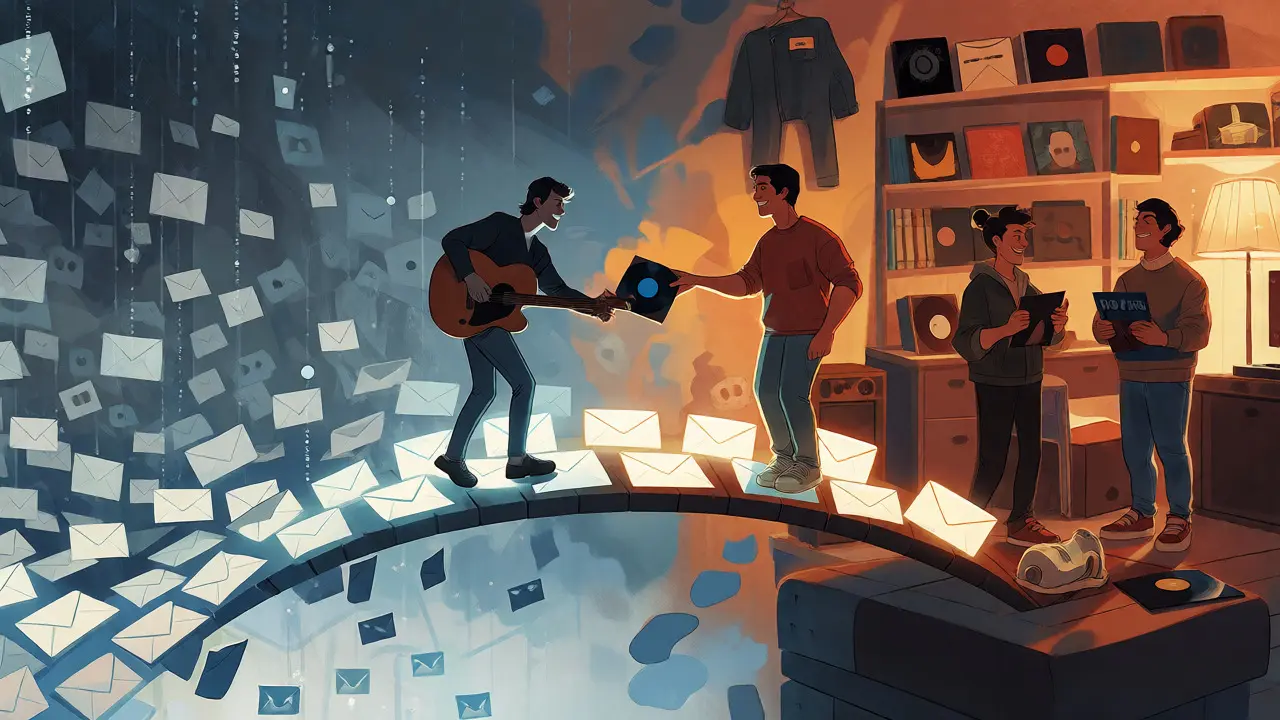
You don’t need to send emails manually every day. Set up automated sequences that work while you sleep. Here’s a basic flow for a new subscriber:
- Day 0: Welcome email. Deliver the promised lead magnet. Brief intro to your music philosophy.
- Day 3: Story email. Share the origin of your band or a pivotal moment in your career. Link to your best playlist.
- Day 7: Soft pitch. Mention your latest release casually. "If you liked the demo, the full album is available now." No pressure.
- Day 14: Social proof. Share a fan photo or a positive review. Remind them where to buy.
For existing buyers, set up a post-purchase sequence. Thank them, ask for a review, and suggest related products. "Since you bought the vinyl, you might like our custom guitar picks." Cross-selling keeps revenue flowing without constant new campaigns.
Pitfalls to Avoid in Blues Email Marketing
Don’t over-send. Two emails a month is plenty unless you’re actively promoting a tour or release. More than that feels like spam. Always provide an easy unsubscribe link. It’s legally required and builds trust.
Don’t ignore mobile users. Over 60% of emails are opened on phones. Keep paragraphs short. Use large buttons. Test your emails on iOS and Android devices before hitting send. If the layout breaks on a phone, you lose the sale.
Don’t forget compliance. Ensure you have explicit consent to email people. Buying lists is a death sentence for deliverability. Grow organically through gigs, website pop-ups, and social media calls to action. Quality beats quantity every time.
Finally, don’t be afraid to fail. Subject lines sometimes flop. Images break. Track your open rates and click-through rates. If an email underperforms, analyze why. Was the subject line boring? Was the CTA unclear? Iterate. Treat your email strategy like a jam session-listen, adjust, and play again.
What is the best email platform for independent blues artists?
Mailchimp, ConvertKit, and Klaviyo are popular choices. For artists focused on e-commerce, Klaviyo integrates deeply with Shopify and WooCommerce, allowing detailed tracking of purchase behavior. ConvertKit is excellent for creators who prioritize clean design and automation simplicity. Choose based on your tech stack and budget.
How often should I email my fans?
Consistency matters more than frequency. Aim for one to two emails per month during normal periods. During a tour or album launch, you can increase to weekly updates. Always monitor unsubscribe rates; if they spike, reduce frequency.
Do blues fans still buy physical records?
Yes, strongly. Vinyl sales have surged in recent years, particularly among older demographics and audiophiles common in the blues community. Physical media offers collectible value and supports the artist more directly than streaming.
How do I grow my email list at live shows?
Set up a tablet with a QR code linking to your sign-up page. Offer an incentive, such as entry into a raffle for a signed poster or a free digital download. Have a dedicated person manage the table to capture data efficiently.
Should I use HTML templates or plain text emails?
A hybrid approach works best. Use a simple HTML template with your branding, but write the body copy in a conversational, plain-text style. Heavy graphics can trigger spam filters and distract from the message. Focus on readability and connection.