
Stop treating your email list like a giant monolith
Sending the exact same email to every single person on your list is the fastest way to kill your open rates. Think about it: would you want the same update if you've been a die-hard supporter for five years as someone who just signed up yesterday because of a 10% discount code? Probably not. When you blast everyone with the same message, you're essentially gambling that the content is generic enough to not offend anyone, but specific enough to actually interest someone. That's a losing game.
The secret to high-converting emails isn't better copywriting or a flashier template; it's email segmentation strategy is the process of dividing an email list into smaller groups based on specific criteria to deliver more relevant content. By breaking your audience into fan groups, you stop shouting into a crowd and start having individual conversations. This shift in approach typically leads to a 14% increase in campaign lift, according to industry benchmarks from platforms like Mailchimp and Klaviyo.
Quick Wins for Your List
- Higher Open Rates: People open emails that feel written specifically for them.
- Lower Unsubscribe Rates: You stop annoying the people who aren't interested in a specific offer.
- Better Conversion: Targeted offers convert significantly better than generic ones.
Identifying your fan archetypes
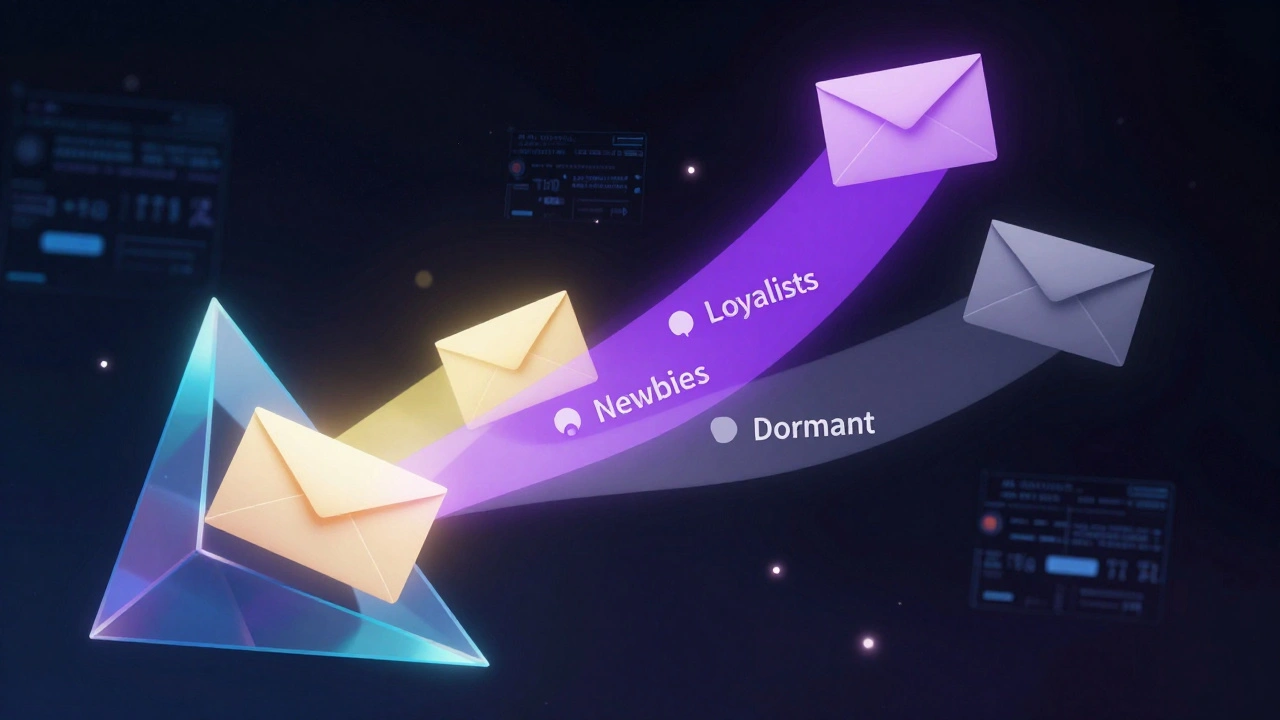
Before you touch your email software, you need to figure out who is actually on your list. You can't segment based on a guess. You need to build Audience Personas, which are semi-fictional representations of your ideal fans. For most creators or brands, fans generally fall into three buckets: the Newbies, the Loyalists, and the Dormant.
Newbies are people who just discovered you. They have high curiosity but low trust. If you try to sell them a high-ticket item immediately, they'll bounce. They need a welcome sequence that explains who you are and what value you provide. Loyalists, on the other hand, are your "superfans." They've bought your products, they follow you on every platform, and they'll probably forgive you if you send a typo. They want insider access, early bird discounts, and a feeling of belonging.
Then there are the Dormant subscribers. These are people who signed up six months ago and haven't opened an email since. If you keep emailing them the same stuff, your deliverability will tank because Internet Service Providers (ISPs) like Gmail or Outlook will notice the lack of engagement and start routing your mail straight to the spam folder.
How to gather the data without being creepy
You can't segment if you don't have data. But you can't just ask people for their life story in a 20-field sign-up form-nobody will fill it out. The trick is to use "progressive profiling." This means gathering small pieces of information over time through interactions.
The easiest way to start is with Zero-Party Data, which is information a customer intentionally shares with you. You can do this using a simple one-question survey in your welcome email: "Which of these three topics are you most interested in?" Depending on what they click, your email service provider can automatically tag them. For example, if you're a music producer and they click "Beatmaking Tips," they get the 'Producer' tag. If they click "How to get signed," they get the 'Artist' tag.
Another powerful method is tracking behavior. If a user clicks a link to a specific product category in your store, that's a clear signal of intent. Using Tracking Pixels or integration with an e-commerce platform allows you to create segments based on actual spending habits. A fan who has spent over $100 is a fundamentally different entity than a fan who has spent $0.
| Fan Group | Key Attribute | Best Content Type | Goal |
|---|---|---|---|
| Newbies | Recent Sign-up | Welcome Series / Storytelling | Build Trust |
| Loyalists | High Purchase Frequency | Exclusive Access / VIP Offers | Retention & Advocacy |
| Dormant | No opens in 90 days | "We Miss You" / Big Incentive | Re-engagement or Cleaning |
| Bargain Hunters | Only buys during sales | Discount Codes / Clearance | Clear Inventory |
The technical setup: Tags, Segments, and Automations
Once you have your personas, you need to implement them in your Email Service Provider (ESP). Most modern tools like ConvertKit or MailerLite use a combination of tags and segments. A tag is a label you stick on a person (e.g., "Interested in Vinyl"). A segment is a filtered view of your list based on those tags (e.g., "All people tagged 'Interested in Vinyl' who live in the USA").
The real magic happens when you tie these segments to Marketing Automation. Instead of manually sending a blast, you create triggers. For instance, when a user is tagged as a "Loyalist," they should be automatically added to a VIP sequence that gives them a 48-hour head start on new merchandise. This removes the manual work and ensures the right person gets the right message at the exact moment they are most likely to act.
Don't overcomplicate this early on. Start with three core segments. If you create 50 different micro-segments, you'll spend all your time managing lists and no time actually writing. The goal is to find the balance between personal relevance and manageable workload.
Crafting messages for different mindsets
Now that your list is split, your writing needs to change. You can't use the same voice for a Newbie as you do for a Loyalist. For the Newbie, your tone should be welcoming and educational. Focus on the "Why." Why should they care about your brand? What problem are you solving for them? Give them a quick win-a free guide or a curated list of your best work-to prove your value quickly.
For the Loyalists, drop the formal introductions. Use a more intimate, "insider" tone. Talk to them like friends. Instead of "We are pleased to announce a new product," try "I've been working on this for six months and I wanted you guys to see it first." This reinforces the relationship and makes them feel like part of an exclusive club, which is the primary driver for lifelong fan loyalty.
When dealing with the Dormant group, brevity is key. They've already tuned you out, so a long newsletter is a waste of space. Use a pattern-interrupt subject line. Instead of "Our Monthly Newsletter," try "Is this goodbye?" or "Something has changed." Give them a reason to click-a massive discount or a provocative question-and if they still don't engage after three attempts, delete them. A smaller, engaged list is infinitely more valuable than a large, dead one.

Avoiding common segmentation pitfalls
One of the biggest mistakes creators make is "over-segmenting." I've seen people create separate lists for every single city their fans live in. Unless you're running local events in every one of those cities, that's a waste of energy. Ask yourself: "Will this specific piece of data actually change the content of the email?" If the answer is no, don't bother segmenting by it.
Another trap is neglecting the "Global' blast. While segmentation is king, there are moments when you actually *want* everyone to hear the same thing. Whether it's a major brand announcement or a holiday greeting, some messages are universal. The key is to use your segments for 80% of your marketing and save the general blasts for the 20% of milestones that truly matter to everyone.
Finally, keep an eye on your Deliverability. If you segment too aggressively and send 100 different versions of an email to tiny groups, some spam filters might actually flag the behavior as suspicious. Keep your segments large enough to maintain a healthy sending reputation but small enough to remain relevant.
What is the difference between a tag and a segment?
A tag is a simple label applied to a contact (e.g., "Customer"), while a segment is a dynamic group based on a set of rules (e.g., "Anyone with the tag 'Customer' who hasn't bought anything in 30 days"). Tags are the building blocks; segments are the filtered results.
How often should I clean my dormant segments?
Generally, every 3 to 6 months. If someone hasn't opened an email in 90 days, try one last re-engagement campaign. If they still don't respond, remove them to protect your sender reputation and lower your monthly ESP costs.
Can I segment my list if I have a very small audience?
Yes. In fact, it's a great time to start. Even with 500 subscribers, treating a few high-value fans differently than the rest creates a foundation for loyalty that scales as you grow.
What is the best way to ask fans for their preferences?
The most effective way is a "Preference Center" or a simple set of links in your welcome email. Give them 3-5 clear options to choose from so they don't feel overwhelmed by a long form.
Will segmenting my list lower my total reach?
Technically, you're sending to fewer people per email, but your total reach (in terms of eyes on the content) actually increases because open rates and click-through rates go up when the content is relevant.
Next Steps and Troubleshooting
If you're feeling overwhelmed, don't try to fix everything today. Start with a simple Welcome Sequence. Set up a trigger so that anyone who joins your list is tagged as a "Newbie" and receives three emails over the first week. This one move solves the biggest gap in most creator strategies.
If you notice your open rates are dropping despite segmenting, check your subject lines. Even the most segmented email will fail if the subject line is boring. Use A/B testing to see which hooks work best for each specific group. What works for a Loyalist (e.g., "Inside look at the new project") will likely fail for a Newbie (who doesn't know what the project is yet).
For those with larger lists, consider implementing a Lead Scoring system. Assign points to users based on their actions: +5 for opening an email, +20 for clicking a link, +50 for making a purchase. Once a user hits a certain score, they automatically move from the "Newbie" segment to the "Loyalist" segment. This ensures your segmentation is based on real-time behavior rather than static labels.