There’s something raw and alive about a classic blues slide solo. Think of Duane Allman gliding through Statesboro Blues, or Elmore James tearing up Dust My Broom. These aren’t just notes-they’re emotions carved into steel. But when you try to play them, they don’t sound right. The bends are off. The vibrato feels stiff. The tone lacks that gritty, singing quality. Why? Because you’re not transcribing. You’re copying. And copying without understanding is like painting with your eyes closed.
Why Transcription Beats Tab
Tabs tell you where to put your fingers. But they don’t tell you how hard to press, how long to hold, or how much to shake. A slide solo isn’t played with precision-it’s played with feeling. The magic is in the micro-adjustments: the slight delay before the slide lands, the way the string buzzes just before it sings, the subtle pitch wobble that makes a note feel alive.When you transcribe, you’re not just learning a lick. You’re reverse-engineering a human performance. You’re learning how a player breathes through their instrument. And that’s how you make it your own.
Step 1: Choose Your Solo
Start with something short and clear. Don’t jump into a 12-minute Albert King solo right away. Pick one of these:
- Elmore James - Dust My Broom (first 8 bars)
- Willie Johnson - When My Baby Left Me (the opening lick)
- Johnny Winter - Be Careful with a Fool (the solo break)
- King Oliver - Canal Street Blues (early slide work)
These solos are under 30 seconds, have clear phrasing, and use basic open tunings. You need a solid foundation before you tackle chaos.
Step 2: Slow It Down Without Losing the Feel
Use a free tool like Audacity, Transcribe!, or even YouTube’s playback speed controls. Drop it to 60% speed. But here’s the trap: don’t just slow it down and stare at the waveform. Listen for texture.
When Elmore James slides into that B note on the high E string, does he hit it clean? No. There’s a slight scrape, a whisper of metal on string. That’s not a mistake-that’s his signature. That’s the part you need to capture. If you play it clean, you lose the soul.
Step 3: Listen Like a Detective
Break the solo into 2- or 3-note chunks. Play one chunk. Pause. Listen again. Then play it on your guitar. Don’t rush. Repeat until your ear matches your fingers.
Pay attention to these details:
- Is the slide moving up or down? (Some players use both)
- Is the note bent before or after the slide?
- Is the slide starting from a fret, or from open?
- Are the notes muted with the left hand? (This is huge-many forget this)
Willie Johnson’s lick in When My Baby Left Me starts with a slide from the 5th fret down to the 3rd-but he mutes the string with his ring finger right after. That’s why it doesn’t ring out like a bell. It dies with a grunt. That grunt is the blues.
Step 4: Learn the Tuning
Most classic slide solos were played in open E, open D, or open G. You can’t fake this. If you’re playing in standard tuning, you’re fighting the original phrasing.
Open E (E-B-E-G#-B-E) is the most common. It’s what Elmore James, Duane Allman, and Derek Trucks used. To tune it, take your standard tuning (E-A-D-G-B-E) and raise the A to B and the D to E. Drop the low E to E-no change there. Now your open strings form an E major chord.
Once you’re tuned, play the open strings. Let them ring. Feel how they vibrate together. That’s the harmonic bed the solo lives on. Your slide doesn’t float in space-it rides these harmonies.
Step 5: Play It Wrong on Purpose
This is where most people quit. You’ve transcribed the notes. You can play it at 60% speed. But when you try to play it at full speed, it sounds robotic. Why?
Because you’re trying to be perfect. Blues slide isn’t about accuracy. It’s about intent.
Here’s the trick: play the lick. Then play it again-but intentionally miss the note by a half-step. Let it ring out flat. Then slide into the right note. Now do it again, but start the slide too early. Let it overshoot. Then correct it.
These "mistakes"? They’re the human touch. Real players don’t glide into notes like robots. They flirt with them. They tease them. They stumble, then recover. That’s what makes it feel alive.
Step 6: Change One Thing
Now you’ve learned the solo note-for-note. Good. But you’re not done.
Take one phrase-just one-and change it. Play the same notes, but:
- Use a heavier slide (steel instead of glass)
- Play it with a bottleneck on your pinky instead of your ring finger
- Slide into it from a half-step below instead of a whole step
- Add a quick hammer-on right after the slide
That’s how Duane Allman turned Statesboro Blues into his own. He didn’t copy the Allman Brothers Band version-he heard the original, then bent it, stretched it, and broke it just enough to make it his.
Step 7: Play It Over a 12-Bar
Transcribing a solo in isolation is like studying a single brushstroke. You need to see the whole painting.
Find a backing track in E major. Play the solo over it. Now try it in D. Try it in G. Notice how the feel changes. The slide doesn’t just move across strings-it moves across context. The same lick in D sounds sadder. In G, it sounds more playful. That’s the power of tuning and key.
Step 8: Make It Your Own
You’re not trying to be Elmore James. You’re trying to be you-with his language.
Take three licks you’ve transcribed. Mix them. Add a bend from your favorite country player. Slip in a bluesy run from B.B. King. Use a slide on your pinky, then switch to your ring finger mid-phrase. Let your fingers find their own path.
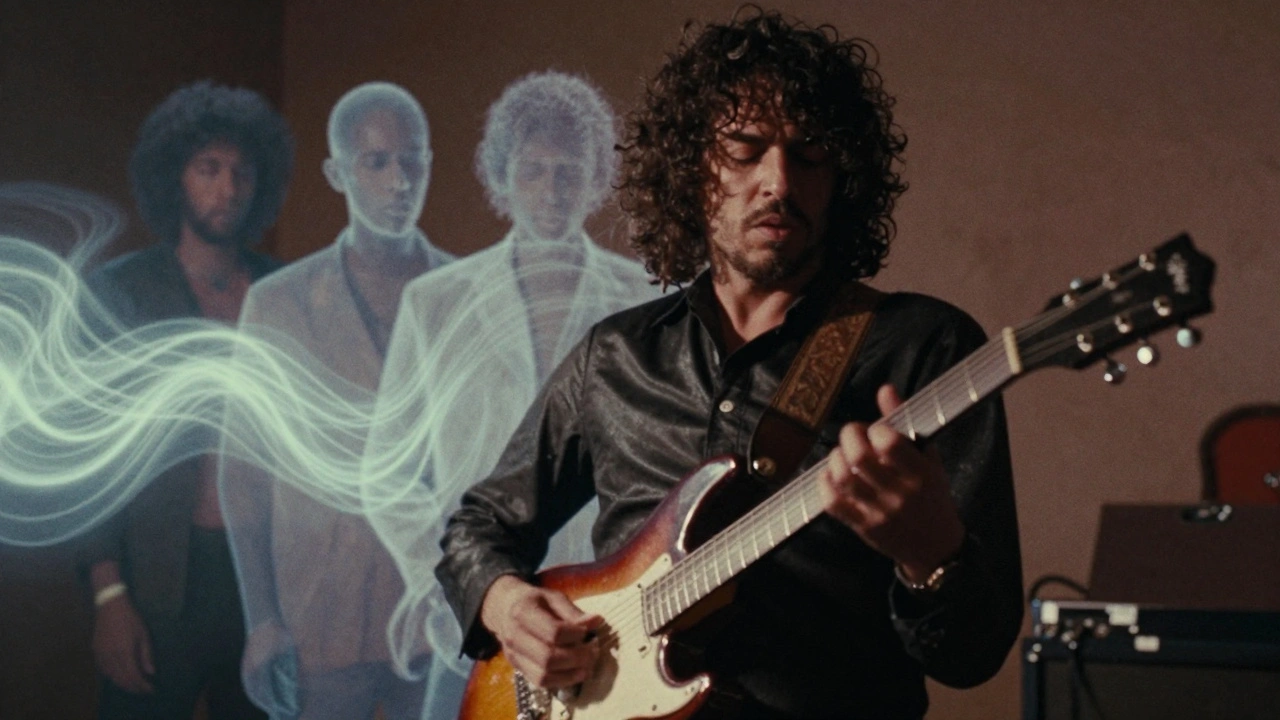
The goal isn’t to replicate. It’s to absorb. To internalize. To let the ghosts of the old players speak through you.
Common Mistakes to Avoid
- Using too much pressure on the slide-this kills sustain and causes buzzing
- Not muting unused strings-this turns a clean solo into a muddy mess
- Ignoring dynamics-blues slide isn’t loud all the time. Sometimes the whisper is louder than the scream
- Playing every note with the same intensity-real players shape phrases like sentences
What Gear to Use
You don’t need fancy gear, but you need the right tools:
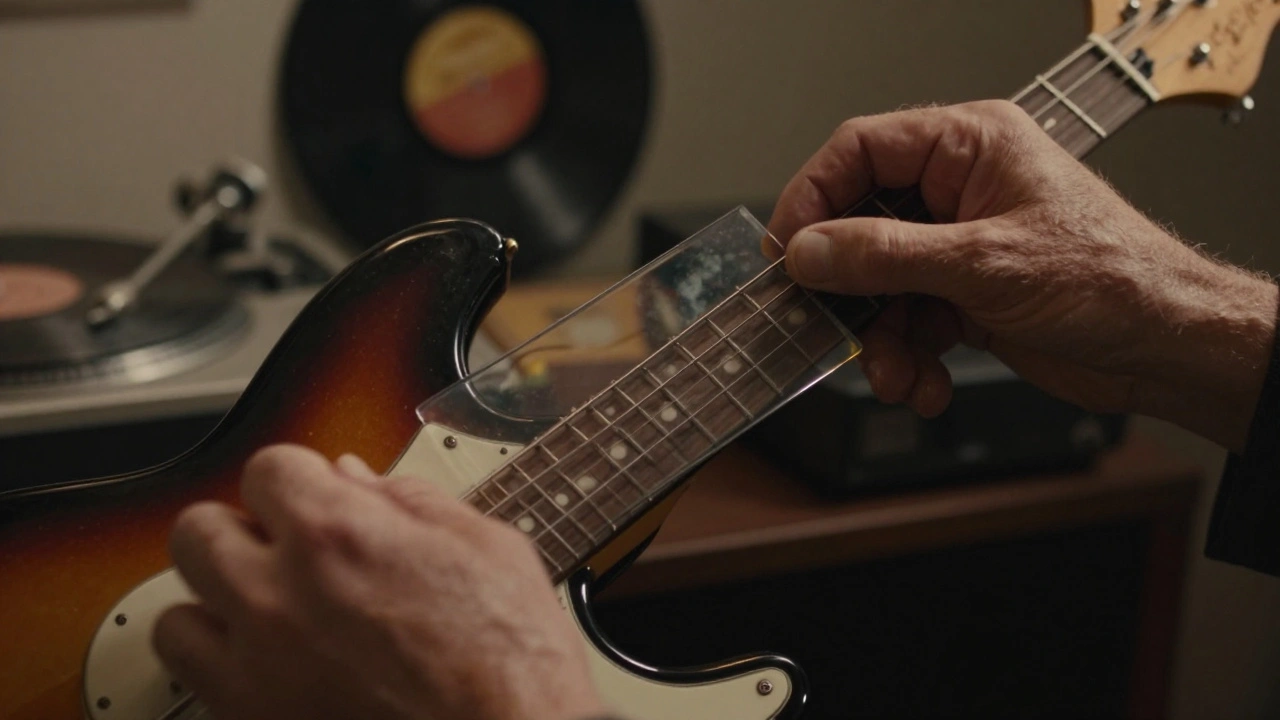
- Slide: Glass for smoother tone, steel for bite. Try a 3/4" diameter-fits most fingers.
- Strings: Medium gauge (.012-.056) for better sustain and tension. Light strings buzz too easily.
- Amplifier: A clean tube amp (like a Fender Princeton) lets the slide sing. Overdrive is fine, but don’t bury the note.
- Position: Play near the bridge for twang, near the neck for warmth. Move around. Let the tone change.
Final Thought: The Slide Doesn’t Play Itself
It’s not about the tool. It’s about the hand behind it. The slide is just a conductor. The emotion comes from your wrist, your ear, your heart.
Listen to the old records. Not just to learn licks-but to feel the silence between the notes. That’s where the blues lives.
Do I need to use a bottleneck to play slide guitar?
No. A bottleneck is the most common tool, but you can use a metal pipe, a glass bottle, a lighter, or even a knife. What matters is the material and how it feels on your finger. Glass slides give a smoother, warmer tone. Steel slides are brighter and louder. Experiment. The best slide is the one that lets you play what you hear.
Can I transcribe slide solos in standard tuning?
Yes, but it’s harder. Most classic blues slide solos were written for open tunings, which let you play full chords with one slide. In standard tuning, you have to fret notes under the slide, which limits fluidity. If you’re just starting, use open E or open D. Once you’re comfortable, you can adapt licks to standard tuning-but don’t start there.
How do I stop my slide from buzzing?
Buzzing usually comes from two things: too much pressure or poor muting. Lighten your grip on the slide-just enough to keep it from rattling. Also, use your left-hand fingers to mute strings behind the slide. Even your palm can help. Practice with the amp off and listen for rattles. If it buzzes without amp, it’ll buzz with amp.
What’s the difference between slide guitar and bottleneck guitar?
There’s no difference. "Bottleneck" just refers to the tool used-a glass or metal tube originally made from a bottleneck. "Slide guitar" is the broader term for the technique. All bottleneck playing is slide guitar, but not all slide guitar uses a bottleneck (some use metal or other objects).
How long does it take to learn to transcribe slide solos?
It depends on how much you listen. If you spend 20 minutes a day transcribing one lick, you’ll start hearing nuances in a week. In a month, you’ll be able to pick out licks from any blues recording. The real skill isn’t playing-it’s hearing. Train your ear first. Your fingers will follow.