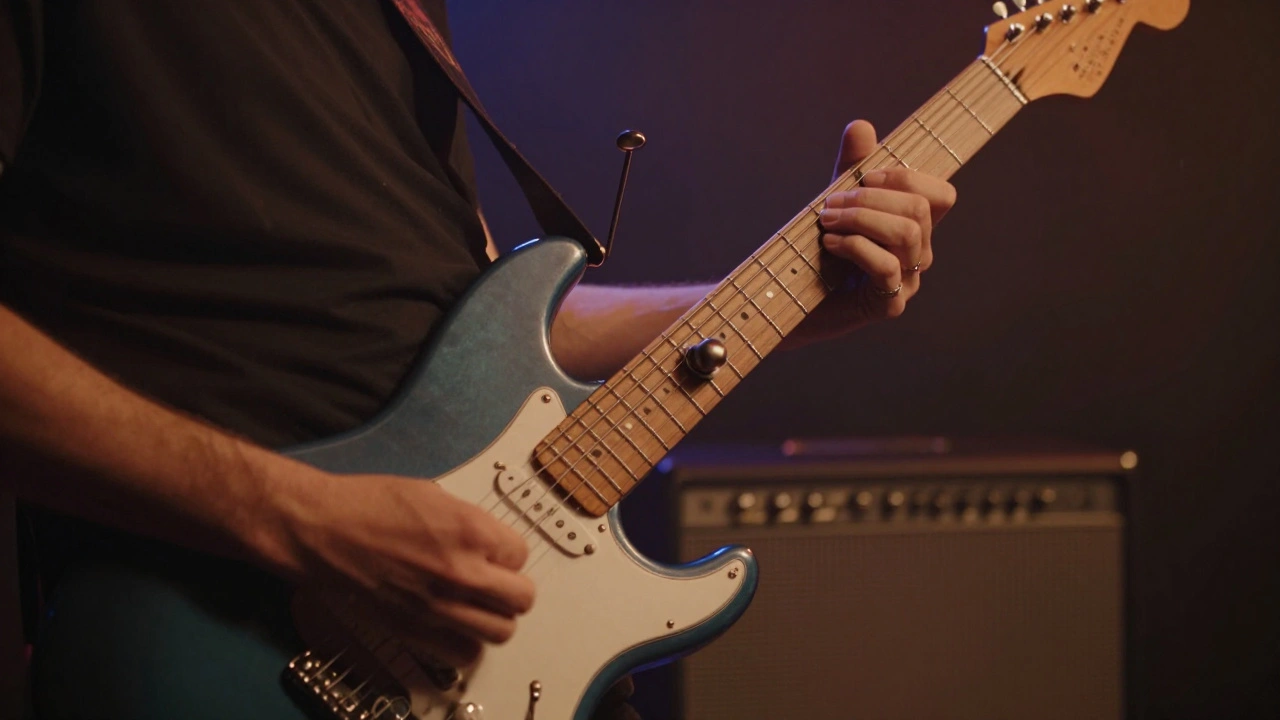
Quick Wins for Your Soloing
- Stop thinking in scales and start thinking in chord tones.
- Use the 'Call and Response' method to create a narrative.
- Focus on the transition between the IV and V chords to build tension.
- Master the micro-tone slide (the slight dip) for emotional depth.
The 12-Bar Blues Roadmap
Before you can improvise, you have to respect the architecture. A standard 12-Bar Blues progression is essentially a loop of three chords: the I, the IV, and the V. In the key of A, that's A, D, and E. If you just play an A minor pentatonic scale over the whole thing, you'll sound fine, but you'll sound like a beginner. To move past that, you need to change your target notes as the chords shift.
When the progression moves from the I chord (A) to the IV chord (D), your target notes should shift too. Instead of hovering around the root A, try sliding up to the D note on the 7th fret of the G string. This creates a sense of resolution. If you stay on the A while the band is playing a D chord, it creates a tension that works, but resolving to the D makes the music feel like it's breathing.
The Bottleneck Slide Framework
Most pros use a Bottleneck slide, which is a tapered glass or metal pipe. The key to using this effectively is the 'closed-position' versus 'open-position' approach. In open position, you're playing the strings without pressing them down, letting the slide do the work. This is where the magic of the Delta Blues sound comes from.
Try this: start your phrase on the 5th fret of the G string (C), then slide up to the 7th (D) right as the IV chord hits. This is a classic move. But here is the pro tip: don't just land on the 7th. Hit the 6.5 fret-just a hair sharp of the 6th-and slide quickly into the 7th. That "scoop" is what makes a slide guitar sound human and vocal rather than like a siren.
| Chord | Primary Target Note | Slide Position (G String) | Emotional Feel |
|---|---|---|---|
| I (A7) | A | 2nd or 14th Fret | Home / Stable |
| IV (D7) | D | 7th Fret | Moving / Searching |
| V (E7) | E | 9th Fret | Tense / Peak |
Using the Blues Scale as a Safety Net
When you're feeling lost, the Blues Scale is your best friend. This is the minor pentatonic scale with an added "blue note" (the flattened 5th). On a slide, the blue note is dangerous. If you hang on it too long, it sounds like a mistake. If you use it as a passing tone, it sounds like soul.
For example, in the key of A, the blue note is Eb. If you're sliding from the 4th fret to the 5th on the G string, just barely touch that space in between. It creates a momentary dissonance that screams for resolution. Think of it like a question that needs an answer. The answer is always the root note or the fifth.

Call and Response Techniques
The biggest mistake slide players make is playing a continuous stream of notes. Slide guitar is a conversation. Imagine you're telling a story. The "Call" is a short musical phrase-maybe a slide from the 3rd to the 5th fret. Then, you leave a gap. Silence is an instrument. The "Response" is the answer to that phrase, often lower in pitch or mirroring the first phrase with a slight variation.
Try this exercise: play a phrase on the high E string, then answer it with a phrase on the B string. This vertical movement across the strings keeps the listener engaged. If you stay on one string, the melody becomes predictable. By jumping across strings, you mimic the way a singer moves through different octaves.
Managing Intonation and Tuning
You can have the best framework in the world, but if your guitar is in standard tuning, slide playing is a nightmare. You'll constantly be fighting the frets to find the right pitch. This is why Open G Tuning (D-G-D-G-B-D) or Open E Tuning (E-B-E-G#-B-E) are the gold standards. In Open G, the guitar is already a chord. This allows you to slide across multiple strings and maintain a harmonic foundation without worrying about hitting a "wrong" note.
If you're using Open G, the 12-bar blues feels different. Your I chord is just barring the strings at the 0 fret (open). Your IV chord is at the 5th fret, and your V chord is at the 7th. This symmetry makes the improvisation framework much easier to visualize because the intervals are consistent across the fretboard.
Common Pitfalls and How to Fix Them
One common issue is the "clanking" sound. This happens when the slide hits the frets too hard. To fix this, keep your slide slightly angled-not perfectly flat against the frets. Also, apply slightly less pressure than you think you need. The slide should glide, not grind.
Another trap is over-using the vibrato. A wide, slow vibrato on a slide can sound amateur. Instead, try a fast, narrow shake. It adds urgency to the note without making it sound like the guitar is shaking apart. Focus on the note's attack, then apply the vibrato only after the note has fully bloomed.
Do I need a specific guitar for slide playing?
You don't need a specialized slide guitar, but a resonator guitar is popular because it has more natural sustain and a metallic bite. However, any electric or acoustic will work if you raise the action slightly so the strings don't buzz against the frets when the slide is applied.
Glass vs. Metal slides: which is better?
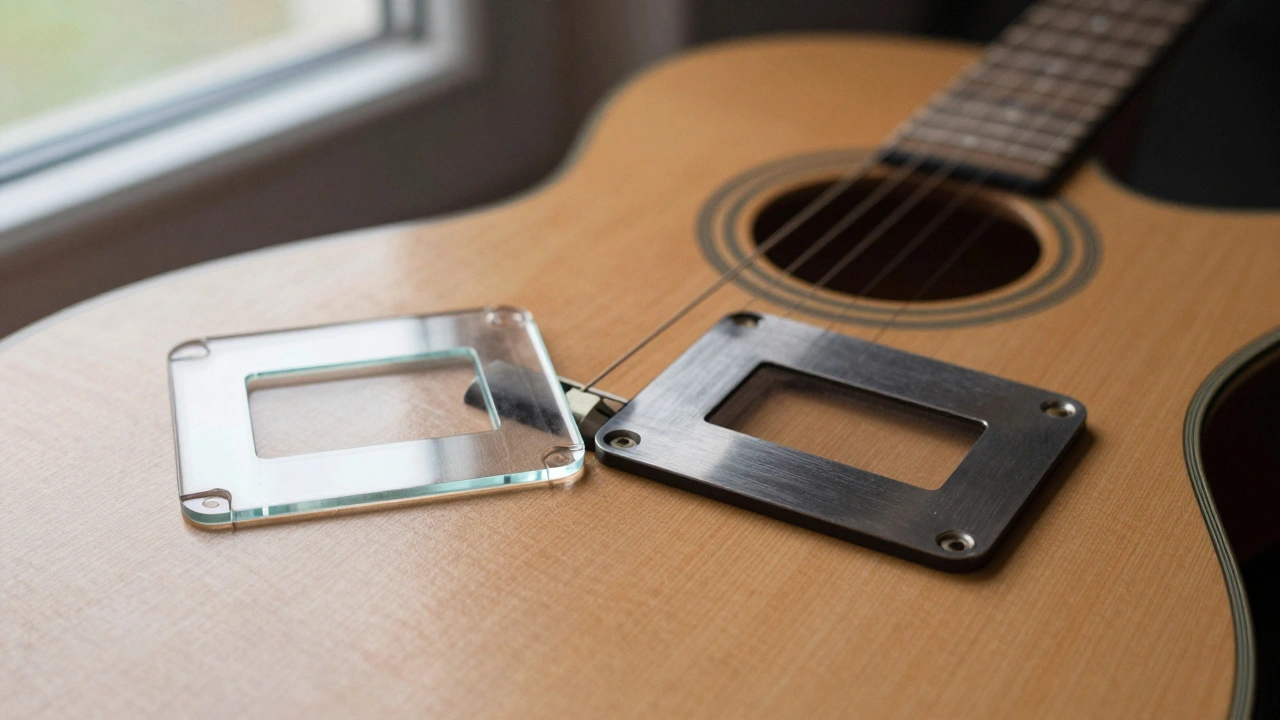
Glass slides provide a warmer, mellower tone that blends well with the guitar's natural sound. Metal slides (brass or stainless steel) are louder, brighter, and have more sustain. If you're playing loud electric blues, go with metal; for acoustic Delta styles, glass is usually the way to go.
How do I stop the slide from sounding "out of tune"?
Intonation is the hardest part of slide. The trick is to practice slowly with a tuner. Find exactly where the note lives-it's often slightly behind the fret wire. Use your ears to "lean into" the note until it locks in with the backing track.
Can I use a slide in standard tuning?
Yes, but it's much harder. You'll be limited to playing single-note lines or very specific chord shapes. For full, rich chords, you'll need to switch to Open G or Open E tuning, which allows the slide to act as a movable capo.
What is the best finger to put the slide on?
Most players use the ring finger. This allows you to use your index and middle fingers to fret notes or dampen strings, giving you more control over the harmony and rhythm while the slide handles the melody.
Next Steps for Your Practice
If you're just starting, spend a week doing nothing but the "Chord-to-Slide Target Map." Don't try to play fast; just try to land on the root of the IV and V chords perfectly. Once that feels natural, start introducing the call-and-response gaps. If you find yourself getting bored, try shifting the key from A to E-the physics of the fretboard stay the same, but the mood changes.
For those who have the basics down, try mixing "fretted" and "slide" notes in the same phrase. Play a fretted note on the B string and immediately slide into the next note on the E string. This hybrid style creates a professional, layered sound that mimics the complexity of a horn section in a big band blues outfit.