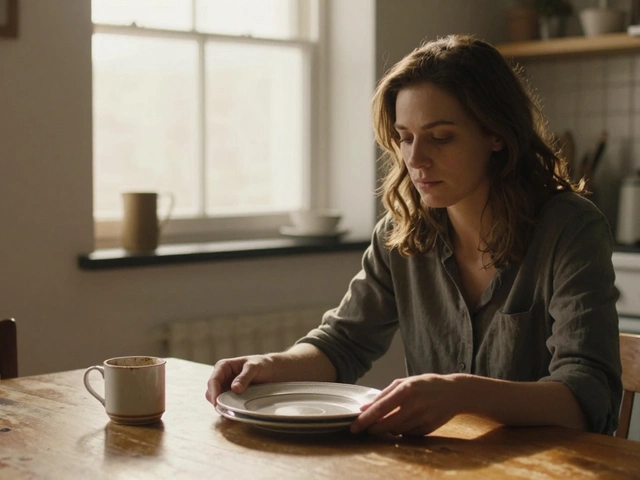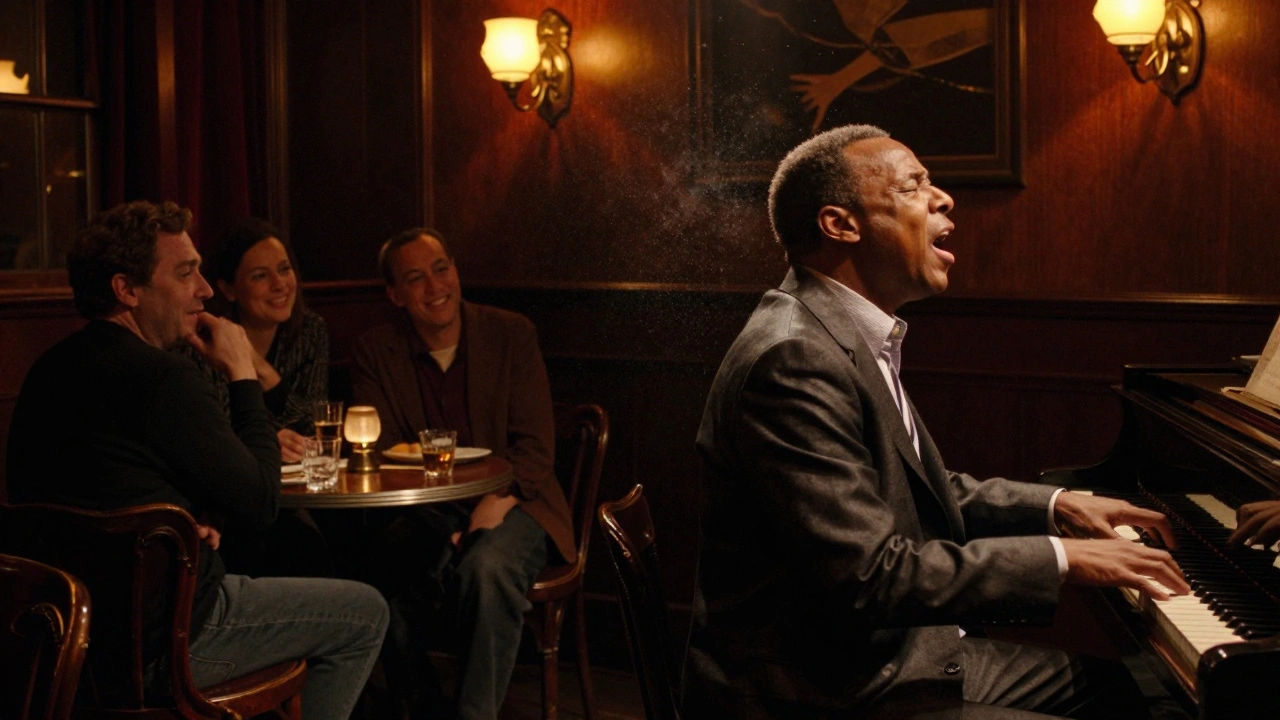
Robert Hill doesn’t just sing a song-he lives it. For over a decade, his multi-night stands have become legendary in jazz clubs from New Orleans to Chicago. Unlike most vocalists who play one-night gigs, Hill books seven, ten, even fifteen consecutive nights in the same venue. And each night, the show feels different. Not because he’s improvising wildly, but because he’s digging deeper.
What Makes a Multi-Night Stand Different?
A typical jazz gig lasts 90 minutes. The setlist? Usually the same five standards, a couple of originals, and a cover or two. Audiences come, clap, leave. But Hill’s multi-night stands break that mold. He doesn’t repeat. He evolves.
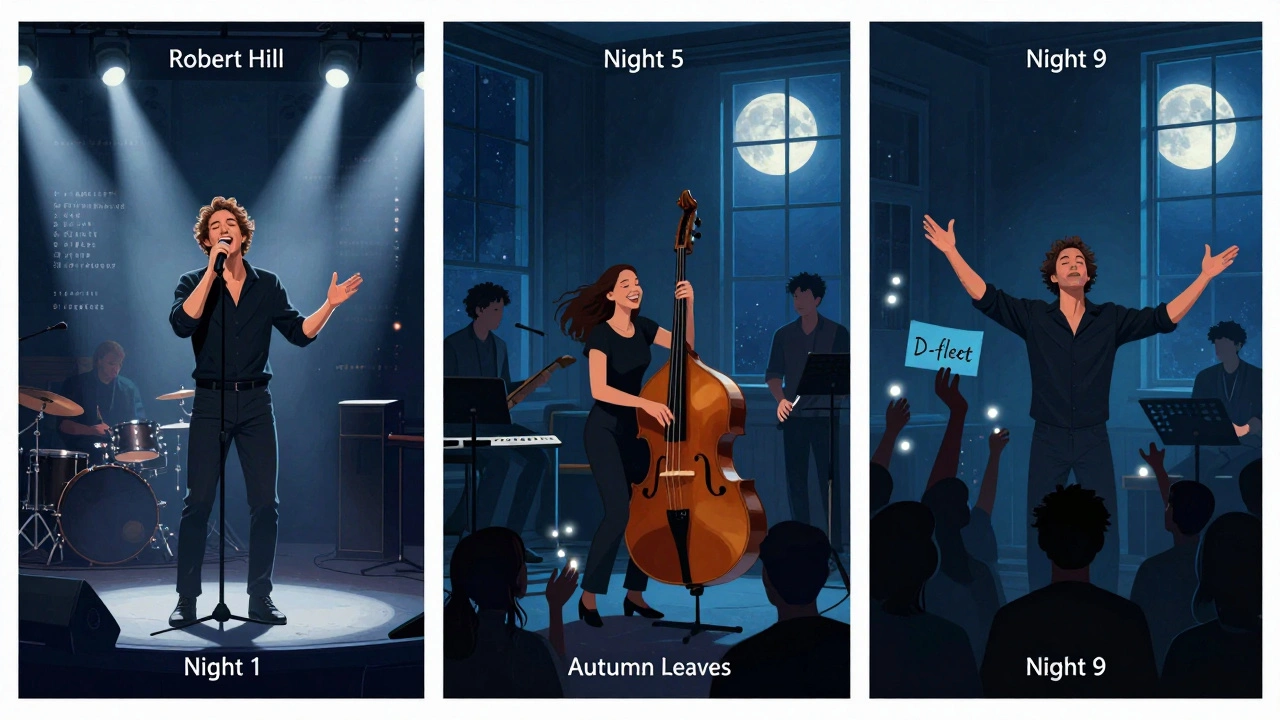
On night one, he might open with ’Round Midnight in a slow, whispery ballad. By night five, he’s turned it into a swinging, syncopated duet with his pianist. The rhythm section adapts. The audience notices. People start returning-not just for the music, but to see how it changes.
This isn’t just about stamina. It’s about trust. Hill builds a relationship with the room. Regulars know when he’ll stretch a phrase. They lean in when he pauses before a high note. A bartender at The Green Mill in Chicago says regulars come in and say, ‘What’d he do to My Funny Valentine tonight?’ They don’t just listen-they participate.
How Robert Hill Structures His Extended Runs
Hill doesn’t wing it. He plans. Each multi-night stand has a hidden structure.
- Nights 1-2: Warm-up. He sticks close to familiar arrangements, letting the band settle in and the crowd get comfortable.
- Nights 3-5: Exploration. One new arrangement per night. Maybe a bossa nova version of Autumn Leaves. Or scatting over a 7/4 groove on Stella by Starlight.
- Nights 6-8: Risk. He drops the safety net. No setlist. He calls songs on the fly, sometimes asking the audience to name a key. He once did a full set based on audience shouts: ‘D-flat,’ ‘minor,’ ‘ballad.’
- Night 9+: Synthesis. He weaves threads from earlier nights into something new. A melody from night three returns in the finale, now harmonized with a line from night one. It’s like a jazz novel with chapters.
His band knows this rhythm. Bassist Lena Cruz says, ‘We don’t rehearse for the next show. We rehearse for the whole run. We’re building a living thing.’
Why This Works in a Streaming World
In 2026, music is everywhere. Playlists. AI-generated covers. Algorithm-driven recommendations. But Hill’s extended runs thrive because they’re the opposite of algorithmic.
There’s no replay button. No skip. No ‘like’ button. You have to be there. And you have to show up more than once.
He’s not selling tickets-he’s selling presence. People who attend his 10-night stand say they feel like they’re witnessing something that won’t exist again. Not because it’s rare-but because it’s shaped by time, by repetition, by the quiet alchemy of a room that grows quieter each night.
One fan, a retired saxophonist from Minneapolis, came every night for 12 nights. He didn’t speak. Just sat in the same seat, sipping bourbon. On the final night, he stood up, walked to the mic, and said, ‘You made me remember why I quit.’ He didn’t say why. Hill didn’t ask. They just nodded.
The Role of the Venue
Hill doesn’t play arenas. He chooses intimate spaces-clubs with low ceilings, worn-in chairs, and no stage barriers. Places where you can hear the creak of a stool, the scrape of a shoe, the breath before a note.
He’s done multi-night stands at:
- The Green Mill (A historic jazz club in Chicago, opened in 1907, known for its intimate layout and acoustics)
- The Village Vanguard (New York City’s iconic jazz venue, famous for live recordings and loyal audiences)
- The Jazz Café (London’s underground jazz spot, with a crowd that travels from across Europe for extended runs)
- Snug Harbor (New Orleans jazz club with a balcony that overlooks the band, where Hill once performed a whole set with no lights on)
These venues aren’t just locations-they’re collaborators. The acoustics, the lighting, even the way the floor creaks, become part of the performance.
How It Changes the Musician
Hill says his voice changes over a 10-night run. Not in pitch. In texture.
‘The first night, I’m trying to prove something,’ he told JazzTimes in 2025. ‘By night seven, I’m not trying to prove anything. I’m just listening.’
His phrasing gets looser. His dynamics widen. He starts leaving space-long silences between phrases-because he knows the audience will fill it with their own breath.
Drummer Marcus Lee, who’s played with Hill for eight years, says, ‘He doesn’t play to the crowd. He plays to the silence between the crowd. That’s what makes it feel sacred.’
Why This Matters Now
Live music is often treated as a commodity. Ticket sales. Merch. Social media clips. But Hill’s model proves something deeper: that connection can’t be packaged. It can’t be streamed. It can only be lived.
His multi-night stands are a quiet rebellion. They say: Attention is the new currency. Presence is the real performance.
Younger musicians are starting to take notice. Jazz students at Berklee now apply for ‘extended residency’ programs modeled after Hill’s format. One 21-year-old vocalist in Portland did a 7-night run at a bookstore café. She sold out every night. On the last night, she didn’t sing a note. She read poetry. The crowd didn’t leave. They stayed until 2 a.m.
Hill doesn’t teach workshops. He doesn’t post tutorials. But his shows are the lesson.
What You Can Learn From His Approach
You don’t need to be a jazz singer to use this idea.
Artists, writers, even teachers can borrow from his method:
- Repeat, but evolve. Don’t just do the same thing over. Change one element each time.
- Let the audience shape the experience. Their energy becomes part of the work.
- Don’t rush to perfect it. Let it breathe. Let it get weird.
- Choose space over scale. A small room with regulars beats a big stage with strangers.
Hill’s run isn’t about longevity. It’s about depth. He doesn’t play longer. He plays deeper.
Why does Robert Hill do multi-night stands instead of touring?
Hill avoids touring because he believes the magic happens in repetition, not movement. Touring means new rooms, new crowds, new energy every night. He wants the opposite: a consistent space where both he and the audience grow together. Over ten nights, the room becomes a living instrument. Touring can’t replicate that.
How does Robert Hill choose his setlist for a multi-night stand?
He doesn’t choose it all upfront. He starts with a core of 12 songs he knows inside out. Each night, he swaps one out for a new arrangement, sometimes based on the crowd’s reaction the night before. By night five, he’s introduced five new versions. By night eight, he’s mixing elements from all of them. On the final night, he rarely uses the original setlist-he plays a mosaic of what evolved.
Do audiences pay more for multi-night stand tickets?
No. He charges the same as any other club show-usually $20-$25 per night. But he offers a ‘stand pass’ for the full run at a 20% discount. People who buy it often say they feel like they’re part of something exclusive. It’s not about money-it’s about commitment.
Has Robert Hill ever had a failed multi-night stand?
Once. In 2022, he booked a 10-night run in a new venue that turned out to have terrible acoustics. The sound was muddy. The crowd stayed away. He canceled the last three nights. He says it was the hardest thing he’s ever done. But he learned: the space matters as much as the music. He hasn’t booked a venue he hasn’t personally tested since.
What’s the longest multi-night stand Robert Hill has ever done?
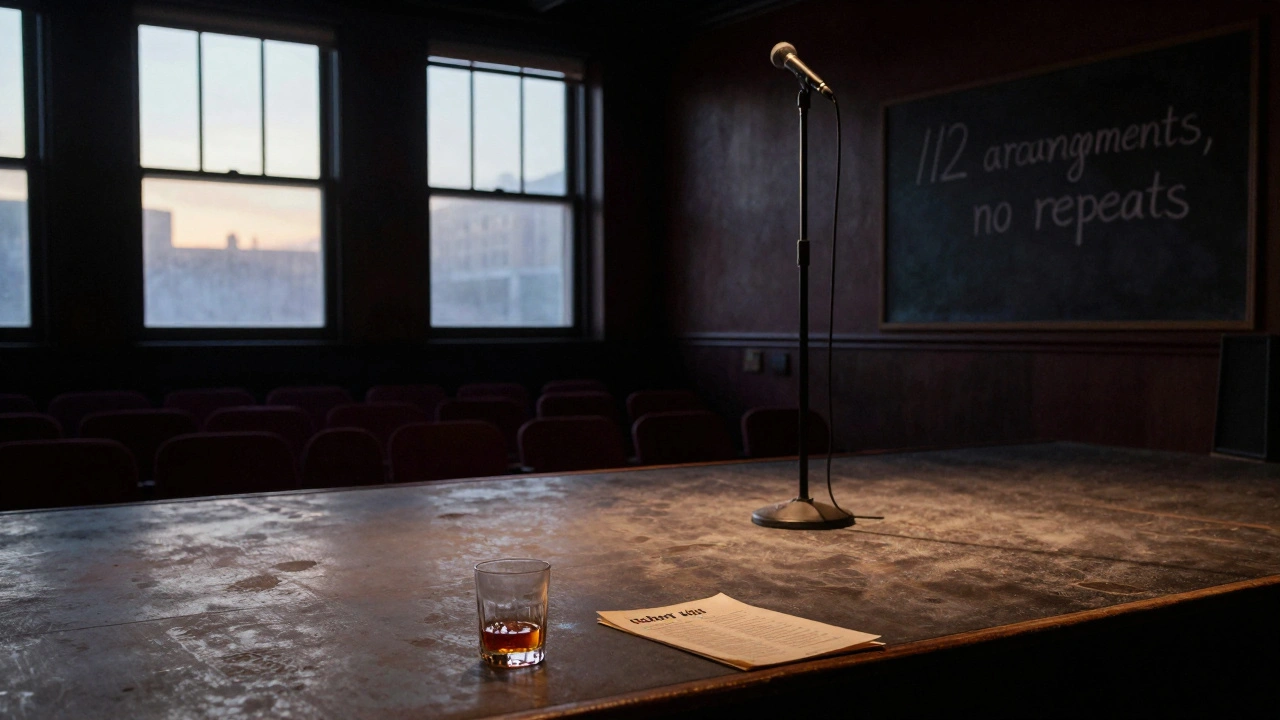
Fifteen nights at The Village Vanguard in 2024. He performed 112 unique arrangements over that stretch. No song was repeated in the same form. The venue recorded the final night and released it as a live album-15 Nights-which became a cult favorite among jazz collectors. Critics called it ‘a masterclass in patience.’