Getting your song onto a popular playlist isn’t luck. It’s a strategy. Thousands of artists pitch to Spotify, Apple Music, and YouTube playlists every week. Most never hear back. The ones who do? They didn’t just send a link. They built a relationship, showed they understood the curator’s audience, and made it easy to say yes.
Know the playlist before you pitch
You wouldn’t apply for a job without reading the job description. Yet so many artists send the same pitch to every playlist they find. That’s why 90% of pitches get ignored.
Start by listening to at least 10 songs from the playlist you want to get on. Not just the top tracks. Look at the deep cuts. What’s the vibe? Is it lo-fi chill? High-energy workout? Late-night study sessions? Does the curator favor new indie artists or established names? Are the tracks mostly under three minutes? Is there a pattern in the BPM or key signature?
For example, if you’re pitching to "Chill Vibes Only" on Spotify, and every track has a slow tempo, acoustic guitar, and no vocals above C4, then your high-BPM trap song won’t fit-even if it’s well-produced. You need to match the sound, not just the mood.
Build a short, specific pitch
Your pitch should be under 150 words. No fluff. No paragraphs about your life story. No begging. Just facts, context, and respect for their time.
Here’s what works:
- Start with the playlist name: "Hi [Curator Name], I’m reaching out about your playlist "Workday Focus"."
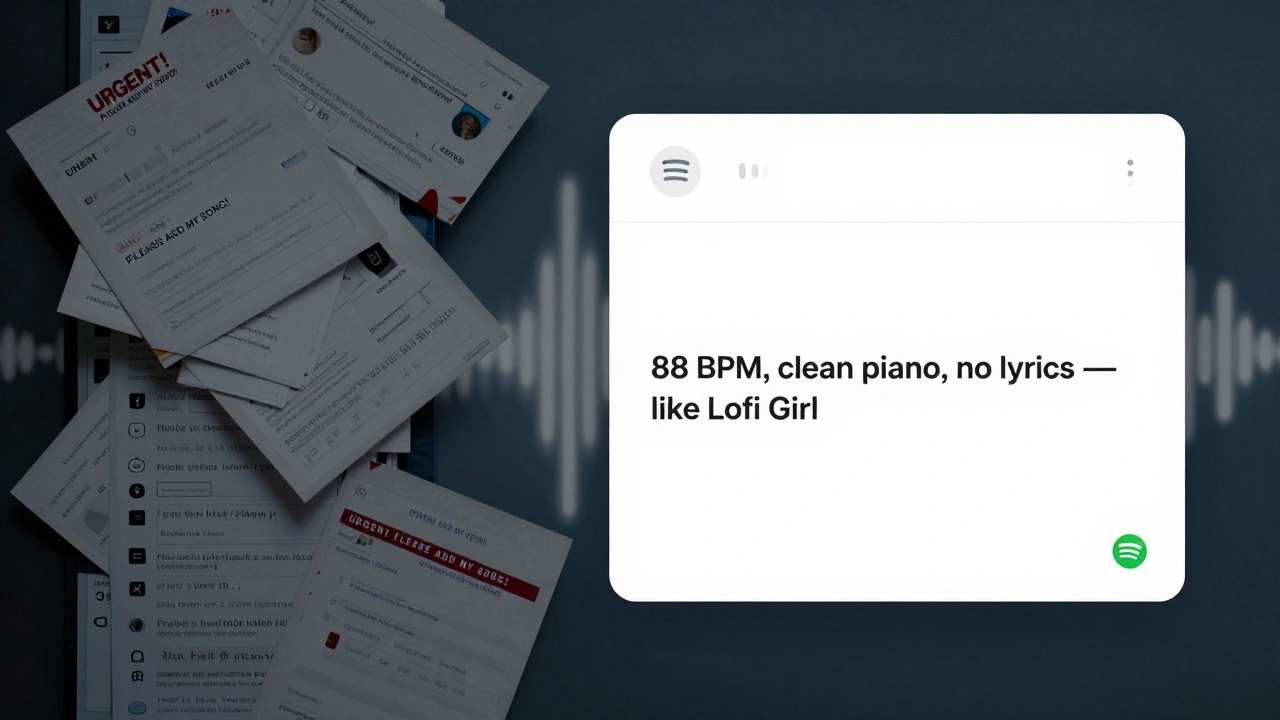
- State why it fits: "My track "Morning Commute" has a steady 88 BPM, clean piano loops, and no lyrics-exactly like the last three tracks you added from artists like Lofi Girl and The Zen Motel."
- Include a link: "You can stream it here: [Spotify link]."
- End politely: "Thanks for considering it. No pressure-just thought it might resonate."
That’s it. No "I’ve got 50K followers," no "This could go viral," no "Please help me." Curators hear that every day. They care about whether your song belongs on their list-not how much you need them.
Track your submissions
Keep a simple spreadsheet. Three columns: Playlist Name, Date Pitched, Response. Add a fourth if you get accepted: Release Date. This isn’t just organization-it’s data.
After 30 pitches, you’ll start seeing patterns. Do you get more responses from playlists with under 10K followers? Do tracks under 2:30 get accepted more often? Are curators who reply within 48 hours more likely to add you? This data becomes your playbook.
One artist in Portland tracked 142 pitches over six months. They found that playlists updated weekly had a 37% acceptance rate. Monthly ones? Just 8%. They shifted all their energy to weekly curators-and saw their monthly streams jump by 210% in three months.
Don’t pitch too early
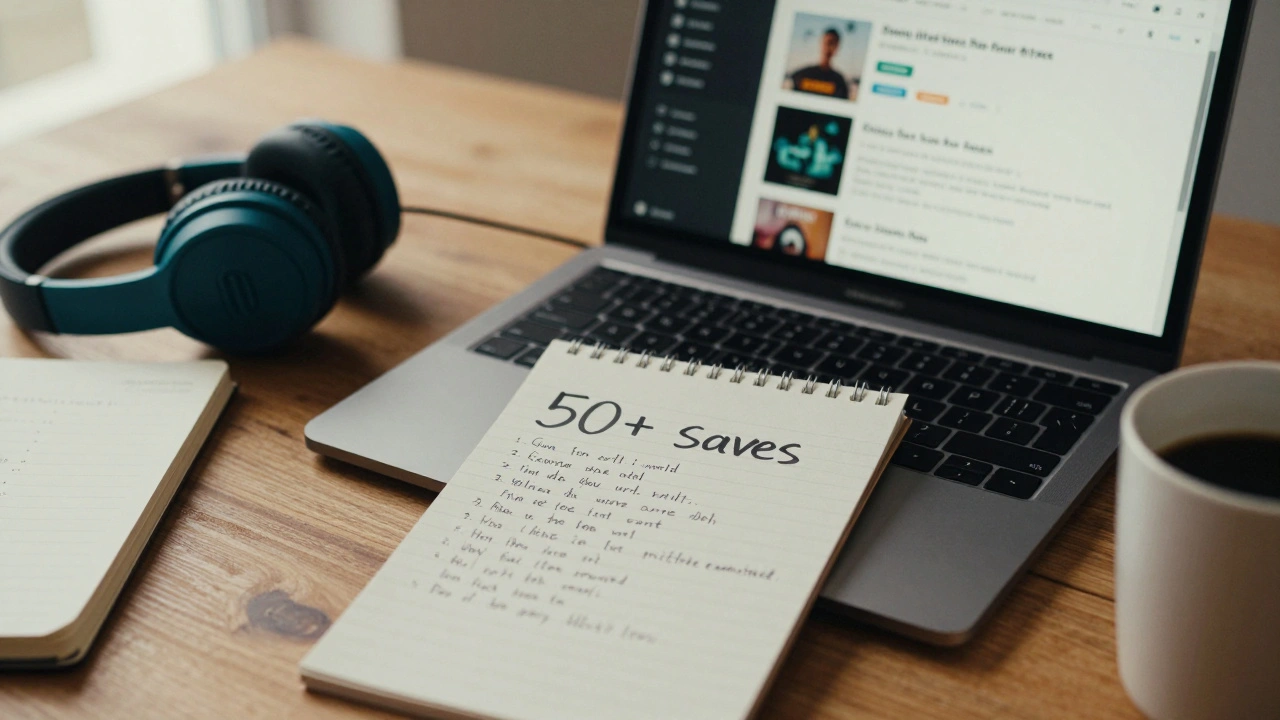
There’s a sweet spot: release your song at least 7 days before you pitch. Why? Because curators want to hear how it performs organically. If your song already has 50+ saves on Spotify or 100+ plays on YouTube, it signals real listener interest. It’s not just you saying it’s good-it’s real people clicking play.
Platforms like Spotify for Artists show you how many saves a track gets in its first week. If you’re under 20, wait. Add a few more promotional pushes. Send it to friends, post it on Reddit communities like r/IndieMusic, or share it in niche Facebook groups. Build a little traction. Then pitch.
Follow up once. That’s it.
If you haven’t heard back in 10 days, send one polite follow-up: "Just checking in on my pitch for "Chill Vibes Only". Still think it might be a good fit. No worries if it’s not the right time."
After that? Silence. No second follow-up. No tagging them on Instagram. No DMs. Curators get hundreds of messages. Pushing too hard burns bridges. They remember the artists who respect their time-and they’ll remember you when the next playlist update rolls around.
Use tools, but don’t rely on them
Tools like SubmitHub, Groover, and PlaylistPush exist. They’re useful, but they’re not magic. SubmitHub charges $5 per pitch. If you send 50 pitches a month, that’s $250. And acceptance rates? Around 12-15%.
Compare that to direct pitches: artists who pitch manually, with personalized messages, have acceptance rates of 20-30%. Why? Because you’re not just paying to be seen-you’re showing you’ve done the work.
Use tools to find curators, not to replace your voice. Find the playlist, go to their profile, read their bio, find their email (often listed), and send it yourself.
Play the long game
Getting on one big playlist won’t change your career. Getting on 10 small ones? That’s how you build momentum.
Think of it like this: a playlist with 5,000 followers that adds you once might give you 200 streams. A playlist with 20,000 followers that adds you once might give you 800. But if you get added to five playlists with 5,000 followers each? That’s 1,000 streams. And if you keep getting added to new ones every month? You’re not a one-hit wonder-you’re a steady grower.
One artist in Portland added 37 tracks to niche playlists over 18 months. Not one had over 50K followers. But combined, those playlists drove over 400,000 streams. They didn’t go viral. They grew quietly, consistently, and they still get new listeners every week.
What curators really want
They don’t want you to be famous. They want their playlist to feel alive, fresh, and reliable. They want to be the first to discover something great. They want to look smart to their listeners.
If your song fits their sound, feels new, and doesn’t require them to explain it to their audience? You’re not asking for a favor. You’re giving them content they can be proud to share.
Stop treating playlist pitching like a lottery. It’s not. It’s a skill. Learn the rules. Play the game. And keep showing up.
How long does it take to get on a playlist after pitching?
There’s no fixed timeline. Some curators respond in 24 hours; others take 3-4 weeks. Weekly-updated playlists usually respond faster. If you haven’t heard back after 10 days, send one polite follow-up. After that, wait. Most curators update playlists in batches, so your song may sit in their queue for weeks before being reviewed.
Should I pay to get on playlists?
Paying for playlist placement is risky. Many paid services use fake followers or bots. Even legitimate ones like SubmitHub have low acceptance rates (12-15%) and cost money you could spend on better promotion. Direct pitching-personalized, free, and targeted-works better long-term. If you’re going to spend money, invest in targeted ads or a music PR campaign instead.
Can I pitch the same song to multiple playlists?
Yes, absolutely. Most curators don’t share lists or communicate with each other. Pitching to 20 different playlists at once is normal. Just make sure each pitch is tailored. Don’t copy-paste the same message. Even small changes-like mentioning a specific track they recently added-make a big difference.
Do playlist curators care about my follower count?
Not really. Most small to mid-sized curators care more about how the song fits their vibe than how many people follow you. A song with 500 Spotify saves from real listeners is more convincing than one with 50K followers who never stream. They’re looking for tracks that feel authentic and engaging-not ones with inflated stats.
What if my song gets rejected?
Rejection is part of the process. Don’t take it personally. Ask yourself: Did I match the sound? Was my pitch clear and respectful? Could I improve the track’s first 10 seconds? Use feedback (if given) to refine. Then move on. The next playlist might be the perfect fit. Persistence beats perfection.