You know that feeling when a guitarist bends a note just slightly sharp, and it hits you right in the chest? That’s not just technique; that’s emotion leaking through the wires. But here is the brutal truth about recording blues slide guitar: most home studios kill that vibe before it even reaches your hard drive. You might have a killer player and a vintage-style instrument, but if your signal chain is sterile or your room sounds like a bathroom, you’re losing the soul of the performance. This isn’t about getting the cleanest sound possible-it’s about capturing the grit, the breath, and the imperfections that make the blues feel human.
| Component | Best For Emotion | Why It Works | Potential Pitfall |
|---|---|---|---|
| Large Diaphragm Condenser | Vocal-like intimacy | Captures high-frequency detail and air movement | Can sound harsh on bright steel strings |
| Ribbon Microphone | Warmth and smoothness | Natural roll-off of harsh highs; figure-8 pattern rejects room noise | Low output requires high gain (noise risk) |
| Tube Preamp | Harmonic saturation | Adds subtle compression and warmth without squashing dynamics | Expensive; tubes need replacement over time |
| Small Room with Drapes | Tight, focused tone | Minimizes reflections; keeps focus on direct sound | Can sound "dead" if over-damped |
The Myth of the Perfect Clean Tone
Let’s get one thing straight immediately: clean is boring. When you listen to Robert Johnson or modern players like Derek Trucks, you aren’t hearing digital perfection. You’re hearing wood resonating against metal, fingers sliding across wound strings, and the ambient hum of a small venue. If you plug a guitar directly into an interface using a DI box, you get a signal, sure. But you lose the air. The emotion lives in the interaction between the string vibration and the surrounding atmosphere. A direct injection captures the electrical impulse; a microphone captures the physical event. To get that visceral reaction from your listener, you need to treat the guitar as an acoustic source first, even if it’s electric.
Choosing Your Microphone Weapon
Not all microphones are created equal, especially when dealing with the complex harmonics of a bottleneck slide. You have three main contenders, and each tells a different story.
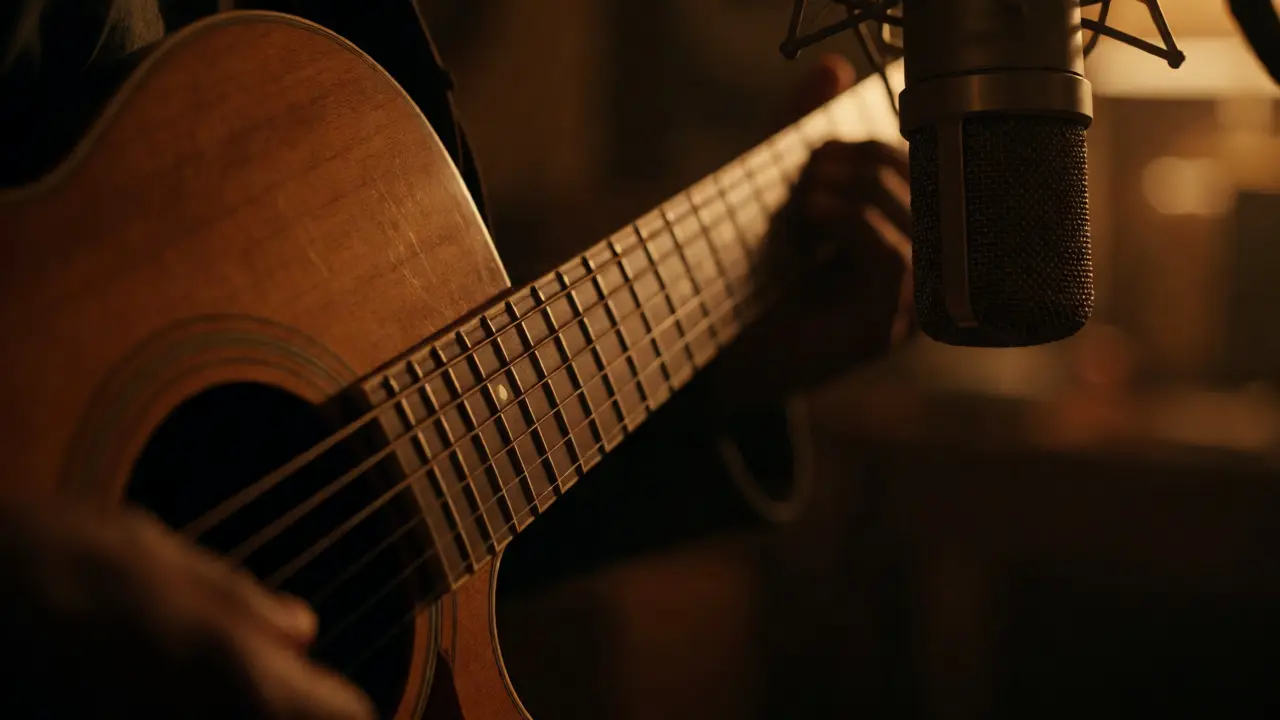
First up is the large-diaphragm condenser, such as the Neumann U87 or its affordable clones like the Rode NT1-A. These mics are sensitive beasts. They pick up everything, including the squeak of the slide and the player’s breathing. Placed about 6 to 12 inches off-axis from the sound hole (aiming toward the neck joint), they provide a detailed, hi-fi representation. Use this if you want the listener to feel like they are sitting in the lap of the guitarist. However, be careful-condensers can exaggerate the metallic fizz of steel strings, making the track sound thin or piercing on cheap headphones.
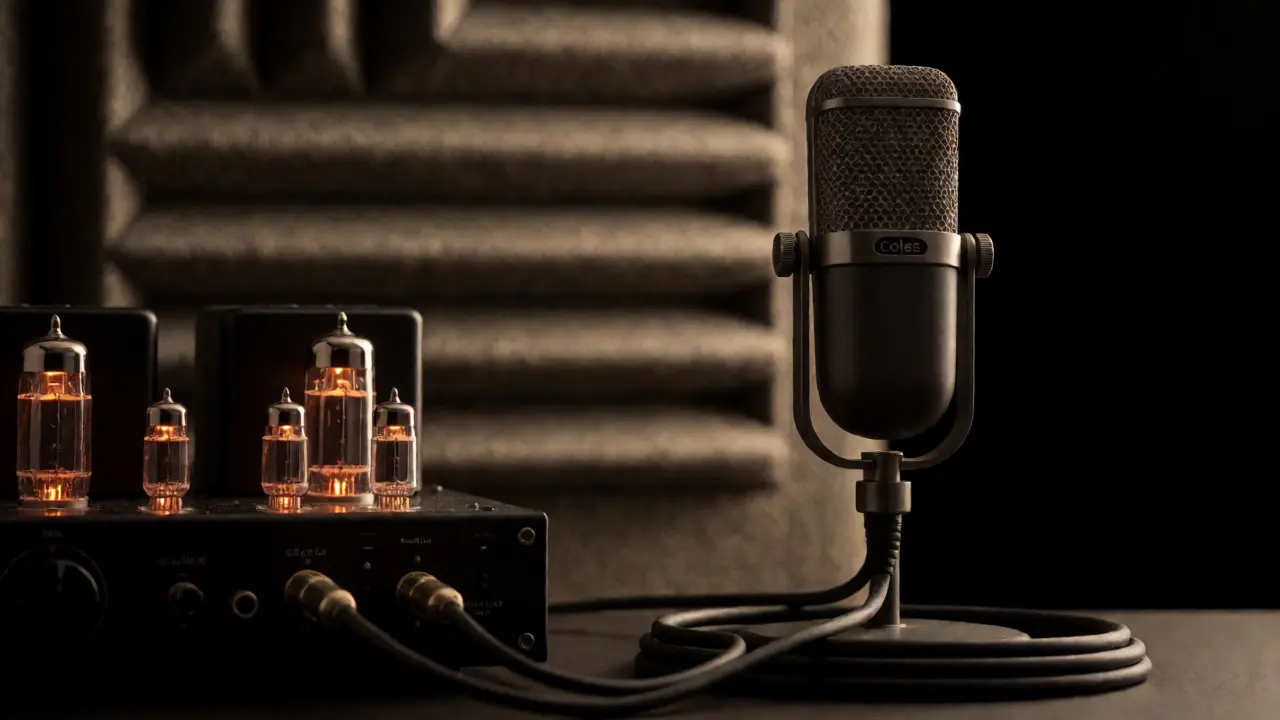
Next, consider the ribbon microphone, like the Royer R-121 or the classic Coles 4038. Ribbons are naturally darker and smoother. They roll off the harsh high frequencies where finger noise and string buzz live, while preserving the midrange body where the emotional weight of the blues resides. Because ribbons use a figure-8 polar pattern, they reject sound coming from the sides. This is brilliant for rejecting a noisy computer fan or a bad HVAC system in your control room. The trade-off? They are quiet. You will need serious gain from your preamp, which introduces the next critical piece of the puzzle.
Finally, don’t sleep on the dynamic Shure SM57. Yes, it’s the workhorse of rock guitars, but on a slide guitar, it adds a gritty, compressed character that sits perfectly in a mix. It lacks the top-end sparkle of a condenser, but it handles high sound pressure levels effortlessly. If your player digs in hard, an SM57 won’t distort prematurely, keeping the tone consistent throughout the take.
Preamps: Adding Color Before the Click
Once the mic has captured the sound, the preamplifier decides how much personality gets added to the signal. In the world of blues, transparency is often the enemy. You want texture.
A solid-state preamp like the Focusrite ISA One offers clarity and headroom. It’s great if you plan to add heavy distortion later in the box. But if you want the magic to happen on the way in, look at tube preamps. Tubes introduce even-order harmonic distortion, which our ears perceive as warm and pleasing. Pushing a tube preamp just into the edge of breakup acts as a natural compressor. It tames the transient spikes of a hard-struck slide note while sustaining the tail end of the bend. This creates a vocal-like sustain that feels incredibly expressive. Models like the Warm Audio WA12 or the Golden Age Project PRE-73 are excellent entry points for this kind of sonic coloring.
Remember, the goal isn’t to record the loudest signal possible. It’s to record the most musical one. Back off the input gain until the needle dances but rarely peaks. Let the dynamics breathe. If you squash the life out of the performance at the input stage, no amount of plugin magic can bring it back.
The Room Is Your Third Instrument
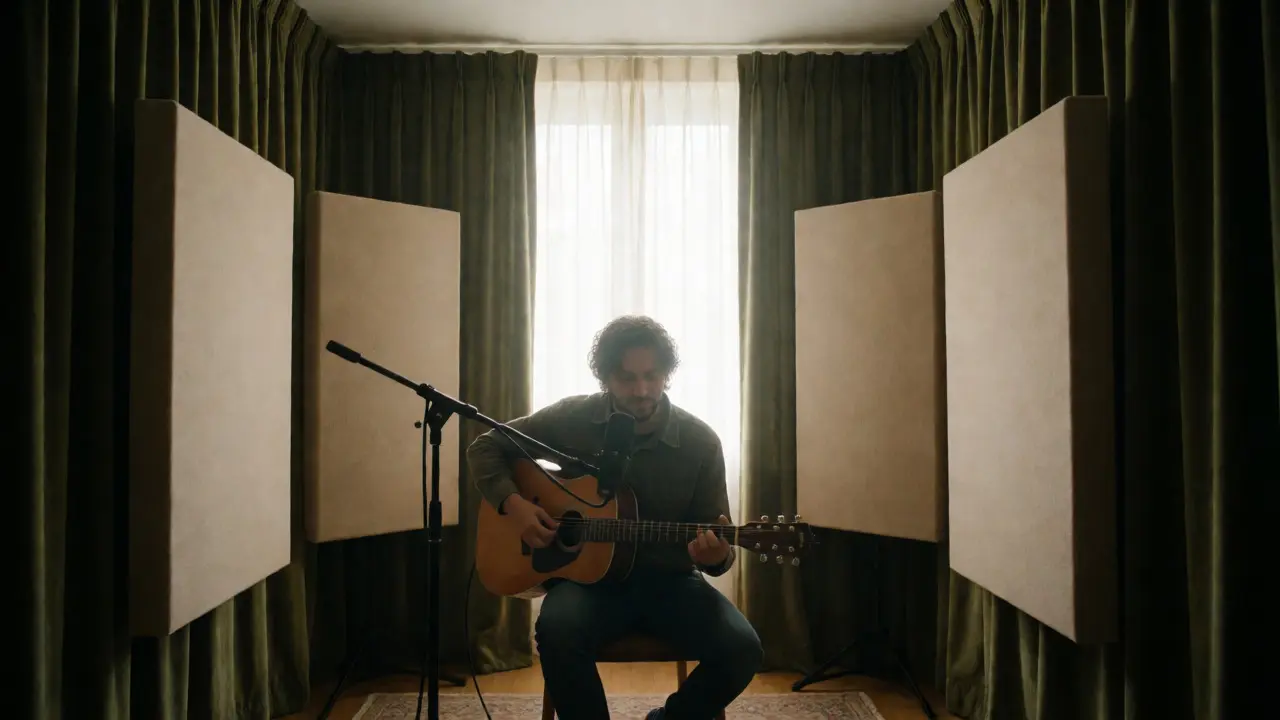
You’ve picked the mic. You’ve warmed up the preamp. Now, why does your recording still sound flat? Look around. Your room is adding-or subtracting-character. Blues thrives on intimacy. Huge, reverb-heavy rooms tend to wash out the intricate details of slide work, turning articulate notes into mud.
For most home studios, a smaller, treated space works best. You want a "dry" environment where the direct sound dominates, but not so dead that it feels unnatural. Hang heavy blankets or acoustic panels behind the guitarist to absorb early reflections. This tightens the low-mids, giving the guitar more punch. Conversely, if the recording sounds too boxy, try moving the player into a corner. Corners boost bass frequencies due to boundary reinforcement, which can add weight to a thin-sounding hollow-body guitar.
Experiment with distance. Moving the mic from 6 inches to 3 feet changes the balance between the direct string attack and the room’s ambient resonance. At close range, you hear the mechanics-the slide hitting the fretboard, the pick striking the string. At a distance, you hear the instrument as a whole entity. For blues, I usually start at 12 inches, aiming at the 12th fret. This spot balances the brightness of the bridge pickup area with the warmth of the neck, avoiding the boomy center of the sound hole.
Technique Matters More Than Gear
No microphone can fix a bad performance. The way the player interacts with the instrument dictates what the mic hears. Encourage your guitarist to play closer to the microphone than they might think necessary. Proximity effect boosts low frequencies, adding thickness to the tone. Have them experiment with angling the guitar away from the mic to reduce excessive string noise if needed.
Also, consider double-tracking. Recording two takes of the same part and panning them left and right creates a wide, immersive image. One take can be played with a heavier touch, the other lighter. The slight timing variations between the two performances create a natural chorus effect that feels alive and organic. This is far more effective than any stereo widener plugin.
Mixing Tips for Preserving the Vibe
When you move to the mixing stage, resist the urge to EQ everything flat. If you used a ribbon mic, you might need a high-shelf boost to open up the top end. If you used a condenser, a gentle dip around 2-4kHz can tame nasal frequencies. Use a tape emulation plugin to glue the tracks together. Tape saturation mimics the magnetic hysteresis of analog tape, rounding off transients and adding a subtle compression that ties the room tone and direct signal together seamlessly.
Reverb should be used sparingly. A short plate reverb with a decay time under 1.5 seconds can place the guitar in a believable space without drowning it. Send the guitar to a shared reverb bus along with the vocals to ensure they occupy the same acoustic environment. This cohesion makes the listener believe the singer and the guitarist were in the same room, enhancing the emotional connection.
Is a condenser or ribbon mic better for slide guitar?
It depends on the desired vibe. Condensers offer detail and air, suitable for intimate, vocal-like recordings. Ribbons provide warmth and smoothness, ideal for taming harsh steel string frequencies and reducing room noise. Many engineers blend both to capture the best of each.
Where exactly should I place the microphone?
Start 6-12 inches away from the guitar, aimed at the junction of the neck and body (around the 12th fret). Avoid pointing directly at the sound hole to prevent boominess. Adjust distance to control the amount of room sound versus direct string noise.
Do I need a tube preamp for blues guitar?
No, but it helps significantly. Tube preamps add harmonic saturation and natural compression, which enhances the sustain and warmth characteristic of blues. Solid-state preamps are cleaner and may require more processing in the mix to achieve similar warmth.
How do I reduce string squeak without killing the tone?
Use a ribbon mic or position a condenser slightly off-axis. Ribbon mics naturally roll off high frequencies where squeaks reside. Alternatively, apply a narrow EQ cut around 3-5kHz during mixing, but be careful not to remove the presence of the guitar.
Should I record slide guitar direct or with a mic?
Always prioritize the microphone for emotional impact. Direct signals lack the spatial context and mechanical nuances (like wood resonance) that make slide guitar feel human. If you must use DI, blend it with a mic signal to retain some air and depth.