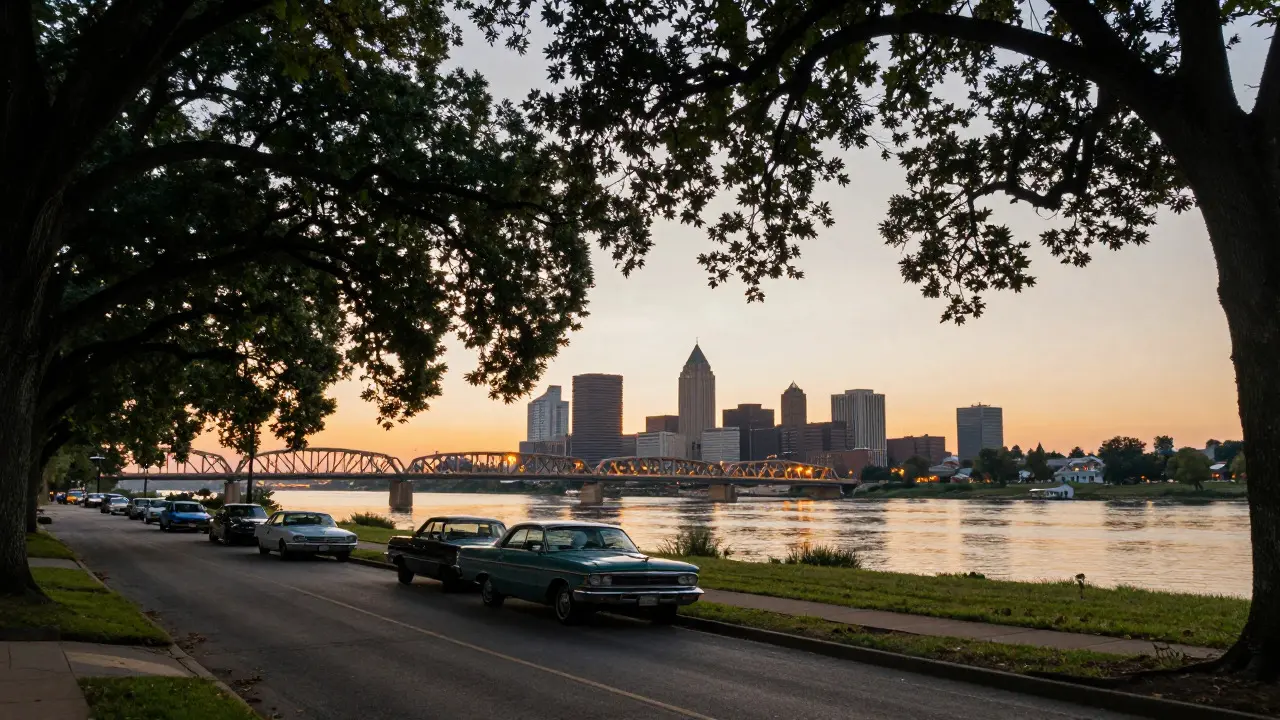
North Little Rock isn’t just a city; for Robert Hill is an American musician and producer whose formative years in this specific Arkansas community shaped his distinctive sound. While many artists cite broad regional influences like "the South" or "the Delta," Hill’s story is anchored in the precise streets, schools, and social dynamics of North Little Rock during the mid-20th century. Understanding where he came from helps explain why his later work feels both deeply local and universally resonant.
You might wonder why a small suburb across the river from Little Rock matters so much to an artist’s development. The answer lies in the unique cultural crossroads that defined the area. It wasn't just about listening to the radio; it was about living in a space where different musical traditions collided daily. This environment created a specific type of sonic palette that Hill would spend decades refining.
The Geography of Sound in North Little Rock
To understand Robert Hill’s early musical roots, you have to look at the map. North Little Rock sits directly opposite Little Rock, connected by several bridges. This geographic proximity meant that residents didn't live in isolation. They crossed over for work, school, and entertainment constantly. For a young Hill growing up in the 1950s and 60s, this meant access to two distinct but overlapping scenes. You had the more established, commercial venues in downtown Little Rock, and the tighter-knit, community-driven gatherings in North Little Rock neighborhoods.
This dual exposure was crucial. In the city proper, you found the big-name acts and the polished R&B sounds coming out of Memphis and Chicago via radio waves. But back in North Little Rock, the music was rawer, more immediate, and often rooted in local church traditions and neighborhood jams. Hill absorbed both. He learned the structure of professional performance from the city side and the emotional authenticity from the home side. This balance became a hallmark of his later production style, where technical precision meets soulful imperfection.
Family Influence and Home Recordings
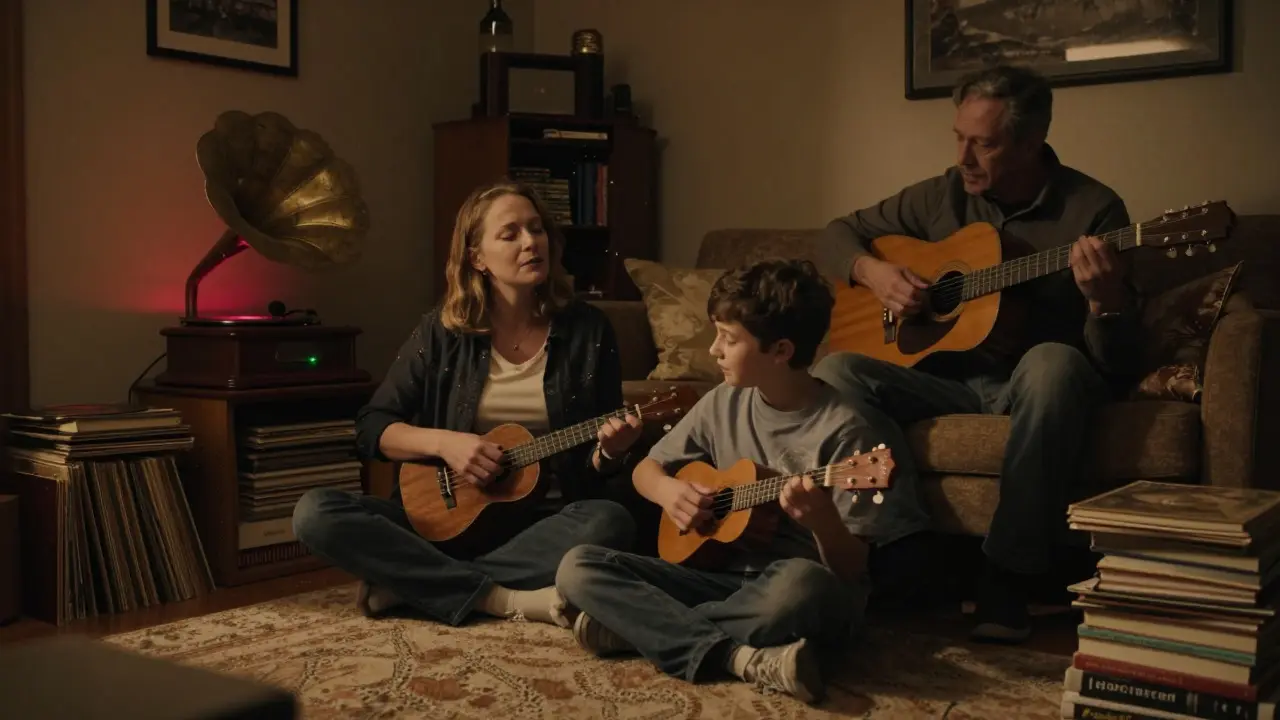
Like many musicians of that era, Hill’s first lessons didn’t come from a conservatory. They came from the living room. His family, like many in the region, gathered around the radio and the phonograph. The house was filled with records spanning genres that wouldn’t typically mix on today’s playlists. Gospel hymns sat next to jazz standards, which were followed by early rock and roll cuts. This eclectic diet prevented him from becoming pigeonholed early on.
His father, a local handyman who also played guitar on weekends, taught him basic chords. But it was his mother’s singing that left a deeper mark. She sang traditional spirituals, not as performances, but as expressions of daily life. This taught Hill that music wasn’t just something you did on stage; it was a language used to process joy, sorrow, and routine. When he started picking up instruments himself, likely a ukulele before moving to guitar, he brought that domestic intimacy into his playing. It explains why his early recordings feel conversational rather than performative.
School Bands and Community Jams
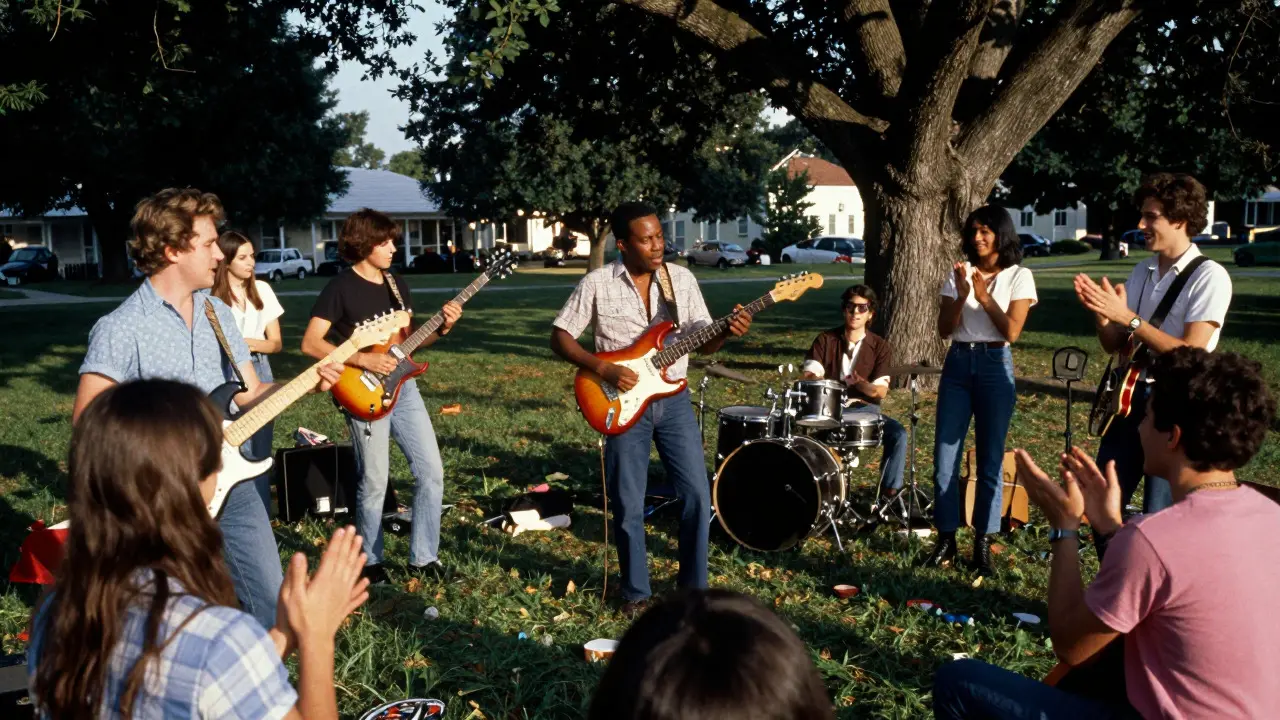
Formal education played a role, but it was different from what we see today. In the public schools of North Little Rock, band programs were active but often focused on marching and classical repertoire. However, after-school hours belonged to the community. Local parks and community centers hosted informal jam sessions where kids could try out their skills. These weren’t auditions; they were social events. If you played well, people listened. If you played badly, people laughed, but they still clapped.
Hill participated in these sessions regularly. He experimented with rhythm, trying to match the tempo of the local blues players who occasionally dropped by. This was a critical period for developing his sense of timing and groove. He wasn’t learning from sheet music; he was learning by ear, mimicking the pocket that seasoned local musicians kept. This organic learning curve gave him a flexibility that rigid academic training often lacks. He understood how to listen to other players and adjust in real-time, a skill that would define his career as a session musician and producer.
The Role of Radio and Local Venues
Radio was the internet of the day, but it was hyper-local. Stations in the Little Rock-North Little Rock metro area programmed specifically for the demographic of the time. They mixed country, R&B, and emerging rock and roll. For Hill, this was a masterclass in genre fusion. He heard how a country fiddle line could sit comfortably under an R&B vocal. He heard how a rock and roll drum beat could drive a gospel chorus. These combinations weren’t forced; they were natural because the audience accepted them.
Beyond radio, local venues like small bars and club lounges provided live exposure. These places didn’t have massive stages or expensive lighting. They had close quarters, which meant the sound was intimate. Hill watched how performers interacted with the crowd in these tight spaces. He saw that connection mattered more than volume. This insight influenced his approach to recording later on. He favored microphones placed close to the source, capturing the breath and the creak of a chair, ensuring the listener felt like they were in the room.
Key Influences Shaping His Style
While the environment was the soil, specific artists were the seeds. Hill has cited a few key figures who impacted his development in North Little Rock. First, there was the local blues tradition, particularly the Texas-influenced blues that was popular in Arkansas. Artists like T-Bone Walker had a significant presence in the region, and their electric guitar styles were widely imitated by young players like Hill. Second, the doo-wop groups that formed in high schools across the state provided a model for vocal harmony. Hill spent hours studying how these groups arranged their parts without formal notation.
Third, the rise of rock and roll brought new energy. Elvis Presley and Chuck Berry were not just celebrities; they were templates for attitude and movement. Hill adopted the rhythmic drive of rock and roll but tempered it with the melodic sensibility of the blues and gospel he grew up with. This synthesis is what makes his sound recognizable. It’s not pure rock, not pure blues, and not pure gospel. It’s a hybrid born from the specific conditions of North Little Rock in the mid-20th century.
| Environment | Primary Characteristics | Impact on Robert Hill |
|---|---|---|
| Downtown Little Rock | Commercial venues, larger audiences, polished productions | Learned professional standards and stagecraft |
| North Little Rock Neighborhoods | Informal jams, community focus, raw acoustic/electric mixes | Developed authentic emotional expression and improvisation |
| Local Schools | Structured band programs, classical/marching focus | Gained basic theoretical knowledge and discipline |
| Home/Family Circle | Eclectic record collection, spirituals, casual listening | Internalized music as a daily language, not just performance |
Transitioning from Local Player to Professional
Eventually, the local scene in North Little Rock couldn’t contain Hill’s ambitions. The transition from a neighborhood player to a working professional required stepping out of his comfort zone. He began taking gigs in nearby towns and eventually traveled to Memphis, the epicenter of the sounds he loved. But even then, he carried the DNA of North Little Rock with him. His ability to blend genres seamlessly, his focus on intimate recording techniques, and his emphasis on emotional truth over technical showmanship all trace back to those early days.
He didn’t leave behind his roots; he refined them. The raw energy of the community jams became the drive in his bass lines. The harmonic complexity of the doo-wop groups evolved into sophisticated vocal arrangements. The eclectic mix of the family radio station translated into genre-bending productions. This continuity is vital for understanding his legacy. He wasn’t someone who reinvented himself completely; he was someone who amplified the signals he received in North Little Rock until the whole world could hear them.
Legacy of the North Little Rock Sound
Today, when we listen to Robert Hill’s catalog, we are hearing the echo of a specific place and time. The "North Little Rock Sound" isn’t a formally defined term in musicology, but it exists in the collective memory of fans and historians. It represents a moment when a small community fostered a diverse musical culture that produced artists capable of crossing boundaries. Hill stands as a prime example of this phenomenon. His journey shows that great art doesn’t always come from major metropolitan hubs. Sometimes, it comes from the quiet streets of a suburb where a kid picks up a guitar, listens to the radio, and learns to play from the heart.
For modern musicians looking to find their own voice, Hill’s story offers a lesson. Don’t wait for the perfect environment. Look at what’s around you. Listen to your neighbors. Study the local history. Your roots, no matter how small the town, can be the foundation for a global sound. Robert Hill proved that you don’t need to be in New York or London to create timeless music. You just need to be true to where you’re from.
Where exactly is North Little Rock located?
North Little Rock is a city in Pulaski County, Arkansas, situated directly across the Arkansas River from the capital city, Little Rock. It serves as a major suburban hub with its own distinct cultural and historical identity separate from, yet closely connected to, the downtown core.
What kind of music was popular in North Little Rock during Robert Hill's childhood?
During the mid-20th century, the area was heavily influenced by a mix of R&B, blues, gospel, early rock and roll, and country. The proximity to Little Rock allowed for a blend of commercial radio hits and local, grassroots musical traditions, creating a diverse sonic landscape for young listeners.
How did local community jams influence Robert Hill's style?
Community jams taught Hill improvisation, listening skills, and emotional authenticity. Unlike formal education, these informal settings prioritized groove and interaction over technical perfection, leading to a playing style that felt conversational and deeply connected to the audience.
Did Robert Hill receive formal music education in North Little Rock?
Yes, he participated in public school band programs, which provided basic theoretical knowledge and discipline. However, his most significant learning occurred outside the classroom through family influence, radio, and local jam sessions, which shaped his unique artistic voice.
Why is the distinction between Little Rock and North Little Rock important for understanding his music?
The distinction highlights the duality of his influences. Downtown Little Rock offered commercial polish and larger-scale performances, while North Little Rock provided intimate, community-driven experiences. This balance between professional standards and raw authenticity is central to his musical identity.