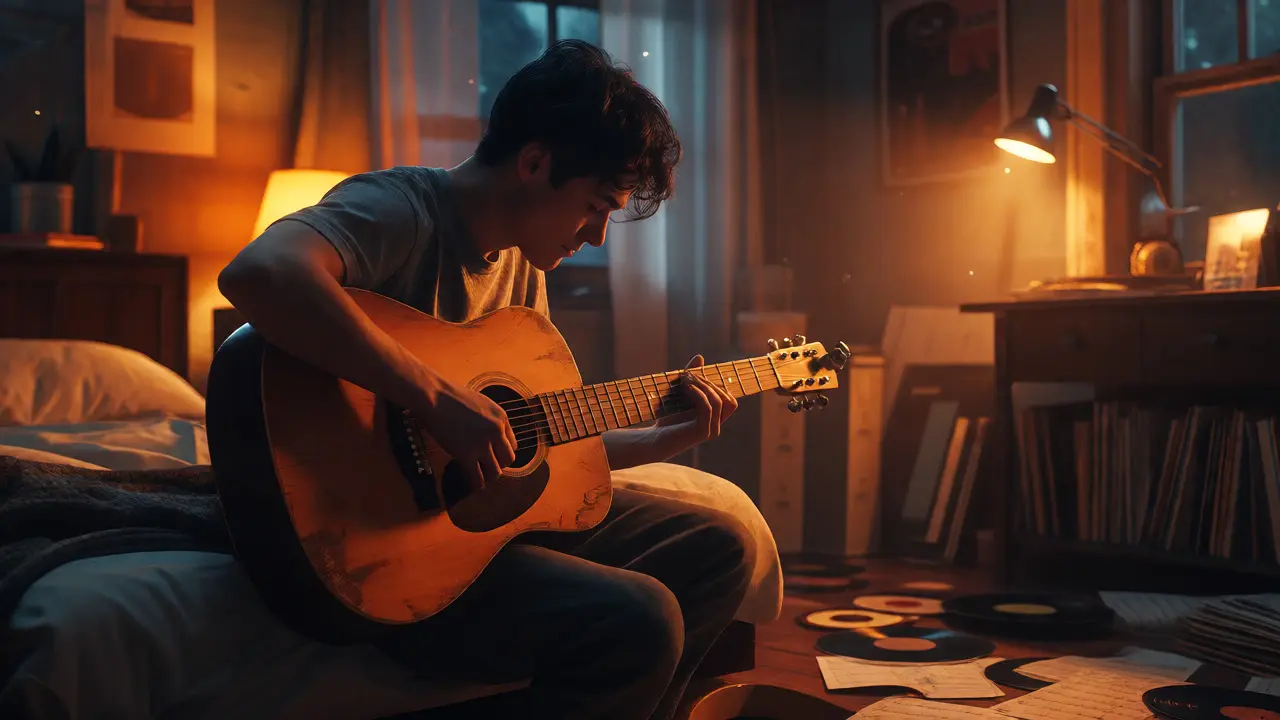
Most people assume that to make serious music, you need a degree from Juilliard or at least years of formal lessons. But look closely at some of the most distinctive sounds in modern indie and folk scenes, and you'll find a different story. Take Robert Hill, an artist whose career challenges the idea that institutional training is the only path to musical proficiency. His journey wasn't paved with conservatory diplomas but with late-night practice sessions, trial and error, and a relentless curiosity about how sound works.
This isn't just another "he practiced until he was perfect" anecdote. Robert Hill's approach to self-teaching music offers a practical blueprint for anyone who feels locked out of the industry by gatekeepers. He didn't wait for permission to start writing songs. Instead, he treated his instrument like a puzzle box, figuring out the mechanics through immersion rather than instruction. If you've ever felt intimidated by music theory or thought you were "too old" to learn an instrument, Hill's story proves that passion and structured self-discipline can beat pedigree every time.
The Myth of the Formal Degree
We tend to equate education with classrooms. We think if it doesn't happen at a desk with a teacher, it doesn't count. For Robert Hill, this notion was irrelevant. He grew up surrounded by music, but not in a way that suggested a professional future. There were no prodigy labels, no early recitals. What there was, however, was access. A second-hand acoustic guitar sat in the corner of his family home, gathering dust until curiosity got the better of him.
Hill’s initial struggle mirrors what many beginners face: the gap between hearing a song in your head and reproducing it on strings. Without a teacher to correct his posture or finger placement, he had to rely on auditory feedback. This forced him to develop a highly sensitive ear, a skill that would later define his songwriting. He learned to listen for intervals, not just chords. While a classically trained student might memorize a scale pattern, Hill figured out why certain notes clashed and others resolved. This intuitive understanding of harmony often leads to more unconventional, interesting chord progressions because you aren't bound by the rules you never formally learned.
It’s worth noting that self-teaching doesn't mean ignoring structure. It means creating your own. Hill spent hours deconstructing songs he loved. He’d slow down recordings, isolate individual instruments, and mimic them. This process, known as transcription, is actually a core component of jazz education, but Hill did it without the tuition fees. By reverse-engineering complex arrangements, he built a mental library of techniques that he could apply to his own compositions.
Building a Practice Routine Without a Teacher
One of the biggest hurdles for self-taught musicians is consistency. When no one is checking your homework, it’s easy to skip the boring parts. Hill avoided the trap of playing only what he already knew. He adopted a rule: spend 20% of practice time on new concepts and 80% applying them. This ratio kept his skills growing while ensuring he stayed motivated by making actual music.
He also leveraged technology long before apps became the norm. In the early days of his development, he used cassette tapes to record himself. Listening back was brutal but necessary. You hear mistakes when recording that you miss while playing. This feedback loop allowed him to identify technical flaws-like inconsistent strumming dynamics or sloppy transitions-and fix them independently. Today, tools like GarageBand or simple voice memos serve the same purpose, but the principle remains: record, critique, refine.
| Aspect | Formal Education | Self-Taught (Hill's Approach) |
|---|---|---|
| Curriculum | Standardized, linear progression | Custom, interest-driven exploration |
| Feedback Source | Instructor evaluations | Self-recording, peer collaboration, audience reaction |
| Theory Application | Learned abstractly, then applied | Learned practically, then codified |
| Creativity | Often constrained by genre norms | High freedom, experimental outcomes |
| Cost | High (tuition, books, lessons) | Low (instrument, free resources, time) |

Leveraging Community and Collaboration
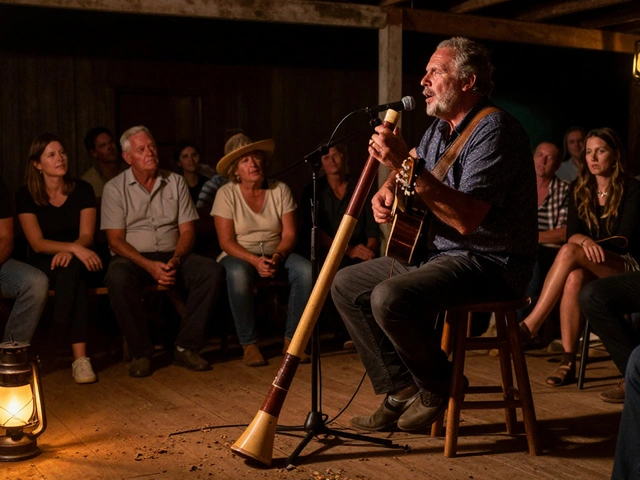
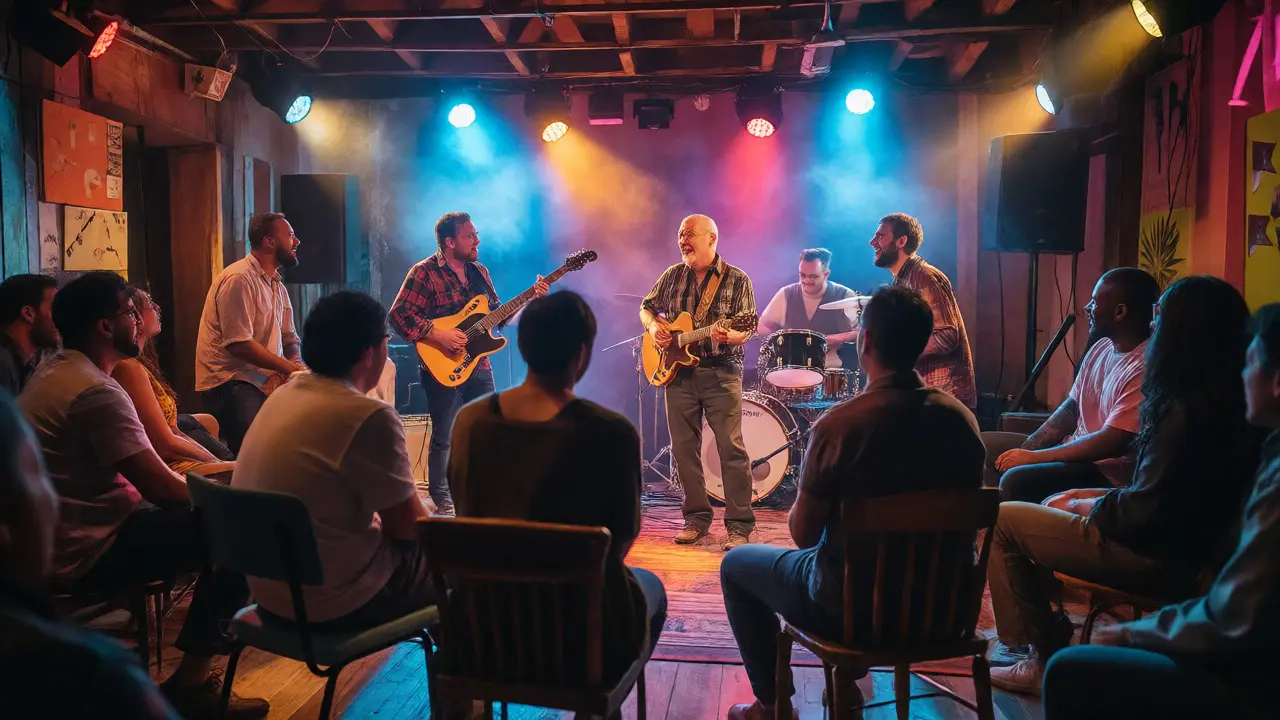
A common misconception is that self-taught artists work in isolation. Robert Hill proves otherwise. While he didn't have professors, he had peers. He sought out local open mic nights and jam sessions, environments where judgment is lower and experimentation is encouraged. These spaces served as informal classrooms. Watching other musicians solve problems in real-time provided insights that no textbook could offer.
Hill understood that music is a language, and languages are learned through conversation, not just grammar drills. Collaborating with drummers, bassists, and vocalists taught him timing and space in ways solo practice couldn't. He learned to leave room for others, to listen actively, and to adapt his playing to support a group dynamic. This social aspect of learning is crucial. It builds confidence and exposes you to styles you might never explore alone. For Hill, these interactions refined his stage presence and helped him understand the emotional impact of his music on live audiences.
Furthermore, online communities played a role, even in his earlier years. Forums and early internet message boards allowed him to ask specific questions about gear or technique. The democratization of information meant that if he hit a wall, someone somewhere had likely encountered the same issue. He curated his own curriculum by aggregating advice from diverse sources, filtering out bad tips through personal testing.
Integrating Theory Through Experience
Did Robert Hill ignore music theory? Not exactly. He approached it differently. Instead of learning scales in isolation, he learned them as they appeared in songs he wanted to play. When he noticed a recurring pattern in a blues track, he investigated why those notes worked together. This contextual learning made theory stick. He wasn't memorizing formulas; he was solving musical mysteries.
This method creates deep neural pathways. Because the knowledge is tied to a sensory experience-a sound you love-it’s harder to forget. Hill eventually studied basic harmony and counterpoint, but only after he had developed an intuition for them. This order-practice first, theory second-is often more effective for creative types. It prevents the paralysis of analysis, where students become so obsessed with doing things "correctly" that they stop expressing themselves.
His songwriting reflects this hybrid approach. The structures are solid enough to feel cohesive, thanks to his underlying theoretical understanding, but the choices are bold and unexpected, born from his experimental roots. Listeners often describe his music as "familiar yet fresh," a direct result of balancing foundational knowledge with unorthodox application.
Lessons for Aspiring Musicians
If you're considering teaching yourself an instrument or producing music, Hill’s path offers several actionable takeaways. First, embrace the discomfort of being a beginner. Mistakes are data, not failures. Every wrong note teaches you something about the fretboard or the keyboard. Second, document your progress. Keep a journal of what you tried, what worked, and what sounded terrible. This log becomes a roadmap for future improvement.
Third, don’t underestimate the power of imitation. Copying your heroes isn't cheating; it's apprenticeship. Once you can replicate their style, try breaking it. Change the tempo, swap the instruments, alter the key. This transforms passive copying into active creation. Finally, share your work early. Waiting until you’re "good enough" usually means waiting forever. Play for friends, post clips online, join a band. External feedback accelerates growth faster than solitary practice ever could.
Robert Hill’s story reminds us that education is what you make of it. You don't need a syllabus to learn. You need curiosity, consistency, and the courage to press play before you feel ready. The barriers to entry in music have never been lower, and the rewards for self-directed learners have never been higher.
Is formal music education necessary to become a professional musician?
No, it is not strictly necessary. Many successful artists, including Robert Hill, are self-taught. Formal education provides structure and networking, but self-teaching fosters creativity and problem-solving skills. Success depends more on discipline, ear training, and consistent practice than on credentials.
How did Robert Hill learn music theory without a teacher?
Hill learned theory contextually by analyzing songs he admired. He identified patterns in melodies and harmonies, then researched the underlying principles. This practical approach allowed him to understand why certain combinations worked, integrating theory naturally into his playing rather than memorizing abstract rules.
What tools are best for self-taught musicians today?
Modern self-taught musicians benefit from DAWs (Digital Audio Workstations) like Ableton or Logic Pro, tuning apps, and video platforms like YouTube for tutorials. However, the most valuable tool remains a recording device to capture and critique your own performances objectively.
Can self-taught musicians collaborate effectively with trained ones?
Yes, often very effectively. Self-taught musicians bring unique perspectives and unconventional techniques, while trained musicians offer structural precision. Clear communication about goals and roles bridges any terminology gaps, leading to innovative collaborations.
How long does it take to become proficient through self-teaching?
Proficiency varies based on practice intensity and natural aptitude. Generally, dedicated daily practice of 30-60 minutes can yield noticeable improvement within six months. Mastery, however, is a lifelong pursuit regardless of educational background. Consistency matters more than duration.