Slide guitar isn’t just about bending notes or sliding into a bluesy lick. In gospel blues, it’s the voice that answers the preacher, the echo that follows a sung line, the emotional bridge between the congregation and the divine. When you hear a slide guitar ripple through a hymn like "Amazing Grace" or pulse under a spiritual like "I’ll Fly Away," it’s not decoration-it’s dialogue. This isn’t rock or jazz. This is worship shaped by history, pain, and joy, where every note has a purpose: to hold space for the human voice.
Why Slide Guitar Fits Gospel Blues
Slide guitar and gospel blues grew up together in the American South. You’ll find roots in the Mississippi Delta, where African musical traditions met European hymnody, and where steel strings were laid across lap guitars, bottlenecked with knife blades, thimbles, or even broken bottles. The slide doesn’t play chords like a piano. It doesn’t articulate words like a voice. But it mimics them. It cries. It moans. It laughs. And in a call-and-response setting, that’s exactly what’s needed.Call-and-response is the heartbeat of Black worship music. One voice-pastor, choir leader, or congregant-sings out. The room answers. Slide guitar doesn’t compete with that. It completes it. When the lead singer stretches a note, the slide answers with a gliding harmony. When the choir shouts "Amen," the slide echoes it with a shimmering bend. It’s the instrument that listens, then speaks back.
Three Core Techniques for Worship Slide Guitar
There’s no single way to play slide in gospel blues. But three techniques show up again and again in churches, revival tents, and home gatherings where the spirit moves.
- Following the Vocal Line - Don’t try to solo. Play the same melody the singer is singing, but with a slide. Use the same rhythm, same phrasing, same pauses. If the singer holds a note for three beats, your slide stays on that fret for three beats. Then, when they drop down, you drop with them. This creates a sonic echo that feels like the voice is being carried by the instrument.
- Using Open Tunings - Most gospel blues slide players use Open G (D-G-D-G-B-D) or Open D (D-A-D-F#-A-D). Why? These tunings let you play full chords with one finger. That’s crucial in worship settings where you’re not just playing rhythm-you’re holding harmony while the congregation sings. With Open G, you can strum all six strings and get a major chord. Slide it up two frets? Instant dominant seventh. No chord charts needed.
- Emphasizing the Blue Third and Seventh - Gospel blues thrives on tension. The blue third (a note between major and minor) and the flattened seventh are where the soul lives. When you slide into the third of a chord, don’t stop cleanly. Let it waver. Let it shake. That’s not out of tune. That’s the sound of longing. When the choir sings "I’ve been redeemed," the slide slides from a minor third to a major third-pain to hope, in one motion.
How to Play With the Congregation
You’re not the star. You’re the glue.
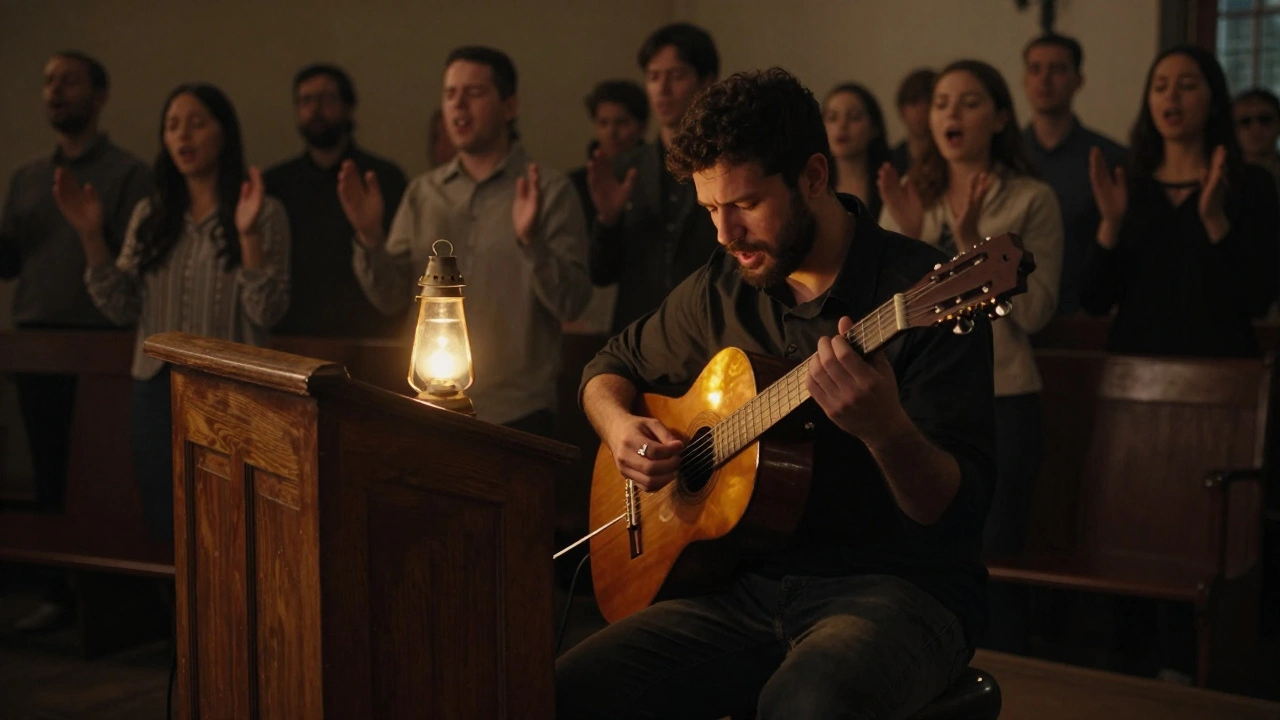
In many Black churches, the slide guitarist sits near the organist or pianist, not front and center. You don’t play during the sermon. You don’t play during the prayer. You play when the singing starts-and only when the singing starts. The rhythm section locks in first: bass drum, snare, maybe a tambourine. Then the lead singer begins. That’s your cue.
Listen to how the voice rises. Where does it crack? Where does it linger? That’s where you enter. If the singer holds a long note on "graaace," you slide up to it from below, letting the note bloom slowly. If the choir responds with a sharp "Yes, Lord!" you answer with a quick, bright slide up two frets-like a clap in string form.
One player I learned from in Jackson, Mississippi, called it "listening with your fingers." He said, "If you’re thinking about your next lick, you’ve already missed the moment. The Spirit speaks through the singer. Your job is to hear it, then sing it back."
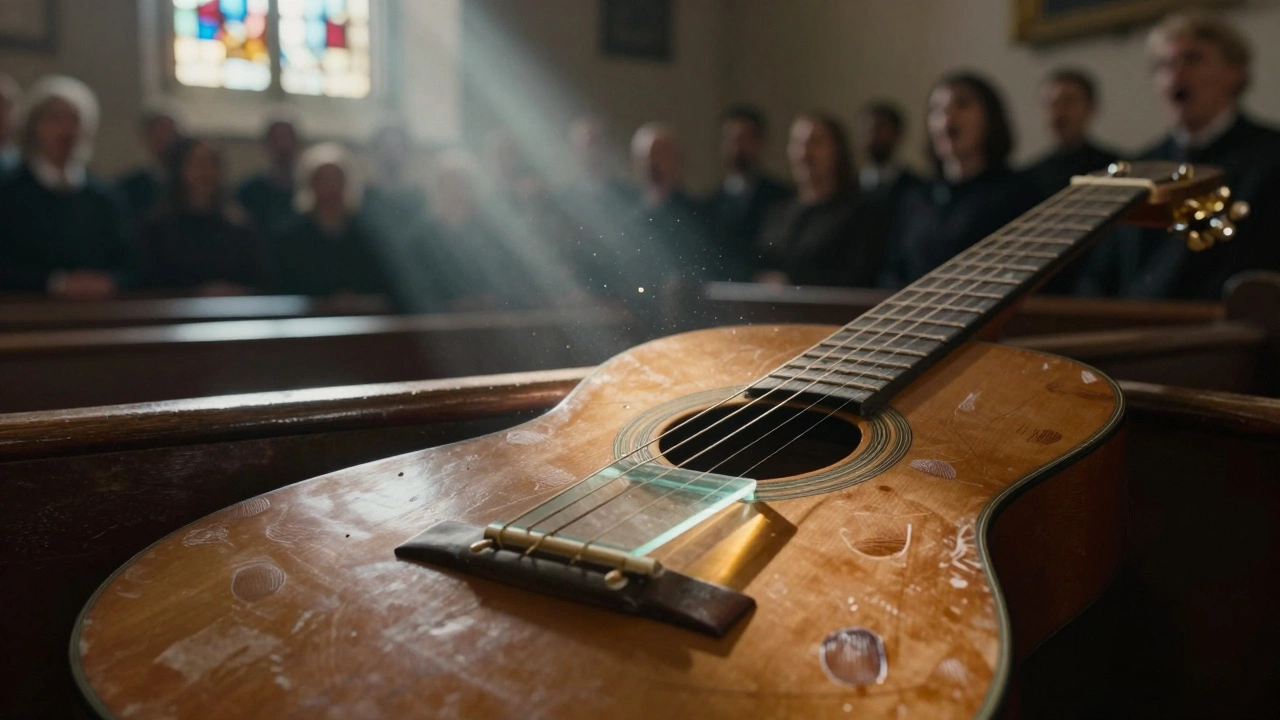
Common Mistakes to Avoid
Too many slide players try to be flashy. In gospel blues, that breaks the worship.
- Playing too fast - Fast licks distract. Worship moves at the pace of prayer. Let silence breathe. Let notes hang.
- Using too much vibrato - A little shake is fine. Too much sounds like a guitar trying to cry. In gospel, the voice cries. The guitar just holds the space.
- Playing over the congregation - If the choir is singing loudly, mute your strings or play softer. You’re not competing. You’re supporting.
- Ignoring dynamics - When the preacher says "Let’s pray," the music drops to a whisper. Slide players know to lift the slide off the strings and let the room go quiet. That silence is sacred.
Real Examples From Worship Settings
Listen to the recordings of Reverend Gary Davis. His slide work on "I Am the Light of This World" doesn’t try to out-sing the choir. It mirrors the rhythm of their clapping. When they hit the beat, his slide taps the fifth string. When they lift their voices, his slide rises with them.
Or check out Blind Willie Johnson’s "Dark Was the Night, Cold Was the Ground." No words. Just slide guitar and voice. The guitar doesn’t play chords. It plays the emotional shape of the song-longing, sorrow, peace. That’s the model.
Modern players like Sonny Landreth and Susan Tedeschi understand this too. When Tedeschi plays in church settings, she doesn’t play solos. She plays responses. She lets the singer lead. She waits. She listens. And when the moment comes, her slide doesn’t shout. It whispers back.
Building Your Own Worship Slide Vocabulary
You don’t need a dozen licks. You need three.
Start with this pattern:
- Slide from the root to the third of a chord (e.g., from G to B in Open G tuning).
- Slide from the fifth down to the fourth (e.g., from D to C).
- Play a single note on the high B string, then let it ring while you gently shake the slide.
Practice these with a recording of a gospel choir. Play along. Don’t try to match every note. Match the feeling. If the choir sings with joy, your slide should shimmer. If they sing with grief, your slide should drag.
Record yourself. Listen back. Does your playing feel like it’s part of the song-or like it’s trying to take over? The best worship slide players are invisible. You don’t notice the instrument. You feel its presence.
Final Thought: The Slide as a Spiritual Tool
Slide guitar in gospel blues isn’t about technique. It’s about surrender. It’s about letting the Spirit move through you, not just your fingers. The slide doesn’t need to be perfect. It needs to be honest.
When you play for worship, you’re not performing. You’re bearing witness. Every slide, every bend, every pause says: "I hear you. I feel it too." That’s why this music lasts. Not because it’s loud. Not because it’s fast. But because it’s true.
What type of slide is best for gospel blues?
Glass slides are most common in gospel blues because they produce a warm, singing tone that blends well with voices. Metal slides can be too bright or harsh for worship settings. Many players use a 3/4-inch glass slide on the ring finger, which gives enough weight to press strings without needing excessive force. Some use a bottleneck from a whiskey bottle-handmade, imperfect, and full of history.
Can you play slide guitar without a slide?
Technically, yes-but you lose the essence. The slide’s magic is in its smooth, continuous motion between notes. Fingers can’t replicate that glide. That’s why slide is essential in gospel blues: it’s the only way to mimic the human voice’s natural inflections-those subtle rises, falls, and trembles that words alone can’t capture.
Do you need to know music theory to play gospel blues slide?
Not formally. Many of the greatest gospel slide players never read a note. But they knew the emotional language of the blues and the structure of call-and-response. If you can hear the difference between a major third and a blue third, you’re already ahead. Focus on listening, not labeling. Theory helps, but feeling drives the music.
Is slide guitar used in white gospel music too?
Yes-but differently. In white Southern gospel, slide is rarer. When used, it’s often more restrained, with less bluesy inflection. Black gospel blues uses slide as a voice of lament and joy. White gospel often uses it for texture or ambiance. The emotional weight and rhythmic freedom are deeper in the Black tradition, where the slide carries centuries of cultural memory.
What songs should I learn to practice this style?
Start with "The Old Ship of Zion," "Wade in the Water," and "I’ll Fly Away." These have clear call-and-response structures and simple chord progressions. Play along with recordings by The Staple Singers, Mahalia Jackson, or Blind Willie Johnson. Focus on matching the phrasing of the singers-not your own ideas.