You have the track. You know exactly how it should sound in your head. But when you get to the shoot day, things often fall apart. The lighting doesn't match the mood. The singer looks bored because there is no action to play. The camera operator is asking what to do next while the clock ticks and your budget burns.
This isn't a talent problem. It’s a planning problem. Music video storyboarding is the bridge between that vague feeling in your chest and the concrete images on screen. It’s not about drawing pretty pictures. It’s about solving problems before they cost you money. If you skip this step, you’re just hoping for luck. And hope isn’t a strategy.
Why Storyboards Save Your Sanity (And Budget)
Think of a storyboard as a blueprint for a house. You wouldn’t start laying bricks without knowing where the windows go, right? In film production, we call this pre-production. When you visualize the sequence beforehand, you spot the gaps immediately.
Let’s say you want a dramatic close-up during the chorus. Without a board, you might realize on set that your lens is too wide, or the background is cluttered with distracting props. With a board, you catch that error weeks in advance. You can adjust the location scout or change the lens choice before renting gear.
There is also the communication factor. Your crew needs to understand your vision. Words like "moody" or "energetic" are subjective. To the gaffer, "moody" means low key lighting. To the actor, it might mean sad body language. A sketch removes the ambiguity. Everyone sees the same thing. This alignment reduces friction on set, which is crucial when you are working with tight timelines common in indie music videos.
The Low-Fidelity Approach: Stick Figures Are Fine
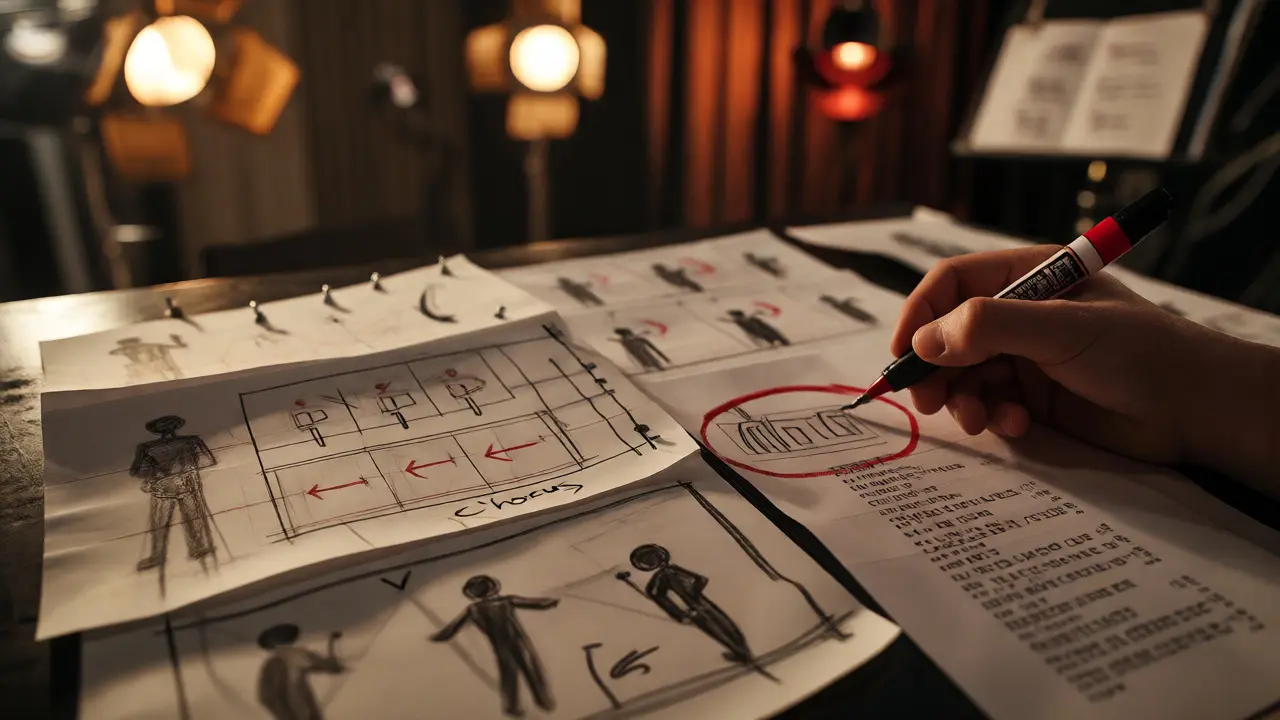
A common myth stops many musicians from starting: "I can’t draw." Forget that. You don’t need to be an artist. You need to be a communicator. Professional directors often use stick figures, arrows, and boxes. That’s enough.
Focus on these three elements in every frame:
- Framing: Is it a wide shot showing the whole band? Or a tight close-up on the drummer’s hands?
- Movement: Use arrows to show if the camera pans left, zooms in, or if the subject walks toward the lens.
- Action: What is happening? Is the singer jumping? Is the guitar smashing?
If you hate drawing, use stock photos or screenshots from movies that match the vibe. Cut them out and tape them to paper. This technique, sometimes called a mood board hybrid, gets the point across faster than trying to render perfect faces. The goal is clarity, not gallery-worthy art.
Syncing Visuals to Audio Structure
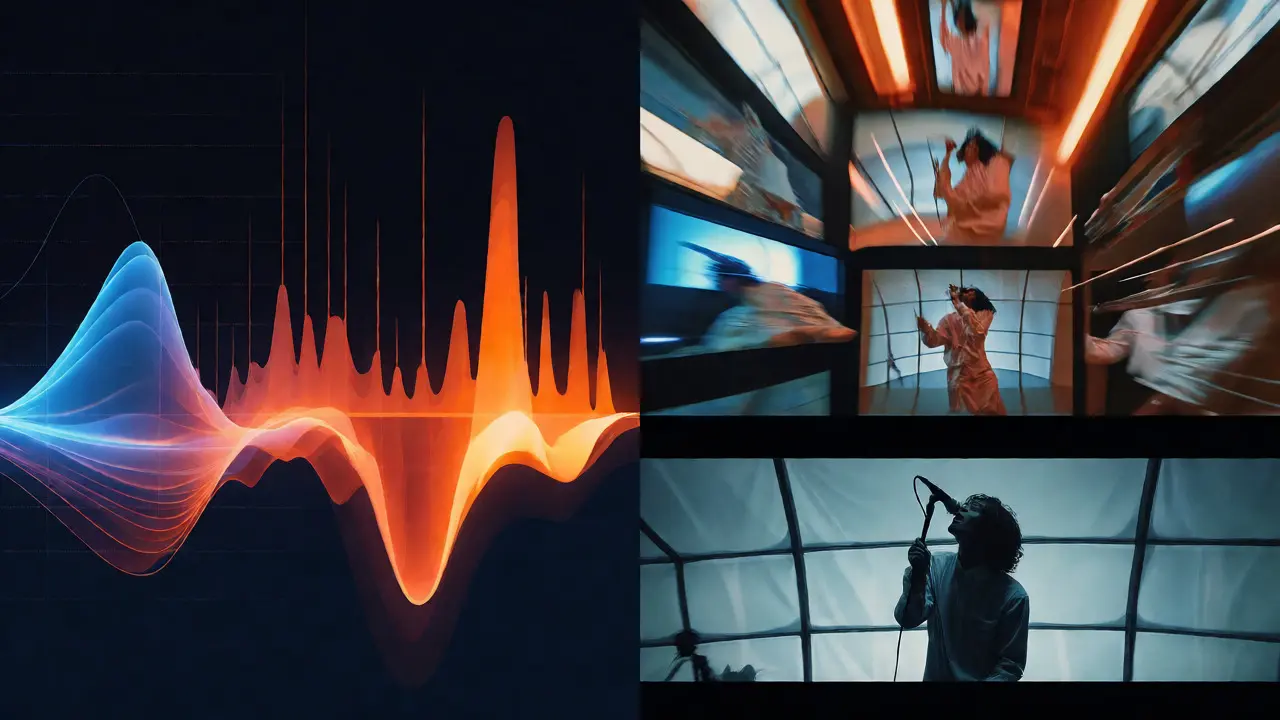
Music has a structure: intro, verse, chorus, bridge, outro. Your visuals should mirror this emotional arc. Don’t just randomly assign shots. Map them to the song’s energy levels.
| Song Section | Audio Energy | Recommended Visual Style | Camera Movement |
|---|---|---|---|
| Intro | Low / Building | Wide establishing shots, slow reveals, atmospheric details. | Slow push-in or static tripod. |
| Verse 1 | Medium / Narrative | Character introduction, performance focus, medium shots. | Handheld for intimacy or smooth dolly. |
| Chorus | High / Peak | Fast cuts, dynamic angles, group energy, color shifts. | Rapid pans, whip pans, or handheld chaos. |
| Bridge | Variable / Tension | Abstract imagery, extreme close-ups, surreal elements. | Unconventional angles or slow motion. |
| Outro | Fading / Resolution | Wide pull-back, lingering on details, fade to black. | Static or slow zoom out. |
Notice how the camera movement changes with the audio intensity. If the chorus hits hard but your camera stays still, the edit will feel flat. Match the kinetic energy of the track with the kinetic energy of the frame.
From Storyboard to Shot List
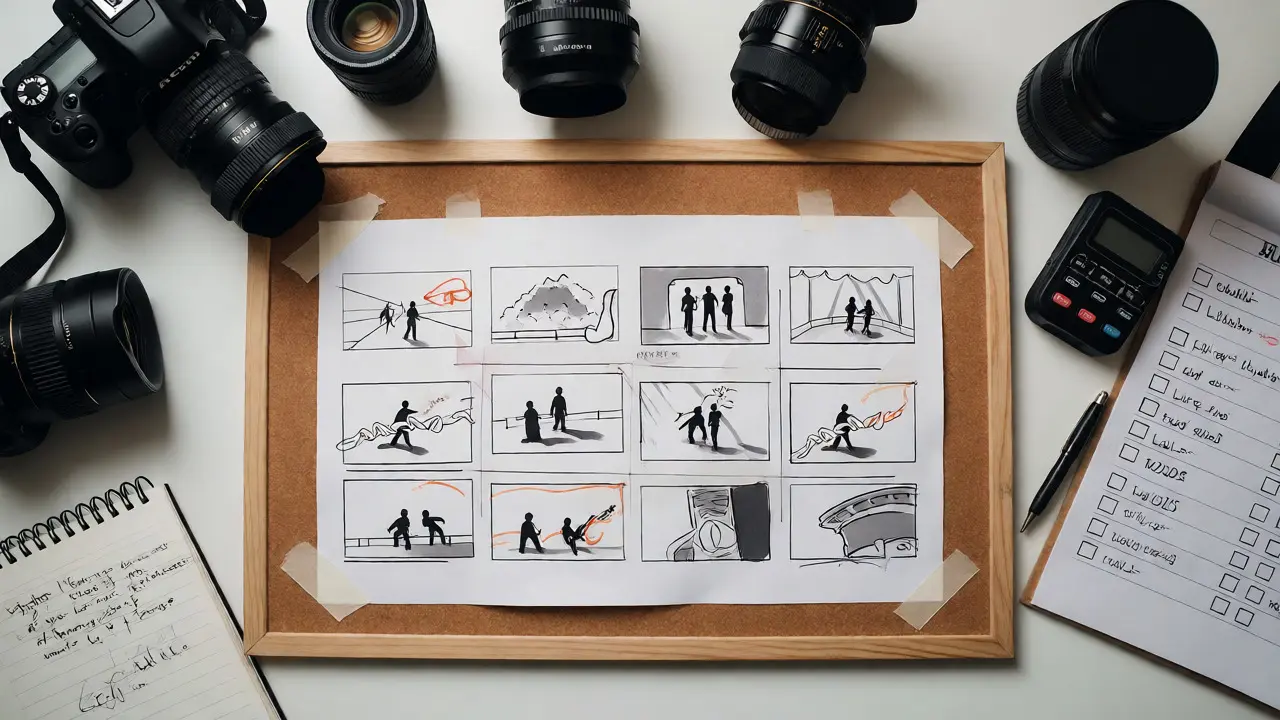
A storyboard shows *what* happens. A shot list tells you *how* to capture it. Once your frames are sketched, break them down into technical specs. This document becomes your bible on shoot day.
For each panel in your storyboard, add these details:
- Shot Number: Sequential order for editing later.
- Lens Choice: Wide (16mm-35mm) for context, Normal (50mm) for natural view, Telephoto (85mm+) for compression and isolation.
- Lighting Setup: Key light position, fill ratio, practical lights needed.
- Duration: How long does this shot last in seconds? Does it cover a full bar of music or half?
This translation process forces you to think practically. You might realize you have five different lighting setups planned for one location. That’s unrealistic. You’ll likely consolidate them, saving hours of setup time.
Pitfalls to Avoid During Pre-Production
Even with a plan, things go wrong. Here are the most common traps I’ve seen in Portland studios and outdoor shoots alike.
Over-complicating the transition. Beginners love fancy transitions-whip pans, object wipes, digital morphs. They look cool in theory but take forever to execute perfectly. If you miss the timing by two frames, the illusion breaks. Start with simple cuts. Master those first.
Ignoring the environment. You drew a beautiful sunset shot. But did you check the weather forecast? Did you check if that park closes at dusk? Outdoor shoots are hostage to nature. Always have a backup indoor scene ready in your storyboard that fits the same song section.
Forgetting continuity. If the singer wears a red jacket in the verse, they must wear it in the chorus unless you plan a costume change. Track wardrobe, makeup, and prop positions meticulously. One mismatched detail pulls the viewer out of the experience instantly.
Tools of the Trade
You don’t need expensive software. Some directors prefer pen and paper. Others use apps. Choose what fits your workflow.
- Paper & Printables: Free storyboard templates online give you empty frames. Great for quick brainstorming.
- Digital Apps: Apps like Boords or Storyboarder let you drag-and-drop images and record voiceovers explaining the shot.
- Video Editing Software: If you are tech-savvy, drop reference clips into your timeline early. See how the pacing feels against the actual audio track.
I personally mix methods. I sketch rough ideas on napkins during rehearsals, then digitize the best ones. Then I paste those images into a PDF along with my shot list notes. It keeps everything in one place for the crew.
Do I really need a storyboard for a simple performance video?
Yes, even for simple videos. A performance video still requires decisions about angles, lighting changes, and cut points. Without a plan, you might end up with ten identical wide shots and nothing else to cut to. A basic storyboard ensures variety and rhythm.
How detailed should my drawings be?
As detailed as necessary to communicate the idea to your team. If you are the only person shooting and editing, stick figures are fine. If you are directing a crew, include notes on lighting and movement. Clarity trumps artistic quality every time.
Can I change the storyboard during the shoot?
Absolutely. A storyboard is a guide, not a law. Sometimes a location offers a better angle than you imagined. Adaptability is key. Just make sure any changes don’t disrupt the overall narrative flow or continuity of the song.
What is the difference between a storyboard and a shot list?
A storyboard is visual-it shows the composition and action. A shot list is textual-it lists technical details like lens type, duration, and equipment needed. You typically create the storyboard first to define the creative vision, then convert it into a shot list for logistical execution.
How many shots should I plan for a 3-minute song?
It depends on the editing pace. For a fast-paced rock video, you might need 100+ short clips. For a slow ballad, maybe 20-30 longer takes. Plan for more footage than you think you need. It is easier to trim excess than to wish for missing coverage.